No one came to my son’s surgery.
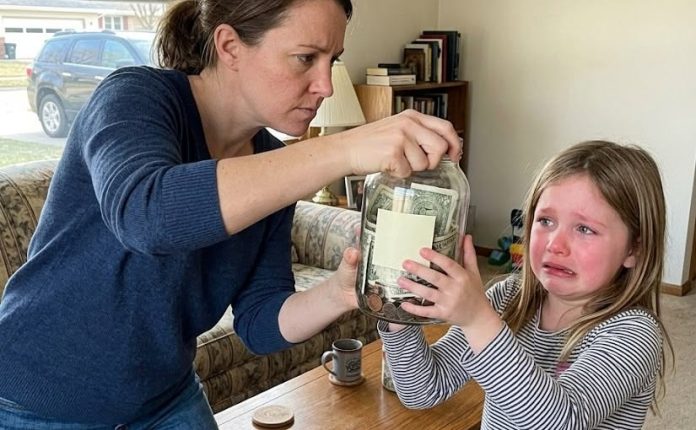
Three days later, my mother texted, “Send $5,000 today for your sister’s wedding dress, or I’ll empty the account before Caleb leaves ICU.”
I sent her 50 cents with the memo “Buy a veil,” froze every bit of access she had, and waited for the anger I knew was coming.
Instead, the bank manager called.
The morning Caleb went into surgery, the pediatric wing smelled like sanitizer, burnt coffee, and the kind of fear nobody admits they brought into the building.
Everything was too clean and too bright, yet nothing felt safe.
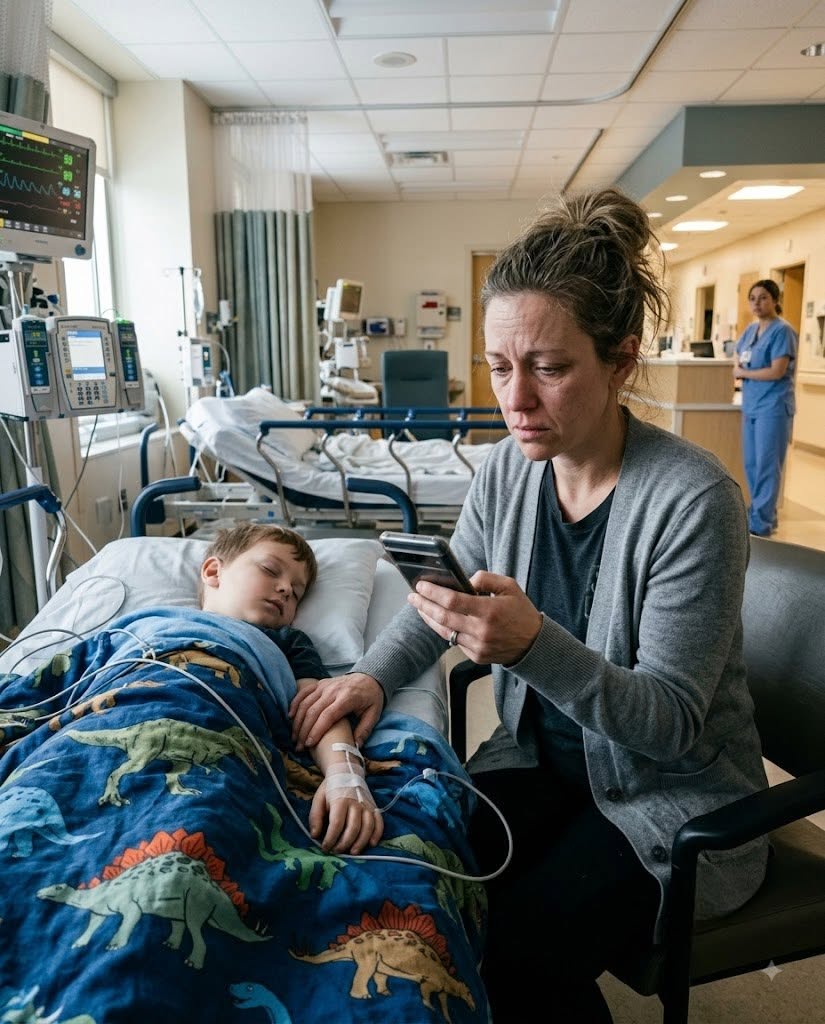
My seven-year-old son lay beneath a white hospital blanket while nurses moved quietly around his bed, checking wires, reading numbers, and speaking in calm voices that sounded practiced because they had to.
His dinosaur blanket was tucked under his chin.
It was faded from years of washing, and one corner had been repaired twice after he dragged it across the driveway when he was four.
Monitor wires crossed his small chest, and a nurse had written CALEB on the whiteboard in green marker with a little heart beside his name.
He noticed the heart immediately.
“Do they do that for everybody?” he asked.
“Only the brave kids,” I told him.
His mouth lifted for half a second, but his eyes kept shifting toward the automatic doors at the end of the hall.
He was waiting for my family.
Three weeks earlier, I had sent my mother, Patricia, every detail she could possibly need.
I gave her the hospital address, the floor number, the surgeon’s name, the surgery time, parking instructions, and a photo of Caleb hugging his stuffed triceratops.
I sent the information twice because Patricia had a way of claiming she had never seen a message whenever showing up would have required effort.
My sister Vanessa replied with a heart.
Patricia wrote, “We’ll see.”
That should have warned me.
Still, I wanted to believe that even they understood this was different.
This was not a birthday dinner they could skip because the restaurant was inconvenient.
It was not a school event they could forget and later cover with a gift.
It was surgery.
My son was seven, scared, and trying hard not to let anyone see it.
At 5:58 a.m., Caleb squeezed my hand and looked toward the automatic doors again.
“Is Grandma lost?”
I glanced at my phone even though I already knew there were no missed calls.
“She’s probably on her way, buddy,” I said.
It was the first lie I told him that day.
I had spent most of my life making excuses for Patricia and Vanessa. I did it automatically, the way some people apologize when another person bumps into them. When Patricia forgot something important, I said she was overwhelmed. When Vanessa asked for money and disappeared afterward, I said she was embarrassed. When neither of them came through, I found softer words for choices that had sharp edges. Caleb believed me because children believe their mothers until life gives them a reason not to. At 6:22, the medical team came to take him toward the operating room. The wheels of the bed clicked over the seams in the floor while I walked beside him for as long as they allowed. His dinosaur blanket slipped from one shoulder, and I pulled it back around him. “Tell Aunt Vanessa I wasn’t scared,” he whispered. I swallowed hard enough to hurt. “You can tell her yourself when you wake up.” He nodded, but his fingers stayed wrapped around mine until a nurse gently separated our hands. The doors closed behind him. That sentence followed me into the waiting room and stayed with me for the next six hours. Tell Aunt Vanessa I wasn’t scared. I sat beneath a television playing a morning show with the sound turned low. A paper coffee cup cooled between my hands while other families came and went. People arrived carrying jackets, phone chargers, grocery-store flowers, and bags of food nobody felt hungry enough to eat. Every time the elevator opened, I looked up. Every time footsteps approached, I wondered whether Patricia had finally decided to come. No one came. No call. No apology. No excuse. Not even a message asking whether Caleb had made it into surgery safely. They were the same people who posted long speeches online about loyalty and blood being everything. Patricia shared quotes about mothers holding families together. Vanessa posted photographs from family dinners with captions about never taking loved ones for granted. In private, their definition of family usually began with what I could provide and ended the moment I needed something from them. Around noon, the surgeon finally came through the doors. I stood so quickly that the coffee cup tipped and rolled beneath the chair. He told me the operation had gone well. For one breath, the entire hallway seemed to loosen around me. Then he explained that Caleb was still fragile and would need close monitoring. The relief did not disappear, but it changed shape. I thanked him, asked questions, repeated the answers back to make sure I understood, and followed a nurse toward the intensive care unit when they allowed me to see my son. Caleb looked impossibly small beneath the hospital blanket. His skin was pale, and the machines beside him made soft sounds that immediately became the center of my world. I placed his dinosaur blanket where his hand could touch it. His fingers moved slightly against the fabric. “I’m here,” I whispered. For the next three days, I slept in a vinyl chair beside his ICU bed. I learned which monitor sound meant a nurse would enter and which one could be corrected with a quiet adjustment. I learned the night-shift routine, the morning rounds, and the exact moment the hallway coffee changed from merely bad to undrinkable. I learned how to brush my teeth in a hospital restroom while keeping my phone volume high enough to hear a call from the unit. I learned how to cry without making noise because Caleb opened his eyes whenever my breathing changed. When he woke, he asked small questions. Could he have ice? Where was his stuffed triceratops? Had anyone called? I answered the first two honestly. The third question became harder each time. Patricia knew where we were. Vanessa knew what day the surgery happened. They both had my number, the hospital information, and the ability to send a message that required less than a minute of effort. They chose not to. By the third afternoon, exhaustion had settled into my bones. Caleb was sleeping with one hand resting against the dinosaur blanket when my phone buzzed at 2:14 p.m. For one hopeful second, I thought someone was finally asking about him. The message was from my mother. Mom: Need $5,000 for your sister’s wedding dress. Send today. Vanessa found the one. I read it twice because my mind refused to accept how completely Caleb had been erased from the conversation. There was no question about his condition. No apology for missing the surgery. No explanation for three days of silence. Just the dress. Five thousand dollars, demanded from a chair beside my son’s ICU bed as though I were sitting at home with nothing more urgent to do. I looked through the glass at Caleb’s face. His chest rose beneath the blanket in the slow rhythm I had been watching since the operation. My phone buzzed again. Mom: Send $5,000 today, or I’ll empty the account before Caleb leaves ICU. The second message did not shock me in the same way. It clarified everything. After my father died, Patricia said grief made her panic about emergencies. She told me she needed access to one of my accounts in case something happened and I could not handle a payment myself. At the time, I was grieving too. I wanted to believe that keeping her close would keep what remained of our family from breaking apart. Vanessa said she only needed my card temporarily. There was always a reason. Her phone bill was due before payday. Her rent was short. Her insurance payment had surprised her. She needed help with a bridal deposit. She needed money for a salon appointment connected to the wedding. She needed lunch while shopping for things I was never invited to help choose. Temporary became routine. Every request was presented as an emergency, and every emergency somehow required my money rather than their planning. They called it family support because I was the one providing it. Whenever I asked when something would be repaid, Patricia said I cared too much about money. Whenever I said no, Vanessa accused me of making her feel ashamed. Whenever I needed help, both of them suddenly became busy, confused, or offended by my tone. I had ignored charges because confronting them felt exhausting. I had covered shortages because arguments with Patricia could last for days. I had mistaken surrender for peace and silence for mercy. Now my mother was threatening to empty an account while my son was in intensive care. She knew exactly where I was. She used Caleb’s hospitalization as a deadline. That was the part I could not excuse. I opened my banking app with one hand while the other rested on the edge of Caleb’s dinosaur blanket. My thumb hovered over the transfer screen. For years, I had sent whatever amount would stop the messages. I had paid for quiet and called it love. This time, I entered fifty cents. Memo: Buy a veil. I pressed send. The confirmation appeared on my screen, small and almost ridiculous against the threat she had made. Then I stepped into the ICU hallway and called the bank. I kept my voice low because families were sitting nearby, but I did not soften the facts. I said I needed every card frozen. I wanted every authorized user removed. I wanted linked transfers shut down. I changed the password and asked what else I needed to secure. Then I requested that the fraud department review years of charges I had ignored because I had allowed family pressure to replace basic boundaries. The bank representative asked careful questions. Which people had access? Which cards were still active? Had I approved the recent transactions? Was anyone threatening to withdraw funds? I read Patricia’s message exactly as she had written it. “Send $5,000 today, or I’ll empty the account before Caleb leaves ICU.” Hearing the words aloud made them sound even worse. The representative stopped speaking for a moment, then guided me through each step. By the time the call ended, the access Patricia and Vanessa had treated as permanent was gone. I returned to Caleb’s room. His eyes opened when I sat down. “Did Grandma call?” he asked weakly. I looked at his small hand against the dinosaur blanket and refused to give him another excuse on their behalf. “She sent a message,” I said. “Is she coming?” “I don’t know.” That answer hurt, but it was honest. Caleb closed his eyes again. I sat beside him while evening settled over the windows and the machines continued their steady work. My phone filled with notifications. Patricia demanded to know why her access had stopped working. Vanessa asked whether I was seriously trying to ruin her wedding over a misunderstanding. Patricia said family did not humiliate family over money. Vanessa said the dress might be sold if I delayed. Neither of them asked how Caleb was doing. I turned the phone facedown. For the first time, their urgency did not become mine. My son needed me awake, present, and able to make decisions. A wedding dress was not an emergency. Their anger was not an emergency. A demand created by people who had ignored a seven-year-old’s surgery was not an obligation. The next morning, Caleb was still sleeping when my phone rang. The number belonged to the bank branch. I slipped into the hallway with my paper coffee cup and answered quietly. “Mrs. Whitaker?” The branch manager introduced himself, then paused as though he were arranging the next sentence carefully. His voice had the tone people use when bad news is already sitting in front of them and they are trying to decide how much to reveal at once. “Your mother came into the branch this morning with your sister,” he said. “They were extremely upset.” My fingers tightened around the coffee cup. I had expected calls. I had expected accusations, tears, and messages about betrayal. I had not expected them to appear at the bank in person while Caleb was still in intensive care. “What did they do?” I asked. “They tried to withdraw everything.” The hallway seemed suddenly colder. Through the ICU window, I could see Caleb’s small chest rising beneath the hospital blanket. His dinosaur blanket was still tucked beside his arm, exactly where I had left it. I forced myself to focus on the manager’s words. “Everything from which account?” He did not answer immediately. The pause was brief, but it carried more weight than anything Patricia had texted me. When he finally spoke, his voice dropped lower. “Not just yours.” Leave a Reply Your email address will not be published. Required fields are marked * Comment *