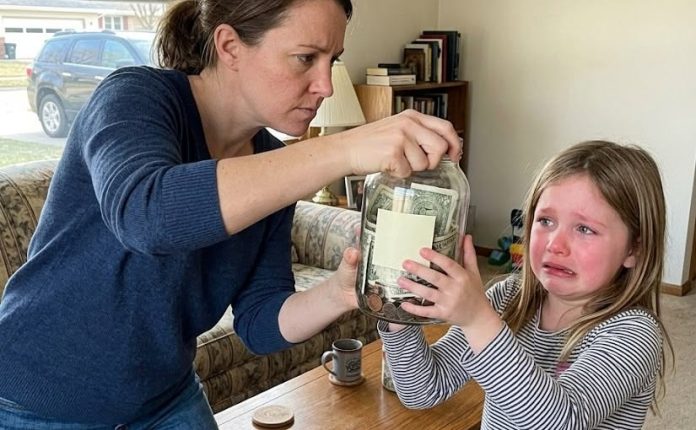
My mother-in-law shaved my 8-year-old daughter bald and blocked the door so I couldn’t leave. My husband said it was “discipline.” I said nothing—I just took our daughter to the doctor, then to a lawyer.
When I picked Meadow up that Tuesday afternoon, I expected the usual things.
A sticky face from too much candy, shoes kicked off somewhere they didn’t belong, maybe another lecture from Judith about how children needed more structure and parents these days were too soft.
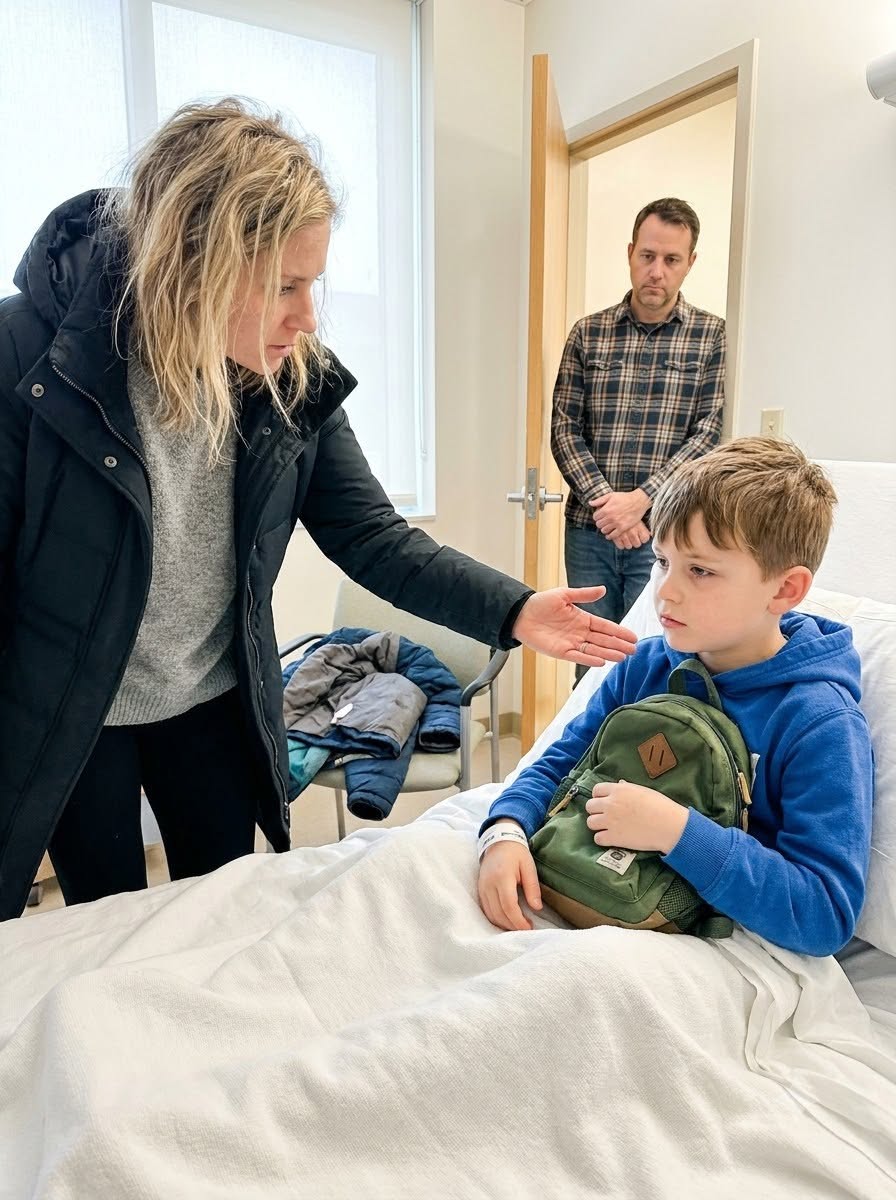
Image
Judith had opinions about everything.
How Meadow dressed. How late she stayed up on weekends. How much time she spent drawing. How often I let her choose what she wanted for breakfast.
Most of it had always been irritating rather than frightening, and I had spent years telling myself that tolerating an overbearing grandmother was easier than creating another fight inside my marriage.
That afternoon changed the meaning of every excuse I had ever made.
The house felt wrong before I even reached the guest room.
There was no television playing, no sound of Meadow moving around, no little voice calling for me from the hallway.
Then I stepped into the room and saw her sitting on the floor with her knees pulled tightly against her chest.
For a second, I could not understand what I was looking at.
Meadow’s long golden hair—the hair she had been growing since preschool—was everywhere.
It covered the carpet in uneven piles.
Strands clung to the front of her shirt and wrapped around her bare feet.
Her scalp was covered in rough, uneven stubble, and the skin near one ear was bright red where the blade had caught her.
She looked smaller without her hair.
Not younger exactly.
Exposed.
Her hands were pressed against the sides of her head as though she could somehow hide what had happened if she held herself tightly enough.
Judith was standing behind me.
She was still holding the clippers.
That detail stayed with me because it made everything impossible to misunderstand.
This was not a terrible accident I had walked in on.
Nobody had made a mistake and panicked.
Judith had done it, finished doing it, and was still standing there with the object in her hand.
Meadow looked up at me and tried to speak.
Nothing came out.
Her mouth opened, then closed, and her whole body started shaking.
Judith showed no embarrassment and no uncertainty.
She looked satisfied, almost relieved, like she had finally corrected something the rest of us had been too weak to address.
“She was getting vain,” she said. “Girls who stare in mirrors need humility.”
I dropped to my knees.
I remember crawling through my daughter’s hair to reach her because standing up suddenly felt impossible.
The strands stuck to my palms as I pulled her against me.
Meadow’s body trembled so hard that her teeth clicked together.
I kept one hand behind her neck and the other around her back, trying not to touch the red skin near her ear.
Judith continued explaining herself as though the explanation mattered more than the child shaking in my arms.
She said Meadow had been spending too much time brushing her hair.
She said she had become too proud of it.
Then Judith told me she had already spoken to Dustin, my husband.
She had called him at work.
According to her, Dustin had told her to do whatever she thought was best.
I wanted to believe she was lying.
Even then, with Meadow’s hair covering the floor and the clippers still in Judith’s hand, some part of me reached desperately for the possibility that my husband had not approved this.
Then Meadow whispered something against my shirt.
“Daddy said Grandma knows best.”
That sentence split my marriage open before Dustin even walked through our door that night.
I stood with Meadow in my arms and headed for the front entrance.
Judith followed us through the hallway, telling me I was being dramatic.
She said Meadow would be fine.
She said I was making the situation worse by reacting emotionally.
When I reached the doorway, Judith stepped in front of it and crossed her arms.
“You are not taking her anywhere while you’re acting like this.”
Meadow buried her face against my shoulder.
Her tears soaked through my shirt.
I looked at Judith.
“Move,” I said.
She gave me a small, dismissive smile.
The clippers were still hanging from her hand.
“Hair grows back.”
“Move.”
I didn’t yell.
Maybe that was why she finally listened.
Something in my voice must have told her that the argument she expected was not going to happen.
She stepped aside.
I carried Meadow through the doorway, down the driveway, and into the car.
I buckled her in myself even though she had been doing it on her own for years.
Her hands would not stop shaking.
She stared down into her lap for the entire drive.
My daughter did not speak again that day.
She barely spoke for the next two days.
Even though it was May, she slept in a winter hat.
The first night, I thought she might take it off once she fell asleep.
She didn’t.
The next morning, she came to breakfast with the hat pulled low over her ears.
I made her favorite strawberry pancakes because I needed to do something ordinary for her.
Something familiar.
Something that said home was still home.
She pushed the plate away without taking a bite.
Then she started drawing.
She drew the same picture over and over: a small girl with no hair crying beside a woman with enormous arms.
I stopped trying to convince myself that this was simply about hair.
Hair might grow back.
Whatever Meadow was trying to process was not going to disappear because time passed.
I took her to her pediatrician.
The doctor examined the redness and the small cuts around Meadow’s scalp carefully.
She photographed what she observed and documented Meadow’s reactions.
She asked questions in a calm voice and did not pressure Meadow when she struggled to answer.
I sat beside my daughter and watched a medical professional treat the situation with a seriousness that my own husband had apparently refused to give it.
Then the doctor used the words I had been too stunned to say myself.
Abuse.
Trauma response.
Mandatory report.
Those words changed the shape of the problem.
Until then, part of me had still been thinking like a wife trapped inside a family argument.
Judith had done something cruel.
Dustin had supported her.
I was furious.
But hearing the doctor speak forced me to see the situation from a different position.
I was Meadow’s mother before I was Dustin’s wife.
The question was no longer how to keep peace in our marriage.
The question was what Meadow needed me to do next.
That afternoon, I called my sister Francine, who worked for a family law firm.
I told her everything.
I told her about the clippers.
The blocked doorway.
Dustin’s approval.
Meadow’s silence.
The drawings.
The red skin near her ear.
Francine did not tell me to calm down.
She did not suggest waiting until Dustin came home so the three adults could discuss it privately.
She told me to photograph every mark, save the medical notes, preserve every message, and pack the things Meadow needed most.
Her voice was steady, practical, almost painfully ordinary.
Then she asked me one question.
“What are you willing to lose?”
I looked across the room at Meadow.
She was wearing a soft pink hat pulled low over her ears and holding her purple elephant against her chest.
She had carried that toy since she was three.
It had been dragged through grocery stores, car rides, sick days, and bedtime battles.
Usually she held it by one floppy leg.
That afternoon, both arms were wrapped around it.
Her fingers gripped the fabric so tightly that it folded beneath them.
I knew my answer.
Everything except my child.
I packed only what mattered immediately.
Clothes for Meadow.
Her school things.
The purple elephant.
The winter hat she suddenly could not sleep without.
My own belongings felt strangely unimportant.
I wasn’t thinking about what would happen to the house or how Dustin would explain our absence to anyone.
For once, I wasn’t thinking about keeping things comfortable for everybody else.
By the time Dustin came home, Meadow and I were gone.
His calls started almost immediately.
At first he was angry.
He wanted to know where I had taken her.
He said I had overreacted.
He said I had humiliated his mother by leaving without discussing it.
Then his tone changed.
He became offended that I would treat him as though he had done something wrong.
After that came concern—but not the kind I had been waiting to hear.
He worried about what people would think.
He worried about how serious I was making the situation look.
He worried that involving doctors and lawyers would turn a family matter into something bigger.
He never asked whether the cuts on Meadow’s scalp hurt.
He never asked why she had stopped talking.
He never asked why an 8-year-old girl was sleeping in a winter hat in May.
He kept repeating one sentence.
“Mom was trying to help.”
The first few times he said it, I argued.
I told him what the doctor had observed.
I reminded him that his mother had physically blocked me from leaving with our daughter.
I told him Meadow had repeated his own words to me.
He always returned to the same defense.
His mother had meant well.
His mother believed children needed discipline.
His mother had raised him and knew what she was doing.
Eventually I stopped answering the argument.
Intent did not change what Meadow had experienced.
Friday morning came faster than I expected.
I sat in a family court hearing with a folder resting on my lap.
Inside were photographs of Meadow’s scalp, the doctor’s notes, copies of Dustin’s messages, and our request for temporary protection while the situation was reviewed.
The folder felt heavier than paper should have felt.
Every page represented something I wished had never happened.
Meadow sat beside me in her pink hat.
Her purple elephant was tucked beneath the table, held against her legs.
She was quiet, but she was watching everything.
That mattered to me.
Whatever happened in that room, I wanted her to see one thing clearly: I was there beside her.
Then Dustin entered with Judith.
I had imagined that moment many times since leaving the house.
Some foolish part of me had wondered whether seeing Meadow again would finally change him.
Maybe he would see the hat.
Maybe he would see how tightly she was holding her toy.
Maybe he would sit near his daughter and realize that defending his mother had cost him something far more serious than an argument with his wife.
There were open seats near Meadow.
There was room beside his attorney.
There was an empty chair between the two sides.
Dustin walked past every one of them.
He sat beside his mother.
Then he placed one hand on Judith’s shoulder as though she were the person in that room who needed reassurance.
I watched Meadow notice.
She did not say anything.
Her fingers tightened around the purple elephant beneath the table.
That small movement hurt more than anything Dustin could have said to me.
It also clarified something I had been struggling to accept.
This was not a misunderstanding between a wife and a husband over how to handle an overbearing grandmother.
Dustin had been given repeated chances to look directly at what had happened to his daughter.
Each time, he had chosen to protect his mother’s intentions instead.
The hearing began.
The judge opened our file.
She studied the first photograph.
Then the second.
Her expression remained controlled.
 No dramatic reaction crossed her face.
She simply kept reading.
I found myself watching her hands more than anything else, following each page as she turned it.
The room felt smaller with every photograph she reviewed.
Dustin sat beside Judith.
Judith remained upright, composed, still carrying herself with the certainty of someone who believed the entire situation had been exaggerated by an emotional mother.
Meadow kept her hat on.
Then the judge reached the photograph showing the red marks near Meadow’s ear.
She stopped turning pages.
For the first time that morning, the stillness in the room felt different.
Not theatrical.
Focused.
The judge lifted the photograph slightly and looked directly at Dustin.
I turned toward him too.
He had spent three days telling me that his mother had been trying to help.
He had defended the haircut as discipline.
He had worried about appearances before he worried about Meadow’s silence.
And when he entered that room, he had chosen the seat beside Judith instead of the seat near his daughter.
Now none of those explanations were being filtered through me.
Nobody was asking whether I was too emotional or whether I had misunderstood his mother’s intentions.
The photograph was in front of him.
The medical notes were in the file.
His messages were preserved.
Meadow was sitting only a few feet away in a pink hat she refused to remove.
The judge held the photograph showing the marks near Meadow’s ear and asked my husband one question.
The entire room went silent.
No dramatic reaction crossed her face.
She simply kept reading.
I found myself watching her hands more than anything else, following each page as she turned it.
The room felt smaller with every photograph she reviewed.
Dustin sat beside Judith.
Judith remained upright, composed, still carrying herself with the certainty of someone who believed the entire situation had been exaggerated by an emotional mother.
Meadow kept her hat on.
Then the judge reached the photograph showing the red marks near Meadow’s ear.
She stopped turning pages.
For the first time that morning, the stillness in the room felt different.
Not theatrical.
Focused.
The judge lifted the photograph slightly and looked directly at Dustin.
I turned toward him too.
He had spent three days telling me that his mother had been trying to help.
He had defended the haircut as discipline.
He had worried about appearances before he worried about Meadow’s silence.
And when he entered that room, he had chosen the seat beside Judith instead of the seat near his daughter.
Now none of those explanations were being filtered through me.
Nobody was asking whether I was too emotional or whether I had misunderstood his mother’s intentions.
The photograph was in front of him.
The medical notes were in the file.
His messages were preserved.
Meadow was sitting only a few feet away in a pink hat she refused to remove.
The judge held the photograph showing the marks near Meadow’s ear and asked my husband one question.
The entire room went silent.