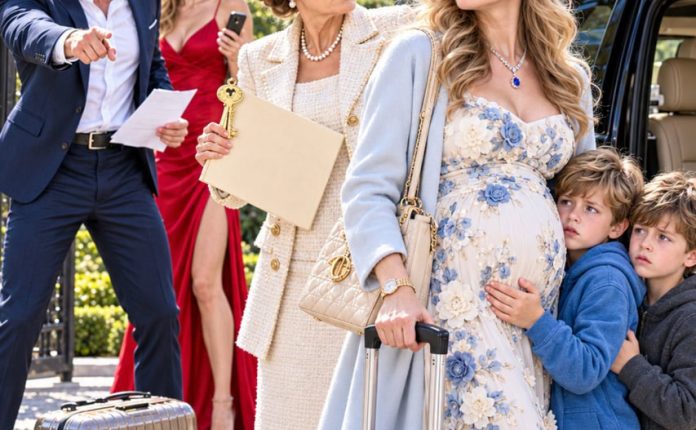
I didn't answer his question.
Tessa stood beside the doorway with the expression of someone prepared to end the conversation for me.
“I need to stop,” I told Dad.
“You can't leave this—”
I ended the call.
My hand shook so badly that I set the phone down with both hands.
Grandma closed her notebook.
“You don't have to decide everything this morning.”
“They used my signature.”
“I heard.”
“He said it like he borrowed a stapler.”
She put her palm against the blanket near my knee.
“Let somebody whose heart is behaving properly handle the next part.”
Tessa adjusted the bed and asked me about pain, dizziness, breathing. She checked my blood pressure. I answered carefully.
Nothing about that conversation had changed the fact that I was sick.
That became the first practical boundary I set.
I told Daniel I would give Leah twenty minutes after lunch, with Grandma present. Anything longer would wait.
He replied within a minute.
Take the time you need. Funds remain blocked.
I read the second sentence twice.
When Leah called, she didn't begin by asking what I wanted to do to Mason.
She asked what I had approved.
“The trip as travel within his existing budget,” I said. “Not the supply agreement. Not an advance. Not a guarantee.”
“Do you have that distinction in writing?”
“An email after our meeting. Rachel was copied.”
Leah found it while we spoke.
I heard keys clicking.
“Yes. You say no binding commitment pending review of the complete terms.”
“That's what I meant.”
“And that's what it says.”
She asked whether I recognized the source of the signature.
I enlarged it on the tablet.
There was a tiny ink dot just above the last letter. I hadn't noticed it earlier.
I knew that dot.
In January, I had signed a foundation grant acknowledgment on thick paper with a fountain pen Dad kept in his office. The pen had leaked.
Rachel scanned the form into our shared executive folder because it supported a company donation.
“The literacy foundation acknowledgment,” I said.
Leah asked Daniel to locate the scan without altering it.
Then she explained what would happen next.
Records would be preserved. Outside counsel would review the authority issues. The supplier would receive notice that I disputed the consent. IT would secure the relevant accounts and preserve logs before making changes.
“Don't send accusations to Bellandi yourself,” she said. “We need one accurate communication.”
“Are we already bound?”
“I can't answer that from one attachment. We'll review every document and what they were told. The immediate objective is to stop more exposure.”
I appreciated her refusal to comfort me with something she hadn't established.
“What about Mason?”
“His transaction access can be suspended while this is reviewed. Your father holds a different role. We need the board involved.”
Our board had five seats.
Dad and I held two. Grandma held the third. Nora Singh, a retired banker, and Owen Bell, a construction executive with no family connection, held the remaining seats.
Dad liked to call them advisers until they voted.
Leah served as company counsel and kept the board's records. She wasn't a director.
“Tell them,” I said.
“Only the medical information necessary to arrange your participation?”
“Yes.”
Grandma nodded.
The distinction mattered. My heart condition was becoming public family property without my consent. I wanted at least one room where it remained mine.
That afternoon, Dad called Leah.
I learned about it from her written summary, which she sent to all five directors.
He described a disagreement over the timing of an approval and said I was emotionally distressed.
Leah recorded his description without adopting it.
She also recorded that I denied authorizing the consent.
At the bottom, she requested an emergency board meeting.
Mason called me just after dinner.
I let it ring.
He sent a message.
Dad says you're making this legal.
I placed the phone on the tray.
A second message followed.
You know what this will do to me.
Grandma was peeling an orange. She removed the white strands with patient attention, laying each one on a napkin.
“I used to help him with homework,” I said.
“I remember.”
“He would leave it until Sunday night. Mom would ask me to sit with him because I was good at explaining things.”
Grandma placed half the orange on my plate.
“One time he copied my entire history assignment. Dad said I should be pleased he trusted my work.”
She looked up.
“I didn't know that.”
“I thought it was funny afterward.”
“Was it?”
I couldn't remember.
By evening, the family had booked a flight.
Mom texted the itinerary as if it answered every question.
We’re coming home. Please don’t do anything until we can talk together.
I asked whether she knew about the consent.
She didn't answer for forty minutes.
Then she wrote that she had only wanted everyone to have a chance to explain.
I put the phone away.
The next morning, Daniel called during the period Tessa had allowed for business.
The advance remained unpaid. Earlier expenses did not.
Mason had arranged four separate payments totaling eighty-six thousand dollars for reservation and project preparation costs. Each fell beneath the threshold that would have prompted a higher approval.
The payments had gone to Bellandi through ordinary company channels.
“Are they real charges?” I asked.
“The supplier confirms receiving them. We're still examining why they were split and who authorized the instructions.”
“Can we recover them?”
“Possibly some. I won't promise all.”
My stomach tightened.
We employed sixty-eight people. Eighty-six thousand dollars wasn't an abstract punishment in a family argument. It was money earned by people who arrived before daylight and kept their boots in their cars.
“Keep payroll and the project accounts protected.”
“They are.”
“Is anyone blaming you?”
Daniel paused.
“Your father suggested I was interfering with a strategic relationship.”
“Send that to Leah.”
“I already did.”
I leaned back against the pillow.
“You shouldn't have had to stand there alone.”
“I wasn't alone. There was a policy.”
He said it without drama.
I had helped write that policy after the refinancing, when Dad insisted formal controls were unnecessary among people who trusted one another.
That afternoon, Rachel came back.
She had been interviewed by outside counsel, and she looked frightened.
“Am I in trouble?” she asked.
“What happened?”
“Mason asked me for the foundation form two days before the ceremony. He said Bellandi wanted examples of our charitable work for a company profile.”
“Did you send it?”
“The PDF. It was already in the executive folder. I didn't think—”
I stopped her.
“You sent an existing company document in response to a company request.”
“He asked whether there was a clean version with the signature clearly visible.”
Her voice broke.
“And I found it.”
I moved the tissue box toward her.
“Tell counsel exactly that.”
“I feel stupid.”
“You didn't put my name on a different agreement.”
She pressed a tissue beneath each eye, careful not to smear her mascara.
“There was an email afterward. From your father. He thanked me for helping Mason move quickly.”
“Did you preserve it?”
“Yes.”
“Good.”
When she left, Grandma watched the door close.
“You were kinder to her than you are to yourself.”
“I know.”
“Try learning from that.”
The family arrived in Nashville the following afternoon.
I knew because Mom sent a photograph from the airport, a habit she had when she wanted us all to admire how busy she was.
Then she asked for my room number.
I told her visits needed to be arranged through the nurse.
It took her only a minute to call.
“Claire, we're your parents.”
“I know who you are.”
“You're putting us on a visitor list?”
“I'm limiting stressful conversations.”
“Your father has barely slept.”
I looked toward Grandma, who was rubbing the heel of one foot with her thumb.
“Neither has your mother.”
Mom stopped speaking.
I permitted her to visit alone for fifteen minutes.
Dad and Mason would communicate through counsel about the transaction.
When she arrived, she carried an enormous arrangement of white flowers.
The vase required both hands.
For a moment, I felt sorry for her. She stood there beneath the fluorescent light, holding something too large to put anywhere.
Tessa found a place near the window.
Mom came to the bed.
“You look pale.”
“I've been sick.”
Her eyes filled.
“I know.”
“Did you know Thursday night?”
She took off her coat slowly.
“The hospital said you were stable.”
“After a serious cardiac event.”
“Yes.”
“Why didn't you come?”
She folded the coat over her arm.
“Mason had the meeting Friday morning. Your father thought we should finish what we'd gone there to do.”
“And you?”
She looked at the floor.
“I went along.”
There it was. A small, plain sentence after days of explanations.
I let it remain in the room.
She sat.
“We shouldn't have posted that photograph.”
“The photograph isn't why you weren't here.”
“I know.”
I wasn't certain she did, but I didn't argue.
After a minute, she reached for my hand.
I let her hold it.
Then she said, “Your father is afraid this investigation will ruin Mason.”
I withdrew my hand.
Her face changed.
“I wasn't asking you to—”
“You came here with his fear.”
“He's my son.”
“I'm your daughter.”
She made a small sound and covered her mouth.
Grandma stood, picked up Mom's coat, and waited.
The fifteen minutes were over.
After she left, I cried with my face turned toward the window. Grandma didn't talk. She moved the flowers so they didn't block the daylight.
That evening, Leah brought documents.
She wore a plain gray jacket and carried a folder with colored tabs. Before opening it, she asked if I had enough energy.
“Tell me what I need to know. Leave what can wait.”
The copied signature matched the foundation scan, including the ink dot. The approval attachment had been assembled from a file accessed through Mason's company account.
The draft had then been sent to Dad.
Dad had replied.
Looks fine. Send Daniel what he needs.
I read the line without speaking.
“We have more to review,” Leah said. “This establishes participation. We aren't going to guess beyond the records.”
“What does Bellandi say?”
“They're cooperating through their counsel. They say Mason represented that the shareholder approval was complete. They treated the advance as pending final verification.”
“So they didn't know?”
“Nothing we've seen suggests they knew the consent was unauthorized.”
Bellandi wasn't a villain hiding in Italy. It was a supplier that had been promised a large order by people wearing our company's name badges.
That made the situation harder to dismiss and easier to understand.
Mason had wanted the announcement.
Dad had wanted Mason to have it.
My refusal had become an obstacle they intended to remove without asking me.
Leah turned to another tab.
Dad had circulated a briefing to several investors, our principal lender, and two project partners while Daniel was blocking the payment.
The briefing described the Bellandi partnership as ready to launch.
It attributed the delay to my sudden medical unavailability and a temporary interruption in executive decision-making.
“That's not accurate,” I said.
“No.”
“He knew I'd refused before I became ill.”
“Yes.”
I studied the list of recipients.
Some had been in the ballroom. Some had called Rachel to ask about me.
Now they had been told that my absence, rather than a missing authorization, was jeopardizing a completed deal.
“Can we correct it?”
“We should. After the board has the facts and approves the response.”
For the first time since waking, I felt something more solid than hurt.
A decision.
I didn't want to spend the next year explaining privately what Dad had misstated publicly.
The correction needed to go where the claim had gone.
The board meeting was scheduled for the next afternoon, with remote attendance available. My cardiologist approved a short period of participation, provided I stopped if symptoms returned.
Nora would chair the discussion of the transaction. Dad would not lead an inquiry into his own conduct.
He objected by email.
Owen replied that this was appropriate.
Grandma read the message, adjusted her glasses, and said, “Well, he can object from his own chair.”
That night, Mason finally reached me because I answered an unfamiliar local number.
“Don't hang up.”
I recognized his voice immediately.
“Why are you using another phone?”
“Because you won't talk to me.”
“This isn't a good time.”
“It never is when I need something.”
The old accusation arrived so easily that I almost apologized.
Then I looked at the tablet.
“What happened to my signature?”
“I was going to tell you.”
“When?”
“After we got the terms locked.”
“You used it before asking.”
“Dad said it was provisional.”
“Was it labeled provisional?”
He didn't answer.
“Mason.”
“I thought you'd be happy when you saw the opportunity.”
“No, you thought I'd be unable to stop it once you'd announced it.”
His breathing became louder.
“You always have to make me sound pathetic.”
I rubbed the edge of the hospital blanket between my fingers.
“You're responsible for what you did. I'm responsible for telling the truth about it.”
He said I didn't understand the pressure he was under.
For the first time, I didn't ask him to explain.
I ended the call.
The following morning, Bellandi's counsel provided the complete correspondence.
Leah phoned before sending it.
“There is one message I don't want you finding alone.”
Grandma moved beside me.
The message was from Dad to Bellandi's commercial director. It had been sent after the hospital reached him.
I checked the time against my admission record.
Then I read it.
Claire cannot participate from hospital. Use the signed consent already supplied. We will bring her around when she is able to discuss it.
Beneath that was Bellandi's response.
They required confirmation that the consent represented valid approval before accepting the advance and treating the larger arrangement as finalized.
Dad had not supplied that confirmation.
He had called me instead.
Seventy-three missed calls, beginning when people on both sides of the transaction stopped accepting his assurance.
Grandma read the message without moving.
Then she asked Leah to include it in the board packet.
Dad sent her a text while we were still on the call.
Mom, I need your support tomorrow. We can’t let Claire’s resentment destroy what I built.
Grandma held the screen where I could see it.
Then she opened her notebook to a clean page.
END PART 2