The house became unnaturally quiet after Grant disappeared onto Interstate 40.
Judith sat in the living room clutching a rosary.
I stayed near the kitchen island with my phone in my hand.
Every few minutes I refreshed the vehicle tracker.
Seventy-eight miles per hour.
Seventy-one.
Sixty-nine.
Then eighty-one.
Grant had always driven like rules were written for people less important than him.
I called again.
Straight to voicemail.
“Grant, pull over. Right now. I know something was done to the tires. I have already contacted the police. Do not keep driving.”
That was all I said.
I refused to warn him that his own mother had tried to kill me.
Not while he was behind the wheel.
Not with Tessa and a child inside the car.
Judith heard the voicemail.
She looked up.
“You called the police?”
“Yes.”
Her rosary stopped moving.
“You didn’t tell them—”
“I told them the car may have been deliberately tampered with.”
Her face collapsed.
“Marissa…”
“You had a chance to tell your son.”
“I panicked.”
“You had another chance when he took the keys.”
“I couldn’t.”
“You mean you wouldn’t.”
She began crying.
I felt no satisfaction.
I wanted to.
After everything she had done, I wanted to look at her and feel victorious.
Instead, I felt sick.
Twenty minutes later, Grant’s location stopped moving.
At first I thought he had listened.
Then I zoomed in.
The car was not at a gas station.
It was not at a rest area.
It was on a stretch of highway near Black Mountain.
Then the tracker went offline.
Judith saw my expression.
“What happened?”
“I don’t know.”
“Call him.”
“I have.”
“Call again!”
I did.
Nothing.
At 11:08 a.m., my phone rang from an unfamiliar North Carolina number.
“Mrs. Caldwell?”
“Yes.”
“This is Sergeant Mason with the North Carolina State Highway Patrol. Are you the registered owner of a white Mercedes sedan?”
My knees weakened.
“Yes.”
“There has been a serious crash near the mountain section east of Asheville.”
Judith stood.
Her hands began shaking.
The officer continued.
“The vehicle appears to have suffered a front tire failure before leaving the roadway. Emergency crews are currently accessing the scene.”
“How many people?”
There was a pause.
“Three occupants.”
I closed my eyes.
“A man, an adult woman, and a young boy.”
Judith made a noise behind me.
“Are they alive?”
“We need you to come to Mission Hospital in Asheville. I don’t want to give you information before the medical team has confirmed identities.”
I understood what that meant.
The drive to Asheville took less than two hours.
It felt like two days.
Judith sat beside me in the back of a hired SUV, alternating between prayer and denial.
“Grant is strong.”
I said nothing.
“He played football in college.”
Silence.
“He’ll survive.”
Finally, I looked at her.
“You are still talking as if strength matters against a tire you cut open with a knife.”
She turned toward the window.
When we reached the hospital, a trauma surgeon met us.
Grant had survived.
Barely.
The Mercedes had crossed the shoulder, broken through a guardrail, rolled down an embankment, and struck trees below.
Grant suffered a severe spinal cord injury, traumatic brain injury, multiple fractures, and internal injuries.
He was alive.
But the surgeon warned that he might never walk again.
Tessa died shortly after arriving.
Caleb died at the scene.
Judith collapsed.
Her knees hit the hospital floor.
“No.”
The surgeon reached for her.
She screamed.
“My grandson!”
Something inside me twisted.
A child was dead.
Whatever Tessa had done, whatever Grant had done, Caleb was innocent.
Judith grabbed my sleeve.
“You knew!”
Her grief changed direction in seconds.
“You knew the car was dangerous!”
I stared at her.
“You knew better than anyone.”
“You gave him the keys!”
“He took them.”
“You should have stopped him!”
“I tried.”
“Not hard enough!”
People turned toward us.
I lowered my voice.
“You stood six feet away while your son drove off in a car you sabotaged.”
Her mouth opened.
Nothing came out.
Then the elevator doors opened.
Four people rushed into the hallway.
Tessa’s mother recognized me immediately.
“You!”
She lunged.
A security guard stopped her.
“You killed my daughter!”
Tessa’s father followed behind her, red-faced.
“My grandson is dead because of your family!”
Within minutes, the hallway turned into chaos.
Accusations.
Threats.
Money.
Lawsuits.
Tessa’s mother screamed that Grant had promised to marry her daughter and provide for Caleb.
Her father demanded compensation.
Judith suddenly found her voice.
“Your daughter destroyed my son’s marriage!”
Tessa’s mother spun toward her.
“Your son chased her!”
“He loved his child!”
“He wasn’t even divorced!”
“He was going to be!”
I stood between them.
“Enough.”
Both women stared at me.
I had spent ten years being the calm person in every crisis.
That day, calm became something else.
Power.
“Tessa and Caleb are dead,” I said. “Grant may never walk again. Screaming in a hospital hallway will not change any of it.”
Tessa’s father pointed at me.
“You think because you have money you can walk away? Caleb was Grant’s son. That child had inheritance rights.”
I looked directly at him.
“Are you sure about that?”
His face changed.
Only slightly.
But I saw it.
Three weeks earlier, while quietly preparing to divorce Grant, a man named Dylan Reese had contacted me through my attorney.
He claimed Tessa had been lying to Grant.
And he had proof.
At the time, I thought it was merely another piece of an ugly divorce.
Now it was about to become the second bomb to explode inside that hospital.
PART 3 — THE HEIR WHO WASN’T HIS
Dylan Reese had dated Tessa before Grant.
According to the messages he gave my attorney, their relationship had continued intermittently long after Tessa began seeing my husband.
Dylan also claimed Caleb was his biological son.
At first, I assumed he was angry.
Then Dana obtained a copy of a privately commissioned paternity test Dylan and Tessa had taken during a child-support dispute.
The result was clear.
Dylan Reese was Caleb’s biological father.
Not Grant.
I had the authenticated report in my email because Dana had sent it to me two days before Judith tried to kill me.
Standing in that hospital hallway, I opened it.
Tessa’s father watched my hands.
“What is that?”
“Something your daughter knew.”
Judith stepped closer.
“Marissa?”
I turned my screen toward them.
The report displayed the names.
The probability of Dylan’s paternity was above 99.9 percent.
Judith stared at it for a long time.
“No.”
Tessa’s mother shook her head.
“That’s fake.”
“It was created before the accident.”
“You made it!”
“Then challenge it in court.”
Her husband grabbed her arm.
“Stop.”
Judith looked at me.
Her face had become strangely blank.
“Caleb wasn’t Grant’s?”
“No.”
“But Tessa told me…”
“Tessa told everyone what benefited Tessa.”
Judith backed into the wall.
For months, she had treated that little boy as a symbol.
The Whitmore heir.
The grandson who would “continue the family.”
The child she believed justified replacing me.
She had planned my death so Grant could bring Tessa and Caleb into our home.
Now Caleb was dead.
Grant was critically injured.
Tessa was dead.
And the fantasy Judith had killed for had never been real.
She slid down the wall.
“What have I done?”
I heard her whisper it three times.
“What have I done?”
I could not answer.
A nurse approached me twenty minutes later.
Grant had regained consciousness.
He could not speak clearly because of his injuries, but he could understand.
I went into the intensive care unit alone.
The sight of him stopped me at the doorway.
The man who had strutted out of our house that morning was gone.
Grant lay beneath white sheets, surrounded by monitors.
A rigid brace held his neck still.
His face was swollen.
Tubes ran into his arms.
His eyes found mine.
For one second, I saw my husband.
Not the liar.
Not the man who humiliated me.
Just the person I had married at twenty-six.
He began crying.
I pulled a chair beside him.
“I warned you.”
His eyelids lowered.
“You should have listened.”
His lips moved.
I leaned closer.
“Tessa?”
I understood.
“She died.”
His eyes squeezed shut.
Then he tried again.
“Caleb?”
My throat tightened.
“He died too.”
The monitor accelerated.
I waited until he calmed.
Then I said, “There is something else you need to know.”
I showed him the paternity report.
He stared at it.
Then at me.
Then back at it.
A tear ran down his cheek.
“Caleb wasn’t your biological son.”
His chest rose sharply.
I hated what came next.
But I knew secrets had already destroyed enough.
“The crash wasn’t a random mechanical failure either.”
His eyes widened.
“Your mother cut the tires last night.”
He stared at me as if he had misunderstood.
“I saw her.”
I took out my phone.
“I recorded her.”
Grant’s eyes moved toward the door.
Judith was somewhere outside.
“She thought I would be driving to Asheville. She wanted me dead so you could bring Tessa and Caleb into our house.”
His face twisted.
For the first time, Grant looked truly terrified.
“She tried to stop you this morning because she knew what she had done. But she was too afraid to confess.”
Grant started shaking.
The heart monitor alarm sounded.
A nurse entered immediately.
“You need to step out.”
I stood.
Grant’s eyes followed me.
I had almost reached the door when a broken sound came from his throat.
“Mar…”
I turned.
I think he was trying to say my name.
I walked out anyway.
Two state troopers were waiting in the hallway.
One introduced himself as Detective Aaron Bell from the highway patrol’s criminal investigation unit.
“Mrs. Caldwell, we need to discuss your vehicle.”
My entire body went cold.
He continued.
“The front driver-side tire showed evidence of deliberate cutting. This was not ordinary road damage.”
Judith lifted her head from across the hallway.
Detective Bell noticed.
“Did anyone have access to your car last night?”
Before I could answer, Judith stood.
“She did!”
Everyone looked at her.
Judith pointed at me.
“Marissa knew her husband was cheating. She hated him.”
I almost laughed.
Not because anything was funny.
Because I finally understood who she was.
Even after killing a child.
Even after destroying her son.
Even after learning the “grandson” she worshiped was not her grandson at all…
Judith still chose herself.
Detective Bell looked at me.
“Mrs. Caldwell?”
I unlocked my phone.
“I have a video.”
Judith stopped breathing.
I handed the detective the device.
He pressed play.
The hallway became silent.
There she was.
Judith Whitmore.
Cream robe.
Kitchen knife.
My Mercedes.
Her own voice whispering from the speaker:
“Once you’re gone, Grant can bring them home.”
Judith’s knees gave out.
The detective watched the entire recording.
Then he looked at her.
“Mrs. Whitmore, do you want to explain what we just saw?”
Judith began sobbing.
“I wasn’t trying to hurt Grant.”
The detective’s expression hardened.
Judith realized too late what she had admitted.
“I meant Marissa.”
Nobody spoke.
She covered her mouth.
But the words were already out.
PART 4 — THE HOUSE OF LIES COLLAPSES
Judith was taken from the hospital in handcuffs.
Her final words to me were not an apology.
“Please take care of Grant.”
I watched the elevator doors close.
Then I turned toward the ICU and realized that in less than twelve hours, the family I had spent a decade protecting no longer existed.
Police searched our house that afternoon.
They recovered the knife from the dishwasher.
Judith had apparently washed it before breakfast, believing that would erase what she had done.
Investigators also recovered garage surveillance footage showing her entering shortly before two in the morning.
My phone recording captured the rest.
The case became devastatingly simple.
Her target had been me.
Her actions killed two other people and catastrophically injured her own son.
Under the legal advice of her defense attorney, Judith eventually stopped pretending the cuts were accidental.
The charges were severe.
Attempted murder.
Two homicide counts connected to the deaths.
Aggravated assault resulting in serious injury.
Criminal damage.
Her attorney later negotiated a plea to avoid the possibility of dying in prison under an even harsher sentence.
While Judith sat in jail, I began dismantling the financial disaster Grant had hidden from me.
Tessa had received more than $240,000 from him over three years.
Apartment payments.
A leased SUV.
Vacations.
Designer purchases.
Daycare.
A brokerage account supposedly established “for Caleb.”
Most of that money had come from marital accounts.
Some of it came from a line of credit secured against property I had helped purchase.
Grant had not merely cheated.
He had been quietly financing a second life with money I earned.
Tessa’s parents stopped threatening lawsuits once my attorney showed them the paternity evidence and the financial trail.
Dylan Reese came forward voluntarily.
He identified Caleb at the morgue.
That was one of the hardest details for me to process.
A three-year-old boy had been turned into a bargaining chip by adults.
Grant used him to imagine himself younger and admired.
Tessa used him to secure money.
Judith used him to justify hatred.
In the end, Caleb paid the price.
I paid for his funeral anonymously.
Nobody knew except Dana.
I did it because somebody needed to treat him like a child instead of evidence.
Grant spent six weeks in intensive care and another four months in rehabilitation.
His cognitive function improved considerably.
His body did not.
He regained limited movement in one arm and some control in his neck, but doctors told him he would need extensive assistance for the rest of his life.
By then, I had filed for divorce.
People asked me later if that felt cruel.
It did not.
Marriage is not a life sentence imposed on the betrayed spouse because the person who betrayed them became disabled.
I arranged appropriate medical coverage during the divorce proceedings.
I also ensured Grant’s portion of the marital estate could support long-term care.
But I was done being his wife.
Seven months after the crash, I visited him at a rehabilitation residence outside Winston-Salem.
He was sitting in a motorized wheelchair facing a window.
When I entered, his eyes shifted toward me.
He could speak a few words now.
Slowly.
Painfully.
“Marissa.”
“Hi, Grant.”
He looked older.
Not physically.
Internally.
I sat across from him.
“The divorce was finalized this morning.”
His eyes closed.
“I know.”
“I came because there are some things I wanted to say without lawyers in the room.”
He waited.
“I don’t hate you.”
A tear appeared in his eye.
“But that does not mean I forgive what you did in the way you want me to.”
He swallowed.
“I’m… sorry.”
“I believe you are.”
His face broke.
“I was stupid.”
“You were selfish.”
He nodded.
“Tessa…”
“I know.”
“I thought…”
“That she loved you?”
A long silence.
“Yes.”
“Maybe part of her did. People are complicated.”
He looked down.
“My mother?”
“Still awaiting sentencing.”
He shut his eyes.
“She did it… for me.”
“No.”
I leaned forward.
“She did it because she believed your happiness mattered more than my life. Don’t romanticize that.”
He began crying.
I let him.
Then Grant whispered something I almost didn’t hear.
“You saved me.”
I frowned.
“No.”
“You called.”
“The police?”
He nodded.
I understood.
Investigators had told him that after he refused my calls, I contacted emergency dispatch.
Troopers had been trying to locate the Mercedes when the crash happened.
“That didn’t save you.”
“You tried.”
“Yes.”
He looked at me.
“Why?”
That question stayed between us.
Why warn the man who had cheated on me?
Why try to save him after his mother tried to kill me?
Because betrayal did not get to decide my character.
“I didn’t want your death on my conscience.”
Grant lowered his eyes.
I stood.
At the doorway, he spoke again.
“Marissa.”
I turned.
“If I had listened…”
“You didn’t.”
He flinched.
It was harsh.
But true.
I left him there with the one thing money, charm, and apologies could never repair.
The knowledge that almost everyone had warned him.
And his arrogance had answered for him.
PART 5 — JUDGMENT DAY
Judith’s sentencing took place eleven months after the crash.
Rain covered Charlotte that morning.
I sat behind the prosecutor wearing a charcoal suit and holding no rosary, no photograph, no symbol of grief.
I carried only a folded statement.
Judith entered wearing a county-issued uniform.
Her hair had gone almost completely white.
She looked twenty years older.
When she saw me, her face crumpled.
The prosecutor described the planning.
The knife.
The tire damage.
The mountain trip she knew I had scheduled.
The video.
Her words.
Her failure to warn Grant.
Then came the deaths of Tessa and Caleb.
The courtroom became very still when Caleb’s photograph appeared on a screen.
Three years old.
Brown hair.
Red sneakers.
Smiling.
For the first time, Judith began shaking uncontrollably.
Her attorney put a hand on her shoulder.
When she was allowed to speak, she stood.
“I hated the wrong person,” she said.
Her voice barely carried.
“I believed my daughter-in-law was keeping my son from being happy. I believed another woman had given him the child he deserved.”
She looked at me.
“I made everything into a competition. A wife against a mother. A grandson against a daughter-in-law. Blood against loyalty.”
She started crying.
“And I killed a child who had nothing to do with any of it.”
Nobody moved.
“I ruined my son. I tried to kill Marissa. There is nothing I can say that makes it smaller.”
For once, she told the truth without being forced.
The judge sentenced her to decades in state custody under the plea agreement.
At her age, everyone understood what that meant.
Judith would probably die in prison.
Before deputies led her away, she turned toward me.
“I’m sorry.”
I believed she meant it.
I also knew some apologies arrive after the person receiving them no longer needs them.
I nodded once.
That was all.
Outside the courthouse, reporters were waiting.
The case had attracted attention because of the bizarre circumstances: a mother trying to eliminate her daughter-in-law only to send her own son into the sabotaged vehicle with his mistress.
I refused interviews.
I did not want to become famous because somebody tried to kill me.
I sold the Charlotte house.
I sold the Mercedes after the investigation released it.
I moved to a smaller home near Lake Norman with enormous windows and no basement garage.
For a while, I woke every night at 2:17.
Sometimes I could hear the imaginary scrape of metal against rubber.
Therapy helped.
Distance helped more.
A year after the sentencing, I resigned from the corporate job I had once believed defined me.
I had spent fifteen years managing risk for companies while ignoring catastrophic risk inside my own home.
So I started something different.
I created the Caldwell Independence Fund, a small nonprofit providing temporary financial assistance and legal referrals to women trying to leave coercive or dangerous households.
I never used my story in fundraising materials.
I did not need strangers admiring my survival.
I needed the survival to mean something.
The first woman we helped was named Rachel.
She was forty-two, had two teenagers, and kept apologizing for needing help.
One afternoon she said, “I should have left years ago.”
I remembered saying the same thing to my therapist.
So I told her what I had eventually learned.
“Leaving late is still leaving.”
She cried.
So did I.
Months became years.
Grant remained in assisted living.
We did not become friends.
But I stopped seeing him as an enemy.
On Christmas, I sent a card.
On his birthday, I arranged for one of his old college friends to visit.
That was the extent of our relationship.
Two and a half years after Judith’s sentencing, I received a letter from prison.
It was from her.
Only four pages.
No excuses.
She wrote that she had replayed the moment in the kitchen thousands of times.
Grant asking for my keys.
Me warning him.
Her standing there.
Silent.
She said the worst part of prison was not the locked door.
It was knowing she had possessed the truth that could have saved everyone and chose cowardice instead.
At the bottom of the final page, she wrote:
I thought I was clearing the road for my son. I was actually destroying every road he had left.
I folded the letter.
Then I put it in a drawer.
I did not write back.
Forgiveness does not always require reconciliation.
Sometimes it simply means refusing to carry somebody else’s poison any farther.
PART 6 — WHAT SURVIVED
Four years after the crash, I drove to Asheville alone.
Not because I had business there.
Because for four years I had avoided the mountains.
I took Interstate 40 west on a bright October morning.
When the road began climbing, my hands tightened around the steering wheel.
Black Mountain appeared on the signs.
My chest tightened.
Then I saw the overlook.
I pulled in.
For a long time, I sat inside the car.
Finally, I stepped out.
The Blue Ridge Mountains stretched across the horizon beneath a clear sky.
Beautiful.
Quiet.
Indifferent to everything that had happened.
I had once believed this landscape had nearly killed me.
But the mountains had never wanted anything from me.
People had.
Grant wanted admiration.
Tessa wanted security.
Judith wanted control and a grandson carrying her family name.
I wanted desperately to hold together a marriage that had already ended.
We had all been clinging to illusions.
Only one of us had been willing to kill for hers.
My phone rang.
It was the director of my nonprofit.
A woman we had been helping had secured an apartment and a job.
“She got the keys this morning,” he told me.
I smiled.
“Good.”
“She asked whether you’d speak with her.”
“Of course.”
After the call, I stood against the railing and looked toward the highway.
I thought about Caleb.
I thought about Tessa.
I thought about Grant sitting beside a window somewhere, living inside consequences he could not outrun.
And I thought about Judith.
She died in prison the following winter after a sudden illness.
I attended a small graveside service.
There were six people.
Grant could not travel.
I stood at the edge of the cemetery while the minister spoke about mercy.
When everyone left, I remained.
For years I had imagined what I would say if I ever stood over Judith’s grave.
I thought I would tell her she lost.
Instead, I said, “I hope you found peace.”
That surprised me.
Grant died fourteen months later from complications related to his injuries.
His attorney called me.
Grant had left a short recorded message.
In it, his speech was slow.
“Marissa… I’m sorry I made you spend so much of your life proving your value to people who benefited from pretending you had none.”
I listened once.
Then again.
That apology mattered more than I expected.
Not because it restored anything.
Because for the first time, Grant understood what he had actually taken from me.
Not money.
Not ten years.
Self-trust.
For too long, I had believed loving people meant absorbing whatever they did.
Covering debts.
Explaining insults.
Ignoring lies.
Forgiving betrayals before anyone apologized.
Calling sacrifice loyalty.
Calling silence maturity.
Calling survival marriage.
I know better now.
I am forty years old as I tell this.
I still live in North Carolina.
The fund has helped hundreds of women.
My house is peaceful.
My phone is not checked for secret locations.
Nobody in my kitchen smiles at me while secretly wishing me dead.
Sometimes people hear what happened and ask whether I believe in karma.
I never know how to answer.
Karma sounds simple.
This was not.
An innocent child died.
A woman died.
A man destroyed his body and his future.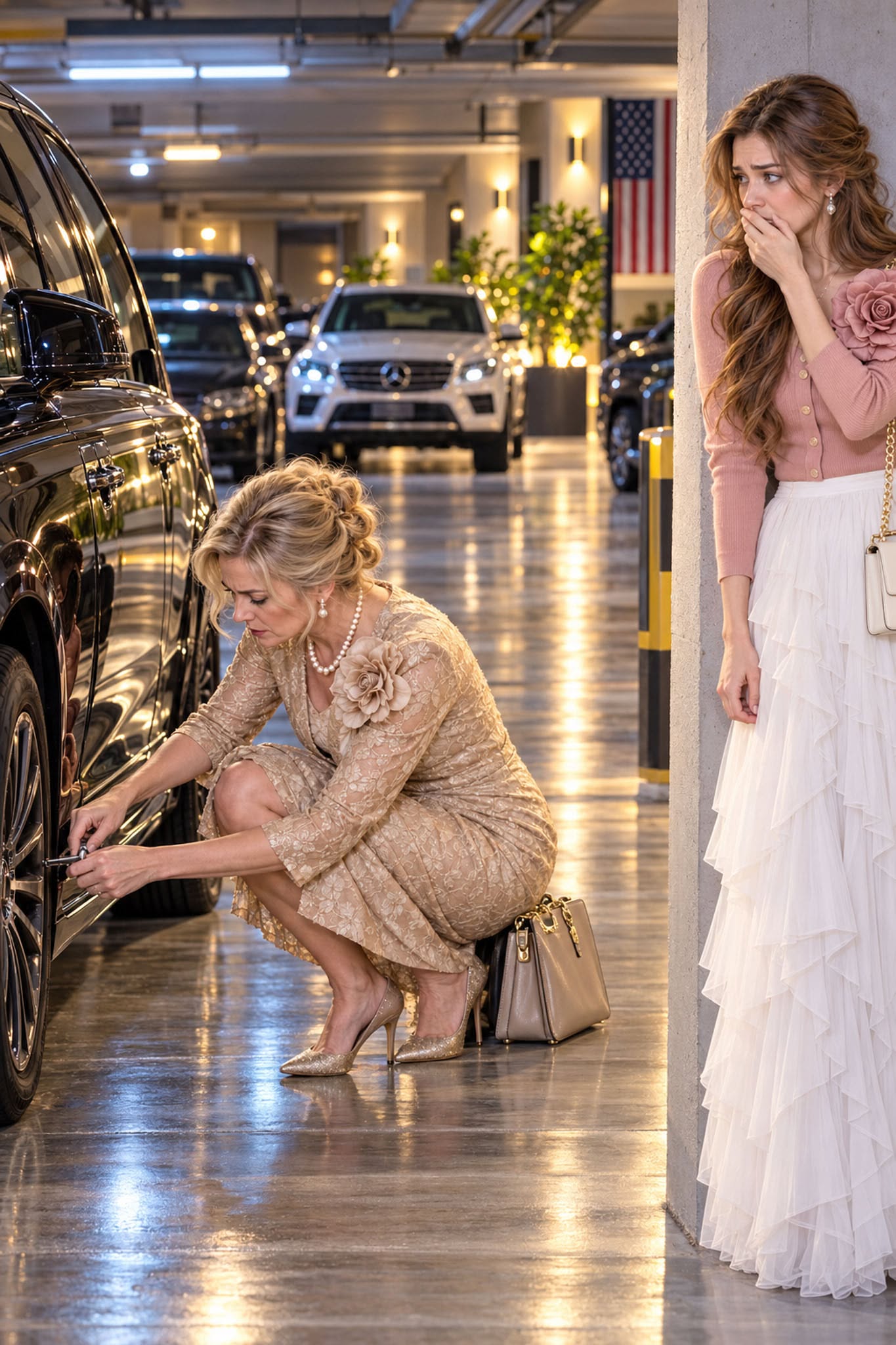 An old woman spent her final years in prison.
There was no perfect justice in any of that.
But I do believe choices eventually reveal people.
Judith’s choice revealed her hatred.
Grant’s revealed his arrogance.
Tessa’s revealed her deception.
And mine?
Mine revealed something I had forgotten.
I could leave.
I could survive.
I could build a life that did not require anybody else’s permission.
That morning at the overlook, I returned to my car.
Before starting the engine, I checked the tires.
For years, I had done it compulsively.
This time I laughed softly at myself.
Then I got behind the wheel and drove west.
No fear.
No husband beside me.
No mother-in-law waiting at home.
No tracker needed.
Just a clear highway, autumn mountains, and a future that finally belonged entirely to me.
An old woman spent her final years in prison.
There was no perfect justice in any of that.
But I do believe choices eventually reveal people.
Judith’s choice revealed her hatred.
Grant’s revealed his arrogance.
Tessa’s revealed her deception.
And mine?
Mine revealed something I had forgotten.
I could leave.
I could survive.
I could build a life that did not require anybody else’s permission.
That morning at the overlook, I returned to my car.
Before starting the engine, I checked the tires.
For years, I had done it compulsively.
This time I laughed softly at myself.
Then I got behind the wheel and drove west.
No fear.
No husband beside me.
No mother-in-law waiting at home.
No tracker needed.
Just a clear highway, autumn mountains, and a future that finally belonged entirely to me.