The cemetery workers were still waiting beside their equipment when my husband leaned toward me.
“Your inheritance should finally take care of my family’s problems.”
He said it softly, almost kindly, as though offering a practical observation about the weather.
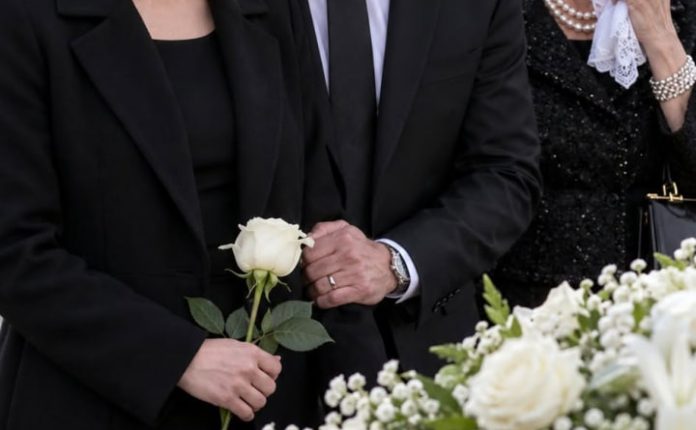
I kept my eyes on Dad’s coffin.
Rain had gathered in the white roses. One petal clung to the polished wood, trembling whenever the wind moved through the awning.
“What problems?” I asked.
Ethan looked surprised that I needed clarification.
“Owen’s loan. Mum’s cards. Everything we’ve been carrying.”
We.
He had used that word so often I had stopped noticing how frequently it meant obligations he had accepted without consulting me.
A few feet away, Marjorie dabbed at her eyes. The lace handkerchief stayed dry. She had cried loudly during the service, especially when people turned toward her, but now she was explaining something to one of Dad’s church friends.
“George believed in family,” she said. “He’d want what he built to do some good.”
My father had employed seven people, repaired church vans without charging labor, and kept a drawer of unpaid invoices he called his patience account.
Marjorie had once called him a stubborn mechanic hoarding valuable land.
Now she spoke about his wishes with the confidence of someone holding a receipt.
Ethan touched the small of my back.
“We don’t have to discuss it here.”
He already had.
I stepped away before he could guide me toward the cars.
At the luncheon, the church basement smelled of coffee, damp coats, and food brought in dishes whose owners had taped their names underneath.
Someone put lemon cake on my plate.
Dad disliked lemon. He always claimed it tasted like furniture polish. The women serving lunch had remembered that I loved it.
That small kindness nearly undid me.
I sat with my hands around a paper cup while Ethan’s relatives talked near the buffet. His uncle laughed at something. Owen kept checking his phone.
Marjorie was describing a sunroom.
I knew the house. Six hundred thousand dollars, white columns, black shutters, a magnolia tree planted too close to the front steps.
The listing had been open on Ethan’s laptop the night before.
Beside it sat a file named Family Recovery Plan.
Dad’s name appeared in the preview.
I had closed the laptop without touching anything. At the time, I thought I was preserving the last little corner of my day that didn’t require confrontation.
Now I understood that leaving something unread did not make it harmless.
“The estate meeting is at ten tomorrow,” Ethan said, sitting beside me. “Please keep yourself together.”
“My father died four days ago.”
“I know that.”
“Do you?”
His smile remained in place for anyone watching.
“My family’s been struggling for years, Lydia. There are other people involved.”
Under the table, he wrapped his fingers around my wrist.
It wasn’t a violent movement. That made it easier, afterward, to remember all the times I had told myself his grip meant urgency, affection, anything except an expectation that I would stay where he put me.
“You’re my wife,” he murmured. “We don’t have separate futures.”
Marjorie appeared on my other side.
“Let Ethan handle the financial conversations until you feel more settled.”
I looked up.
“I handle financial conversations for a living.”
“Bookkeeping,” she said, with a patient little nod. “Of course.”
Dad’s repair business had payroll, tax filings, supplier accounts, equipment financing, and commercial property. I managed the books and worked with the accountant every quarter.
But Marjorie had decided years ago that because I wore ordinary clothes and drove Dad’s old truck, my work involved putting receipts into envelopes.
I had allowed her to believe it because correcting her always seemed more exhausting than ignoring her.
I pulled my wrist free.
“I’ll be there at ten.”
Ethan’s shoulders eased.
He thought the matter had been settled.
On the way home, he talked about developers.
Dad’s shop occupied a corner parcel that had become valuable while he was busy repairing transmissions. New apartments stood beyond the rear fence. A coffee chain had bought the former feed store.
Offers arrived every few months.
Dad used the backs of the business cards for shopping lists.
“Selling quickly might actually be sensible,” Ethan said. “Before everyone starts making demands.”
“Who is everyone?”
“People who know you have money.”
I turned toward the window.
His phone rang before he could hear what I might have said.
At home, I hung my funeral dress in the bathroom and sat on the edge of the tub.
My overnight bag stood beside the wardrobe. I had taken it to Dad’s house during his final week, filling it with fresh socks, a charger, and the soft cotton shirts he could bear against his skin.
There was a square empty space at the bottom where his old phone had once been wrapped in a shop towel.
I remembered placing it there.
I remembered taking it out the following morning.
Two months before his final decline, Dad had called me into the office while Rosa, his forewoman, dealt with a supplier in the workshop.
He asked for copies of bank statements, deeds, account records, and security backups.
“Anything with Ethan’s name attached,” he added.
I had looked up from the filing cabinet.
“Has something happened?”
“Something needs checking.”
“He’s trying to help Owen.”
Dad moved a stack of invoices away from the edge of the desk.
“Then checking shouldn’t hurt.”
I had disliked his tone. Worse, I had disliked the possibility that he might have a reason for it.
Ethan had spent months presenting himself as the sensible person trying to save his brother’s restaurant. He drove Owen to meetings, negotiated payment dates, and complained afterward that nobody appreciated the burden.
I had mistaken being busy with a problem for being honest about it.
Dad handed me his old phone.
The green case had split near the charging port. A tiny white paint mark crossed the back.
“Take this to Martin.”
“Can’t you call him?”
“I have. This needs to go there.”
He made me look at him.
“If something happens before I finish sorting it out, you go to Martin. Not Ethan. Not his mother.”
“Nothing’s happening.”
He waited.
“All right,” I said.
I delivered the phone the next morning. Martin called Dad while I sat across his desk. They spoke about preserving records, and I assumed it concerned business.
Afterward, Martin asked whether I needed anything.
I said no.
I had been married three years. I still thought admitting trouble might help create it.
A knock pulled me back to the bathroom.
Ethan opened the door before I answered.
“You’ve disappeared.”
“I needed quiet.”
His gaze moved to the bag.
“Did George give you any papers to keep here?”
“What papers?”
“Anything. Account details. Keys. Things Martin might not know about.”
“Why would Martin not know?”
He leaned against the doorframe.
“Because your father liked doing things his own way.”
For a second, I heard Marjorie’s voice in his.
“You mean he liked deciding what happened to his property.”
Ethan straightened.
“You’re looking for a fight.”
“No.”
“Then stop making everything sound ugly.”
He left.
I slept in the spare room with Dad’s truck keys beneath my palm. During the night, I woke twice thinking I had heard his cough.
At nine, Martin’s assistant called and asked me to arrive fifteen minutes early.
Ethan stopped buttering his toast.
“We agreed to go together.”
“No. You said we should.”
“What do you need to discuss alone?”
“My father.”
He stood in the kitchen doorway, holding his plate.
I waited.
His phone rang. Marjorie’s name appeared on the screen.
He moved aside to answer, and I walked out.
The truck smelled faintly of old vinyl and the peppermint lozenges Dad kept in the ashtray. I drove with both hands on the wheel, concentrating on ordinary things: the school crossing, a delivery van, a woman pulling a shopping trolley through a puddle.
Martin met me at his office door.
He was wearing the same brown cardigan he wore when he visited Dad in the hospital. One cuff had begun to fray.
That steadied me more than a polished desk ever could have.
There was a glass of water beside a brown envelope.
Before touching either, I said, “Ethan thinks he’s getting money today.”
Martin took off his glasses.
“Has anyone asked you to promise a distribution?”
“His mother’s chosen a house.”
“What house?”
“Six hundred thousand. Apparently the sunroom is good for grief.”
He didn’t smile.
“Have you signed anything?”
“No.”
“Authorized Ethan to act for you?”
“No.”
He opened a drawer.
Dad’s old phone lay inside.
“Your father was worried about a loan guarantee,” he said.
“Owen’s equipment loan?”
“That one was paid. This is another transaction.”
He slid the envelope toward me.
The first page bore Dad’s full name: George Mercer.
Below it was a guarantee for a restaurant refinancing loan of one hundred eighty thousand dollars.
I checked the date.
Then the signature.
At a glance, it was Dad’s. But he had stopped making that long final stroke years earlier, when his fingers began to stiffen.
“Dad said he didn’t sign this?”
“Very clearly.”
“Then why hasn’t it been dealt with?”
“He disputed it before the lender completed its own review. His illness slowed the exchange of records. Yesterday, the lender notified the estate that it intended to pursue the guarantee.”
“So it’s still hanging over him.”
“It’s a claim. We’re going to answer it with evidence.”
I touched the paper without picking it up.
Dad had spent his final weeks measuring his breathing, his strength, the distance between his bed and the bathroom.
Somewhere inside that shrinking world, he had also been trying to protect himself from my husband.
I wanted to apologize to him. The impossibility of that lodged beneath my ribs.
Martin let me sit without filling the silence.
Then he said, “I invited Ethan because he asked to attend. You don’t have to allow it.”
“Does he know you have the phone?”
“I don’t believe so.”
I looked toward the frosted glass.
“Let them come in.”
Marjorie entered first with a glossy property brochure. Owen followed, wearing the same dark suit he had worn at the funeral.
Ethan came last.
He looked at my face, then at the envelope.
“What’s all this?”
“Please sit,” Martin said.
Marjorie placed the brochure near my water.
“There’s a deadline on something we’re considering.”
Martin moved it away from the papers.
“This is an initial conference about George’s estate. It isn’t a distribution.”
Ethan pulled out the chair beside mine. When I moved mine a few inches away, he stopped touching it.
Martin explained his role as executor, the need to establish assets and liabilities, and the difference between being a beneficiary and having immediate access to estate funds.
Owen stared at his hands.
Marjorie listened with the expression she used when a waiter described a dish she had already decided to order.
“We understand administration,” she said. “We’re simply trying to avoid unnecessary delays.”
“Then you’ll understand why we must address a disputed claim first.”
Ethan’s eyes dropped to the phone.
For the first time since Dad’s death, I watched him lose track of the expression he was wearing.
Martin turned the screen toward himself.
“This is a voicemail George preserved. It was left before he brought the guarantee to my attention.”
He pressed play.
Ethan’s voice came from the small speaker, brisk and familiar.
“George, just date the guarantee Friday. Lydia doesn’t need—”
Six seconds.
That was all it took.
Ethan shoved his chair backward and stood.
“Turn that off.”
The chair struck the wall.
Nobody moved.
Martin paused the recording.
“Sit down, Ethan.”
“That’s private.”
“It was sent to my client and given to me by him.”
“You don’t understand the conversation.”
“Then you can explain it.”
Ethan looked at me.
“Your dad misunderstood what we were doing.”
I kept my hands flat on my knees.
“What was I not supposed to need?”
He swallowed.
“What?”
“The rest of that sentence.”
Marjorie reached for his sleeve.
“Sit down. You’re making it sound worse.”
That sentence went into the room and stayed there.
Martin resumed the message.
“—to get tangled up in this yet. Once the refinance clears, we can settle everything properly. Mum’s counting on the house being sorted. Call me before you speak to Shaw. We don’t need him turning a family arrangement into a problem.”
The recording ended.
Somewhere outside, the assistant answered a telephone.
I heard every word of her greeting.
Martin placed a printed transcript beside the guarantee.
“George’s response is also preserved. He said he had not agreed to this guarantee and would not backdate anything.”
Ethan sat slowly.
“It was a restructuring proposal.”
“Was the document signed by George?”
“He understood what it was for.”
“That wasn’t my question.”
Owen rubbed both palms down his trousers.
Marjorie turned toward him with a sharp little movement of her chin.
He stopped.
I saw it.
I wondered how many other gestures I had missed because I was watching whoever spoke loudest.
Martin opened another folder.
“George’s will leaves the repair business and its property to Lydia, subject to administration. There are specified gifts for employees and a provision for the church repair fund. The residue also passes to Lydia.”
Marjorie sat forward.
“Nothing for his son-in-law?”
“No.”
“But George knew about Owen.”
“He knew Owen had a restaurant.”
“We’re family.”
Martin’s voice stayed level.
“George’s instructions are clear.”
For years, I had imagined the moment someone finally contradicted Marjorie would be satisfying.
It wasn’t.
I was sitting in an office listening to strangers’ expectations fall against the fact that my father was dead.
There should have been another year. Another winter of him complaining about the office heater. Another birthday when he pretended not to know why I’d brought a cake.
Instead, we were discussing who expected to spend what he had left.
Ethan touched the guarantee.
“Whatever anyone thinks, there’s still a debt. If this gets messy, it affects the estate.”
“Which is why we’re investigating it,” Martin said.
“You could save everyone a lot of trouble.”
I looked at him.
“How?”
“By settling it.”
“You want me to pay a document Dad said he never signed.”
“I want us to move forward.”
“With your mother’s house?”
Marjorie drew herself up.
“That’s a separate matter.”
“Then why was it in the voicemail?”
No one answered.
Martin closed the will folder.
“There will be no commitment today. Lydia, I recommend independent advice concerning your own finances. I act for the estate, and your interests may overlap, but they aren’t identical.”
Ethan stood again.
“This has become ridiculous.”
I stayed seated.
He waited for me to rise with him.
When I didn’t, his mouth tightened.
“We’ll talk at home.”
“I’m going to the shop.”
“You don’t have to make a scene.”
I looked around the quiet office.
“I haven’t.”
Marjorie took her brochure. Owen left without meeting my eyes.
At the door, Ethan turned back.
“George never liked me. Remember that before you let him finish what he started.”
The door closed behind him.
I stared at the place where he had been standing.
Martin waited until I looked up.
“Your father didn’t give me this because he disliked Ethan.”
“Why didn’t he tell me everything?”
“He was gathering proof. He was also afraid you’d feel forced to choose before you were ready to believe him.”
“That wasn’t his choice to make.”
“No,” Martin said. “It wasn’t.”
I was grateful he didn’t turn Dad into a saint simply because I could no longer argue with him.
Martin gave me the name of another attorney, Priya Desai, and asked permission to forward the relevant documents.
Then he handed me a smaller envelope.
“George wrote this when he brought the phone.”
Inside was one sheet from a shop invoice pad.
Lyd—
Ask for the records yourself. Don’t let anyone tell you what they say.
Dad.
I sat with that sheet until the words blurred.
At the shop, Rosa had opened the roller doors.
A customer’s hatchback stood on the first lift. Someone had put a black ribbon around the wall clock, and it looked so unlike Dad that I almost laughed.
Rosa followed my gaze.
“Frank thought we should do something.”
“It’s all right.”
“You want it down?”
“Not yet.”
She handed me tea in a mug with a chipped handle.
I stood in the office doorway.
Dad’s coat still hung on its hook. His reading glasses lay across a parts catalogue.
There was a grease mark on the light switch that no amount of cleaning had ever removed.
“How bad?” Rosa asked.
I told her about the guarantee.
She set down the work order she was holding.
“George kept asking me to save camera footage.”
“From when?”
She named the date on the document.
I looked at her.
“Why that date?”
“He said somebody had put him somewhere he wasn’t.”
Rosa opened the office computer. The security system kept only a rolling period of footage, but she had exported several days at Dad’s request and saved duplicate copies.
I didn’t play them yet.
I called Martin.
Then I called the bank.
I expected to confirm what I already knew about our household accounts. Instead, I learned that knowing a monthly balance from an app notification was different from examining transactions.
Ethan and I both had access to our joint savings. I had handled household bills; he had insisted he would manage the longer-term transfers.
For months, I had been taking Dad to appointments and covering more at the shop.
When I asked about our savings, Ethan said funds were temporarily in a better-interest account.
I had believed him.
The bank employee helped me retrieve the complete statements.
There was no better-interest account in our names receiving those transfers.
There were payments to Owen’s restaurant.
There were payments to a card issuer Marjorie used.
And there was a recent transfer for eighteen thousand dollars to a property brokerage’s client account.
I read that one three times.
Rosa brought a chair over without asking.
By the time I finished adding the transactions, sixty-two thousand four hundred dollars had left our joint savings over nine months.
The eighteen thousand was only the latest part.
I called Ethan.
He answered immediately.
“Ready to be reasonable?”
“What was the brokerage payment?”
Silence.
Then: “A reservation payment. It’s mostly refundable.”
“For your mother’s house.”
“For an opportunity.”
“Whose money did you use?”
“Ours.”
“When did I agree?”
“We discussed helping Mum.”
“No. You discussed it. I was in the room.”
He exhaled heavily.
“Your father left you far more than that. Stop acting as though I emptied your purse.”
I looked at the invoice pad beside the keyboard.
Ask for the records yourself.
“I’m meeting an attorney.”
“If you bring lawyers into our marriage, don’t blame me for what happens.”
I ended the call.
The bank explained what could be done about account access and what couldn’t be undone simply because a joint owner disputed spending afterward. I took notes. I asked for written copies.
I moved my next paycheck to an account in my name and arranged to meet Priya the following afternoon.
Then I called a locksmith about Dad’s house.
I had inherited nothing I could freely spend yet. I had no dramatic fortune in my handbag.
What I had was an appointment, a folder, and a growing understanding of how long I had let Ethan answer questions I should have asked myself.
Near closing, Martin called.
The lender had supplied additional material.
“The guarantee wasn’t the only representation Ethan made,” he said.
Rosa quietly left the office.
Martin asked whether I was sitting down.
I disliked the question. I sat anyway.
“He gave them an authorization purporting to come from you.”
The email arrived while he was speaking.
I opened the attachment.
My name appeared at the bottom.
Above it was a statement authorizing Ethan to discuss my expected inheritance as a source of repayment and asserting that I supported the refinancing arrangement.
I had never seen it before.
The document didn’t merely ask my father to carry the debt.
It made me part of the promise.
END PART 1