The first thing I remember about that Thanksgiving is my daughter asking whether the pastry leaves on our pumpkin pie looked real enough.
Addie was standing on a kitchen chair, holding a tiny piece of dough between two flour-covered fingers. Her twin brother, Finn, was sitting at the table with a black marker, making place cards for everyone who would be gathering at Grandma's house.
"Mom, Uncle Wes has two letters at the end of his name, right?"
"Just one," I said.
Finn frowned at his third attempt.
"Well, now his card looks ridiculous."
I laughed, reached for a dish towel, and was about to tell him that his uncle probably wouldn't notice when my phone buzzed against the countertop.
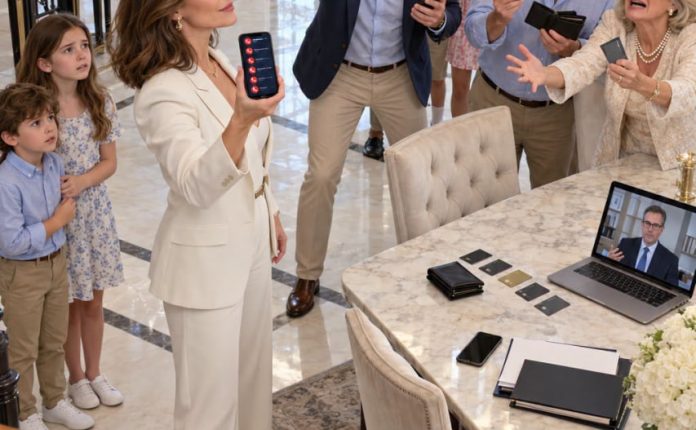
The message appeared at 12:14 p.m.
It came from my older brother, Wes Ellis.
"New rule for Thanksgiving. No kids except mine. We need a calmer afternoon this year. Hope you understand."
For several seconds, I stood perfectly still.
I read the message once.
Then again.
Then a third time, because surely I had misunderstood.
My nine-year-old twins were not invited to Thanksgiving dinner.
But Wes's children, eleven-year-old Mason and thirteen-year-old Sophie, were apparently welcome.
We were supposed to arrive at Mom's house at three.
I typed a response.
"Are you serious? Why would your kids be allowed and mine wouldn't?"
His reply appeared almost immediately.
"Because I'm hosting. Don't make this a whole thing."
Then my mother reacted to his original message with a thumbs-up.
It was only a small blue symbol on a screen.
Somehow, it hurt worse than Wes's words.
I looked at the bags of groceries I had purchased the previous afternoon. There were sweet potatoes, green beans, fresh cranberries, cream, butter, and the ingredients for three desserts.
The receipts totaled $428.
That didn't include the $1,150 I had contributed toward Mom's housing expenses earlier that month, the dishwasher I had bought in September, or the repairs I'd arranged after discovering that her porch railing had begun pulling loose.
Wes was hosting Thanksgiving.
Apparently, that meant he would carve the turkey and decide which children deserved a seat.
I was expected to pay for nearly everything else.
My name is Maren Ellis.
I was thirty-two that Thanksgiving, a divorced mother raising twins in a small house outside Milwaukee, Wisconsin.
I worked in architectural restoration, specializing in historic theaters, libraries, churches, and older homes.
Much of my job involved identifying problems hidden beneath attractive surfaces.
A wall could look perfectly solid while moisture slowly destroyed its supporting timbers.
A ceiling could remain beautiful for decades, then collapse because somebody ignored a crack that had been spreading for years.
I had always considered myself reasonably observant.
Looking back, I find it remarkable how long I ignored the cracks in my own family.
My father had died eight years earlier, when I was twenty-four and pregnant with Addie and Finn.
He had been a gentle man who enjoyed ordinary routines. He fixed broken drawer handles, made pancakes on Sunday mornings, and insisted that the best conversations happened while washing dishes.
After his funeral, I began helping Mom with expenses.
At first, the arrangement felt natural.
Dad had always handled certain household responsibilities, and Mom was overwhelmed by paperwork, repairs, and the unfamiliar business of managing everything alone.
When the furnace needed servicing, I paid the technician.
When the property taxes came due, I helped.
When her dishwasher broke, I replaced it.
Then Wes needed money for his contracting business.
Talia, our younger sister, needed help paying for certification classes.
Mom needed assistance with insurance premiums.
The requests multiplied so gradually that I rarely noticed how much they had expanded.
I became the person everyone called when something cost more than expected.
I also became the person everyone accused of being difficult whenever I asked a reasonable question.
Six days before Thanksgiving, I had discovered a charge for $1,486 on a credit card connected to our family spending arrangements.
The purchase was from a furniture retailer.
When I asked Talia about it, she admitted she'd ordered a dining set for Mom's house.
"I thought you'd be pleased," she told me.
"You used my card without asking."
"It's for Mom."
"That doesn't make it yours to use."
She became offended.
Not apologetic.
Offended.
She told me I was acting as though she'd stolen something, even though the furniture would benefit everybody.
I sent her the receipt and asked her to reimburse me by Friday.
She responded with a message about how exhausting it was to have a sister who kept track of every dollar.
I hadn't mentioned the dispute to Wes.
Apparently, Talia had.
And somehow my children had become the punishment.
I called Mom.
She answered after six rings.
Football commentary sounded in the background, along with several people talking.
"Happy Thanksgiving, sweetheart."
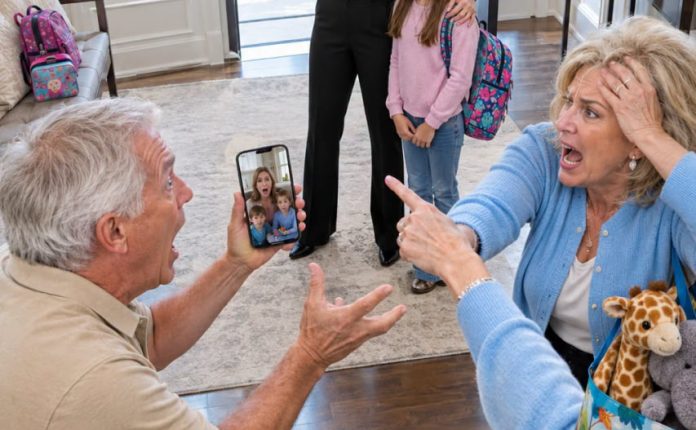
"Mom, did you know Wes just told me not to bring Addie and Finn?"
The background noise shifted.
I heard a door close.
"Maren, we're trying to keep things peaceful this afternoon."
"Peaceful for whom?"
"Wes has been under tremendous pressure lately."
"What does that have to do with my children?"
"And Talia is still upset about what happened with the credit card."
I looked toward Addie.
She was carefully pressing the final pastry leaf against the pie crust.
"Mom, are you telling me my children aren't welcome because I asked Talia to pay me back?"
"Nobody is saying that."
"Then tell me why Wes's children are invited."
"Because they're already here."
"That isn't an explanation."
"Maren, please. You're making this more complicated than it needs to be."
I could hear the irritation creeping into her voice.
That was familiar.
Whenever I questioned an arrangement that benefited someone else, the discussion somehow became about my attitude.
"Did you tell Wes he was wrong?" I asked.
Mom sighed.
"Sometimes being the bigger person means accepting that not everything is fair."
I'd heard variations of that sentence since childhood.
When Wes borrowed something and broke it, I was supposed to understand.
When Talia missed an important family occasion, I was supposed to remember how busy she was.
When I needed help, I was reminded that I had always been the responsible one.
"All right," I said.
Mom sounded relieved.
"Thank you, sweetheart."
"We'll make other plans."
"Good. I knew you'd understand."
"I understand what you're asking me to accept."
I hung up before she could reply.
For a few moments, I stood beside the kitchen window.
Outside, a thin crust of frost covered the grass. The neighbors across the street were loading covered dishes into their car.
Inside, my children were preparing for a celebration they no longer had permission to attend.
Addie noticed my expression first.
"Is Grandma sick?"
"No, honey."
"Then why do you look worried?"
I pulled out a chair.
"Come sit with me, both of you."
Finn brought his marker.
I told them the Thanksgiving arrangements had changed.
I explained that Grandma and Uncle Wes had decided the gathering would be smaller, but that the rule hadn't been applied fairly.
Finn looked confused.
"Does smaller mean Mason and Sophie aren't going?"
"No. They're still going."
He stared at the place cards he'd made.
"Then did we do something wrong?"
That question stopped me.
"No," I said, making certain he could hear every word. "You haven't done anything wrong."
"Did we get too loud last Christmas?"
"No."
"Did I break something?"
"Finn, listen to me. This isn't because of anything you or Addie did."
Addie slowly removed her pearl earrings.
Dad had given them to her when she was born, having purchased two tiny pairs before he died because he insisted his grandchildren should have something special from him.
She wore them on holidays.
She placed them carefully beside the pie.
"Can we still go somewhere nice?" she asked.
I reached across the table and took her hand.
"Absolutely."
I booked Thanksgiving dinner at a small restaurant near Lake Michigan.
It wasn't the kind of restaurant we usually visited. The tables had white cloths, the menu was printed on heavy cream-colored paper, and the reservation required a deposit.
But they had a table for three.
And nobody there was going to decide one of my children was less welcome than another.
While the twins changed clothes, I reviewed my financial accounts.
I had never kept a careful separation between money I deliberately gave my family and money they had access to spend.
At various times, I'd authorized four cards for specific family purposes.
Mom had one for household purchases.
Wes had one for expenses associated with helping maintain her property.
Talia could use another for certain grocery and supply purchases.
A fourth had been reserved for emergencies.
I had trusted them to respect those arrangements.
Now I realized trust had gradually replaced any meaningful accountability.
I called my credit card company about the $1,486 dining set.
I explained that Talia had made the purchase without my permission.
The representative asked several questions about her access to the account and explained that the bank would need to review the transaction under the applicable cardholder agreement.
I requested a formal investigation and written confirmation.
Then I restricted the authorized cards, removed spending permissions I could revoke, and changed account credentials.
I also stopped the voluntary household transfer scheduled for Monday.
The representative reminded me that removing access or stopping a transfer wouldn't eliminate any obligation I had personally signed.
I understood.
I wasn't trying to escape a debt.
I wanted to know which debts were actually mine.
Next, I took screenshots of the group chat and forwarded them, along with several financial records, to my accountant, Nora Patel.
I had worked with Nora for five years.
She understood my business finances, my mortgage, and the difficulties of balancing irregular restoration contracts with two growing children.
I wrote a short message.
"Nora, I need a complete review of every payment connected to my mother's household. Please identify anything that doesn't match the arrangements we've discussed."
Then I put my phone away.
At the restaurant, Finn was fascinated by the folded cloth napkins.
"They made them look like little jackets," he whispered.
Addie asked whether she could order something other than turkey.
"Of course."
"Even though it's Thanksgiving?"
"Especially because it's Thanksgiving."
At 4:38 p.m., after the waiter had taken our order, I sent one final message to the family group chat.
"Since my children and I are no longer included in family gatherings on equal terms, I will no longer be contributing to the household budget, paying for family purchases, or providing unpaid repairs. Any expenses belonging to me will be handled by me. Everything else is now the responsibility of the adults who agreed to it."
Wes replied with a laughing emoji.
Talia wrote, "Unbelievable."
Mom asked me to call her immediately.
I turned my phone facedown.
And then, unexpectedly, the afternoon became lovely.
The restaurant smelled of roasted rosemary, warm bread, and coffee.
An older couple occupied the neighboring table.
The woman had short silver hair and wore a burgundy cardigan. The man had a magnificent white mustache and the cheerful expression of someone who considered every stranger a potential conversation partner.
When Addie accidentally knocked her water glass against the bread basket, the woman handed her an extra napkin.
"Don't worry, sweetheart. Frank once emptied an entire bowl of clam chowder into my handbag."
The man shook his head.
"That story gets worse every time you tell it."
"It was a very good handbag."
"It was a terrible soup."
Finn laughed.
That was how we met Ruth and Frank Bellamy.
Ruth was a retired school librarian.
Frank had spent forty years working as a commercial electrician.
When he learned what I did for a living, he recognized the name of a theater I had recently helped restore.
Within minutes, we were discussing old plaster ceilings and the difficulties of modernizing electrical systems without destroying historic interiors.
Ruth asked the twins about school.
She listened to Finn explain a book about Antarctic exploration.
She asked Addie about the piano lessons she had recently started.
Not once did either of them interrupt the children or treat their stories as an inconvenience.
When Ruth learned that our original Thanksgiving plans had changed, she didn't pry.
She simply pointed toward the dessert menu.
"Frank has ordered two different pies because he claims variety is important for his health. Would you three help me prevent him from eating both?"
We joined their table.
Frank taught Finn a ridiculous card trick.
Ruth told Addie about the first school library where she'd worked, a converted classroom with shelves so uneven that books sometimes slid onto the floor.
By the end of dessert, Addie was laughing hard enough to wipe her eyes.
Finn asked whether he could draw Ruth a picture of the theater I was restoring.
She wrote her telephone number on the back of our receipt.
"I would love that," she said.
I watched my children talking to two people who had met them only hours earlier.
Neither Ruth nor Frank had any obligation to make us feel welcome.
They simply wanted to.
For years, I had confused family obligation with love.
That evening, I began to understand there could be a difference.
We arrived home shortly after nine.
The twins were sleepy and content.
Finn left his unfinished place cards on the kitchen table.
Addie put her pearl earrings into their small velvet box.
I helped them into pajamas, kissed their foreheads, and promised we could eat the pumpkin pie for breakfast if they wanted.
Then I went into my bedroom and checked my phone.
Sixty-four missed calls.
Twenty-one from Mom.
Seventeen from Wes.
Eleven from Talia.
The remaining calls came from relatives who rarely contacted me unless someone wanted me to contribute money.
There were dozens of messages.
Wes accused me of behaving like a child.
Talia claimed I had ruined Thanksgiving.
An aunt asked why I was putting Mom through unnecessary stress.
A cousin wrote that families were supposed to support each other.
I almost replied.
Then I noticed a voicemail from Mom.
The timestamp was 11:46 p.m., sent while my phone had been set to silence unknown interruptions.
I pressed play.
"Maren, you don't understand what you've interrupted. Wes says the payment has to go through Monday, or they're going to start asking questions about the house. Please call me before anyone finds out."
I played it again.
Then I sat down on the edge of the bed.
The mortgage wasn't due Monday.
And I had never agreed to make payments for anything belonging to Wes.
I opened my banking application.
One family-related charge appeared repeatedly.
LAKEVIEW PROPERTY SERVICES.
I searched backward.
The amounts varied, but the merchant name remained the same.
I didn't remember authorizing a service agreement with that company.
As I examined the transactions, I remembered a stranger who had visited Mom's house in September.
He'd been standing beside Wes near the dining room doorway, carrying a folder.
When I'd asked who he was, Wes said he was helping with paperwork.
Mom immediately offered me coffee and changed the subject.
At the time, I hadn't questioned it.
Now I wondered why.
My phone vibrated.
A message from Wes appeared.
"Restore those cards tonight. You have no idea what you're interfering with."
I stared at the words.
Then I typed a question.
"What is Lakeview Property Services?"
For several minutes, the screen remained silent.
Finally, Wes responded.
"Don't start digging through things you don't understand."
I forwarded the exchange to Nora.
Then I searched through the oldest statements I could access.
The Lakeview charges hadn't started recently.
They stretched back months.
Some were small.
Others exceeded a thousand dollars.
And there was something else.
On several dates, a Lakeview payment appeared only days after a transfer I'd made to help Mom with ordinary household expenses.
I couldn't yet establish what that meant.
But I knew I had never been told about the arrangement.
I called Mom.
She answered immediately.
"Maren, thank goodness."
"Mom, what payment is Wes talking about?"
She hesitated.
"Your brother is trying to sort something out."
"What?"
"It's complicated."
"Does it involve your house?"
Another silence.
"Where did you hear that?"
"In your voicemail."
I heard her breathing.
"Please just put things back the way they were until we can talk."
"Tell me what the payment is."
"I don't have all the information."
"Then why did you say people would start asking questions?"
"Maren, please."
Her voice trembled.
I remembered the woman who had raised me, sitting alone after Dad's funeral, staring helplessly at a stack of bills.
For one terrible moment, I wanted to restore everything simply to make her stop sounding frightened.
Instead, I asked one last question.
"Mom, is your house in trouble?"
She began to cry.
And then she said something I had never expected to hear.
"Wes told me you already knew."
END PART 1