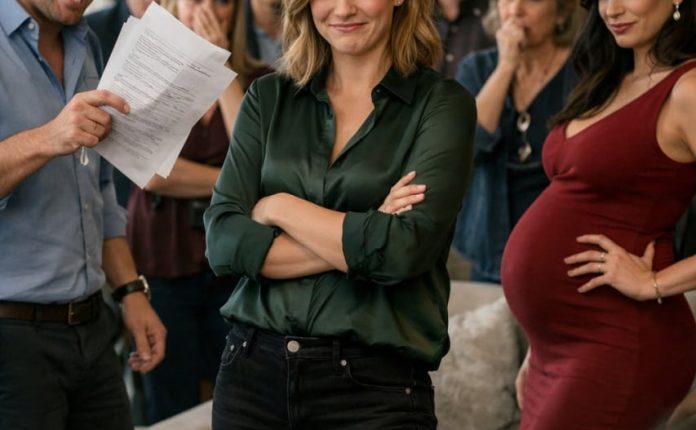
The first sign that something was terribly wrong was a silver-colored link on a gold chain.
The second was my brother asking me to pass the gravy as though nothing unusual had happened.
I was standing at the end of my dining room table with a basket of warm rolls in my hands when Elodie Marsh reached across her plate. The necklace swung forward, catching the light from the chandelier.
I recognized it immediately.
Not because of its oval shape, although I knew every curve of that little gold locket. Not because of the delicate engraving on its face or the thin chain that had survived decades of ordinary wear.
I recognized the repair.
Eighteen years earlier, I had fixed one broken link with silver solder at my father's workbench. I was twenty-four and still learning how to make metal behave. The repair had held, but the color never matched.
My mother had refused to let me correct it.
And now that unmistakable pale link was hanging around the neck of my brother's new girlfriend.
A necklace my mother had been buried wearing nine months earlier.
"These rolls are delicious, Mara," Elodie said. "Did you make them yourself?"
Her smile was open and friendly.
I looked down at the basket.
"They came from the freezer. I brushed them with butter."
"Well, you've fooled me."
My younger brother, Reid, laughed.
"Mara can make anything taste like it came from a bakery. She just won't admit it."
I wanted to look directly at him.
Instead, I set the basket on the table and reached for my water glass.
Across from us, Aunt Bethany was explaining why her doctor had told her to reduce her salt intake. The television murmured in the living room, where a football game was playing without anyone paying much attention.
Everything smelled of turkey, sage dressing, and the cinnamon candles I had lit that morning.
It was Thanksgiving in Dubuque, Iowa.
There were five of us at the table, counting my neighbor Diane, who had joined us after her daughter canceled their holiday plans.
It should have been a pleasant afternoon.
Instead, I was struggling to breathe.
My name is Mara Whitcomb. I'm forty-two, divorced, and employed as a tool-and-die maker at an agricultural equipment plant outside town.
I have spent almost twenty years examining metal parts for flaws too small to notice without measuring instruments.
People at work sometimes tease me about being particular.
If something is supposed to fit within a tolerance of a few thousandths of an inch, I want to know exactly why it doesn't.
But I never imagined that habit would follow me into a family holiday.
Or that it would make me recognize something I desperately wished I hadn't seen.
My mother, Sylvie Whitcomb, died on February 18, 2025.
We buried her three days later at Cedar Bluff Memorial Cemetery, on a hillside overlooking the Mississippi River.
I knew what she had been wearing because I had helped select her clothes.
Her favorite blue dress.
Her wedding band.
And the gold locket my father had bought her in 1982, the year they became engaged.
I saw it resting against her chest during the visitation.
I checked the clasp myself.
There was no uncertainty about that memory.
The locket had been there.
Now it was sitting across my Thanksgiving table.
Elodie was wearing a cream-colored sweater, pearl earrings, and a bracelet with tiny blue stones. She had pulled her dark hair into a loose knot, leaving a few strands beside her cheeks.
She looked genuinely pleased to be included in our family gathering.
She was thirty-four, worked in the billing department of a dental practice, and had been dating Reid for five months.
Thanksgiving was her first holiday with us.
Until that afternoon, I had liked her.
She had arrived carrying flowers and a homemade cranberry cake. She remembered Aunt Bethany's name and asked Diane thoughtful questions about her grandchildren.
She also insisted on helping with the dishes before dinner, despite my protests.
Nothing about her suggested that she understood what she was wearing.
That realization made the situation worse.
I could not decide whether to speak immediately or wait until we were alone.
I glanced at Reid.
He was cutting his turkey into small pieces, carefully avoiding my eyes.
My brother was thirty-six and worked in sales at a car dealership.
He had our father's dark eyebrows and our mother's ability to make a stranger feel welcome within three minutes.
He could persuade a mechanic to stay late, a restaurant manager to find a table, or an angry customer to reconsider a complaint.
When we were children, he could usually persuade Mom to forgive whatever trouble he had caused.
I had loved that about him.
I was beginning to wonder whether I had mistaken his charm for something more dependable.
"Mara?"
Elodie was looking at me.
"Are you all right?"
"Yes. Sorry. I was thinking about something."
She nodded toward the serving dish.
"Could you pass the green beans?"
I handed them over.
The locket moved again.
My stomach tightened.
I had to ask.
"That's a pretty necklace, Elodie. Where did you find it?"
She touched the pendant with one finger.
"Oh, thank you. Reid gave it to me for my birthday."
I looked at my brother.
He kept his eyes on his plate.
"Really?"
"Yes. He said he found it in a little resale shop across the river. Isn't it lovely?"
"It is."
"Apparently it's quite old."
I swallowed.
"Did he tell you anything about its history?"
"Only that he thought it suited me."
She smiled at Reid.
"He has excellent taste when he wants to."
Reid finally looked up.
"Don't make me sound too impressive."
Aunt Bethany chuckled.
I didn't.
Because I remembered the day my mother received that necklace.
Not personally, of course. I hadn't been born yet.
But she had told the story so often that I could picture it.
Dad had saved for months while working at a machine shop. The locket wasn't expensive by jewelry-store standards, but it had cost him more than he could comfortably afford.
He wrapped it in a small box and gave it to Mom after dinner at a restaurant near the river.
She wore it for the rest of their marriage.
When Dad died of a heart attack eleven years earlier, Mom stopped wearing most of her other jewelry.
The locket stayed.
Sometimes she slept with it tucked beneath her nightgown.
She said it made her feel that Dad was still close enough to hear her complain about the furnace.
I repaired the chain when I was twenty-four.
She had been unloading groceries when it caught on a cabinet handle and snapped. The pendant landed in a bag of potatoes.
I took the necklace home and spent an evening working over it with a magnifying glass, a soldering iron, and more confidence than skill.
When I returned it, she examined the silver-colored link.
"I can have a jeweler fix that," I told her.
She closed her hand around the locket.
"Absolutely not."
"Mom, it doesn't match."
"Your father gave me the pendant. You fixed the chain. I like having something from both of you."
I had forgotten many small conversations from those years.
I had never forgotten that one.
And I had never imagined anyone else wearing the necklace after her death.
"Would you like to see inside?"
Elodie's voice brought me back to the table.
Before I could answer, she opened the locket with her thumbnail.
Two photographs appeared.
Neither belonged there.
One showed Reid wearing a blue dealership polo shirt.
The other showed Elodie laughing on a boat, sunlight reflecting off the water behind her.
I stared.
"Those are nice pictures," I managed.
"Thank you. I put them in myself."
She lifted the pendant a little closer.
"It was empty when Reid gave it to me. I thought photographs would make it more personal."
Empty.
The word seemed to hang between us.
My mother's locket had contained two pictures for as long as I could remember.
One was Dad at twenty-three, squinting into summer sunshine.
The other showed Reid and me sitting on the back steps of our childhood home.
I was wearing a dreadful pink sweatshirt.
Reid was barely three.
Mom used to laugh whenever she opened it.
She said the photographs reminded her of the two families she had been lucky enough to have: the one she started with Dad, and the one that grew when we arrived.
Now both pictures were gone.
I closed my fingers around the edge of the table.
"Very nice," I said.
Elodie returned to her meal.
Reid reached for another helping of dressing.
I could not eat.
I was remembering the final weeks of my mother's life.
Everything had changed in October 2024, when a routine medical appointment led to tests, a scan, and the diagnosis nobody wanted to hear.
Pancreatic cancer.
Already advanced.
By Christmas, Mom had stopped pretending she felt better than she did.
By January, we had moved a hospital bed into her living room.
The yellow house on the west side of town became a place of medication schedules, quiet visitors, half-finished cups of tea, and conversations conducted in whispers.
I slept on the couch most nights.
I learned the sound of Mom reaching for water.
I learned which floorboards creaked when the nurse arrived.
I learned that exhaustion could make an ordinary question feel impossible to answer.
Reid helped when he could.
He handled some prescriptions, picked up groceries, and took Mom to appointments when his work schedule allowed.
But most of the daily care fell to me.
I did not resent him for having a job.
I had one too.
What hurt was the number of times he promised to come and didn't.
There were evenings when Mom waited for his car.
She would ask me to leave the porch light on.
Sometimes he arrived.
Sometimes he called with an explanation that sounded reasonable until it became the third explanation that week.
I did not tell Mom how angry I was.
She already had enough to carry.
One evening in late January, she asked me to sit beside her bed.
The television was playing softly.
Outside, a snowplow scraped along the street.
"Open this for me," she whispered.
She meant the locket.
Her fingers had grown too weak to manage the catch.
I opened it and held the two photographs where she could see them.
She studied Dad's face.
Then she touched the childhood photograph.
"You two were always so different."
I smiled.
"That's one way of putting it."
"Your brother used to follow you everywhere."
"Until he discovered girls."
Mom gave a small laugh that turned into a cough.
I helped her drink some water.
When she settled again, she held the pendant between her fingers.
"Mara, I want you to promise me something."
I leaned closer.
"I want to be buried with my wedding ring and this necklace."
I said nothing at first.
She looked at me steadily.
"Your father gave me both. I'd like to keep them."
"Of course."
"Don't let anyone talk you into taking them off because they're valuable."
"Nobody will."
She rested her hand on mine.
"Promise?"
"I promise."
Two days before she died, she repeated the request while Reid was visiting.
He sat on the opposite side of the bed.
Mom's voice was barely audible.
"My ring and my necklace," she said. "Both of them."
Reid nodded.
"You'll have them, Mom."
He kissed her forehead.
I remember how he looked that evening.
Frightened.
Tired.
Younger than thirty-six.
Afterward, we stood in the laundry room and cried where Mom could not hear us.
For a few minutes, we were just two children who did not know how to lose their mother.
When she died, that was the memory I wanted to keep of my brother.
I wanted to believe that whatever mistakes we made afterward, we would protect the promises we had made together.
At Baird Family Funeral Home, Lawrence Baird personally reviewed the arrangements with us.
He was a careful man with gray hair and a voice that rarely rose above a conversational murmur.
He asked about clothing, flowers, the service, and personal belongings.
When we reached the jewelry section, I explained Mom's wishes.
"Both pieces stay with her," I said.
He checked the appropriate box.
Beside it, he wrote the jewelry descriptions.
Gold locket and wedding band.
Remain with deceased.
Reid sat beside me.
He heard every word.
The visitation was Thursday, February 20.
Snow had been falling since noon.
Mom lay in her blue dress, looking smaller than I remembered.
Her ring was on her left hand.
The necklace rested neatly at the center of her chest.
Before the first visitors arrived, I leaned close enough to see the repaired link.
It was there.
The same pale silver mark.
I touched the clasp gently.
Then I stepped away.
For three hours, people told me stories about my mother.
An elderly neighbor remembered the meals she had delivered after a surgery.
A former coworker described how Mom once organized a collection for a family whose house burned down.
A woman I did not recognize told me that Mom had helped her learn English years earlier.
I had known my mother all my life.
That evening, I discovered how much of her life had taken place beyond my sight.
Near closing time, I walked an elderly neighbor to the lobby and helped her arrange a ride home.
When I returned, Reid was standing alone beside the casket.
His head was lowered.
One hand rested on its edge.
I considered going to him.
Then I decided to leave him alone.
Grief had made us both strange.
He had never been comfortable crying in front of people.
I thought he deserved a private goodbye.
The following morning, the casket was already closed when we arrived.
Mr. Baird explained that the final preparations had been completed early because of the weather and the burial schedule.
I was disappointed.
I had hoped for one more moment beside Mom.
But I trusted the arrangements.
We buried her next to Dad while snow blew across the cemetery.
I watched the casket descend.
I believed the necklace was still with her.
For nine months, I believed it.
Then came Thanksgiving.
And Elodie.
And the silver link.
"Excuse me," I said, pushing back my chair.
"Everything okay?" Reid asked.
"I need some air."
I left through the kitchen door before anyone could ask another question.
The cold struck my face immediately.
I had forgotten my coat.
My socks absorbed moisture from the porch boards.
I stood beside the railing, trying to breathe normally.
Then I took out my phone.
I found the number for Cedar Bluff Memorial Cemetery and called.
A holiday answering service picked up.
I gave my name, my mother's name, and her burial date.
"What is the nature of your concern?" the woman asked.
I looked through the window.
Elodie was cutting a piece of pumpkin pie.
Reid was laughing at something Diane had said.
"I need to know whether my mother's grave has been opened since her burial."
There was a pause.
"Do you believe the grave has been disturbed?"
"I don't know."
"Is there visible damage?"
"I haven't been there today."
The woman explained that the cemetery office was closed for the holiday but that she could request an urgent return call.
I thanked her.
After hanging up, I stood outside until my toes hurt.
The kitchen door opened.
Reid stepped onto the porch.
"Hey," he said. "What are you doing out here?"
"Getting some air."
"You've been gone a while."
"I know."
He glanced at my phone.
"Everything okay?"
I looked at him.
He had a small stain of gravy near his cuff.
For some reason, that detail nearly made me cry.
"Where did you buy Elodie's necklace?"
His expression tightened.
"Why?"
"She said it came from a resale shop."
"Yeah."
"Which one?"
He rubbed his thumb along the edge of the doorframe.
"Some place over in Wisconsin. I don't remember the name."
"Did you get a receipt?"
He gave a short laugh.
"Are you checking my shopping habits now?"
"I asked a question."
"Mara, it's Thanksgiving."
"I know what day it is."
He looked toward the kitchen.
"Elodie's having a good time. Please don't make something weird."
I wanted to ask him whether he remembered standing beside Mom's hospital bed.
I wanted to describe the silver link.
Instead, I stepped past him into the house.
Dinner ended without another confrontation.
Elodie hugged me goodbye.
"Thank you for making me feel welcome," she said.
I returned the hug carefully.
Her necklace brushed my arm.
Reid stood behind her holding their coats.
He did not meet my eyes.
After they left, I washed the dishes alone.
Aunt Bethany had offered to stay, but I told her I needed the quiet.
I was still awake at two in the morning.
I kept returning to the same question.
How could a necklace buried with my mother end up around another woman's neck?
The cemetery superintendent called Friday morning.
His name was Daniel Mercer.
He was patient and practical.
He checked the burial records while I waited on the phone.
There had been no authorized reopening of Mom's grave.
No disinterment request.
No maintenance report indicating disturbance.
He explained that the grounds had been inspected routinely and there was nothing suggesting the grave had been interfered with.
"If you'd like to meet me out here, I'm happy to show you the records and the site," he said.
"Thank you."
I stared at my cold coffee after the call.
One possibility had become much less likely.
If the necklace had never been removed from her grave, perhaps it had never been buried with her.
That thought led me back to the visitation.
To Reid standing alone.
To the closed casket on Friday morning.
And to the promise we had made.
I searched for the funeral home's number.
A receptionist answered and explained that Mr. Baird could meet with me Monday.
I told her the matter concerned jewelry listed on my mother's funeral arrangements.
She became noticeably more formal.
I spent Saturday looking through old family photographs.
I found a Christmas picture showing Mom smiling beside her small artificial tree, the locket visible against a red cardigan.
I found another taken during Dad's final birthday.
And I found a close-up from the visitation, taken before guests arrived, showing Mom's blue dress and the pendant exactly where I remembered it.
The photographs did not explain how the necklace disappeared.
But they confirmed that I was not imagining its presence.
On Sunday evening, Aunt Bethany visited with a casserole.
She studied my face while I made coffee.
"Something happened on Thanksgiving," she said.
I sat across from her.
"Do you remember Mom's visitation?"
"Of course."
"Do you remember Reid being alone by the casket?"
She thought for a moment.
"Yes. He was there near closing."
"Did you see anyone speak to him?"
Bethany frowned.
"I remember him talking to one of the employees near the side door. A younger man, I think."
"When?"
"I couldn't tell you."
She set down her cup.
"Mara, what's this about?"
I hesitated.
Then I told her what Elodie had worn.
Aunt Bethany's hand went to her throat.
"Are you certain?"
"About the necklace? Yes."
She closed her eyes.
"Oh, honey."
That was all she said for a while.
Then she warned me not to turn an uncertain memory into an accusation.
I promised I would get the facts.
Monday morning, I drove to Baird Family Funeral Home.
I carried the arrangement papers and the photographs.
Mr. Baird met me in a small office beside the chapel.
I pointed to the jewelry instructions.
"I saw the necklace on Mom during visitation," I told him. "My brother's girlfriend wore it to Thanksgiving."
He studied the photographs.
He looked especially closely at the pale repair.
Then he opened the funeral home's records.
The preparation sheet listed the wedding band and locket as present before visitation.
The closure record showed that two employees had secured the casket Friday morning.
But there was no separate confirmation that both pieces of jewelry remained in place immediately before closure.
"That should have been documented," he said quietly.
"Could someone have taken it?"
He did not answer directly.
Instead, he explained how private family viewing worked, and how difficult it was to determine what had happened without speaking to the employees involved.
I asked him to preserve every relevant record.
He agreed.
Then, as I was preparing to leave, he mentioned something else.
"Your brother called here after the funeral," he said.
I turned back.
"What about?"
"He wanted a private conversation. I remember that clearly."
"Did he say anything about the necklace?"
Mr. Baird removed his glasses.
"I don't want to give you an answer based on an imperfect memory. Let me review my notes."
I left with more questions than I had brought.
In the parking lot, I opened my phone.
Reid had sent another message.
Elodie thinks she upset you. Can you please tell me what's going on?
I typed three different replies.
I deleted all of them.
Finally, I wrote:
We need to talk. Just you and me.
His answer appeared almost immediately.
Is this about Mom's necklace?
I stared at the screen.
I had not mentioned the necklace to him.
Before I could respond, another message arrived.
Please don't say anything to Elodie yet. I can explain.
I called.
He declined the call.
Then another message appeared.
Meet me at Mom's house tonight. Seven o'clock.
I sat in my car looking toward the funeral home's front doors.
Nine months earlier, I had walked through those doors believing my brother and I were keeping our last promise to our mother.
Now he was asking me to meet him in the house where we had made it.
And I knew that whatever explanation he offered, I would have to decide whether I could believe him.
At six fifty-two Monday evening, I pulled into the driveway of our mother's house.
The porch light was already on.
A thin layer of frost covered the grass. Dead leaves had collected beneath the hedges, and the small ceramic bird Mom kept beside the front steps had tipped onto its side.
I had meant to put it away before winter.
There were many things I had meant to do.
Reid's car was parked beside the garage.
I stayed behind the steering wheel for a minute, looking at the yellow siding and the dark windows.
The house had belonged to our parents for nearly forty years.
After Mom died, Reid and I inherited it together. Neither of us had been ready to sell, so we kept the utilities connected and shared the basic expenses.
I came by most weekends to check the furnace, collect mail, and make sure nothing was leaking.
Reid visited less often.
At least, that was what he told me.
I entered using my own key.
The kitchen smelled faintly of old wood, dish soap, and the lemon cleaner Mom had preferred.
Reid was sitting at the table.
Two mugs stood beside him.
He had made coffee.
"You came," he said.
"You asked me to."
I took off my coat and hung it on the back of a chair.
He pushed one mug toward me.
"Still take it black?"
"Yes."
He nodded, though he had known that answer all his life.
For several seconds, neither of us spoke.
I looked around the kitchen.
Mom's handwritten grocery list was still attached to the refrigerator with a magnet shaped like a strawberry.
Milk.
Bananas.
Oatmeal.
She had written it before she became too sick to shop.
I had never been able to throw it away.
Reid followed my gaze.
"Feels strange being here, doesn't it?"
"It always does."
He ran a hand through his hair.
"I didn't know you were going to react like that at Thanksgiving."
I looked at him.
"React like what?"
"You disappeared. Elodie thinks she did something wrong."
"Did she?"
"No."
"Then why are we talking about her feelings before we're talking about Mom's necklace?"
He lowered his eyes.
There it was again.
The same avoidance I had seen across the Thanksgiving table.
"Reid, where did you get it?"
He leaned back.
"I told you. I found it at a shop."
"Which shop?"
"I don't remember."
"You bought a necklace for your girlfriend and can't remember where?"
"It was months ago."
"Then show me the charge on your card."
He looked irritated.
"Seriously?"
"Yes."
"Mara, this isn't a police interview."
"No. It's a conversation between a brother and sister about a necklace our mother was buried wearing."
His face changed.
He looked toward the living room, where Mom's empty recliner remained beside the window.
"Keep your voice down."
I stared at him.
"There's nobody else here."
"I know."
"Then why does it matter?"
He pressed his palms against the table.
"Because we're in Mom's house."
That was the first moment I felt something besides anger.
He was frightened.
Not simply uncomfortable.
Frightened.
I sat opposite him.
"Tell me what happened."
He looked at his coffee.
"I didn't think she'd care."
I stopped moving.
"Who?"
"Mom."
I waited.
He swallowed.
"About the necklace."
The refrigerator motor started with a familiar rattle.
For a moment, it was the only sound in the room.
"What do you mean?"
Reid rubbed his forehead.
"She knew I liked it."
"She knew both of us liked it. That wasn't the question."
"She said once that I could have it someday."
"When?"
"I don't know. A long time ago."
I felt something tighten in my chest.
"Mom told us exactly what she wanted two days before she died."
"People change their minds."
"She didn't."
"You don't know every conversation I had with her."
"No," I said. "I don't."
That was true.
And I wanted to be fair about it.
My brother had a relationship with our mother that existed beyond my supervision.
He had memories I didn't share.
He had private conversations I would never know about.
But the request Mom made in the hospital bed had not been casual.
She had repeated it.
She had asked for a promise.
Reid had given it.
"Did she change her mind after that conversation?" I asked.
He looked away.
"She wasn't always clear near the end."
I felt the sting of that sentence.
"She was clear when she asked us."
"I know."
"Then answer me."
He didn't.
I reached into my bag and took out a copy of the funeral arrangements.
I laid it on the table.
"This is what we told Mr. Baird."
Reid glanced down.
"Why do you have that?"
"Because I met with him this morning."
His shoulders stiffened.
"You went to the funeral home?"
"Yes."
"Without talking to me first?"
"I tried to talk to you on Thanksgiving."
"You asked where I bought a necklace."
"And you lied."
He stood so abruptly that his chair scraped the floor.
"You're making this into something it doesn't have to be."
I remained seated.
"Then explain it."
He walked toward the sink and turned on the faucet.
He let the water run for several seconds before shutting it off.
Mom used to do that when she needed time to think.
Seeing him repeat the gesture hurt more than I expected.
Finally, he turned around.
"I took it."
I had imagined hearing those words.
I had rehearsed my reaction while driving to the funeral home.
Nothing prepared me for how ordinary they sounded.
I looked at him.
"From where?"
He closed his eyes.
"You know where."
"Say it."
"Mara."
"Please."
His voice dropped.
"From Mom. At the visitation."
I heard a faint ticking from the clock above the stove.
I had given Mom that clock for Mother's Day.
She had complained that its ticking was too loud, then refused to replace it.
Now every movement of its second hand seemed painfully clear.
"You took her necklace off?"
"Yes."
"While she was lying in the casket?"
He nodded.
"After everyone left?"
"Near the end. When I was alone."
I pressed my fingertips against the table.
I wanted to keep my voice steady.
"How?"
"What?"
"How did you take it off?"
He stared at me.
"Why does that matter?"
"Because I fixed the clasp. I know how difficult it can be."
"I reached behind her neck and opened it."
"Did you move her?"
"No. Just lifted the chain."
I looked toward the dark living room.
I could picture him beside the casket.
His hand on the polished wood.
His head lowered.
I had believed he was saying goodbye.
Perhaps part of him had been.
But he had also been taking something she had specifically asked to keep.
"Where was Mr. Baird?" I asked.
"I don't know."
"Did anyone see?"
"Not when I took it."
"Not when you took it?"
He sat down again.
"An employee saw me afterward."
Aunt Bethany's memory returned.
A younger man.
The side door.
"What did you tell him?"
"That I had something of Mom's. He asked if I needed an envelope."
I stared.
"And you said?"
"I said yes."
"Did you tell him you had permission?"
Reid looked miserable.
"I told him it was something Mom wanted me to keep."
I stood up.
I could not sit there anymore.
I walked to the sink and gripped its edge.
Through the window, I could see the neighbor's porch light shining across the fence.
A child's bicycle leaned against their garage.
For years, I had stood in this exact place washing Mom's dishes, watching Reid pull into the driveway.
I had defended him.
When he forgot appointments, I explained that work was busy.
When he arrived late, I said traffic had been terrible.
When he missed a Sunday afternoon while Mom was dying, I told her he had called and would come soon.
Sometimes that was true.
Sometimes I had been trying to spare her disappointment.
Now I wondered how many excuses I had made without realizing it.
"You knew she wanted that necklace buried with her," I said.
"I know."
"You promised."
"I know."
"Then why?"
He covered his face with both hands.
"I couldn't stand the idea of everything being gone."
The answer surprised me.
I turned around.
"What?"
"First Dad. Then Mom. The house was going to be sold eventually. Her clothes were being packed up. Everybody kept talking about sorting things and deciding what to donate."
"We weren't selling the house."
"Not yet."
He looked toward the living room.
"I wanted one thing that felt like her. Something I could keep."
I thought about the fishing rods still standing in the basement.
Mom's sewing basket beside the couch.
The boxes of photographs in the upstairs closet.
There were hundreds of things he could have kept.
"Why that?"
He spoke quietly.
"Because she never took it off."
I wanted to accept that answer.
Grief does terrible things to ordinary judgment.
I knew that.
I had spent weeks after Mom's death sleeping with one of her old cardigans folded beside my pillow.
I had carried her grocery list in my purse before finally returning it to the refrigerator.
I understood the desperate need to hold something familiar.
But understanding was not the same as excusing.
"Why didn't you tell me?"
"Because you would have made me put it back."
"Yes."
He nodded.
"That's why."
There was no anger in his voice.
Only shame.
For one brief moment, I could see the frightened boy who used to hide broken household objects beneath his bed.
Then I remembered Elodie wearing the necklace.
"How did it end up with her?"
He looked down again.
"I gave it to her."
"Why?"
"It was her birthday."
"That's not an explanation."
He rubbed his hands together.
"It was August. We'd been dating for a few months. I wanted to give her something special."
"So you gave her Mom's necklace."
"I didn't think you'd ever see it."
That sentence struck harder than anything else he had said.
Not because he had taken it.
Not even because he had lied.
Because he had considered the possibility of discovery and decided that avoiding me would be enough.
"You didn't think I'd ever see it?"
"Elodie wasn't supposed to wear it to Thanksgiving."
I stared at him.
He continued quickly.
"She usually keeps it in her jewelry box. I didn't know she'd put it on that day."
"Did you ask her not to?"
"No."
"Did you tell her whose necklace it was?"
"No."
"What did you tell her?"
He hesitated.
"I told her it was from an antique shop."
"A resale shop across the river."
"Yes."
"Was any part of that true?"
He shook his head.
I looked at his hands.
They were the same hands that had held Mom's while she was dying.
The same hands that had touched her face before the funeral.
And the same hands that had taken off the necklace.
"Where are the photographs?" I asked.
"What photographs?"
"The pictures inside the locket."
His eyebrows drew together.
"Oh."
That small reaction made my heart drop.
"Oh, what?"
"I took them out."
"I know."
"I put them somewhere safe."
"Where?"
"I think they're upstairs."
"You think?"
"Mara, it was nine months ago."
"You removed our father's photograph and a picture of us from the locket you took off our dead mother. You must remember what you did with them."
He stared at the floor.
"I kept them in an envelope."
"Where?"
"In the desk. Maybe."
I turned toward the hallway.
"Let's find them."
"Not tonight."
I stopped.
"Why not?"
"Because I need you to listen to me first."
"I've been listening for nearly an hour."
He stood.
"I need you to promise you won't tell Elodie."
There it was.
The request he had brought me here to make.
Not to understand Mom's wishes.
Not to arrange for the necklace to be returned.
Not even to apologize.
He wanted silence.
I looked at him carefully.
"Why?"
"Because she'll think I'm a terrible person."
"She deserves to know where her necklace came from."
"She loves it."
"That doesn't make it hers."
His jaw tightened.
"You're going to ruin my relationship over a piece of jewelry?"
I felt heat rise into my face.
"A piece of jewelry?"
"You know what I mean."
"No, Reid. I don't."
He pushed his chair under the table with unnecessary force.
"Mom is gone. The necklace doesn't change that."
I looked toward the hallway leading to her bedroom.
He seemed to realize what he had said.
"Mara, I didn't mean—"
"Yes, you did."
My voice sounded unfamiliar.
"You meant that because she's dead, what she wanted no longer matters."
"That's not fair."
"Neither was taking it."
He sat down again.
For a while, neither of us spoke.
Then I asked the question I had been avoiding.
"Did you take anything else?"
His head came up.
"No."
"Her wedding ring?"
"No."
"Anything from the house that I don't know about?"
He frowned.
"What kind of question is that?"
"The kind I never thought I'd need to ask."
He stood again.
I could see anger beginning to replace his shame.
"I came here to explain. You're acting like I robbed a bank."
"You took something from Mom's casket."
"I was her son."
"So was I her daughter."
His mouth tightened.
"She always trusted you more."
I stopped.
That old grievance had been waiting between us for years.
"Is that what you think?"
"You handled everything. The doctors. The paperwork. The funeral. Everybody asked you what to do."
"Somebody had to do those things."
"And I was just the little brother who showed up when he could."
I took a slow breath.
"Reid, nobody stopped you from helping."
"That's easy for you to say."
"No. It wasn't easy for me to say then, and it isn't easy now."
He turned away.
I remembered the evenings Mom had waited for him.
The unused dinner plates.
The unanswered messages.
The times she had told me not to be angry because Reid was busy.
I had never told him how much those absences hurt her.
I had not wanted to make him feel worse after she died.
Now, standing in her kitchen, I wondered whether silence had helped either of us.
"Mom loved you," I said.
He did not answer.
"She loved you even when she was disappointed. She didn't measure her love according to who spent more nights on the couch."
He rubbed his face.
"Then why does it feel like you got everything?"
I looked around the room.
"Everything?"
"You have the memories. You know what she wanted. You know where everything belongs."
I thought of the hospital bills, the laundry, the sleepless nights, and the loneliness that followed.
"I didn't get those things as a reward, Reid. I was there."
He looked wounded.
I regretted the sharpness of my words, but not their meaning.
For years, I had softened the truth whenever he was uncomfortable.
That habit had not protected our family.
It had simply postponed difficult conversations.
"I need the necklace returned," I said.
He looked at me.
"To you?"
"No. To Mom."
He shook his head.
"How?"
"I don't know yet. I'll find out what can legally be done."
"Mara, come on."
"And I want the photographs."
"Fine."
"Tomorrow."
"Fine."
"Elodie needs to know."
His expression hardened.
"That's where I draw the line."
"You don't get to draw that line for her."
"You don't even know her."
"I know she thanked me for Thanksgiving while wearing something she believed you had bought for her."
He pushed his hands into his pockets.
"You could just tell her there was a mistake."
"Then she'd ask what kind."
"Tell her it belonged to Mom."
"And when she asks how you got it?"
He looked away.
I stepped toward the door.
"I'm not going to lie for you."