Pain.
My daughter had already been hurt.
And my wife had continued treating the situation as punishment.
I looked toward the hospital bed.
My daughter was asleep beneath the blankets, her small face finally relaxed now that she was warm and surrounded by medical staff.
I walked closer.
The officer remained behind me.
“Does she know about the video?” I asked.
“No. Not yet.”
“Don’t tell her tonight.”
“We won’t.”
I sat beside her bed and held her hand.
A few minutes later, she opened her eyes.
“Daddy?”
“I’m here.”
She looked toward the doorway.
“Is Mommy coming?”
“No.”
Her fingers loosened slightly around mine.
The relief on her face hurt more than anything I had seen that night.
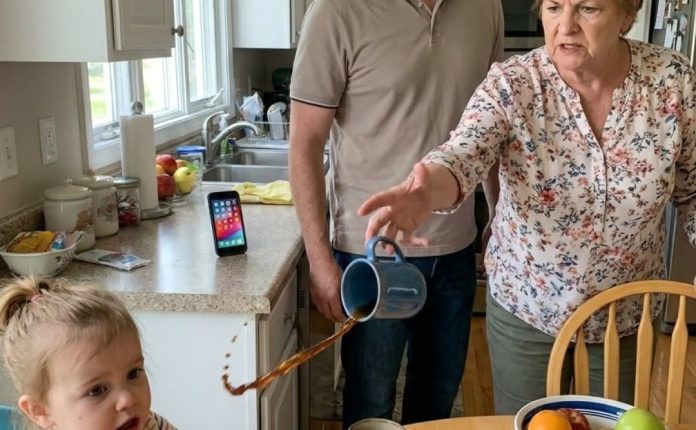
Then she whispered, “She was mad because I spilled it.”
“I know.”
“I didn’t mean to.”
“I know you didn’t.”
She closed her eyes again.
I stayed there until her breathing became steady.
Outside the room, the officer spoke quietly with another investigator. I could hear fragments of their conversation, but I didn’t need every word. The situation had changed from a family argument into something that required evidence, statements, medical documentation, and decisions about my daughter’s safety.
And there was another problem.
My wife still had a version of the story.
She had told the police that I was angry because I wanted a divorce. She had said I was exaggerating what happened. She had suggested that our daughter was frightened and confused and that I was influencing her.
Now the recording gave investigators something independent.
I had not created what happened outside that door.
I had walked into it.
The next morning, a detective came to the hospital.
He asked if I was willing to give a formal statement.
“Yes.”
He placed a recorder on the table.
“Start wherever you believe the relevant events begin.”
So I told him.
I told him about the arguments that had become more frequent. The changes in my wife’s temper. The times my daughter had become unusually quiet when her mother entered the room. The questions I had asked myself and the excuses I had made because I did not want to believe my own suspicions.
Then I told him what I saw when I came home.
I told him about the open door.
The cold.
My daughter.
Her shaking body.
Her words.
“Daddy, my side hurts.”
The detective wrote everything down.
Then he asked, “When did you sign the divorce papers?”
“Earlier that day.”
“Before you saw the injury?”
“Yes.”
“Why?”
I looked at my daughter’s room through the glass panel in the door.
“Because I had already realized something was wrong. I just didn’t know how wrong.”
The detective nodded and continued writing.
By afternoon, the hospital had completed additional examinations. The three fractured ribs were documented in her medical records. The doctors also recorded her symptoms and the history provided to them.
My daughter remained under observation.
I remained beside her.
Meanwhile, my wife’s story began changing again.
First, she said she had only intended to frighten our daughter into behaving.
Then she said she had not realized how cold it was outside.
Then she insisted that our daughter had fallen at some point and that she had been trying to help.
Each version seemed to appear only after investigators confronted her with another piece of information.
The neighbor’s recording made that increasingly difficult.
But the hardest moment came when my wife’s attorney contacted me through the divorce process.
The message was simple: my wife wanted to discuss custody.
I read it twice.
Custody.
After everything that had happened, she still wanted to argue about where our daughter should live.
I handed the phone to the detective.
He read the message and gave it back.
“Don’t respond emotionally,” he said. “Let the legal process handle the communication.”
So I did.
For the first time in weeks, I stopped trying to convince my wife of anything.
There was nothing left to explain to her.
The evidence could speak for itself.
That evening, my daughter woke again.
“Daddy?”
“Yeah?”
“Are we going home?”
I swallowed.
“Not tonight.”
“Why?”
“Because I want you somewhere safe.”
She thought about that.
Then she asked the question I had been dreading.
“Is Mommy going to be mad?”
I looked at her.
“No matter what happens next, none of this is your fault.”
She nodded, but tears gathered in her eyes.
“I spilled the food.”
“You spilled food.”
“I know.”
“That doesn’t make what happened to you okay.”
She stared at me for several seconds.
Then she reached for my hand.
I held it.
The next few days became a blur of interviews, medical appointments, paperwork, and conversations I never imagined having about my own family.
The divorce papers I had once carried in my work bag became part of a much larger legal process.
My wife could no longer reduce everything to a disagreement between two adults.
There was a child involved.
There was medical evidence.
There was independent video.
There were statements.
And there was a little girl who had finally said what she was afraid to say.
The detective eventually showed me the recording o