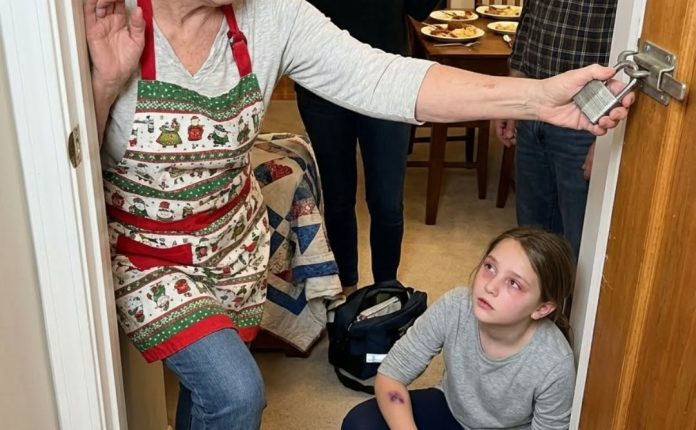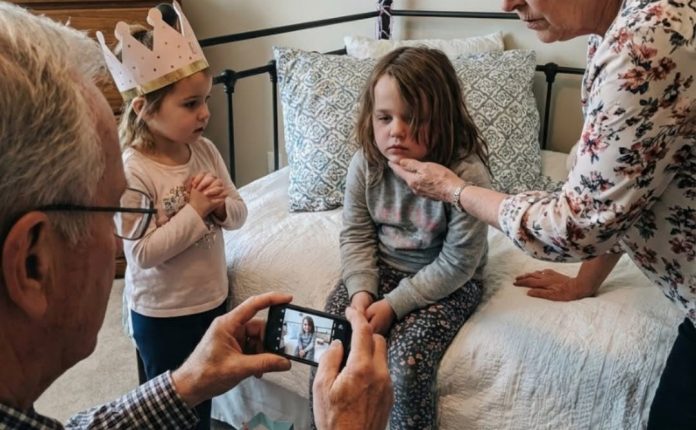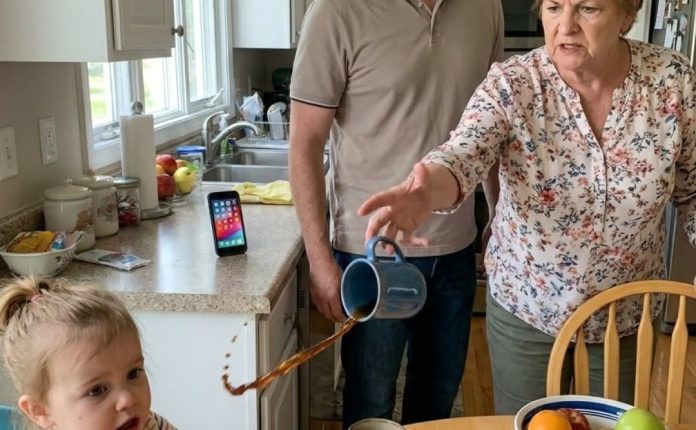
And now my daughters were the ones who had paid for that trust.
My mother sat down too.
She looked at the folded note in my hand.
“I was angry,” she admitted.
“At me?”
“Yes.”
“For what?”
She took a breath.
“For always being expected to fix things.”
I looked at her.
“You could have said no.”
“I didn’t want to say no.”
“Then you chose this.”
She didn’t respond.
That was the first time I understood the difference between a mistake and a choice.
A mistake could happen in seconds.
But she had opened the door.
She had seen them.
She had sent me the message.
And she had still let them remain outside.
My older daughter leaned against me.
“I thought you were mad at me,” she whispered.
My heart broke.
“Why would I be mad at you?”
“Because Grandma said you would be mad if I kept knocking.”
My mother looked up.
The nurse looked at her.
My father rubbed both hands over his face.
That was the first moment my mother stopped defending herself.
She didn’t apologize immediately.
Instead, she asked my daughter, “Did I say that?”
My daughter nodded.
My mother looked down.
“Yes,” she said quietly. “I did.”
No excuse followed.
No explanation.
Just the admission.
My youngest stirred beneath the blanket.
I went to her side.
Her eyes opened briefly.
“Mommy?”
“I’m here.”
“Home?”
“Not yet.”
She reached for my hand.
I gave it to her.
My mother watched us.
Then she said, “I can fix this.”
I looked at her.
“No.”
She seemed surprised.
“I don’t think you can fix this tonight.”
My father started to object, but I raised my hand.
“I’m not saying you can never be part of their lives again. I’m saying you don’t get to decide when they’re safe just because you’re their grandparents.”
My mother looked at my older daughter.
“She loves us.”
“I know.”
“Then don’t take that away from her.”
“I’m not.”
I pulled the blanket higher around my youngest.
“You did something that scared her. I’m not going to teach her that love means pretending it didn’t happen.”
The room stayed quiet.
Not because everyone had suddenly agreed.
Because the decision was no longer about winning the argument.
It was about what my daughters would remember when they were older.
My father finally spoke.
“What do you want us to do?”
I answered honestly.
“Leave.”
My mother looked wounded.
I didn’t soften it.
“Tonight, I want you to leave.”
She stood slowly.
Then she looked at my older daughter.
“Can I say goodbye?”
My daughter didn’t answer.
She looked at me.
I didn’t answer for her either.
That mattered.
For the first time that night, she got to choose.
After a few seconds, she shook her head.
My mother nodded.
She didn’t argue.
She walked toward the door.
My father followed.
At the doorway, he stopped.
“I never meant for them to get hurt.”
I looked at him.
“I believe you.”
He seemed relieved for half a second.
Then I finished.
“But you still left them outside.”
His face changed.
He nodded once and walked out.
My mother stayed behind for another moment.
She looked at the note I was still holding.
Then she said, “Keep it.”
I didn’t understand.
“What?”
“Keep the note.”
She walked out.
I looked down at the paper again.
The handwriting that had been meant to protect her was now the clearest record of what she had known.
I folded it and put it inside my coat pocket.
The nurse returned to my youngest daughter.
She checked the blanket and made sure she was warm.
My older daughter climbed carefully onto the edge of the chair beside me.
She rested her head against my arm.
“Are we going home?” she asked.
“Yes.”
“Together?”
I looked at both of them.
“Together.”
My husband was still being treated, so home would not be simple.
There would be another night in the hospital.
There would be difficult conversations.