
Nina came into the dining room barefoot, holding one pink sock in her fist like it was evidence from a crime scene.
The house smelled like roast chicken, lemon cleaner, and the furniture polish my mother-in-law used whenever she expected people to notice how carefully she maintained appearances.
Forks moved softly against China beneath the hum of the chandelier until my eight-year-old daughter stopped in the doorway and looked at me as though she were trying to make herself smaller.
“Mom,” she said. “My clothes are gone.”
The serving spoon stopped above the salad bowl.
Nobody at the table looked confused.
That was the first thing I noticed.
Sylvia lifted her wineglass with the cool impatience of someone whose evening had been interrupted by a problem she had already decided was beneath her.
Charles leaned back in his chair with the same faint smile he had worn for years whenever he wanted me to remember that, in his mind, I had married upward.
My sister-in-law, Monique, kept her napkin folded across her lap.
Her daughter, Vivian, sat beside her in glittery shoes, swinging her feet under the chair.
I put down the spoon, wiped my hands on the dish towel, and knelt in front of Nina.
“Which clothes, baby?”
“All the ones I like,” she whispered. “My yellow dress. My flower sweater. My jeans with the patch.”
She looked at the sock in her hand before adding, “They cleaned my room, and now everything is gone.”
Sylvia sighed.
“Sweetheart, you should thank us,” she said. “Some things simply aren’t appropriate for this family.”
Charles gave a short laugh and said the yellow dress made Nina look poor.
The comment landed with the casual ease of something that had been discussed before I entered the room.
That realization hurt almost as much as the words themselves.
This was not one impulsive act by an overbearing grandmother.
They had gone through my daughter’s room, selected the things that made her happiest, removed them, and then sat down to dinner expecting her to accept the humiliation as an improvement.
I looked at Monique.
She studied the edge of her plate.
I looked at Sylvia.
She took another sip of wine.
Then Vivian grinned at my daughter and said, “Finally. Someone threw the trash out.”
Nina did not shout or throw the sock.
She folded inward.
Her shoulders rounded, her chin lowered, and her eyes moved from one adult to another as she waited for somebody to say that she was not trash.
Nobody did.
For a second, I imagined turning the table over.
I imagined crystal breaking against the floor, gravy running across the rug, and Charles losing the smile he used whenever cruelty entertained him.
I imagined giving them a scene so loud they could never pretend not to understand it.
Then I looked at Nina.
She did not need to watch her mother become another frightening adult in the room.
She needed one adult to choose her without hesitation.
Anger is easy for cruel people to dismiss as instability.
Records are harder.
I placed my hand against Nina’s back and asked whether she wanted to stay there that night.
She shook her head once.
That small movement ended something in me that had taken years to build.
I had spent most of my marriage translating Sylvia and Charles into softer language.
Sylvia was not controlling; she was particular.
Charles was not insulting; he was blunt.
Their constant comments about my clothes, my job, my family, and the way I raised Nina were not meant to wound me; they were simply traditional.
Elliot had supplied most of those translations.
He loved his parents, and for a long time I had mistaken his need to keep peace for patience.
We had been married long enough for me to know the exact expression he would wear when he heard about the clothes.
His forehead would crease.
He would rub both hands over his face.
Then he would say he was going to talk to them.
Talking had protected everyone except the person being hurt.
I reached for Nina’s hand.
Sylvia lowered her glass and told me not to make a scene.
“We’re leaving,” I said.
Charles laughed as though I had just announced that I planned to buy a private island.
“And where exactly will you go, Natalie?” he asked. “You don’t have the money for this kind of drama.”
He had said versions of that sentence for years.
Sometimes he said it when I declined Sylvia’s offer to buy me a more suitable coat.
Sometimes he said it after family vacations I skipped because I preferred paying my own way to accepting a gift that would later become a debt in conversation.
Once, he had said it in front of Nina after I told him she did not need a more expensive birthday party.
He had built an entire picture of me from the things I did not display.
Because I did not brag, he assumed I had nothing.
Because I did not compete with Sylvia, he assumed I could not.
Because I let Elliot’s family believe their company had survived on clever management and good timing, they assumed I had never contributed anything important.
That mistake had been useful for longer than any of them understood.
Nina and I went upstairs.
We packed the clothes they had left behind, her school tablet, her stuffed rabbit with one worn ear, and the sketchbook she kept beneath the mattress because Vivian sometimes drew mustaches on her animals when nobody was looking.
The detail about the sketchbook stopped me.
I asked how long that had been happening.
Nina shrugged and said, “It’s okay. Grandma says Vivian is just playing.”
That sentence told me the problem was older than the missing clothes.
Sylvia had not merely taught Nina that certain outfits were unacceptable.
She had been teaching her that discomfort was the price of belonging.
Children do not forget those lessons when adults call them little things.
They remember who made them feel small.
Sylvia stood in the foyer with her arms crossed while we came downstairs.
Monique remained several feet behind her, close enough to witness everything and far enough to avoid responsibility.
Vivian watched from beside her mother.
“She’ll come back,” Sylvia said. “Children forget these things.”
“No,” I told her. “They remember who made them feel small.”
That was the only line I gave her.
I did not tell her where we were going.
I did not tell Charles that he was wrong about my money.
I did not explain why I was not frightened by the hotel bill or what would happen when Monday morning arrived.
I simply took Nina outside.
At the hotel, Nina asked permission before touching everything.
She asked whether she was allowed to use the robe.
She asked whether the glass water bottle cost extra.
She asked whether she could unwrap the small bar of soap beside the sink.
Every question landed beneath my ribs because it showed me what that house had been teaching her while I was busy trying to prevent arguments.
At 9:42 p.m., Elliot opened the hotel room door.
Nina was asleep among the pillows with the pink sock still curled inside her hand.
Elliot looked from her to me and seemed to understand that whatever he said first would matter.
Unfortunately, he chose the words his parents had already prepared for him.
“They said you overreacted.”
I laughed once.
There was nothing humorous in it.
“Your parents threw away our daughter’s clothes,” I said. “They sat at dinner while Vivian called her trash.”
He lowered his voice, as though volume were the real danger.
“They said they were cleaning.”
“They chose her favorite things.”
“They probably didn’t think.”
“They discussed it before dinner.”
“I’ll talk to them.”
“Talking is over.”
He sat on the edge of the bed and rubbed both hands over his face exactly as I had imagined.
For years, Elliot had treated every incident as separate.
A comment about my family was one misunderstanding.
A criticism of Nina’s hair was another.
Sylvia entering our room without knocking was simply her house, her rules.
Charles joking about my income was bad humor.
Taken individually, each incident looked survivable.
Placed side by side, they formed a system.
His phone began buzzing.
Once.
Twice.
Then repeatedly.
The family group chat filled with messages, but he ignored them until an audio file appeared.
He stepped onto the balcony and pressed play.
Through the glass, I watched his posture change.
His shoulders went rigid first.
Then his jaw tightened.
By the time he came back into the room, every excuse had left his face.
“They didn’t mean to send that to me,” he said.
I waited.
“My mother said Nina is weak like you.”
His voice lowered further.
“My father said you would crawl back because you have nothing without us.”
The room changed after that.
Not because the words surprised me.
Because Elliot finally heard his parents when they thought nobody important was listening.
He sat beside the sleeping shape of our daughter and stared at the sock in her hand.
“I didn’t know,” he whispered.
“You knew pieces,” I said. “You just kept refusing to put them together.”
That was the most honest thing I had ever said to him about his family.
It was also the least cruel.
I opened my laptop at 10:13 p.m.
The first account showed an emergency operating loan.
The second showed a credit extension.
The third contained the payroll bridge transfers that had kept the family company from missing paychecks during its worst months.
Three years earlier, Elliot had come home after midnight and admitted the company was in trouble.
He had not asked me directly for money.
He had only said Charles was desperate, Sylvia was terrified of losing the life she had built, and dozens of employees depended on the company surviving the quarter.
I had access to funds from investments I managed under the name I used before marrying Elliot.
I also understood lending better than Charles ever suspected.
I arranged the first bridge because employees should not lose their paychecks over an owner’s pride.
I structured it as a documented loan because generosity without records becomes permission for people to rewrite history.
Wire confirmations were saved by date.
Renewal forms were signed.
Payment schedules were entered into the calendar.
Bank notices were filed beneath the company’s business name.
The company’s bookkeeper knew the lending account.
Charles and Sylvia knew there was financing, but they never bothered to examine the source closely enough to connect it to me.
They preferred believing the money had appeared because powerful people recognized Charles’s importance.
I had allowed that belief to stand because Elliot wanted to protect his father’s pride.
That had been my trust signal to him.
I kept his family’s secret, preserved their public dignity, and never once used the loans to demand a place at their table.
In return, they used that table to humiliate my daughter.
Elliot stared at the screen as I opened each file.
The emergency operating loan carried the original transfer date.
The credit extension showed two renewals.
The payroll bridge contained a schedule of payments that matched the weeks Charles had boasted about making difficult decisions to protect his workers.
The final renewal was due before Monday morning.
Elliot leaned closer when the lender identity field appeared.
The account carried my pre-marriage name.
He recognized it immediately.
His mouth opened, but nothing came out.
For the first time that night, he looked at me the way his parents never had.
Not as the quiet wife who tolerated their judgment.
As the person whose decisions had been keeping their company alive.
“What are you going to do?” he asked.
“I’m going to read every agreement before I decide anything,” I said.
That answer disappointed the angry part of me.
It was also the right one.
I did not end the loans from the hotel room in a burst of revenge.
I reviewed the payment terms, the renewal dates, and the written notice requirements.
I documented what had already been paid and what remained outstanding.
I separated the family insult from the financial decision until I could explain, clearly and truthfully, why the relationship no longer carried enough trust for another extension.
The next morning, Nina woke and asked whether she had done something wrong by telling me about her clothes.
I sat beside her on the bed.
“No,” I said. “You did exactly the right thing.”
“Grandma said they were ugly.”
“They were yours.”
“Vivian said they were trash.”
“Vivian was cruel, and the adults should have stopped her.”
Nina looked toward Elliot.
He had been standing near the window with a paper coffee cup in his hand.
He set it down and came to sit on her other side.
“I should have stopped things sooner,” he told her. “I’m sorry.”
It was not a grand speech.
It did not repair the night.
But it was the first apology he gave without translating his parents into nicer people.
Over the next several days, I replaced only what Nina needed immediately.
I let her choose.
She picked another yellow dress.
It was brighter than the first one.
She held it against herself in the fitting-room mirror and asked whether it made her look poor.
I told her it made her look like a child who loved yellow.
Elliot turned away for a moment because his eyes had filled.
Meanwhile, I completed the financial review.
The company had relied on the extensions more heavily than Charles had admitted.
The upcoming renewal was not a small convenience.
It was the bridge he expected to carry payroll and operating costs into the next cycle.
Nothing in our agreements required me to continue lending indefinitely.
The money was not a gift.
The relationship depended on renewal, documentation, and trust.
Trust had not disappeared because Sylvia disliked a dress.
It had disappeared because the family had entered my daughter’s room, removed her belongings, mocked her distress, and then expected me to remain financially useful while accepting personal contempt.
Two weeks after the dinner, the notices were delivered to the company’s registered business address.
The first letter confirmed that the current loans would remain governed by their existing repayment terms.
The second stated that the credit extension would not be renewed.
The third ended any expectation of additional payroll bridge funding.
There were no insults in the letters.
There were no references to Vivian, the pink sock, or the dining table.
There were dates, account numbers, balances, and deadlines.
Some people are not afraid of shouting.
They are afraid of records.
Charles called Elliot first.
I could hear his voice through the phone from across the hotel room.
He demanded to know which lender had suddenly become unreasonable.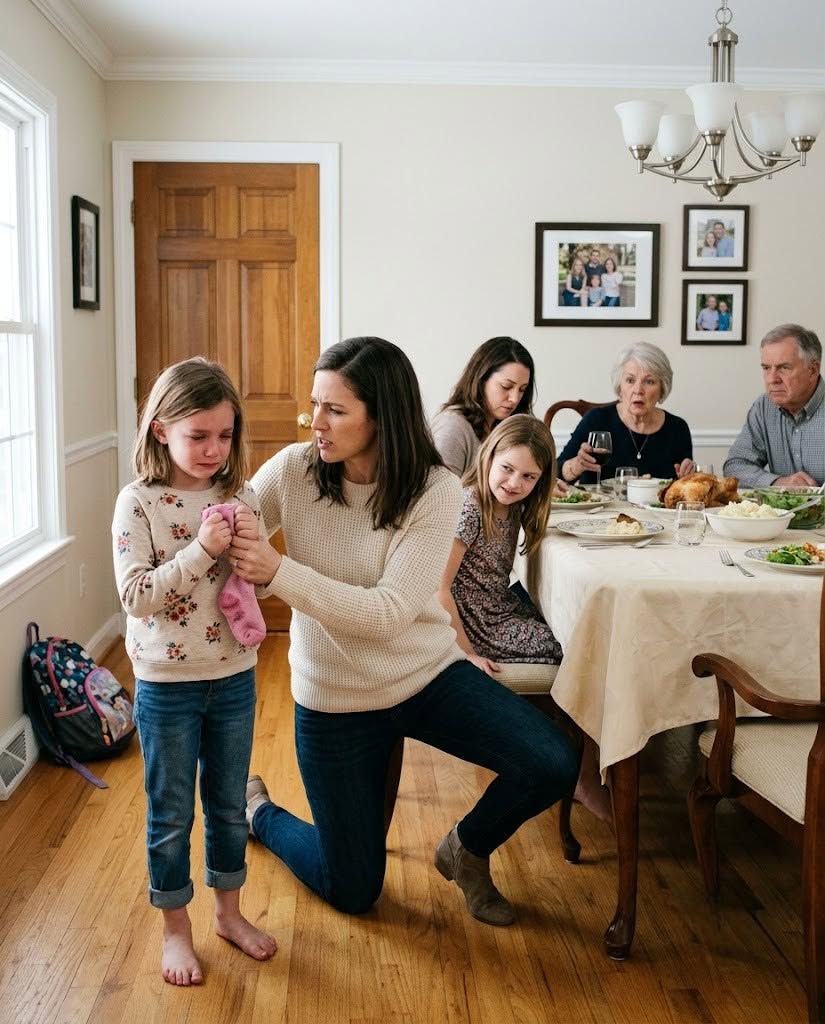 Elliot looked at me before answering.
“The lender is Natalie.”
Silence followed.
Even from several feet away, I could feel it.
Charles asked him to repeat the sentence.
Elliot did.
Then Sylvia took the phone.
She accused me of using a child’s tantrum to destroy the family.
I did not accept the call.
I sent one message instead.
The loans were documented business arrangements, the renewal decision was final, and all further financial communication needed to remain in writing.
Charles sent three messages that afternoon.
The first was angry.
The second was insulting.
The third asked whether we could discuss a shorter extension.
I saved all three.
Monique contacted Elliot and said she had not known the loans came from me.
That was true, but it was not an apology.
She also said Vivian was young and did not understand what she had said.
Children learn where to aim by watching which people adults refuse to defend.
Vivian had watched the adults mock Nina’s clothes, and she had understood the lesson perfectly.
Elliot told his sister that explanation was not good enough.
It was the first time I heard him confront his family without asking me to stand beside him and absorb the consequences.
The company did not vanish overnight.
Ending a renewal was not magic, and I had no interest in pretending it was.
Charles still had a business to manage, obligations to meet, and time to find legitimate replacement financing.
What he no longer had was invisible access to my money while treating me as though I contributed nothing.
That was the real consequence.
The family had spent years confusing my silence with dependence.
They learned the difference when the letters arrived.
Nina and I did not return to Sylvia’s house.
Elliot stayed with us, though staying required more than choosing a hotel room over his parents’ dining table.
He began correcting the small things immediately.
When Sylvia sent a message claiming Nina had misunderstood, he did not ask Nina to explain herself again.
When Charles called the missing clothes a misunderstanding, Elliot named it plainly.
When Monique asked us to keep the cousins together for the sake of family, he said family did not require Nina to practice being humiliated.
None of that erased the years he had spent softening their behavior.
It did show that he finally understood what repair would require.
One evening, Nina placed the pink sock on the hotel desk beside my laptop.
“Can we throw it away?” she asked.
I told her she could decide.
She thought for a moment, then shook her head.
“I want to keep it until I find the other one.”
There was something hopeful in that answer.
Not because the matching sock was likely to return.
Because Nina no longer held the object like proof that she had been rejected.
It was simply hers again.
A week later, she wore the new yellow dress to breakfast.
She spilled a little juice on the front and laughed when Elliot hurried for a napkin.
Nobody told her it looked cheap.
Nobody inspected the fabric or suggested that she should be grateful for something more appropriate.
She sat in the morning light with her stuffed rabbit beside her and asked for another pancake.
That ordinary request felt larger than it should have.
For too long, an entire family had treated comfort as something Nina needed permission to receive.
That morning, she reached for it without asking.
The loan letters did not teach Sylvia compassion.
They did not transform Charles into a humble man.
Consequences rarely rewrite people that neatly.
What the letters did was end an arrangement in which cruelty flowed in one direction and support flowed quietly in the other.
They drew a boundary Charles could not laugh away and Sylvia could not redecorate into something prettier.
Most importantly, they showed Nina that leaving the table had not made us weak.
It had made room for a life in which she did not have to shrink to keep adults comfortable.
Children remember who made them feel small.
They also remember who took their hand and stood up.
Elliot looked at me before answering.
“The lender is Natalie.”
Silence followed.
Even from several feet away, I could feel it.
Charles asked him to repeat the sentence.
Elliot did.
Then Sylvia took the phone.
She accused me of using a child’s tantrum to destroy the family.
I did not accept the call.
I sent one message instead.
The loans were documented business arrangements, the renewal decision was final, and all further financial communication needed to remain in writing.
Charles sent three messages that afternoon.
The first was angry.
The second was insulting.
The third asked whether we could discuss a shorter extension.
I saved all three.
Monique contacted Elliot and said she had not known the loans came from me.
That was true, but it was not an apology.
She also said Vivian was young and did not understand what she had said.
Children learn where to aim by watching which people adults refuse to defend.
Vivian had watched the adults mock Nina’s clothes, and she had understood the lesson perfectly.
Elliot told his sister that explanation was not good enough.
It was the first time I heard him confront his family without asking me to stand beside him and absorb the consequences.
The company did not vanish overnight.
Ending a renewal was not magic, and I had no interest in pretending it was.
Charles still had a business to manage, obligations to meet, and time to find legitimate replacement financing.
What he no longer had was invisible access to my money while treating me as though I contributed nothing.
That was the real consequence.
The family had spent years confusing my silence with dependence.
They learned the difference when the letters arrived.
Nina and I did not return to Sylvia’s house.
Elliot stayed with us, though staying required more than choosing a hotel room over his parents’ dining table.
He began correcting the small things immediately.
When Sylvia sent a message claiming Nina had misunderstood, he did not ask Nina to explain herself again.
When Charles called the missing clothes a misunderstanding, Elliot named it plainly.
When Monique asked us to keep the cousins together for the sake of family, he said family did not require Nina to practice being humiliated.
None of that erased the years he had spent softening their behavior.
It did show that he finally understood what repair would require.
One evening, Nina placed the pink sock on the hotel desk beside my laptop.
“Can we throw it away?” she asked.
I told her she could decide.
She thought for a moment, then shook her head.
“I want to keep it until I find the other one.”
There was something hopeful in that answer.
Not because the matching sock was likely to return.
Because Nina no longer held the object like proof that she had been rejected.
It was simply hers again.
A week later, she wore the new yellow dress to breakfast.
She spilled a little juice on the front and laughed when Elliot hurried for a napkin.
Nobody told her it looked cheap.
Nobody inspected the fabric or suggested that she should be grateful for something more appropriate.
She sat in the morning light with her stuffed rabbit beside her and asked for another pancake.
That ordinary request felt larger than it should have.
For too long, an entire family had treated comfort as something Nina needed permission to receive.
That morning, she reached for it without asking.
The loan letters did not teach Sylvia compassion.
They did not transform Charles into a humble man.
Consequences rarely rewrite people that neatly.
What the letters did was end an arrangement in which cruelty flowed in one direction and support flowed quietly in the other.
They drew a boundary Charles could not laugh away and Sylvia could not redecorate into something prettier.
Most importantly, they showed Nina that leaving the table had not made us weak.
It had made room for a life in which she did not have to shrink to keep adults comfortable.
Children remember who made them feel small.
They also remember who took their hand and stood up.