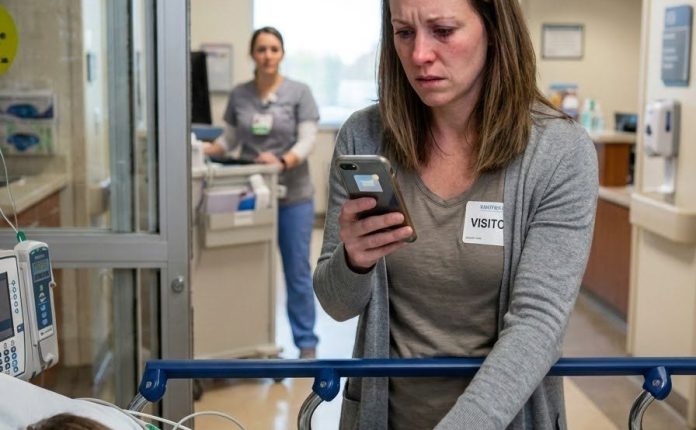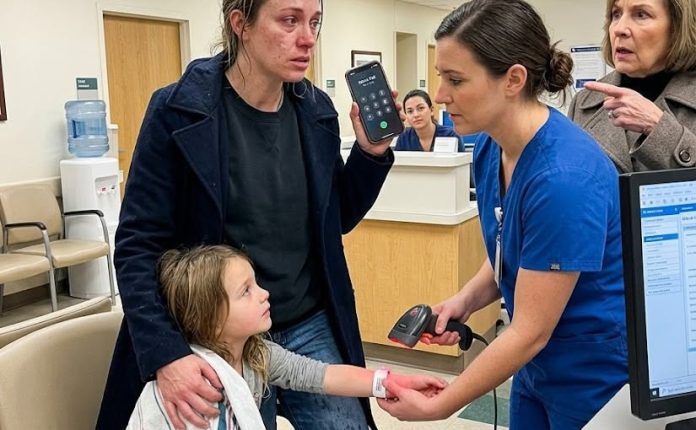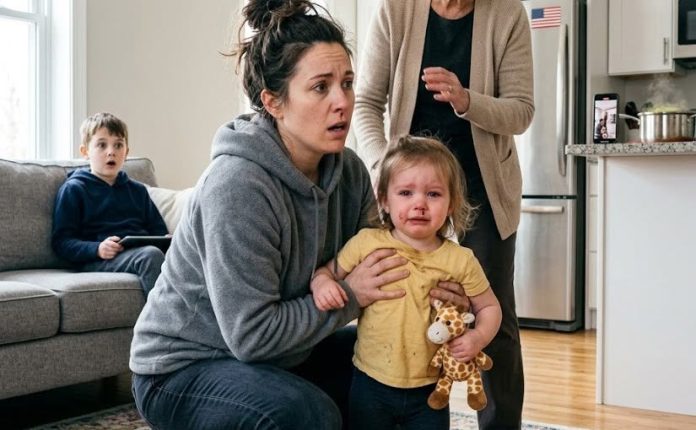
‘He told dispatch that you abandoned the girls outside Vance Financial and drove away after threatening your parents,’ the officer said. ‘He asked us to find you before you returned to the hospital.’
His nameplate read Daniel Ruiz.
I looked from him to the brass key, then back to Maisie beneath the heated blankets.
‘I never went near their office.’
Officer Ruiz held out his hand for my phone.
I unlocked it and gave it to him.
My location history showed the route from Oakwood Lane directly to Riverside General, followed by the parking-garage entry at 2:18 p.m.
The intensive-care form showed my signature at 2:34.
Ruiz studied both screens without changing his expression.
‘Your father called at 2:12,’ he said. ‘He reported that the children were already standing behind the locked accounting office.’
Maisie turned her face toward me.
‘We weren’t there yet.’
Ruiz moved closer to her bed.
I kept my hand around hers while he asked what happened after Grandma locked the deadbolt.
Maisie swallowed.
She said Ruby had started pounding on the door with both mittens, crying that she was hungry.
Then the garage opened.
My father stepped out without a coat.
He pressed the brass key into Maisie’s palm and told her the accounting office was warm, even though it was closed for Christmas.
‘He said to follow the road past the creek,’ Maisie whispered. ‘He said someone would meet us.’
No one did.
The office was nearly two miles away.
Ruby had made it past the first intersection before one velvet shoe filled with snow.
Maisie carried her for a while, lost her balance near Briar Creek Road, and dragged her behind a snowbank when the wind became too strong.
The driver who found them had stopped because he saw the gray rabbit in the road.
Officer Ruiz lowered the evidence sleeve.
His first report had treated me as the person who abandoned them.
Now he asked a nurse to photograph Maisie’s wrists where Ruby’s coat sleeves had rubbed the skin raw.
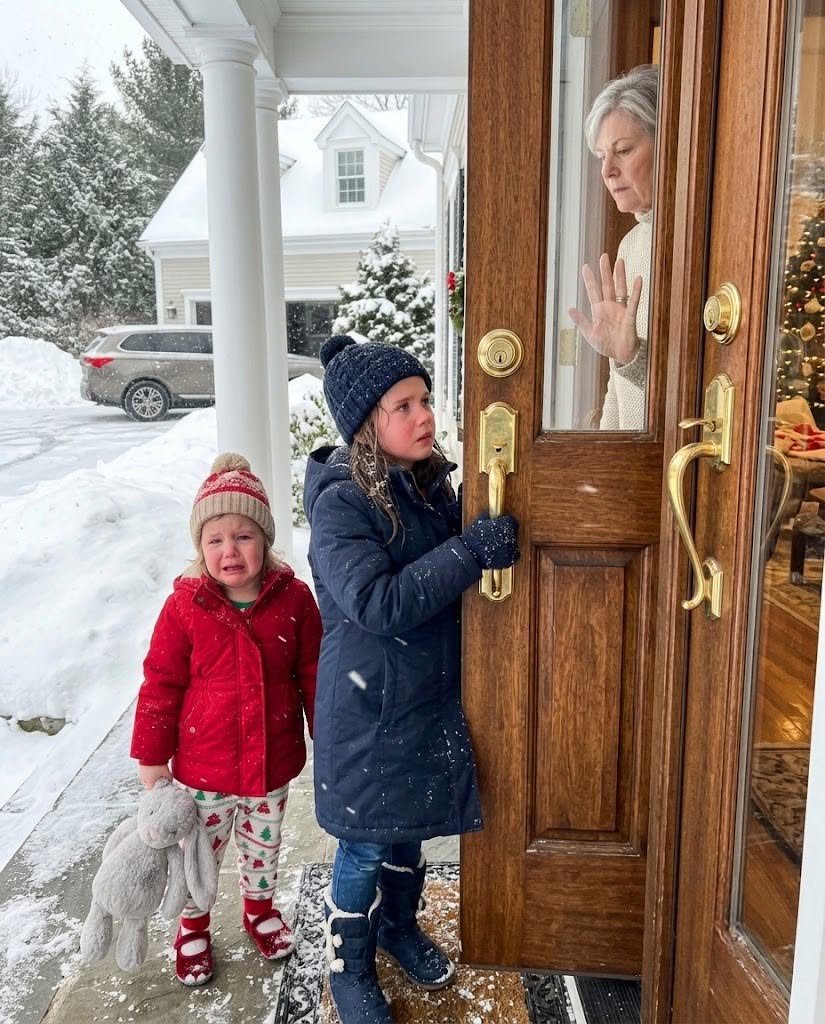
I requested a hospital security restriction before my parents could arrive. No calls. No visitors. No information about room numbers, discharge plans, or David’s condition. The nurse, Kara Mills, entered the restriction while the pediatric bay smelled of warmed plastic and disinfectant. Ruby slept beneath a silver warming cover, her small chest lifting unevenly. Kara said David would probably remain unconscious until morning. I nodded and did not tell her I had not eaten since one cinnamon roll before noon. My mother called three times while Ruiz took Maisie’s statement. On the fourth call, I answered. ‘Where are my children?’ I asked. Helen exhaled as though I had inconvenienced her. ‘They’re confused, sweetheart. The weather frightened them, and children invent explanations when they’re upset.’ ‘Maisie says you locked them out.’ ‘We were trying to calm the situation.’ ‘You told them to get lost.’ ‘That isn’t language I would use.’ Ruby made a weak sound beneath the warming cover. I watched her bandaged fingers curl around nothing. ‘You won’t see them,’ I said. Helen’s voice softened. ‘You have a critically injured husband, two distressed children, and no sleep. Let your father and me handle the police before you make this worse for yourself.’ I ended the call and handed the phone to Ruiz so he could record the time. At 4:18 p.m., my parents appeared outside the pediatric unit. My father wore a charcoal overcoat and carried a blue folder from his firm. My mother had changed into a dry sweater. Through the narrow window, I watched her speak to hospital security with one hand pressed over her heart. Ruiz met them in the corridor. I could not hear every word, but I saw my father open the blue folder and point to printed pages. Several minutes later, Ruiz returned alone. ‘Your father says the key was stolen from his office months ago,’ he said. He placed a photocopy on the counter. It was a key-control report used by Vance Financial because its employees handled confidential client records. The last line showed that key number K-17 had been removed from the secure cabinet at 12:41 p.m. that day. The electronic signature beside it belonged to Thomas Vance. My father had brought the document to prove the key was missing. He had not noticed what the first page proved. Ruiz read the line twice. Then he asked hospital security to move my parents away from the pediatric floor. The power shift was quiet. My father’s finger stopped tapping the folder. My mother’s polished hand dropped from her chest. Ruiz did not apologize for believing their call. He simply turned his body between them and the unit doors. Sometime after five, Ruby’s temperature began rising. Her doctor said the cold had not caused permanent organ damage, but the cracked skin on her fingers would need weeks of care. Maisie refused food until I opened the pudding cup myself and tasted the first spoonful. She ate three bites. I wiped melted snow from the rabbit’s plastic eye even though it changed nothing. Upstairs, David’s blood pressure dropped again. A surgical resident called while I was helping Ruby drink warm apple juice. The bleeding near his liver had increased, and the team was taking him back to surgery. For several minutes, everything I had regained disappeared. I could not be beside my husband without leaving our daughters. I could not follow the police investigation without answering questions beside two hospital beds. I signed consent for David’s procedure over the phone while Maisie watched my hand shake. She pushed the pudding cup toward me. ‘You should eat.’ I swallowed one spoonful because she was watching. Ruiz returned with the original dispatch summary. My father had given police my license plate, my coat color, and a description of the girls’ clothes. He said I had become unstable after David’s crash. He also said he had discovered the children behind the Vance Financial office at 2:12. The drive from Oakwood Lane to that office took at least seven minutes in clear weather. Maisie said they had not left the porch until after the garage opened. My father had reported their supposed location before they could have reached it. I remembered an orange county snowplow idling near the entrance to Oakwood Lane when I drove away. Its beacon had flashed across my rear window. Ruiz wrote down the route number from the photograph I had taken accidentally while trying to send David’s sister a picture of the snow. The image was crooked and mostly dashboard. The plow was visible in one corner. That detail mattered later. At the hospital, it gave Ruiz somewhere else to look. My parents left after security warned them they would be removed from the property. Before leaving, Helen sent one message. She wrote that she loved the girls too much to let a misunderstanding destroy the family. I saved it without replying. At 7:06 p.m., a hospital social worker brought me temporary safety-plan forms. Signing them meant the girls could not be released to anyone except me or David. It also meant I had to provide an address where my parents had no access. They owned the house where we lived. The deed was theirs, although David and I had paid rent for six years. I wrote down the address of David’s sister, Claire, forty minutes away. Then I called Claire and asked whether three exhausted people could stay after discharge. She said yes before I finished the sentence. That was the only easy answer all day. Near nine, Officer Ruiz called from the county road department. The snowplow’s forward camera had recorded the Oakwood Lane intersection. At 2:14 p.m., it showed Maisie walking into the road with Ruby on her back. Neither child wore a hat. At 2:15, my father’s car backed halfway out of the driveway. It remained there until the girls disappeared beyond the trees. Then it returned to the garage. Ruiz asked permission to play the clip for Maisie later, when a child specialist was present. I said no for that night. She had already carried enough. David came out of surgery at 10:52. The bleeding was controlled. Kara had been wrong about him staying unconscious until morning. At 11:46, he opened his eyes while I stood beside his bed wearing paper shoe covers over wet socks. His voice barely reached me. ‘Where are the girls?’ ‘Downstairs. They’re warm.’ He closed his eyes again. I told him what my parents had done in pieces, stopping whenever the monitor changed rhythm. When I mentioned the key, his fingers tightened around the bed rail. ‘Your dad called me last week,’ he whispered. I leaned closer. David said Thomas had wanted him to sign a new engagement letter allowing Vance Financial to manage our tax records without outside review. David had refused because one page permitted the firm to communicate with creditors and banks in our names. The argument ended with Thomas saying David had made himself an enemy of the family. I asked whether David had kept the document. He nodded toward his damaged truck as though it were parked outside the room. ‘Glove box.’ The truck was in a police impound lot after the crash. I told Ruiz about the document, but I did not pretend it explained what happened to the girls. It established another conflict. Nothing excused the porch. Two days later, both girls were discharged to Claire’s house. David remained in intensive care. Maisie slept in her coat for the first week, and Ruby screamed whenever anyone turned a deadbolt. I stopped using the lock after dark and placed a chair beneath the handle instead. It was less secure. It let Ruby sleep. My parents responded through an attorney. The letter described the incident as an unfortunate communication failure during an emergency. They offered to cover the girls’ hospital bills, replace damaged clothing, and pay six months of rent somewhere else. In return, I would withdraw my request for a protective order, decline further interviews, and agree not to discuss Vance Financial publicly. For one afternoon, the offer looked like an ending. David could not work. We had medical bills, no permanent home, and two children who needed therapy. I placed the letter beside the cold soup Claire had left for me and read every page. Then I noticed that the payment would be made only after the criminal inquiry closed without charges. They were not offering help. They were setting a price for silence. I scanned the letter and sent it to the prosecutor assigned to the false-report investigation. Then I refused the offer. The next morning, Vance Financial changed every exterior lock and reported that the brass key no longer opened the building. The old key remained in police evidence. The criminal case moved slowly. Ruiz interviewed Maisie again with a child advocate present. Ruby was too young for a formal statement, but she repeatedly demonstrated the same sequence with a toy house: grandmother at the door, lock turning, grandfather giving a key, two children walking away. My parents maintained that they believed an employee was waiting at the office. No employee had been scheduled. The firm’s holiday calendar showed the building had been closed since noon on Christmas Eve. The key-control system showed my father had signed out K-17 less than an hour after David’s crash. The snowplow video showed him watching the girls leave. My phone history showed I had driven directly to the hospital. Still, the strongest evidence came from the call my father had made at 2:12. At the preliminary hearing, the prosecutor played the full recording rather than reading the dispatcher’s summary. My father’s voice sounded calm. He gave our names, described my car, and said I had abandoned the girls behind his office. The dispatcher asked whether he could currently see them. Before he answered, my mother’s voice came through the background. ‘Don’t say Oakwood, Tom. Say the office, or they’ll bring them back here.’ The courtroom stayed silent after the recording ended. My father looked at the table. My mother reached for a water glass and missed it by an inch. The prosecutor filed child-endangerment charges against both of them and a false-report charge against my father. Months later, they entered no-contest pleas under an agreement that included supervised probation, restitution for the girls’ medical care, mandatory counseling, and a criminal no-contact order. The judge prohibited them from approaching the girls, their school, our home, or David’s rehabilitation clinic. The order did not repair Christmas. It gave us enforceable distance. Two senior employees left Vance Financial after the plea became public record, and my parents sold the remaining client accounts the following summer. I did not contact their clients or post the dispatch recording. Their own filings were enough. David spent eleven days in the hospital and several months learning to move without guarding his left side. The girls visited only after the tubes were gone. Maisie brought him the gray rabbit because Ruby said Daddy needed someone to watch him sleep. By spring, Ruby wore the velvet shoes once more, although the hospital had kept the wet one as evidence until the case ended. Maisie never asked to return to Oakwood Lane. Neither did I. When police released the evidence, Officer Ruiz handed me the brass key inside a small paper envelope. The white Vance Financial tag was scratched and bent. I took it to a locksmith and had a red emergency cabinet fitted to the old key. Inside the cabinet, I placed copies of our medical contacts, Claire’s number, a flashlight, spare mittens, and a card explaining where the girls should go during an emergency. I removed the white company tag and gave the key to Maisie. The brass key now belongs to her, and it opens the emergency cabinet in our kitchen.