“Keep your toast brief, Natalie. Nobody wants to revisit old complaints.”
My father delivered this instruction while removing a photograph of me from the anniversary pile.
We were sitting in the private dining room of a restaurant outside Dayton. The party was three weeks away. Brooke had brought a binder, my mother had brought photographs, and I had apparently brought a reputation that required advance management.
“I haven’t written a toast,” I said.
Dad tapped the photograph against the table.
“Good. Then we’re ahead of it.”
In the picture, I was seventeen, standing beside the Ford Ranger he had given me. One hand held the driver’s door against my hip because the latch had stopped catching that morning.
Brooke reached for it.
“Oh, include that. Remember how you had to climb through the passenger side?”
“I remember.”
“You used to make that sound hilarious.”
That was how I had made most things bearable.
My name is Natalie Hale. At forty-one, I had spent almost half my life working in film postproduction. I had started by labeling tapes and synchronizing sound, progressed to editing features, supervised other editors, and eventually founded a company.
My father’s preferred description remained, “She does computer work at home.”
Sometimes he added that I was good at taking the dull sections out of movies.
Brooke’s work required less translation. She was a regional sales director for a commercial kitchen equipment company. She could explain a difficult quarter using numbers Dad understood, and he would lean forward as though the national economy depended on her next sentence.
I knew she worked hard. I had watched her answer customer calls while brushing her teeth. The problem was never that Brooke deserved nothing.
It was that whatever she deserved seemed to establish what I could do without.
We called it seventy-thirty only after we were adults. As children, we had no name for it.
Brooke got the larger birthday budget, the newer winter coat, the summer program with housing included. If her plans changed, my parents adjusted. If mine became expensive, Dad explained how constraints encouraged resourcefulness.
When she turned seventeen, a blue Honda appeared in our driveway with a bow on the hood.
Three years later, Dad handed me the Ranger’s keys.
“Still plenty of life in it.”
There was life in it. Much of that life appeared to be devoted to making unfamiliar noises.
I kept a screwdriver in the cup holder for the loose window crank. The ceiling fabric rested against my hair. On hot days, I drove with both windows down and arrived wherever I was going smelling faintly of warmed vinyl.
Mom told me Brooke’s car had been a particularly good deal.
I believed her. That did not make my door close.
College repeated the pattern with larger numbers.
Brooke went to a private university. My parents paid most of her tuition, helped with rent, and sent her to Madrid for a semester.
When I was accepted into film school in California, they contributed enough to matter and little enough that the remainder organized my entire life.
I worked in an equipment cage, picked up shifts at a campus café, and spent school breaks doing anything that left my hands free enough to edit afterward.
During my second year, I found a used professional workstation for just under three thousand dollars.
Dad listened while I explained why the school computers were unavailable overnight and why the projects I was taking on needed more storage.
Then he asked whether their old Dell could do it.
I stopped explaining before he could hear me cry.
The workstation went on a credit card. I paid for it with weddings, safety videos, student shorts, and an advertisement for a dentist who insisted that artificial fog would make porcelain veneers seem exciting.
For months, I ate beside that keyboard with the bowl balanced well away from it. I could replace noodles. I could not replace the machine.
Brooke bought her first house at twenty-eight with help from our parents.
When I moved into an apartment that did not require sharing a bathroom, Mom sent me a toaster.
I used it for eleven years. One slot charred bread; the other seemed to offer encouragement.
These were details I rarely recited together. Separately, each could be explained. Together, they suggested a pattern nobody wanted named.
Aunt Linda came closest one Christmas.
She watched Mom hand us envelopes of visibly different thickness, then cornered me beside the sink.
“Yours has money in it?”
“Yes.”
“As much?”
“No.”
Linda dried a plate with unnecessary force.
At the planning lunch, she was absent. I missed her.
Brooke spread out her proposed schedule.
Dinner. Anniversary film. Her remarks. My remarks. Cake.
Beside her name, she had typed Host.
Beside mine, Technical assistance.
“How long a film?” I asked.
“Thirty-five minutes? Forty?” Mom said. “People love looking at photographs.”
“People love the first ten minutes of looking at photographs,” I said.
Brooke smiled without looking up.
“You can make it interesting. That’s your thing.”
I had two projects approaching delivery, an employee on parental leave, and a facility still settling into its opening schedule. My family knew some version of this.
I had told them. Whether they had retained it was another question.
“I can make ten minutes,” I said. “I need the photographs and messages by Friday.”
Dad glanced at Brooke.
“We’re not asking you to produce a Hollywood epic.”
“No. You’re asking me to finish a film.”
His expression tightened at my use of the word.
Mom touched my wrist.
“It’s a gift.”
“I know. Ten minutes is the gift I can give.”
For several seconds, nobody answered.
Then Brooke wrote something in her binder hard enough to leave an impression on the sheet underneath.
My husband, Grant, was waiting in the parking lot when I came out.
He took one look at me and moved his coffee off the passenger seat.
“How much free labor?”
“Ten minutes.”
“That sounds almost reasonable.”
“After several unreasonable minutes.”
He reached across and squeezed my knee.
Grant understood my family without pretending he stood entirely outside its history.
Years before we married, he had dated Brooke. Years before Brooke married Jason, Jason had dated me.
There had been no overlap. There had been years between the relationships, separate cities, different jobs, ordinary breakups.
Aunt Linda had still found it necessary to map the marriages on a cocktail napkin.
Grant had assured her that six years constituted a respectable waiting period.
Jason had asked her to stop calling it a trade.
That was the family version of the story: awkward, funny, harmless.
The less funny consequence was that Brooke occasionally spoke to Grant with the authority of someone who assumed she had known him first and therefore knew him best.
Once, when he praised a film I had edited, she said, “You’ve always been easily impressed by creative people.”
He answered, “I’ve become more selective.”
She laughed. I knew him well enough to hear that he had not been joking.
On the drive back from lunch, I told him about Technical assistance.
“Did you ask her to change it?”
“It’s an internal schedule.”
“That wasn’t my question.”
I watched the winter-brown fields beyond the highway.
“I’m tired of explaining what every little thing means.”
“Then don’t explain every little thing. Correct the ones you’re standing in front of.”
Friday came without photographs from Brooke.
Sunday brought a folder containing eighty additional images and a request to remove one Mom had already supplied.
It showed me holding a student filmmaking certificate, squinting in bright sun. Dad’s arm lay across my shoulders, though his face was turned toward someone outside the frame.
Too many graduation pictures, Brooke wrote. Let’s keep this about their marriage.
I opened the folder. There were six images from her university commencement.
I left mine in.
Over the next two weeks, I repaired faded colors, recorded relatives, and listened to Mom describe the kitchen in their first apartment.
Dad had worked overtime to pay for a refrigerator. Mom had sewn curtains from discounted fabric. They had eaten supper on an overturned packing crate for a month.
I knew those stories. Editing them together made me hear them differently.
They had once understood making something with inadequate resources.
Somewhere between that apartment and our childhood, they had begun admiring perseverance in principle while treating my actual perseverance as evidence that I needed less.
I made no accusation in the film.
I included Dad teaching Brooke to ride a bicycle, Mom braiding my hair, both of us asleep under the same camping blanket. I included the family we had been when nobody was comparing outcomes.
Then, in the corner of a photograph Mom had taken while sorting Christmas cards, I saw my own handwriting.
An envelope lay beneath her wrist.
I enlarged the image.
The return address was mine. The seal appeared untouched.
Six weeks earlier, we had opened our Dayton facility in a renovated neighborhood cinema. I had mailed invitations, called, followed up by text, and offered to arrange transportation.
Brooke had a company sales banquet that weekend. She was being recognized for her region’s results.
My parents went with her.
Mom had said they would visit my little venture another day.
They had not suggested a day.
On the envelope, beneath the formal address, I had written a sentence that embarrassed me now.
Please come inside before you tell me what it is.
I had thought it might make Dad curious.
Instead, it had become background clutter in a photograph.
The afternoon before the anniversary, Grant found me enlarging the scan on my laptop in our hotel room.
He bent toward the screen.
“Still sealed?”
“It looks that way.”
He sat down beside me. The heating unit rattled beneath the window.
I waited for him to suggest that Mom had opened it carefully elsewhere, that the photograph might predate the opening, that perhaps I should not assume.
He did none of that.
“Does knowing for sure change what you want tomorrow?” he asked.
I closed the laptop.
“I don’t want a confrontation.”
“What do you want?”
It should have been an easy question.
I wanted my parents to enjoy their anniversary. I wanted them to stop describing my life as something unfinished. I wanted those desires to coexist without my having to perform a complicated maneuver between them.
“I want to attend a family dinner without defending my adulthood.”
Grant reached into his overnight bag and removed a photograph inside a cardboard sleeve.
It was from the opening.
I recognized the bright afternoon, the broad pavement, the people gathered beneath the restored marquee. I remembered our photographer asking us to move closer while everyone complained that there was no closer left.
“You brought that?”
“I thought Linda might want a copy.”
“She already has one.”
“She asked for another.”
I almost smiled.
Grant laid it facedown on the bed.
“You don’t have to show anyone.”
“Then why put it there?”
“Because you keep getting asked to prove a point with both hands empty.”
My phone lit up.
Brooke had sent her introduction for my toast.
Our creative little sister, who proves you don’t need a traditional career to stay busy.
I read it once quickly, then again with the peculiar concentration people give instructions they hope they have misunderstood.
Grant waited.
I deleted little, then removed the rest of the sentence.
Natalie will now give a toast.
I sent it back.
Brooke called immediately.
“It was warm,” she said.
“It was condescending.”
“You know I don’t mean it that way.”
“I’m telling you how it sounds.”
Somewhere behind her, Jason asked about candles.
Brooke covered the phone, answered him, then returned with a sharper voice.
“Tomorrow is about Mom and Dad.”
“Then my introduction should be easy.”
She breathed into the receiver.
“Fine. Just don’t make a statement.”
When the call ended, I looked at the photograph again.
Grant started returning it to his bag.
“Put it in your jacket,” I said.
He did not ask whether I was sure.
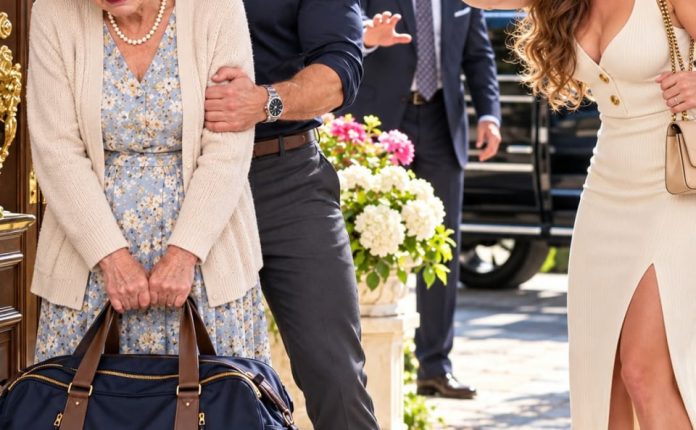
The next evening, Mom stood beneath gold anniversary numbers, wearing a blue dress with pearl buttons. Dad held her elbow while a cousin photographed them.
His shoes were polished. Her hair curled against her cheek exactly as it had in photographs from my childhood.
I loved them.
That was the inconvenient fact beneath everything else.
Resentment would have been simpler if love had withdrawn and left it the room.
Instead, I straightened Mom’s necklace and told Dad his tie was crooked. He stood still while I fixed it, the way he had when I was small and insisted on helping.
For several minutes, the evening felt possible.
Then the restaurant manager asked who was handling the projector.
Dad pointed at me.
“Our resident computer expert.”
“I made the anniversary film,” I told the manager. “Where’s your connection panel?”
It was a small correction. Nobody argued.
The film began with my parents emerging from the courthouse, Mom’s veil blowing across Dad’s face.
He laughed at the sight of himself.
Around the room, conversations faded. People recognized houses that had been demolished, cousins who had moved away, relatives whose voices they had not heard in years.
Mom’s younger sister appeared in an old home movie, carrying a pie through a doorway. Mom pressed her napkin to her mouth.
I watched my parents instead of the screen.
For once, the thing I made reached them without needing translation.
When the final image faded, Dad was looking down at his hands.
Mom caught my wrist as I sat.
“That was beautiful.”
There was no qualification in her voice.
I tucked the moment away before anything could damage it.
Dinner came. Plates warmed the tablecloth. Jason passed bread to Grant. Aunt Linda asked whether I had eaten anything while connecting all the equipment.
Then Brooke stood.
She was good at speaking to a room. She knew where to pause, where to smile, how to make people feel they had been included in the preparation.
She thanked the staff, Jason, the relatives who had traveled.
She thanked me for the “lovely little montage.”
Grant’s thumb stopped moving along the stem of his glass.
Brooke continued.
“Our parents always knew we were different,” she said. “They understood which daughter needed structure and which needed space.”
Dad nodded.
“Some of us needed a push. Some needed room to figure things out.”
Aunt Linda put down her fork.
I looked at my sister.
She was not glaring at me. She was smiling at our parents, pleased with the generosity of her assessment.
That was what finally exhausted me.
She believed she had offered me something kind.
Brooke lifted her glass to fifty years, sat, then gestured toward me.
“Natalie.”
I stood.
My prepared notes lay beside my plate. They mentioned loyalty, endurance, the way Mom remembered birthdays and Dad never let anyone drive home on a flat tire.
Every sentence was true.
Every sentence also belonged to a speech from which I had carefully removed myself.
Dad smiled toward the nearest tables.
“And remember, Nat, nobody’s keeping score tonight.”
A few guests chuckled.
I put the notes down.
“I wasn’t planning to,” I said.
The chuckling stopped.
I felt Grant watching me, still, attentive.
“For a long time,” I continued, “I thought being grateful meant never noticing a difference.”
Mom’s smile faltered.
“I am grateful. For the help I received. For what was good in our home. I’m also old enough to stop pretending Brooke and I received the same things.”
“Natalie,” Dad said quietly.
“I’m not presenting a bill.”
I looked at the glass in my hand.
“If I had to describe it, I’d say seventy-thirty. That was usually the balance. And I spent too long looking at the seventy.”
Brooke folded her arms.
I could hear a server waiting beyond the door, plates touching softly.
“So tonight, I’m raising this to my thirty percent,” I said. “And to the life I’ve built from it, with people who helped because they chose to.”
Brooke looked directly at me.
“What life are we talking about?”
The question came out harder than she seemed to intend.
I lowered my glass.
“My actual one.”
“I know you work, Natalie. I mean, what have you built?”
Grant’s hand moved toward his jacket. He waited until I nodded.
Then he took out the photograph and slid it across the table.
Brooke caught the edge with two fingers.
Mom leaned closer.
For a moment, nobody spoke.
Then Mom covered her mouth.
Dad looked from the photograph to Brooke, as though she might supply information he had somehow misplaced.
My sister stared at the restored cinema, the people beneath the marquee, and the lettering on the glass beside me.
She let out a long breath.
“Since when?”
END PART 1