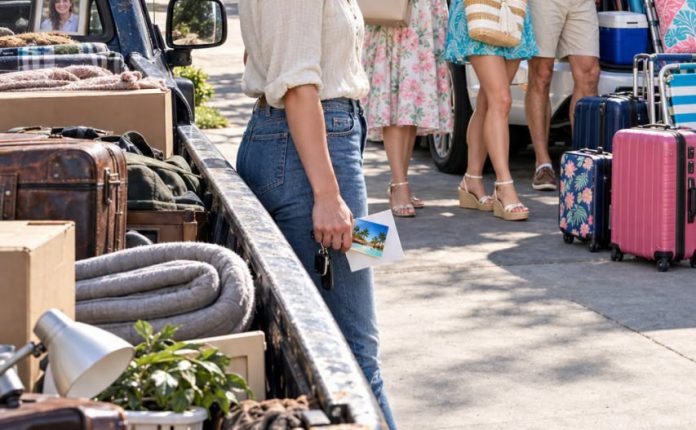
The first hundred miles were easy.
I was too busy concentrating to feel anything.
The Ford Ranger rattled whenever I accelerated.
My toolbox slid against the passenger door.
The radio picked up stations that disappeared every few minutes.
But every mile belonged to me.
Outside Indianapolis, I pulled into a rest area.
I bought coffee from a machine.
It tasted burnt.
I sat behind the steering wheel and cried.
Not loudly.
Not dramatically.
I just cried until my face hurt.
Then I washed my hands in the restroom.
Bought a bottle of water.
And got back on the road.
Nobody was coming to rescue me.
For once, that thought didn't frighten me.
It gave me direction.
The journey took three days.
I slept in inexpensive motels.
Ate sandwiches from gas stations.
Checked the truck's oil every morning.
Mr. Delgado called twice.
The first time, he asked about the engine.
The second time, he wanted to know whether I'd found somewhere safe to sleep.
My parents didn't call until the third day.
Mom's name appeared while I was driving through Wyoming.
I let it ring.
An hour later, she left a message.
“Emma, where have you gone? This isn't funny.”
I listened once.
Then I stopped for gas.
Another message arrived from Natalie.
“You ruined the vacation. Mom won't stop talking about you.”
I read it beside the pump.
The wind smelled like dust and hot pavement.
For years, Natalie had ruined my vacations before they began.
Nobody had called those summers ruined.
I deleted her message.
Dad called the following evening.
I answered.
“Hi, sweetheart.”
His voice sounded tired.
“Hi.”
“Your mother says you moved out.”
“Yes.”
“Where are you?”
“On my way to Oregon.”
There was a pause.
“Oregon?”
“Yes.”
“That's a long way.”
“I know.”
“Is that old truck running all right?”
The question almost undid me.
Of all the things he could have asked, he'd chosen the one he knew how to fix.
“It's running fine.”
“Good.”
Silence stretched between us.
“When are you coming home?”
“I'm not.”
He sighed.
“Emma, you're upset.”
“I'm moving for a job.”
“We'll discuss this when you've calmed down.”
I looked at the highway beyond my windshield.
“No, Dad.”
He waited.
“I'm not coming back just to have the same conversation.”
He didn't answer.
I said goodbye and ended the call.
Then I continued driving.
Bend was different from anywhere I'd lived.
The air was dry.
Mountains rose beyond the town.
Pine trees lined roads that seemed impossibly wide.
I arrived exhausted, dusty, and frightened.
Daniel Mercer met me outside his workshop.
He was in his fifties, with a neatly trimmed beard and a coffee stain on his shirt.
He shook my hand.
“Emma Hale?”
“Yes.”
“Delgado says you know your way around equipment.”
“I know some things.”
Daniel smiled.
“Good. People who claim to know everything are expensive to supervise.”
He showed me the workshop.
The storage shelves were organized by component type.
Service manuals filled a cabinet.
There were two repair bays and an office with mismatched chairs.
It smelled like metal, cardboard, and fresh coffee.
I loved it immediately.
Daniel offered me a trial period.
The wages were modest.
The work was demanding.
I accepted before he finished explaining the schedule.
For my first month, I rented a room from a widow named June Alvarez.
June lived near the edge of town.
She grew tomatoes in raised beds and listened to jazz while cooking.
Her spare bedroom had a narrow bed and a window overlooking the backyard.
The first evening, she knocked on my door.
“I'm making soup.”
I looked up from unpacking.
“Oh, thank you.”
“Would you like some?”
I hesitated.
“Am I supposed to help?”
She looked confused.
“Only if you want to.”
I followed her downstairs.
We ate vegetable soup at a small wooden table.
June asked about Ohio.
I told her about the tire shop.
My truck.
My electrical classes.
I didn't mention Myrtle Beach.
It seemed ridiculous to explain that a beach vacation had helped send me across the country.
For several weeks, I worked and slept.
I learned new systems.
Made mistakes.
Corrected them.
Studied at night.
Daniel was demanding without being cruel.
If I wired something incorrectly, he showed me why it was wrong.
He didn't tell me I was difficult for noticing.
That distinction changed more than I expected.
One afternoon, I spent nearly an hour tracing an electrical fault.
The equipment kept shutting down.
I finally found a damaged connection hidden behind a panel.
Daniel inspected my work.
“Nice catch.”
I waited for the criticism that usually followed praise.
It never came.
He returned to his office.
I stood there holding my screwdriver.
It was a small moment.
But I remembered it for years.
My parents continued calling.
Mostly Mom.
At first, she demanded explanations.
Then she complained that I was embarrassing her.
Neighbors had asked where I'd gone.
Relatives were curious.
She disliked saying she didn't know.
“You could have told us before leaving,” she said.
“I did leave a note.”
“That's hardly appropriate.”
“Neither was leaving me behind.”
She sighed.
“We're not reopening that argument.”
“Then what are we discussing?”
She ended the call.
A week later, she sent photographs from Myrtle Beach.
Natalie and Scott smiling on the balcony.
Dad standing beside the ocean.
Mom holding a seafood platter.
Underneath she wrote:
“We wish you'd been here.”
I stared at the message.
Then I replied.
“You knew where I was supposed to be.”
She didn't answer.
Months passed.
I stopped waiting for an apology.
I enrolled in the training I needed.
Worked overtime.
Learned to handle larger jobs.
When my truck needed repairs, I performed most of them myself.
June helped me navigate the town.
She introduced me to her friends.
One Saturday, she invited me to a backyard barbecue.
I arrived carrying a bowl of potato salad.
I expected to sit quietly while everyone else talked.
Instead, people asked questions.
They remembered my name.
They included me in conversations.
When someone suggested a camping trip, June turned toward me.
“Emma, would you enjoy that?”
The question startled me.
“I think so.”
“Great. We'll make sure the dates work for everybody.”
Everybody.
Such an ordinary word.
It stayed with me.
During my second year, I completed an important stage of my electrical qualifications.
Daniel congratulated me.
June baked a cake.
Mr. Delgado called from Ohio.
He sounded proud.
Dad sent a text.
“Good job.”
Mom asked whether the certificate meant I could finally find work closer to home.
Natalie didn't mention it.
She did, however, send photographs from another Myrtle Beach vacation.
By then, I had stopped counting those trips.
That summer, I went camping near a mountain lake.
June came with us.
Daniel brought his wife.
There were children, dogs, muddy shoes, and too much food.
Nobody was particularly concerned about sleeping arrangements.
We moved tents when the wind changed.
Shared supplies.
Made room.
On the second morning, I woke before everyone else.
Mist floated across the lake.
I sat beside the water holding a mug of coffee.
For the first time, I realized I wasn't waiting for my family to come get me.
I had gone somewhere because I wanted to be there.
And I hadn't needed their permission.
That realization didn't erase the past.
It simply gave me something new to build.
Over the following years, I became a skilled electrical technician.
I worked on commercial equipment.
Troubleshot control systems.
Helped train apprentices.
Daniel eventually made me a supervisor.
I earned enough to rent my own apartment.
Then I bought a small house.
Nothing extravagant.
Two bedrooms.
A garage.
A porch with enough space for two chairs.
The walls needed painting.
The kitchen cabinets were outdated.
I loved every inch.
I bought it with money I'd earned.
Nobody chose the furniture for me.
Nobody announced that the spare room belonged to someone else.
When I turned twenty-six, Daniel mentioned retirement.
He wanted to reduce his workload.
He asked whether I'd consider taking over part of the service business.
I thought he was joking.
“Why me?”
“Because you know the work.”
“There are people with more experience.”
“Yes.”
He leaned against his desk.
“And some of them are terrible with customers.”
I laughed.
He continued.
“You listen before you decide what the problem is.”
I knew exactly how much that mattered.
Over the next two years, we arranged a gradual transition.
I purchased a share of the business.
Took responsibility for scheduling.
Hired another technician.
I wasn't wealthy.
I still worried about payroll.
Still repaired equipment after hours when emergencies occurred.
But the work belonged partly to me.
My decisions had consequences.
People depended on me.
And I was good at it.
Throughout those years, Grandma Rose remained a steady presence.
We spoke every Sunday.
Sometimes twice.
She asked about my work.
My garden.
My neighbors.
Whether I was eating properly.
She never began conversations by asking about Natalie.
That alone made her calls different.
When I told her I'd purchased a house, she cried.
“Oh, Emma.”
“Grandma, it's only a little house.”
“It's yours.”
“Yes.”
“That makes it a very important house.”
She visited when I was twenty-five.
We drove through the mountains.
Visited a farmers market.
Spent an afternoon choosing flowers for my porch.
One evening, she sat beside me outside.
“Are you happy here?”
I considered the question.
“Yes.”
She smiled.
“Good.”
Then she asked something unexpected.
“Do you miss Ohio?”
“Sometimes.”
“What do you miss?”
I thought about my old bedroom.
The maple tree.
Mr. Delgado.
The smell of cinnamon rolls on snowy mornings.
“You,” I said.
She reached for my hand.
“Anything else?”
I looked toward the yard.
“I miss what I thought my family was going to become.”
Grandma didn't respond immediately.
Then she squeezed my fingers.
“I understand.”
I wasn't certain she did.
Not yet.
My relationship with my parents settled into an uneasy distance.
They called on birthdays.
Sent holiday greetings.
Occasionally invited me to gatherings.
But invitations usually arrived late.
Thanksgiving plans were already settled.
Christmas arrangements had been made.
Vacation dates were fixed.
Every message carried the same unspoken condition.
I could participate if I fitted into a life planned without me.
I stopped rearranging my schedule.
Mom interpreted that as stubbornness.
“You never make an effort anymore,” she complained.
I wanted to remind her of the years I'd spent begging.
Instead, I said I was busy.
Dad remained gentle and ineffective.
He asked about the truck.
My work.
The weather.
He rarely mentioned anything difficult.
Our conversations were pleasant because they avoided the truth.
That was the bargain he'd always preferred.
Natalie married Scott when I was twenty-four.
I received an invitation six weeks before the wedding.
Mom called to explain that the bridal party had already been selected.
I hadn't asked to be included.
I attended as a guest.
The ceremony was beautiful.
Natalie wore an elaborate lace gown.
Scott cried during the vows.
Mom cried even harder.
At the reception, someone asked whether I lived nearby.
I explained that I was in Oregon.
Natalie interrupted.
“Emma ran away years ago.”
The woman looked uncomfortable.
I smiled politely.
“I moved for work.”
Natalie rolled her eyes.
“Same difference.”
I didn't argue.
I left after dinner.
At the airport, Dad called.
He said he was glad I'd attended.
Then he added, “You know your mother wishes you'd visit more.”
I looked at the boarding pass in my hand.
“Dad, did you ever wish I went on those vacations?”
He didn't answer.
I continued.
“Did you ever actually want me there?”
His voice became quiet.
“Of course.”
“Then why didn't you say anything?”
A long silence followed.
Finally, he said, “It was complicated.”
I ended the call before my plane boarded.
For years afterward, those words bothered me.
Complicated.
What could possibly have been complicated about including your own daughter?
By twenty-eight, I no longer spent much time wondering.
My life had become full.
I had friends.
A home.
Meaningful work.
I dated occasionally, though I wasn't in a hurry to marry.
June still lived across town.
Daniel was mostly retired.
We sometimes ate dinner together on Sundays.
I traveled when I could.
The Oregon coast.
Northern California.
A short trip to Seattle.
I kept photographs of those journeys on my refrigerator.
In several, I was laughing.
In others, I looked exhausted after hiking.
I didn't care.
I was in them.
Then Grandma Rose called one Tuesday morning.
I was opening the workshop.
The overhead lights flickered on.
A delivery truck was pulling into the lot.
Her number appeared on my phone.
“Morning, Grandma.”
“Emma, sweetheart.”
Something about her voice made me straighten.
“Are you all right?”
“Yes.”
She paused.
“But I've been speaking with your father.”
I sat on a stool.
“What happened?”
“I asked him a few questions.”
“About what?”
“About those summers.”
I looked toward the open workshop door.
“Why?”
“Because I've been thinking.”
Grandma was eighty that year.
She'd grown more direct with age.
Sometimes she said things that made people uncomfortable.
She considered this an advantage.
“Do you remember your first summer with me?” she asked.
“Of course.”
“I told you your mother said there wasn't hotel space.”
“Yes.”
“Well, I found the postcards Natalie sent that year.”
I waited.
Grandma explained that she had been sorting old correspondence.
She still kept cards and letters in labeled boxes.
Among them was a postcard from Myrtle Beach.
Natalie had written it when she was thirteen.
Grandma read the message slowly.
It described the ocean.
A restaurant.
A shopping trip.
Then came a sentence about how wonderful it was to have their parents' attention without Emma tagging along.
I closed my eyes.
Natalie had been a child.
Children could be selfish.
I knew that.
But my parents had been adults.
“Grandma, why does this matter now?”
“Because your father finally admitted something.”
I stopped breathing for a moment.
“What?”
She hesitated.
“Not yet. I'd rather we discuss it properly.”
“Grandma.”
“Listen to me.”
Her voice grew firm.
“I'm planning a birthday gathering.”
“In Ohio?”
“No. Oregon.”
I blinked.
“Here?”
“I've wanted another visit for months.”
“That sounds wonderful.”
“And I thought it was time for everyone to talk.”
I felt the old anxiety return.
“Everyone?”
“Your parents. Natalie. Scott.”
I stood.
“Grandma, no.”
“I haven't invited them into your home.”
“I know, but—”
“And I haven't promised them anything.”
I fell silent.
“I asked whether they'd be willing to come,” she continued.
“They said yes.”
I looked at the calendar beside my desk.
For eight years, I'd carefully managed my distance from them.
Now Grandma wanted to bring everyone together.
“Why are you doing this?”
“Because your father said something he should have said long ago.”
I pressed my fingers against my forehead.
“And because,” she added, “I don't want another birthday where everyone pretends the past didn't happen.”
I had no answer.
Grandma softened her voice.
“But it's your choice, Emma.”
“What if I don't want them here?”
“Then they won't come.”
I waited for the next sentence.
The guilt.
The lecture.
The reminder that family mattered.
It never arrived.
“What if I agree?”
“Then they'll have to speak for themselves.”
A customer walked into the workshop.
I raised one finger, signaling I'd be a moment.
Grandma continued.
“I know what happened hurt you.”
I stared at the floor.
“Did Dad really admit something?”
“Yes.”
“Something about the vacations?”
“Yes.”
I swallowed.
“What did he say?”
“Emma, I don't want to repeat a conversation he needs to have with you.”
Her voice trembled slightly.
“But I will tell you this.”
I waited.
“There was always room.”
My eyes filled.
I pressed my palm against the workbench.
For eight years, I'd told myself the details no longer mattered.
That I was beyond needing explanations.
That building a better life meant leaving every unanswered question behind.
But hearing Grandma say those words brought back the eleven-year-old girl standing beside the minivan.
Seven seat belts.
An empty third row.
And a mother telling her the luggage needed somewhere to go.
My phone vibrated.
Dad was calling.
I watched his name appear.
Grandma seemed to sense my hesitation.
“You don't have to answer.”
“I know.”
“And you don't have to forgive anybody today.”
I closed my eyes.
“I know.”
She paused.
“Whatever you decide, sweetheart, make sure it's your decision.”
We said goodbye.
Dad's call was still coming through.
I looked toward the customer.
He was examining a broken control panel.
The morning was ordinary.
I had work waiting.
Employees depending on me.
A life that had continued without my parents for years.
I could ignore the call.
I could let the past remain where I'd placed it.
But something had changed.
For the first time, my father seemed willing to discuss the thing he'd avoided throughout my childhood.
I answered.
“Hi, Dad.”
He sounded nervous.
“Emma.”
I waited.
He cleared his throat.
“Your grandmother says you've spoken.”
“Yes.”
Another pause.
“I think we need to talk.”
I looked at the framed photograph of my first crew outside the workshop.
Three people smiling beside a repaired service van.
All of them there because I'd invited them.
“All right,” I said.
“But this time, Dad, I need you to answer my questions.”
He inhaled.
Then, very quietly, he said, “You deserve that.”
It was the first time I had ever heard him say anything like it.
And I wasn't certain whether to believe him.
END PART 2