Dad didn't begin with an apology.
He began with the weather.
“Is it still warm out there?”
I sat on the workshop stool.
“Dad.”
“Right.”
He cleared his throat.
“I'm sorry.”
I had imagined hearing those words for years.
Now that they had arrived, I didn't know what to do with them.
“Sorry for what?”
He was quiet.
I waited.
“Everything with the vacations.”
“That's a lot of years.”
“I know.”
“Then tell me why.”
He inhaled slowly.
“Your sister was difficult when she was younger.”
I nearly ended the call.
“Difficult?”
“She had a hard time sharing attention.”
I looked out toward the parking lot.
“Dad, she was thirteen when this started.”
“I know.”
“You and Mom were adults.”
“I know that too.”
“Then why did you keep leaving me behind?”
His silence lasted so long that I wondered whether the call had disconnected.
Finally, he spoke.
“Because it was easier.”
I closed my eyes.
There it was.
Not a hotel shortage.
Not an unfortunate misunderstanding.
Not a complicated schedule.
Easier.
I waited for him to explain.
He told me that Natalie had always been intensely competitive.
As a child, she hated sharing birthdays.
She complained whenever my parents attended one of my school events.
If I received praise, Natalie found a reason to need attention.
Mom had grown accustomed to managing her moods.
Dad had grown accustomed to letting Mom handle them.
Then came the first Myrtle Beach vacation.
Natalie had asked for a trip that would be special.
A week when she could have both parents to herself.
Mom had initially rejected the idea.
But Natalie complained.
Then cried.
Then refused to participate in planning.
Eventually, Mom suggested leaving me with Grandma Rose.
“It was supposed to happen once,” Dad said.
I stared at the floor.
“Once?”
“Yes.”
“Then why did it happen every year?”
He sighed.
“Your sister enjoyed it. Your mother thought you didn't mind spending time with Rose.”
I sat upright.
“I cried when you left.”
“I know.”
“I asked every year.”
“I know.”
“Then how could you think I didn't mind?”
His voice cracked slightly.
“Because we told ourselves you would be all right.”
I pressed my hand against my mouth.
He continued.
“Your mother thought Natalie needed more reassurance. You were always independent.”
I laughed once.
A short, unpleasant sound.
“I became independent because nobody made room for me.”
He didn't argue.
That frightened me more than I expected.
For years, Dad had offered explanations.
Now he was acknowledging something ugly.
“I should have stopped it,” he said.
“Yes.”
“I kept thinking we'd fix things the following summer.”
“But you didn't.”
“No.”
I thought about that last vacation.
The promised condominium.
The forty dollar card.
“Did you ever intend to take me that year?”
He hesitated.
“Your mother did at Thanksgiving.”
“And afterward?”
“Natalie complained.”
I looked toward the window.
“About what?”
“She didn't want you sharing the bedroom arrangement.”
“Dad, there were three bedrooms.”
“I know.”
“What was the real problem?”
He spoke so softly I nearly missed it.
“She didn't want you there.”
I gripped the stool.
“Why?”
“She said vacations weren't enjoyable when you came.”
I felt a sharp pang of disbelief.
“She wouldn't know. I never came.”
“I know.”
Those words kept returning.
I know.
I know.
I know.
He had known so much.
And done so little.
I asked about the gift card.
Dad sounded ashamed.
“Your mother bought it because she thought you'd be disappointed.”
“Forty dollars?”
“She thought it was better than nothing.”
“Did anybody suggest keeping the promise?”
He didn't answer.
I didn't need him to.
We spoke for nearly an hour.
By the end, Dad had admitted more than he'd acknowledged in twenty years.
But an explanation wasn't the same as repair.
I told him so.
He agreed.
Then he asked whether I'd permit him to attend Grandma's birthday gathering.
I thought carefully.
“Grandma wants you there.”
“Yes.”
“And I don't want to take away her celebration.”
“I understand.”
“But I won't be humiliated in front of people again.”
“You won't.”
I listened to the uncertainty in his voice.
“Dad, you can't promise that Natalie will behave.”
“No,” he admitted.
“I can't.”
That was the first honest limitation he'd ever acknowledged.
I agreed to a gathering in a rented community room.
Not my house.
Not my workplace.
Somewhere neutral.
Dad thanked me.
Before hanging up, he said something unexpected.
“I remember teaching you to change the alternator.”
I smiled faintly.
“So do I.”
“That was a good day.”
“Yes.”
He hesitated.
“I wish I'd been as good a father during the difficult days.”
I looked at the tools hanging on the wall.
“So do I.”
After the call, I returned to work.
My employees noticed I was distracted.
I made a mistake entering a service appointment.
Forgot where I'd left a folder.
Poured coffee and abandoned it on my desk.
At lunch, June stopped by.
She was delivering tomatoes from her garden.
She took one look at me.
“What happened?”
I told her.
Not everything.
Enough.
She listened without interrupting.
When I finished, she placed the tomatoes on the counter.
“Are you going to see them?”
“Yes.”
“Do you want to?”
I considered the question.
“I want to know whether anything can be different.”
June nodded.
“That's fair.”
Then she added something that stayed with me.
“Don't mistake someone finally admitting the truth for proof that they've changed.”
I knew she was right.
But knowing and living were different things.
Over the following weeks, Grandma Rose finalized her birthday plans.
She would stay with me.
The others booked a hotel.
The gathering would be small.
A few friends.
June.
Daniel and his wife.
Several relatives who lived nearby.
My parents, Natalie, and Scott.
Grandma insisted there would be cake.
“I'm eighty,” she said.
“I'm not spending the whole afternoon discussing your mother's nonsense.”
I laughed.
For the first time in weeks, the gathering sounded manageable.
Then Mom called.
She hadn't spoken to me since Grandma announced the plans.
“Emma.”
“Hi, Mom.”
“I understand you've been talking to your father.”
“Yes.”
She sighed.
“I hope you're not planning to make your grandmother's birthday uncomfortable.”
I stood at my kitchen sink.
“I'm not the one who asked for explanations.”
“Well, some things are better left alone.”
I looked at the evening light beyond the window.
“Not this.”
She sounded irritated.
“We did our best.”
“Did you?”
“Of course.”
“Then why did you leave me behind every summer?”
A long pause.
“You were always happier doing your own thing.”
I felt the familiar frustration rising.
“No, Mom.”
“Emma—”
“I asked to come.”
“You were very sensitive.”
“I offered to pay for myself.”
“You don't remember how stressful those years were.”
“I remember the forty dollar gift card.”
Silence.
Then Mom said, “I was trying to be kind.”
I closed my eyes.
That was the problem.
She still wanted credit for kindness while refusing to acknowledge the cruelty beneath it.
“Mom, I'm willing to talk at Grandma's birthday.”
“Good.”
“But I won't pretend it was all a misunderstanding.”
Her tone sharpened.
“I won't be interrogated.”
“Then don't come.”
She gasped.
“You can't mean that.”
“I do.”
I surprised myself with how calmly I said it.
For years, I'd begged her to include me.
Now I was offering a clear choice.
She could come respectfully.
Or stay away.
I wasn't going to chase her.
Mom hung up.
The next morning, Natalie texted.
“Really? You're making Grandma's birthday about yourself?”
I stared at the screen.
Then I typed:
“Grandma invited us. You're welcome to celebrate her without discussing me.”
Natalie's answer arrived immediately.
“Mom says you've been telling everyone we mistreated you.”
I considered responding.
Then I put the phone down.
Some conversations only continued because I kept trying to make the other person understand.
I was beginning to recognize when to stop.
Grandma arrived four days before her birthday.
I met her at the airport.
She stepped through the arrivals doors wearing a blue cardigan and carrying an enormous handbag.
I hugged her.
She smelled like peppermint and her familiar floral soap.
“Look at you,” she said.
“You say that every time.”
“And I mean it every time.”
We drove home through the late afternoon sunshine.
She admired the mountains.
Commented on the trees.
Asked whether I was eating enough vegetables.
At the house, she examined my garden.
Then she inspected the guest room.
“Very nice.”
I smiled.
“I'm glad you approve.”
She sat on the edge of the bed.
“Emma, there's something else I want to tell you.”
I pulled up a chair.
She explained that she'd spoken with Dad again.
He had admitted that when I was thirteen, Mom asked him to make sure the house was safe for me to stay alone.
He'd objected.
He thought thirteen was too young.
But Mom insisted I was responsible.
He relented.
Grandma looked furious.
“I never knew they left you alone for an entire week.”
I stared at her.
“I thought you knew.”
“No.”
“Mom said everyone agreed.”
Grandma shook her head.
“She told me you were staying with a school friend's family that summer.”
I sat very still.
That was worse than the false hotel excuses.
My parents hadn't merely excluded me.
They'd concealed the arrangements from people who might have questioned them.
Grandma reached into her handbag.
She removed a worn cardboard folder.
Inside were old postcards.
Birthday cards.
Letters.
A few photographs.
“I brought these because I thought you might want them.”
I looked at the first postcard.
A picture of the Myrtle Beach boardwalk.
Natalie's handwriting covered the back.
I read the sentence Grandma had described.
Natalie had written that everything was better when she didn't have to share Mom and Dad with me.
I wasn't surprised.
But seeing the words written by a child who had been given exactly what she requested stirred an unexpected sadness.
She had learned something terrible.
That her parents' attention could be purchased by excluding someone else.
And nobody had corrected her.
Grandma watched my face.
“I'm sorry I didn't understand sooner.”
I shook my head.
“You believed what Mom told you.”
“I should have asked more questions.”
I touched the worn edge of the postcard.
“Maybe.”
She reached across the table.
“But that doesn't mean you were responsible for what happened.”
I nodded.
The morning of the gathering, I woke early.
Grandma was already dressed.
She sat at the kitchen table drinking tea.
“Are you nervous?” she asked.
“Yes.”
“Me too.”
I laughed.
“You?”
“Of course.”
She studied me over her cup.
“I love your parents.”
“I know.”
“I love Natalie.”
“I know.”
“And I love you.”
My eyes filled.
Grandma continued.
“Loving somebody doesn't mean agreeing with what they've done.”
We sat quietly.
Then she asked whether I was ready.
I looked toward the porch.
The sun was rising over the trees.
“I think so.”
The community room was bright and welcoming.
June helped arrange flowers.
Daniel carried folding chairs.
Grandma insisted on placing her own birthday cake in the center of the table.
It was lemon.
Her favorite.
The guests began arriving shortly after noon.
Mom entered first.
Her hair was carefully styled.
She wore a pale pink blouse and an expression I recognized immediately.
The expression she used when she intended to remain composed regardless of what anyone said.
Dad followed carrying flowers.
Natalie and Scott arrived several minutes later.
Natalie looked around the room.
“So this is where you work now?”
I shook my head.
“No. My business is across town.”
“Oh.”
She glanced toward the decorations.
“Cute.”
I didn't answer.
Grandma greeted everyone warmly.
For nearly an hour, things remained pleasant.
We ate lunch.
Talked about the weather.
Admired the cake.
June told stories about her garden.
Daniel mentioned his retirement.
Dad asked thoughtful questions about my electrical business.
I answered.
Natalie seemed surprised.
“You own part of a company?”
“Yes.”
“Since when?”
“About two years.”
She looked toward Mom.
“Did you know that?”
Mom hesitated.
“I knew Emma was doing well.”
I noticed the difference.
Doing well.
Such a convenient phrase.
It concealed how little attention she'd paid.
After cake, Grandma asked everyone to remain seated.
She stood beside the table.
Her hands trembled slightly.
I started to rise.
She waved me down.
“I'm eighty, Emma. I can still stand.”
Several people laughed.
Grandma smiled.
Then her expression became serious.
“I want to say something before we finish.”
The room quieted.
“I have been blessed with a long life.”
She looked around the table.
“Many good things have happened. Some painful things too.”
Mom lowered her eyes.
Grandma continued.
“For years, I accepted explanations about why one granddaughter repeatedly missed family vacations.”
She glanced at me.
“I believed there were practical reasons.”
Natalie's posture stiffened.
Grandma addressed my parents directly.
“Recently, I've learned those explanations weren't true.”
Mom's cheeks flushed.
“Mother, this isn't appropriate.”
Grandma looked at her.
“Neither was lying to me.”
The room became completely silent.
Dad set down his fork.
Grandma continued.
“I want the truth acknowledged. Not because today belongs to an argument, but because I've watched this family avoid one for far too long.”
Mom opened her mouth.
Dad spoke first.
“She's right.”
Everyone turned toward him.
He looked at me.
“We left Emma behind because we chose to.”
Natalie's eyes widened.
“Dad.”
He didn't look away.
“We knew she wanted to go. We kept making excuses.”
Mom whispered, “David.”
He shook his head.
“No, Marilyn.”
His voice was strained but steady.
“We've spent enough years pretending.”
I felt my throat tighten.
Dad explained that Natalie had wanted vacations centered on her.
Mom had encouraged that arrangement.
And he'd allowed it because he disliked conflict.
He admitted the excuses had been dishonest.
He admitted that the arrangements were unfair.
Then he looked directly at me.
“You kept asking us to include you.”
I nodded.
“And we kept deciding not to.”
Nobody spoke.
Dad swallowed.
“I'm sorry, Emma.”
Mom stared at the table.
Natalie folded her arms.
“This is ridiculous.”
I turned toward her.
She continued.
“We were kids.”
“Yes,” I said.
“You were.”
She looked triumphant for a moment.
Then I continued.
“But Mom and Dad weren't.”
Natalie opened her mouth.
No words came.
Scott shifted in his chair.
I looked at my parents.
“I wasn't asking for expensive presents.”
My voice shook.
“I wasn't asking you to cancel every trip.”
I paused.
“I just wanted to go with you.”
Dad's eyes filled.
Mom looked away.
I continued.
“When I was little, I thought there was something wrong with me.”
Grandma covered her mouth.
“I watched you pack the van every summer.”
I looked directly at Dad.
“I counted the seats.”
His face changed.
I could see the memory reaching him.
The driveway.
The minivan.
The empty third row.
“I remember,” he whispered.
I took a breath.
“And when I finally believed you'd include me, you handed me forty dollars.”
Mom began crying.
“I didn't realize how much that hurt.”
I looked at her.
“You did realize I was disappointed.”
She nodded weakly.
“You just didn't think the disappointment mattered enough to change anything.”
Her tears continued.
She didn't answer.
For a moment, I wanted to comfort her.
That impulse startled me.
I'd spent much of my childhood trying to make my parents feel better about hurting me.
I kept my hands in my lap.
Natalie broke the silence.
“This was years ago.”
I turned toward her.
“Yes.”
“So why can't you move on?”
I considered her question.
Then I answered quietly.
“I did.”
She frowned.
“What?”
“I moved two thousand miles away.”
Nobody laughed.
“I built a life.”
I looked around at June and Daniel.
“Found people who wanted me around.”
Then I faced Natalie again.
“Moving on didn't mean pretending nothing happened.”
Her jaw tightened.
“You've always been dramatic.”
I looked at her for a long moment.
For years, that accusation had stopped me.
This time, it sounded tired.
Small.
Almost rehearsed.
“Maybe,” I said.
“But I'm not arguing with you about my childhood anymore.”
I turned back toward Grandma.
“This is your birthday.”
She nodded.
“And I want you to enjoy it.”
Grandma smiled faintly.
“I intend to.”
There was a silence.
Then June stood.
“Well,” she said, “I believe somebody promised us more cake.”
Grandma laughed.
The tension loosened.
Not completely.
But enough for people to move.
Talk.
Breathe.
The afternoon continued.
Natalie stayed for another twenty minutes.
Then she told Scott she was tired.
They left without speaking to me.
I watched them go.
Part of me still wished she'd turned around.
She didn't.
That hurt less than I expected.
Mom approached me near the end of the gathering.
Her eyes were red.
“Emma.”
I waited.
“I don't know how to fix this.”
I looked at her.
“I don't either.”
She swallowed.
“Could we start again?”
I thought about all those summers.
The lies.
The empty driveway.
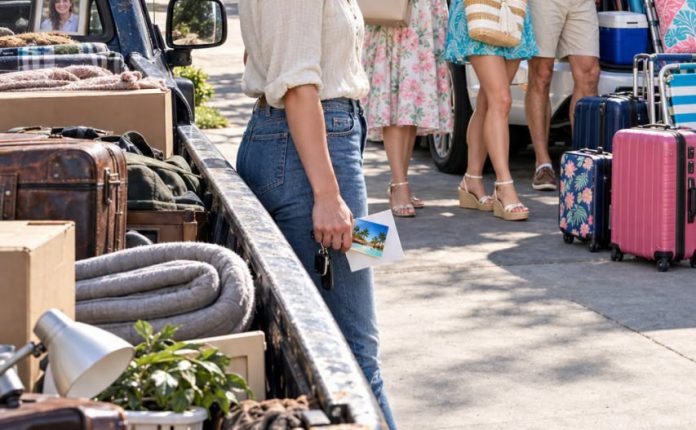
The truck loaded with everything I owned.
Starting again sounded simple.
It wasn't.
“We can't start over,” I said.
Her face fell.
“But we could try having a different relationship.”
She looked up.
“What would that mean?”
“It means no more excuses.”
I paused.
“No more blaming me for being hurt.”
She nodded slowly.
“And no more expecting me to pretend I'm fine just because admitting the truth makes you uncomfortable.”
Mom wiped her cheeks.
“All right.”
I wasn't certain she understood.
But at least I'd told her.
Dad approached after she walked away.
He looked older than I remembered.
He handed me a small envelope.
My stomach tightened.
“What's this?”
“Open it later.”
I shook my head.
“No more mystery envelopes, Dad.”
He gave a sad little smile.
“Fair enough.”
Inside was a photograph.
It showed the two of us working on my Ford Ranger.
I was eighteen.
My hair was tied back.
There was grease on my cheek.
Dad stood beside me holding a wrench.
I remembered that Saturday.
I remembered feeling loved.
He touched the photograph.
“Your mother found it while cleaning.”
I studied his face.
“I didn't bring it because I think it fixes anything.”
“Good.”
“I just wanted you to have it.”
I looked down again.
There we were.
Two people who had enjoyed each other's company when nothing difficult was required.
“Thank you,” I said.
Dad nodded.
Then he asked if he could visit my workshop sometime.
I considered the question.
“Maybe.”
“I'd like to see what you've built.”
I looked at him.
“Then you'll have to make the effort.”
He nodded.
“I know.”
For once, I believed he was beginning to understand.
Not because he had apologized.
Because he hadn't tried to negotiate the conditions.
The next morning, Grandma and I ate breakfast on my porch.
She wore slippers and one of my old sweaters.
The birthday flowers stood in a vase beside the door.
“How do you feel?” she asked.
“Tired.”
She nodded.
“So do I.”
We watched a bird peck at the lawn.
After a while, I said, “I'm glad you came.”
Grandma smiled.
“So am I.”
Then she reached into her handbag.
“I have something for you.”
I stared at her.
“Grandma, please don't tell me it's another envelope.”
She laughed.
“No, darling.”
She produced two airline brochures.
One advertised the Oregon coast.
The other featured South Carolina beaches.
I looked at her.
“What are these?”
“I've been thinking about taking a vacation.”
I smiled.
“Have you?”
“Yes.”
“And I thought you might help me choose.”
I examined the brochures.
The Oregon coast looked beautiful.
But the South Carolina picture caught my attention.
White sand.
Blue water.
A long boardwalk.
Myrtle Beach.
Grandma noticed where I was looking.
“You never did get that vacation.”
I swallowed.
“No.”
“Would you like to go?”
I stared at her.
For a moment, I was nine again.
Holding a library book about seashells.
Imagining the ocean.
Waiting for somebody to say yes.
Then I was twenty-eight.
Sitting on the porch of the home I'd purchased.
Looking at the grandmother who had always made room for me.
“Yes,” I said.
“I think I would.”
We planned the trip for September.
Just the two of us.
Grandma insisted on paying for her own ticket.
I booked a comfortable hotel close to the beach.
Two beds.
An accessible elevator.
A balcony overlooking the ocean.
We discussed restaurants.
Walking distances.
What she wanted to see.
I checked the weather.
She bought a new sunhat.
For once, planning a family vacation felt ordinary.
No secret decisions.
No sudden excuses.
No one being told to stay behind.
Dad continued calling occasionally.
He began asking real questions.
About my business.
About my friends.
About what I wanted.
Sometimes our conversations were awkward.
Mom sent a longer letter.
She acknowledged specific summers she'd mishandled.
She apologized for lying to Grandma.
For leaving me alone at thirteen.
For breaking the final promise.
I appreciated the letter.
But I didn't rush to reassure her.
Trust, I had learned, returned through behavior.
Not through a single emotional afternoon.
Natalie didn't apologize.
She sent one message accusing me of humiliating the family.
I replied:
“I hope someday we can discuss what happened without pretending it was harmless.”
She didn't answer.
I stopped checking.
September arrived.
Grandma and I flew to South Carolina.
When we entered our hotel room, she walked straight to the balcony.
“Oh, Emma.”
Beyond the railing, the Atlantic Ocean stretched toward the horizon.
The waves rolled across the sand.
The air smelled of salt and sunscreen.
I stood beside her.
For a long moment, neither of us spoke.
Then Grandma took my hand.
“Worth the wait?”
I looked at the water.
I thought about the years I'd spent believing there was no room for me.
I thought about the distance I'd driven.
The people I'd met.
The life I'd built.
And the fact that I was finally standing beside the ocean without needing anyone's approval.
“Yes,” I said.
“But I wish we'd done it sooner.”
Grandma squeezed my hand.
“So do I.”
That afternoon, we walked along the shore.
She collected shells.
I searched the sand near the waterline.
I wasn't expecting much.
Then I noticed a small dark triangle.
I bent down.
Picked it up.
Rubbed away the wet sand.
A shark tooth.
Tiny.
Imperfect.
Exactly the sort I'd imagined finding when I was nine.
I held it in my palm.
Grandma leaned closer.
“What did you find?”
I showed her.
She smiled.
“Look at that.”
I laughed.
Not because the tooth was valuable.
Not because finding it somehow repaired my childhood.
But because, after all those years, I had finally experienced something I'd wanted for myself.
I slipped it into my pocket.
We continued walking.
Later, when the sky softened into evening, we sat on a bench overlooking the beach.
Grandma rested her head against my shoulder.
“Are you happy, Emma?”
I considered the question.
Eight years earlier, I might have answered too quickly.
I might have tried to sound grateful.
Or forgiving.
Or completely healed.
But I knew better now.
Some things still hurt.
Certain memories probably always would.
I had lost years of family experiences.
I couldn't recover them.
My parents might change.
They might not.
Natalie might someday understand.
Or she might never apologize.
Those uncertainties were real.
But so was everything I had built.
I had a home.
Work I loved.
Friends who showed up.
And a grandmother who had crossed the country simply to spend time with me.
I looked toward the water.
“Yes,” I said.
“I really am.”
Grandma smiled.
“Good.”
We stayed until the first evening lights appeared along the boardwalk.
The following morning, Dad sent a text.
It contained a photograph of the old green Ranger from the day we'd repaired it.
Underneath, he'd written:
“I'm glad you kept going.”
I looked at the message for a long time.
Then I replied:
“So am I.”
I didn't know exactly what our relationship would become.
I no longer needed to decide immediately.
For most of my childhood, I'd stood in a driveway watching my family leave.
For years afterward, I'd assumed belonging meant persuading them to turn around.
But that wasn't what had changed my life.
I hadn't convinced them to save me a seat.
I'd finally stopped waiting beside the vehicle.
I'd found my own way.
And this time, when I looked at the ocean, I wasn't wondering why everyone else had been allowed to come.
I was already there.
THE END
Disclaimer: This is a fictional, AI-generated story inspired by themes of family exclusion, emotional neglect, independence, reconciliation, and personal growth. Characters, conversations, and events are presented as fiction.
END PART 3
Disclaimer: This fictional story was created with AI assistance for entertainment. Names, characters, dialogue, and events are fictional. Any resemblance to actual people or events is coincidental.