Daniel Whitcomb lived in a small house overlooking a canal.
He was seventy-six, retired, and still wore a jacket when meeting clients, even though he insisted I wasn't a client.
Evelyn accompanied me.
He welcomed us into a room lined with bookshelves and framed photographs of fishing trips.
When he heard Grandma's name, his expression softened.
"Lenora was a remarkable woman."
I smiled faintly.
"She could be stubborn."
"She had to be."
He offered us coffee.
Then Evelyn explained why we had come.
Daniel listened carefully.
When she mentioned the seven cottages, he removed his glasses.
"Your grandmother was concerned about those properties for several years."
"Why?" I asked.
"Because she believed her son regarded them as an inheritance he could spend before she died."
I looked down.
It sounded exactly like Dad.
Daniel explained that he had helped Grandma establish an estate plan years earlier.
The original arrangement included a revocable trust intended to make the transfer and management of her properties easier after her death.
Later, Grandma had become concerned about how the properties were being managed and whether the trust records accurately reflected her wishes.
"Did she change the trust?" I asked.
"She began the process. I referred her to another attorney when my health made it difficult to continue practicing."
"Evelyn?"
He shook his head.
"A colleague named Rebecca Shaw."
Evelyn made a note.
"Do you have any records of the earlier trust?"
"Some archival copies."
"Can we review them?"
"With appropriate authorization, yes."
Daniel explained that he couldn't simply hand over privileged client files without considering the law and his professional obligations.
But he could help identify the lawyer who had completed Grandma's later planning.
He also remembered a meeting with my father.
"Your father came to see me after Lenora began reconsidering her arrangements."
"What did he want?"
"Information about the properties."
"Did you give it to him?"
"No."
Daniel's answer was immediate.
"He was not my client. Lenora was."
I wondered how many times Dad had heard that distinction before deciding to ignore it.
Daniel leaned back.
"He seemed particularly interested in whether the cottages could be sold without Lenora's personal approval."
"Could they?"
"Not under the arrangements as I understood them at that time."
I felt a small measure of relief.
Then Daniel continued.
"But we need the current documents, Claire. Those are what matter."
We left with Rebecca Shaw's contact information.
On the drive back, I looked at Evelyn.
"Why didn't Grandma tell me about any of this?"
"Perhaps she intended to."
I remembered her last telephone call.
There's something we need to discuss in person.
The words returned with painful clarity.
"I should have visited sooner," I whispered.
Evelyn kept her eyes on the road.
"Would your assignment have allowed that?"
"No."
"Then be careful about rewriting your life around information you didn't have."
I watched the water through the passenger window.
I wished that made me feel better.
Rebecca Shaw's office was in Key Largo.
When Evelyn contacted her, Rebecca confirmed that Grandma had been her client.
She requested documentation establishing my identity and the basis for discussing the estate plan.
Several days passed before we could meet.
During that time, my parents increased their pressure.
Mom called repeatedly.
Sometimes she cried.
Sometimes she accused me of humiliating the family.
Sometimes she said Dad was under enormous stress and I needed to stop.
One afternoon, she came to my motel room carrying a paper bag of sandwiches.
I let her in.
She looked around the small room.
"You're really staying here?"
"Yes."
"You could come home."
"Dad told me not to."
"He didn't mean it."
I watched her place the sandwiches on the table.
"Mom, why didn't you tell me Grandma died?"
Her hands stopped moving.
"We were overwhelmed."
"Three weeks."
"Claire—"
"Three weeks, Mom."
She sat down.
For a moment, she looked genuinely tired.
"Your father thought it would be easier."
"Easier for whom?"
She didn't answer.
I sat opposite her.
"Did Grandma ask for me?"
Mom's eyes filled.
"Yes."
There it was.
One honest word.
"When?"
"Several times."
"Why didn't you call?"
She pressed a tissue against her mouth.
"Your father said you'd be angry about the estate. He didn't want arguments while your grandmother was so ill."
I stared at her.
"You kept me away because Dad thought I might ask questions?"
"He was trying to keep things peaceful."
"Grandma was dying."
"I know."
"She wanted me."
Mom began crying.
I had spent most of my childhood comforting her when Dad upset the household.
This time, I didn't move.
After a while, she looked up.
"You're making everything worse."
I felt something inside me settle.
"Mom, Grandma died asking for me. You knew where I was. You knew how to contact my supervisor."
She wiped her face.
"I don't know what you want me to say."
"The truth would be a start."
She stood.
"I came here to make peace."
"Peace doesn't mean pretending nothing happened."
She picked up her purse.
At the door, she turned.
"Your father has worked very hard for this family."
"So did Grandma."
Mom's face hardened.
"You don't understand what it takes to manage property."
I thought of summers spent repairing shutters, hauling lumber, repainting railings, and cleaning storm debris.
"I understand more than you think."
After she left, I found the sandwiches untouched on the table.
I threw them away.
The following week, Evelyn and I met Rebecca Shaw.
Rebecca was direct and meticulous.
She had Grandma's client file.
She also had something we hadn't expected.
A dated memorandum describing Grandma's concerns about her son's financial management.
Rebecca explained that Grandma had discussed changing her trust and replacing the people authorized to manage the properties.
She had wanted an arrangement that protected the cottages from unnecessary sales and ensured transparent accounting.
"Did she complete those changes?" I asked.
Rebecca looked at Evelyn.
"She executed a restatement of her trust."
I gripped the edge of my chair.
"Where is it?"
Rebecca opened a folder.
"I have a signed counterpart and records of the execution."
For several seconds, I couldn't speak.
My father had told the court Grandma left no will.
He had presented the estate as though ownership were straightforward.
Yet here was an attorney with a signed trust instrument that might control some or all of the properties.
"Does that mean the cottages are mine?" I asked.
Rebecca shook her head gently.
"It means we need to examine the trust terms and verify how the properties were titled at the time of your grandmother's death."
She explained that a trust document alone did not automatically establish ownership of every asset.
The recorded deeds mattered.
So did the dates.
The court would need to review the evidence.
I appreciated her precision, even though I desperately wanted a simpler answer.
Rebecca then asked about the metal container.
Evelyn showed her photographs and copies of the records.
Rebecca recognized several of the documents.
"Lenora was gathering evidence of questionable transactions," she said.
"Did she think Dad was stealing?"
"She believed money had been transferred without explanations she considered satisfactory."
Rebecca chose her words carefully.
"She had asked for an independent review."
"What happened?"
"Her health deteriorated before the review was completed."
I looked at the letter in my bag.
Grandma had known something was wrong.
She had tried to fix it.
Then she died.
Rebecca turned to a page in the file.
"There's another matter."
I braced myself.
"Your grandmother was particularly concerned about Cottage Seven."
"Why?"
"Because your father had discussed selling it to a development company."
I remembered the glossy brochure.
"Grandma refused."
"Yes."
Rebecca showed us correspondence from the developer.
Dad had described himself as the person who would soon control the properties.
Some messages were sent before Grandma died.
Others were sent afterward.
In one email, he discussed a preliminary sale schedule.
He was treating the inheritance as though it were already settled.
"Can we stop him?" I asked.
"Your attorney can ask the court for protective orders," Rebecca replied.
Evelyn nodded.
"We've already begun."
Rebecca then showed us a document Grandma had signed.
It appointed an independent successor trustee for the property trust.
The name wasn't mine.
It wasn't Dad's.
It was a professional fiduciary named Helen Brooks.
I felt briefly confused.
"If Grandma wanted me protected, why didn't she make me trustee?"
Rebecca smiled slightly.
"Because she didn't want you dragged into managing disputes while grieving."
I stared at the page.
Grandma had known me well enough to understand that I would be torn between defending her work and trying to earn my parents' approval.
She had chosen someone independent.
"Your grandmother wanted the properties managed according to her written instructions," Rebecca continued. "She also wanted any beneficiary to receive proper information about the business."
"Who are the beneficiaries?"
Rebecca placed the trust restatement before Evelyn.
The answer would require a full legal review of the executed documents and the deeds.
But one provision immediately stood out.
Grandma had identified me as the principal beneficiary of the Pelican Row property trust after her death, subject to its terms.
My parents were not listed as beneficiaries of those cottages.
I stared at the words.
Then I started crying.
Not because I had suddenly become rich.
Because Grandma had been thinking about my future while I was somewhere above a burning mountain, believing I had plenty of time to visit her.
Rebecca gave me a tissue.
"She spoke about you often," she said.
I tried to answer.
I couldn't.
She waited until I had regained control.
Then she added something important.
"Claire, your grandmother also wrote a separate letter explaining her reasoning."
I touched my bag.
"I have one."
Rebecca nodded.
"She told me she planned to leave it where you would find it."
That evening, I called Rosa.
When I told her about the trust, she was silent for a moment.
Then she said, "Lenora told me you'd have a difficult decision."
"What decision?"
"Whether to fight for what she wanted or surrender it to keep your parents happy."
I looked out over the motel parking lot.
"And what did she think I'd do?"
Rosa gave a small laugh.
"She said you were more stubborn than she was."
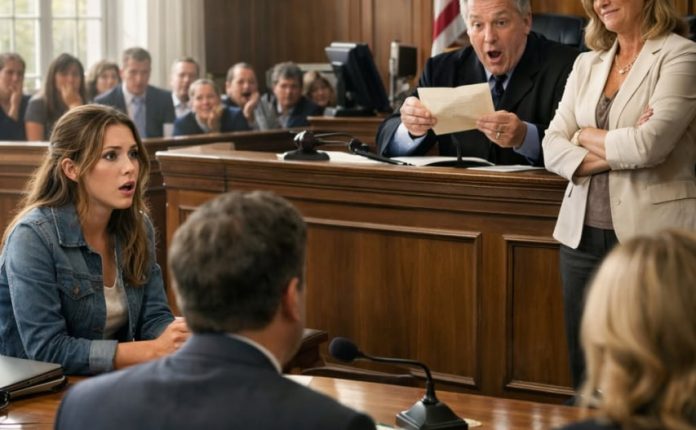
Two days later, the court scheduled a hearing.
My father's attorney filed a response claiming that Grandma's later estate arrangements were unreliable.
The response questioned her mental capacity.
It also suggested I had influenced her decisions.
I stared at the document in disbelief.
"I wasn't even there when she signed it."
Evelyn nodded.
"That's one fact we'll establish."
"But they know that."
"Knowing something and admitting it are different matters."
We reviewed Grandma's medical records, witness statements, and the timeline of the trust execution.
Rebecca provided information about the signing.
Margaret supplied financial documents.
Rosa prepared a statement about Grandma's business activities and her repeated requests to see me.
Daniel confirmed the earlier planning history.
Piece by piece, a clearer picture emerged.
Grandma had been elderly and medically vulnerable, but she had also taken deliberate steps to protect her properties.
My father had presented a very different account.
Then Evelyn received another document.
It was an email from the developer.
Dad had apparently promised that he could deliver clear title to the cottages soon after the probate hearing.
The developer was requesting confirmation of the closing timetable.
Evelyn read it twice.
"He's made commitments he may not be able to fulfill."
I sat across from her.
"What happens now?"
"We present the evidence."
"All of it?"
"The evidence that's relevant and properly admissible."
She placed the email in the case folder.
"Claire, your father is going to have to answer questions about the properties, the records, and the statements he made."
I looked down at Grandma's letter.
For the first time, I understood why she had hidden it.
She wasn't simply leaving me a message.
She was leaving me the courage to challenge a story my parents had spent years teaching me to accept.
END PART 3