Skip to content
…
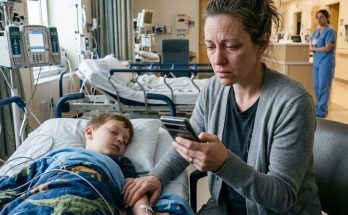
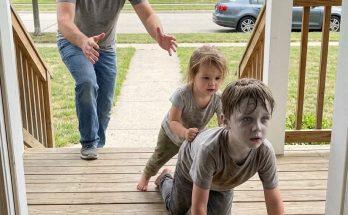
After ending the call, Peter set his phone aside and pulled the hospital chair into a new position, planting himself between Drew’s bed and the doorway. It was a small movement. It felt enormous. For years, Peter had let a closed door tell him where his place was in his brother’s children’s lives. Reena had said they were sleeping. Reena had said they were sick. Reena had said seeing Peter reminded them too much of their father. Each time, Peter had accepted the explanation because the alternative required him to believe something he had not been ready to believe. Now six-year-old Drew was lying under a hospital blanket with a leg that had been broken before he ever began his seven-block escape, and three-year-old Lily was resting nearby after arriving hungry enough to attack a sleeve of crackers. The excuses no longer sounded protective. They sounded like barriers. Peter leaned forward, forearms on his knees, and watched Drew watch his sister. That was what the boy kept doing. Even hurt, Drew checked Lily first. Even exhausted, Drew noticed whether she was eating too fast. Even after dragging himself across block after block of pavement, he had arrived at Peter’s porch thinking less about his own pain than about the little girl gripping the back of his shirt. Peter could not get past that. He had spent three years thinking of Drew as Aaron’s little boy. Somewhere along the way, Drew had been forced into acting like Lily’s protector. At six. Peter looked toward the hospital bed and remembered the first thing Drew had said on the porch. “She locked us downstairs again.” Again. That word had been sitting in Peter’s chest ever since. At first, the emergency had been too loud for him to understand it. There had been Drew on the steps, pale and shaking. There had been Lily hanging on to his shirt. There had been the terrible angle of Drew’s leg and the dirt on both children. There had been Peter’s screwdriver hitting the porch boards after slipping from his hand. Then everything had become movement. Down the steps. Lift Lily. Support Drew. Get them inside. Call for help. Answer the dispatcher. Give the address. Give the ages. Explain the injury. Repeat what Drew had said. Peter had not been trying to solve the story then. He had been trying to get two children safely through the next five minutes. The story began catching up with him only after the sirens came. Two officers had written down Reena’s address while paramedics stabilized Drew’s leg and examined Lily. Peter had watched strangers move around his nephew with practiced care and felt something close to shame every time he remembered how often he had been kept away. He had called. He had offered groceries. He had brought birthday presents. He had volunteered to repair things around the house. He had believed that remaining available without becoming confrontational was the responsible choice. After Aaron died, grief had rearranged everyone. Peter knew that. Aaron had been thirty-five when a heart attack killed him, leaving behind Drew, baby Lily, and a widow promising she wanted one thing for the children. Stability. Peter had believed that word because he wanted to. More painfully, he had believed it because Aaron would have wanted to. Peter could still picture his younger brother laid out in a funeral-home suit that did not look like him at all. Aaron had never seemed like someone who belonged in stiff clothes and polished silence. Peter’s memories of him were alive with ordinary things instead. A brother who had children to raise. A brother who expected there would be another birthday, another repair, another argument, another normal week. Then there wasn’t. After the funeral, Reena’s promise had sounded almost merciful. She wanted stability for the children. Peter had taken her at her word. When she began limiting his contact, he told himself she knew Drew and Lily’s grief better because she lived with it every day. “They’re asleep.” Fine. He could call later. “They’re sick.” Fine. He could leave the groceries. “You remind them too much of their father.” That one had landed differently. Peter had gone back to his truck with gifts that never reached the children and sat there longer than he cared to remember. He had wanted to push. He had also been afraid of making himself the problem. A grieving household did not need another adult fighting for territory, he had decided. So he backed away. Not completely. Never completely. But enough. Now he understood the terrible cost of that distance. He did not know everything that had happened inside Reena’s house, and he refused to fill the gaps with guesses while Drew was lying ten feet away. What Peter knew was already enough to change the shape of the past three years. Drew had called the basement a place where they had been locked before. He had referred to Reena’s punishment room. Lily had reached Peter’s porch frighteningly light and desperately hungry. Drew had arrived with a broken leg. And according to the doctor, that break had happened before the escape. Those were not Peter’s suspicions. Those were facts already in front of him. The doctor’s sentence kept replaying in his head. The injury predated that morning. Peter had initially assumed Drew had hurt himself while getting away. Seven blocks was already difficult to imagine for a healthy six-year-old trying to guide a three-year-old. Seven blocks while dragging an already broken leg changed the entire picture. Drew had not been injured by the escape. He had chosen to escape despite the injury. Peter looked at the boy again. Drew’s fingers rested near the edge of the blanket. He was quiet. Too quiet, Peter thought, though he reminded himself that the child had been through more than enough without an adult studying every breath for another clue. So Peter did something he wished he had understood sooner. He stopped demanding answers from the moment. He stayed. That was all. He stayed where Drew could see him. He stayed where Lily could wake and find him. He stayed where nobody could reach either child without passing him first. The position of the chair mattered to Peter for reasons he could not fully explain. Maybe because doors had defined too much already. Reena’s front door had been the place where groceries, presents, offers of help, and Peter himself kept getting turned around. The basement door had become something much darker in Drew’s few exhausted sentences. Now there was a hospital doorway, and Peter had put himself beside it deliberately. Not to control Drew. To make sure Drew did not have to control everything anymore. Lily shifted in her sleep. Drew’s head turned immediately. Peter saw the reflex and felt his throat tighten. “She’s okay,” he told him quietly. Drew kept looking until Lily settled again. Only then did his shoulders loosen a little against the pillow. Peter wanted to tell him he could stop worrying. He wanted to promise that adults had it from here. But promises suddenly felt cheap. Reena had made promises too. Stability. That word again. Peter decided not to compete with it using another speech. Instead, he stayed in the chair. Earlier that morning, he had been kneeling on his own porch trying to fix a loose hinge. It seemed ridiculous now that the hinge had frustrated him so much. He had spent nearly an hour tightening, testing, and adjusting it while his thoughts wandered toward Aaron. Then he heard scraping against the steps. Not knocking. Not footsteps. Scraping. Peter had turned and seen a sight his mind still resisted whenever he replayed it. Drew was pulling himself forward with his hands. His hair stuck to his forehead. His face looked gray beneath the dirt. One leg trailed stiffly behind him. Lily stumbled after him with both fists wrapped in his shirt. Peter had run. By the time he reached Drew, the boy’s arms were beginning to give out. “Drew. God, buddy, what happened?” The answer had come in a whisper. “She locked us downstairs again.” Peter had not even processed the last word before Drew added the reason he had kept going. “I had to get Lily out. She was really hungry.” Peter remembered lifting Lily. The absence of weight had frightened him. Then he had carried Drew carefully, supporting his upper body and avoiding pressure on the damaged leg. Drew barely cried out. That restraint frightened Peter more than screaming might have. Inside, Lily had reached for crackers with frantic speed. Peter had moved toward her, worried she would choke or make herself sick. Drew beat him to it. “Slow, Lily. Slow.” The memory was almost unbearable now. A six-year-old with an untreated broken leg had still believed he was responsible for managing his sister’s hunger. Peter closed his eyes briefly. Then he opened them. He did not want to look away anymore. When he had announced that he was calling for help on the porch, Drew’s fear had changed instantly. “She’ll be mad.” That sentence had stripped away any remaining uncertainty about whether Drew expected comfort when adults became involved. Peter had knelt in front of him. “She is not touching you again.” He remembered saying it with a certainty he did not yet know how to fulfill. But he had known the first step. He called 911. Three minutes later, sirens arrived. From there, the children’s world finally included adults Peter had not needed permission from Reena to contact. Paramedics could look at Drew’s leg. Medical staff could evaluate Lily. Officers could hear Peter’s statement. Doctors could read what an X-ray showed instead of relying on a family explanation. That mattered. Not because Peter suddenly believed every mystery had been solved. It had not. The doctor had been careful about that. He had not given Peter a dramatic theory. He had given him one medically relevant fact. The break was older than the escape. Peter respected the restraint of that answer. It made the fact more powerful, not less. There was no need to embellish it. Drew had traveled seven blocks on a leg that was already broken. That was enough. The officers needed to know it, so Peter had called them back and added the information. He also clarified the word that had become impossible to ignore. Again. Drew was not describing one isolated morning. At minimum, he was describing repeated confinement. Peter did not try to interview him beyond what was necessary. The boy was a child, not a witness Peter intended to interrogate from a hospital chair. If Drew wanted to talk, Peter would listen. If he wanted to sleep, Peter would let him sleep. If Lily woke hungry, Peter would make sure somebody knew. The simplicity of those choices steadied him. For three years, Peter had been trapped inside a question he never said aloud. How hard should an uncle push when a widowed parent says the children need distance? That question had seemed complicated when all he had were closed doors and plausible explanations. Now there was another question. What does a child do when every adult who might help him has been kept far enough away that he has to reach them himself? Drew had answered that one with his body. Seven blocks. Hand over hand. One injured leg dragging behind. His little sister holding his shirt. Peter felt anger rise, but anger did not tell him what Drew needed at that moment. So he kept his voice even. He kept his hands still. He kept the chair where it was. The hospital room had become strangely ordinary around the worst morning of Peter’s life. Fluorescent light. A blanket. A chair. Medical equipment. Footsteps beyond the doorway. The same kinds of things thousands of families probably stared at while waiting for news they were not ready to hear. Peter had paced those halls earlier, replaying every unanswered call and every visit that ended before it began. Now pacing felt wrong. He was done moving away from the children. He thought about Aaron. That was the part that hurt differently. His brother had died without seeing this morning. Without hearing Drew say “again.” Without watching Lily eat crackers like food might disappear. Without seeing the X-ray that changed Peter’s understanding of the escape. Peter could not know every belief Aaron carried into his last day. He could not ask him what he had noticed, what he had trusted, or what he would have done differently if he had known what Peter knew now. But Peter did know that the promise repeated after Aaron’s funeral had not matched what arrived on his porch. Stability was not a child dragging a broken leg down the street. Stability was not a hungry three-year-old clinging to her brother. Stability was not a six-year-old flinching at the idea that calling for help might make an adult angry. Whatever Aaron had believed his children would have after he was gone, this could not have been it. That realization carried grief inside it, but it also stripped away Peter’s last excuse for standing at a respectful distance. He could not redo the previous three years. He could not retrieve the birthday visits he had abandoned at the door. He could not turn the groceries he had offered into meals that had already been eaten. He could not go back to the first time Reena said the children were asleep and demand proof that everything was fine. He had only the next choice. Stay. When Drew finally looked toward him instead of Lily, Peter did not launch into reassurance. He simply met the boy’s eyes. “I’m here,” he said. Nothing more. Drew studied him for a moment. Then his hand relaxed against the blanket. Peter remained in the chair. Outside that room, there were still questions that other people would have to examine. There was Reena’s address already written in the officers’ notes. There was Drew’s statement. There was Lily’s condition when she arrived. There was the X-ray. There was Peter’s follow-up call clarifying what he had only understood after the doctor spoke. None of those things needed Peter to become a detective or invent an answer. They needed him to tell the truth about what he had seen and heard. That he could do. He had seen Drew crawling toward his porch. He had heard him say they had been locked downstairs again. He had lifted a three-year-old who felt frighteningly light. He had watched Drew moderate Lily’s eating before asking for anything himself. He had seen fear cross Drew’s face when help was mentioned. He had heard a doctor say the break was not new. Those facts were heavy enough. For years, Peter had thought being a good uncle meant respecting boundaries set by the children’s home. That morning taught him that a boundary and a barrier were not always the same thing. One can protect a family. The other can hide one. The loose hinge was still waiting on Peter’s porch. His screwdriver was probably still somewhere near the boards where it had fallen with that metallic crack. Ordinarily, unfinished repairs bothered him. Aaron used to tease him about it. Peter would tighten a cabinet handle in somebody else’s kitchen while they were still talking to him, or notice a sticking latch and start checking the screws before anyone asked. But for once, Peter did not care about the hinge. The door could sag for another day. His place was here. Drew’s eyes grew heavier. Lily remained asleep. Peter settled deeper into the chair without moving it away from the doorway. For the first time since the children reached his porch, nothing urgent happened for several minutes. No sirens. No running. No frantic explanation. No new sentence from a doctor changing what Peter thought he knew. Just two exhausted children resting in the same room and an uncle refusing to leave them alone with fear. Peter had spent three years believing that not pushing was a form of kindness. Now he understood that kindness could also mean being inconvenient. Calling again. Showing up. Asking another question. Taking a frightened child seriously the first time he says “again.” He could not change the morning Drew had already survived. He could not change the seven blocks. He could not change the broken leg Drew had carried across them. But when Drew finally allowed his eyes to close, Peter was still sitting between the bed and the door. And this time, when a door stood between those children and the rest of the world, Peter was on their side of it. Leave a Reply Your email address will not be published. Required fields are marked * Comment * Read More
…
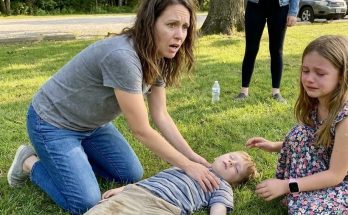
Detective Miller rotated the bottle so I could read the pharmacy label. Whatever I expected to see, Amber’s name wasn’t printed there. It belonged to my brother. Lily’s father. Image For a few seconds, I could only stare at the letters while Caleb’s monitor kept up its steady electronic rhythm behind us. My brother’s name made the bottle worse, not better. Amber lived with him. She shared a bathroom with him, a kitchen with him, cabinets with him. If that medication had come from their house, then her story about finding it in my bag had just developed a hole big enough to drive through. But Detective Miller didn’t celebrate. Neither did I. He lowered the bottle and said, “This tells us where the prescription originated. It doesn’t tell us, by itself, who gave Caleb the mixture.” “I know.” My voice sounded surprisingly calm. Maybe because I had already used up the part of me capable of screaming when I found my son on the grass. “Call my brother,” I said. “Ask him where he keeps it. Ask him who had access. Ask him whether he ever gave Amber permission to take it.” Miller studied me for a second. Then he nodded. I looked through the glass toward Amber. I looked at the officer standing beside her. I looked at the way she kept talking with both hands, as if enough explanation could turn chemistry into misunderstanding. I looked back at Caleb. That was the only direction that mattered. His fingers were warm in mine now, but he still hadn’t opened his eyes. A nurse adjusted one of the lines near his arm, checked the monitor, and gave me the kind of small professional nod that meant nothing had suddenly gotten worse. At that point, I was learning to accept tiny pieces of good news. No new alarm. A steadier number. Another breath. I had spent years hearing Amber describe Caleb as “too much.” Too loud at family dinners. Too restless when adults wanted to talk. Too excited at birthday parties. Too quick to climb, run, ask questions, touch things, laugh at the wrong volume. What I had always seen was an energetic little boy who needed boundaries, patience, and somewhere safe to burn off energy. Amber saw a problem that needed to be shut down. That difference had caused arguments before, but I had never imagined she would put something in his drink. I certainly never imagined she would stand under a tree afterward, scrolling through her phone while he lay pale and still on the ground. Detective Miller stepped away to make calls. I stayed beside the bed. A while later, another nurse brought Lily past the doorway with an adult staff member beside her. Her face was blotchy from crying, and she had both hands wrapped around her smartwatch as though she were afraid someone might take it away. She saw me and stopped. “Auntie Sarah?” I stood immediately. She looked toward Caleb’s bed. “Is he going to wake up?” The question hit harder than anything Amber had said. “The doctors are taking care of him,” I told her. “You did exactly the right thing calling me.” Her mouth trembled. “Mommy said I wasn’t supposed to.” I felt my entire body tighten. But I didn’t ask what she meant. That mattered. I wanted to scoop Lily into my arms and ask her every question in my head, but Detective Miller had already explained that the children needed to tell what happened in their own words, without adults feeding them details. So I hugged her. Nothing else. “You’re safe,” I said. She held on to me for three seconds longer than usual before the adult with her gently guided her back down the hall. When Detective Miller returned, his expression had changed again. Not triumphant. More focused. “Your brother confirmed the prescription is his,” he said. My knees almost gave way from the strange mixture of relief and dread. “He says he did not give the bottle to you, and he did not put it in your bag.” “Did he give it to Amber?” “No.” One word. That was enough. Miller explained that my brother remembered the medication being at home and had not authorized Amber to use it for anyone else. That did not solve every question, but it destroyed the clean version of events Amber had apparently hoped the police would accept. The bottle had not simply materialized around me. It had come from her household. And she had access to it. “What about the alcohol?” I asked. “We’re still working through that.” I hated that answer. Not because it was evasive, but because it reminded me that there were still things nobody could explain yet. I walked back to Caleb and sat down. For the first time since reaching the park, I let myself think about the beginning of the day. Amber’s smile. Her sudden generosity. Her offer to take both kids out. The way she had said, “They’ll have fun,” like she was doing me a favor. She had smiled. She had volunteered. She had taken charge. She had returned my son to me on a hospital bed. The order of those facts bothered me now in a way I couldn’t explain away. Hours later, Caleb finally moved. It wasn’t dramatic. His fingers curled weakly against my palm. I was on my feet before I realized I had stood up. “Caleb?” His eyelids fluttered. A nurse was beside us almost immediately, checking him before I could crowd the bed. I forced myself backward even though every instinct in me wanted to pull him into my arms. His eyes opened only halfway. “Mom?” “I’m here.” That was all I trusted myself to say. His voice was dry and tiny. “My head hurts.” The nurse kept her tone gentle while checking him, and I stayed where Caleb could see me without interrupting. When he reached for my hand again, I gave it to him. He squeezed once. Weakly. Still Caleb. I cried then. Not loudly. I just bent my head over our joined hands and let the tears fall onto the hospital blanket. The medical danger had not vanished because he opened his eyes, and the staff made that clear. He still needed monitoring. He still needed rest. But hearing my son say “Mom” rearranged the entire room inside my chest. Detective Miller did not question him immediately. I was grateful for that. There would be time for facts after Caleb was stable enough to give them. When that conversation eventually happened, I was not in the room coaching him. That was intentional. I wanted whatever Caleb remembered to belong to Caleb. Later, Miller came back to me with a notebook closed in one hand. “Caleb remembers Amber giving him the drink,” he said. I shut my eyes. I had known it. Hearing it confirmed was still different. “He said he didn’t like the taste.” My stomach tightened. “He told her?” “Yes.” Miller paused. “He says she told him to finish it.” I turned toward the wall because for one ugly instant I couldn’t look at another person. At the park, Amber had described Caleb like an unruly child she had simply tried to settle down. But Caleb’s memory made the moment sound far less casual. He had objected. She had insisted. Then he had gotten sick. And Lily had been left trying to wake him. “What did Lily say?” I asked. Miller chose his words carefully. “She described seeing her mother handle a medicine bottle before Caleb became sleepy. Her account is being documented separately.” Separate. That word mattered to me. Two children. Two accounts. Neither one needed me to tell them what to say. Amber’s version now had to survive the lab results, the prescription bottle from her own household, my brother’s statement, Lily’s account, and Caleb’s memory of being told to finish a drink he did not want. She still tried. Of course she did. The next time I saw her clearly, she was standing farther down the corridor arguing with someone while my brother faced her from several feet away. He looked like a man who had arrived believing there had to be some explanation and had discovered there wasn’t one he could live with. I couldn’t hear everything. I heard Amber say my name. I heard the word “overreacting.” Again. Then my brother stopped her. He didn’t shout. He simply said, “Caleb is in a hospital bed.” Amber answered too fast. “I didn’t know it would do that.” The corridor seemed to narrow around the sentence. She kept talking immediately, trying to reshape what she had just admitted. She said she meant she hadn’t known he would react badly. She said she had only wanted him to calm down. She said everyone was twisting her words. She said she never intended for anybody to get hurt. But intent was no longer the only issue. Caleb had been given something dangerous. He had collapsed. She had called it a prank. Then she had pointed police toward me. Detective Miller had been standing close enough to hear her. He did not deliver some clever comeback. He asked her another question. That was worse for her. “Why did you tell us the bottle came from Sarah’s bag?” Amber stopped talking for half a beat. Then she changed direction. She claimed she had been confused at the park. She claimed she had panicked. She claimed she might have mixed up which bag she had seen. But that explanation created a second problem. Earlier she had been very specific. The medication was mine. The bottle was mine. She had supposedly been trying to protect the children from my negligence. Now, after the label tied the prescription back to her home, her certainty had become confusion. My brother stared at her. “You told me Sarah did this.” Amber looked at him instead of answering. He stepped away from her. That movement was small, but I watched it happen. He had spent the first part of the evening trying to understand what his wife was saying. Now he was putting physical space between them. Lily came around the corner with the adult who had been staying with her. She saw her father and ran to him. He crouched and wrapped both arms around her. Amber took one step toward them. Lily buried her face against her father’s shoulder. My brother looked up. “Not right now.” No speech. No performance. Just a boundary. Amber’s mouth tightened. For the first time all day, she had lost control of where everyone stood. She could not tell me how to raise my son. She could not tell Lily not to call me. She could not tell my brother which version to believe. And she could not make the lab results disappear by calling them dramatic. Caleb stayed under observation while the adults dealt with everything outside his room. That was the part I cared about most. I refused to let his bedside become a courtroom. When my brother came in, he stood near the door until I nodded. Then he approached Caleb slowly. “I’m sorry,” he said. Caleb looked at him with sleepy confusion. My brother swallowed. “You don’t have to say anything. I just wanted you to know I’m here.” Caleb nodded once and closed his eyes again. My brother turned toward me. There were a hundred things we could have argued about. How he had missed Amber’s contempt toward Caleb. How often he had let her criticize me at family gatherings because correcting her was uncomfortable. How easily she had turned my parenting into a running joke. I wasn’t interested in any of that yet. “Take care of Lily,” I said. “I will.” “Believe her.” His face crumpled slightly. “I do.” That mattered more than an apology. The investigation did not wrap itself up in one dramatic hospital scene. Real consequences came through interviews, medical records, the contents of the bottle, the children’s separate statements, and the timeline people had initially treated like background noise. Amber’s original explanation kept changing as each fact became harder to deny. First it was harmless. Then accidental. Then misunderstood. Then supposedly my fault. Then supposedly my brother’s medication mistake. But every new version had to fit the same stubborn facts. Caleb had been fine when he left with her. Amber had given him the drink. He had objected to its taste. She had made him finish it. He had become dangerously unresponsive. Lily had called me because Amber was not getting him help. And after I arrived, Amber had tried to redirect responsibility toward me. There was no sentence dramatic enough to erase that sequence. She was taken away from the hospital later, after officers finished what they needed to do there. I didn’t watch. I was sitting with Caleb when it happened. That choice surprised some people afterward. They expected me to want the satisfaction of seeing Amber frightened or humiliated. I didn’t. I had already seen enough fear for one day, and all of it had been on children’s faces. My job was beside the bed. Caleb recovered gradually. The first time he asked for food, I nearly laughed from relief. The first time he complained about being bored, I had to turn my face away because the sound was so wonderfully normal. The first time he tried to negotiate for more screen time, I told him no. He groaned. I smiled. There he was. Lily visited once he was ready. She stood awkwardly near the bed holding a folded piece of paper she had drawn on. Caleb looked at it. “Is that me?” She nodded. The picture showed two stick figures beside something green that was probably supposed to be a tree. “You made my head huge.” “You have a huge head.” He laughed. Lily laughed too. My brother covered his mouth with his hand and looked toward the window. Nobody told the children that the moment was important. We let it be ordinary. That became the rule afterward. The adults could deal with the consequences. The children did not have to perform their pain for us. Lily stayed with her father while everything involving Amber moved through the appropriate process. I stopped asking my brother for updates unless something directly affected Caleb or Lily. He understood why. There were also changes closer to home. For months, I had allowed Amber’s criticism to make me second-guess myself. Was I too protective? Was Caleb really too wild? Did I need to toughen him up because other adults found his energy inconvenient? After the park, those questions sounded different. Caleb still needed rules. He still had to listen. He still had to learn when running was safe and when it wasn’t. But there is a difference between guiding a child and resenting the space a child takes up. I had watched Amber cross that line long before I understood how far she could go. I would not ignore it again. Weeks later, Caleb asked whether we could go back to the park. My first instinct was no. I could still picture the grass beneath his body. I could still see the loose sneaker. I could still hear Lily’s voice through the car speakers telling me he would not wake up. Caleb waited while I fought with all of that. Then he said, “I don’t want her to keep my park.” That settled it. We went. My brother brought Lily. There was nothing ceremonial about the afternoon. No speeches. No promises that everything was fixed. The kids ran toward the playground before we had even finished putting our things down. I called after Caleb to slow down near the path. He waved without looking back. A few minutes later, one of his shoelaces came undone. He jogged over, impatient, while I crouched and retied it. Lily was waiting several yards away, yelling that he was taking forever. Caleb yelled back that she was cheating. I tightened the knot, handed him his sealed bottle of water, and tapped his sneaker. “Go.” He took off toward Lily, both of them already arguing about whose turn it was on the swing. Read More