The folded clinic form rested in Maya’s hands as she looked from the paper back to the little girl who had carried it across the room. Nora had not handed it over because she wanted attention. She had done it because she knew something on that page mattered.
Her father stood beside the exam table, still holding his phone with Claire’s messages glowing on the screen. The words accusing Nora of exaggerating sat there beside the reality in front of him: his eight-year-old daughter with her injured arm held close, afraid to go back into the clinic where the accident happened.
Maya carefully opened the form.
The room was quiet, but not because nobody knew what to say. It was because everyone was waiting for the same answer.
Who had written those notes?
The question stayed between them.
Earlier that morning, the day had started like any other. Claire had told him she would stay with Nora while she handled a few things at the clinic. He believed it because he trusted his wife. He believed his daughter was safe because the person watching her was someone he had chosen to bring into their family.
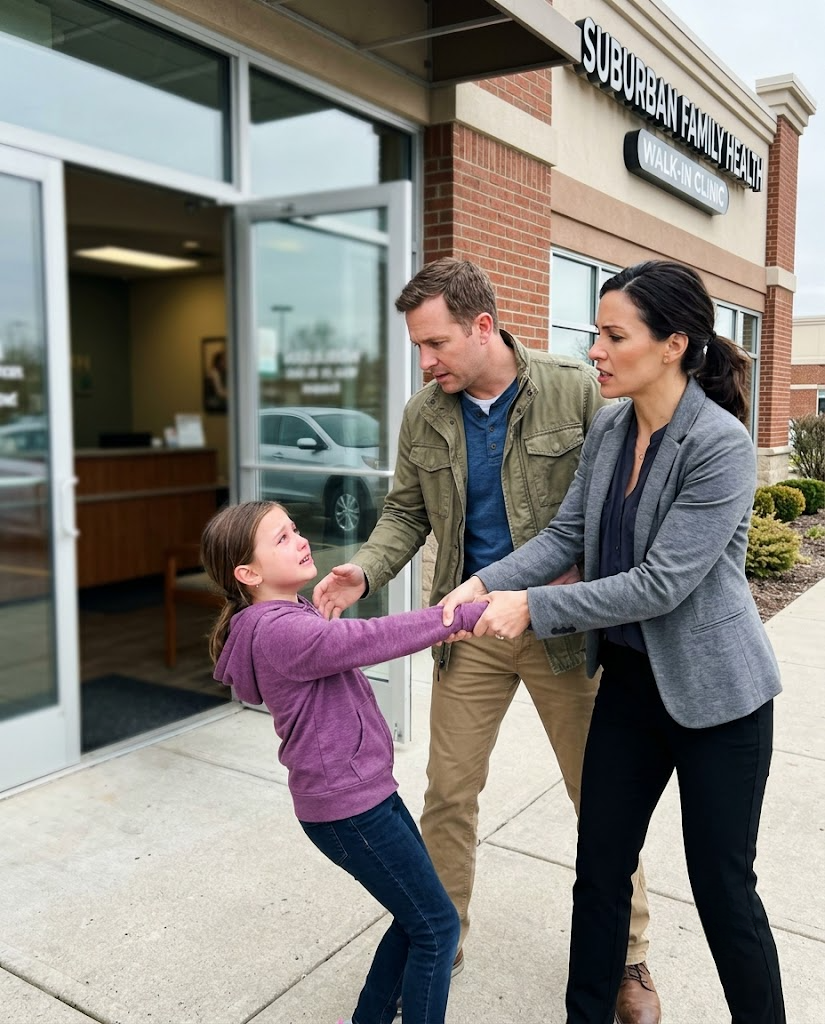
But Nora had tried to warn him before he left. She cried. She begged him not to leave her alone with Claire. At the time, he thought it was a child struggling with change. A child adjusting to a new marriage. A child who did not yet understand the responsibilities adults carried. He was wrong. By the time he stepped into the clinic later that day and saw Claire pulling Nora toward the registration desk, he finally understood that his daughter had not been asking for comfort. She had been asking for protection. Nora had not wanted to make trouble. She had not wanted to embarrass anyone. She had simply wanted someone to believe her. The injury itself was only part of what hurt. She had been left alone in an unused consultation room while Claire continued working with patients. Every time Nora opened the door, she was told to wait. She was told that people were outside. She was told that Claire had things to do. A child waiting for help became another interruption in a busy day. Then came the fall. Nora had climbed onto the rolling stool because she was trying to reach Claire’s bag. The stool shifted beneath her. Her arm took the impact. And the person who was supposed to notice never saw it happen. That was the part her father could not stop thinking about. Not just that Nora was hurt. That she was hurt quietly. When he drove away from the clinic, he noticed every small detail he had ignored before. The folded paper beside the parking receipt. The way Nora kept her injured arm protected. The way she refused to let the air blow toward it because even that bothered her. She was not acting dramatic. She was trying to stay in control of the only things she still could. At urgent care, Maya had immediately recognized that something about Nora’s story mattered. She did not push. She did not assume. She simply listened. That was why Nora trusted her with the form. Because the paper was not just paperwork. It was a piece of the morning Claire did not expect anyone to examine closely. Maya ran her finger down the page. The writing was familiar. The timing was important. And the details did not match what Claire had told Nora’s father. The form showed that the story Claire gave him was incomplete. More than incomplete. It showed that someone had been trying to control the version of events before anyone else could hear Nora’s side. The father looked at his daughter. For hours, he had been focused on the injury. The arm. The appointment. The argument at the clinic door. But his daughter had been focused on something else. She had been protecting the truth. Maya asked again, “Who filled this out?” The father did not answer immediately. Because he already knew the answer might change everything. Claire had wanted the form back because she said it belonged to the clinic. But Nora had known it belonged somewhere else first. With the person who needed to see it. Maya turned another section of the page toward the light. Then she pointed to one line that made the father’s stomach drop. The note did not describe an ordinary waiting-room situation. It described a decision someone had made. A decision that left Nora alone longer than anyone had admitted. And suddenly the biggest question was no longer how Nora hurt her arm. It was why Claire was so determined to keep the paper away from everyone else. The father picked up his phone again. Three messages from Claire were still there. But this time, he read them differently. The first message was not anger. The second was not frustration. The third was not about a clinic form. They were all attempts to make him look away before he saw what his daughter had already discovered. Nora had spent the whole day carrying the truth in a folded piece of paper. Now it was finally in someone else’s hands. And Claire was about to find out that Nora was no longer alone.