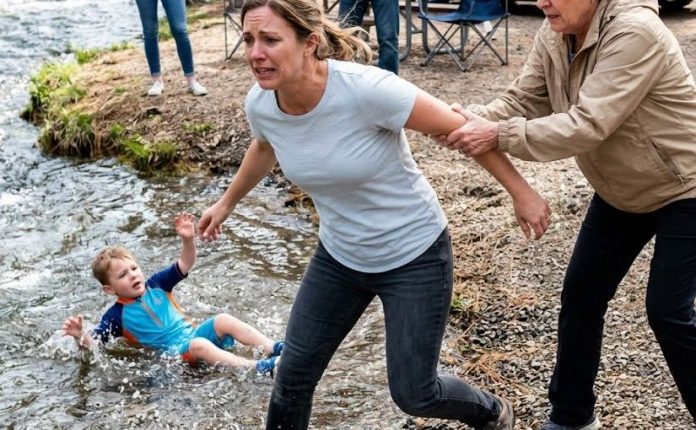
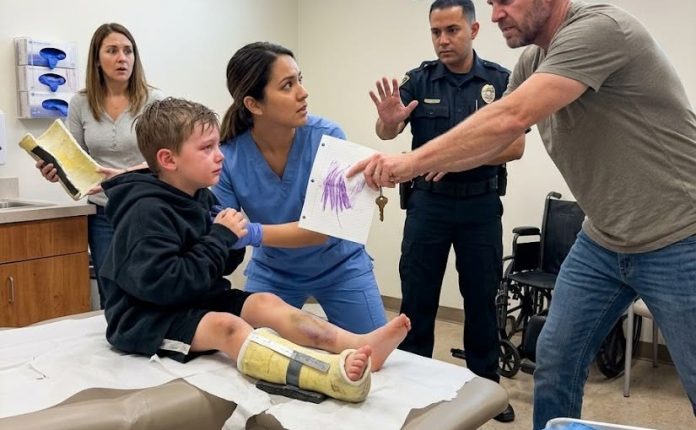
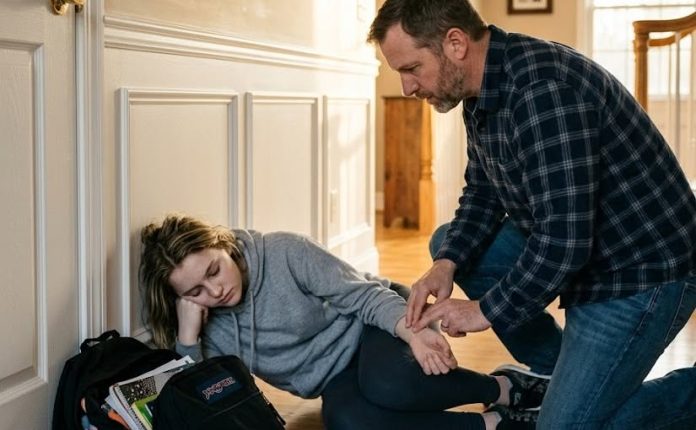
At my ex-wife’s wedding, my 12-year-old daughter beat the groom unconscious in front of everyone.
By sunrise, half the family had decided she was dangerous.
By breakfast, they were talking about charges.
And before I had even boarded a plane home from Germany, the adults around her had agreed on a version of the story that required no one to ask why a child had attacked a grown man.
My phone buzzed at 4:16 a.m. in a barracks room lit by the flat white hum of fluorescent tubes.
The hallway smelled like burnt coffee and floor cleaner, and the tile was cold enough under my bare feet to make me fully awake before I answered.
My commanding officer’s voice was controlled, which frightened me more than panic would have.
“There has been an incident involving your daughter.”
For one second, I pictured every ordinary emergency a parent learns to fear from a distance.
A school bus accident.
A fall from a bike.
A fever that had turned serious while nobody was looking.
Then he told me Ava had put a grown man in the hospital.
Not a stranger.
Not someone who had grabbed her in a parking lot.
The man her mother had married less than an hour before the fight.
Wade.
The groom.
I sat on the edge of the narrow bed while the fluorescent light buzzed above me and listened to words that did not fit together.
Wedding.
Ambulance.
Police.
Twelve years old.
Unconscious.
My ex-wife, Diane, had already told officers she wanted charges.
Wade’s mother was demanding that Ava be treated like an adult.
Someone had used the word dangerous.
That word stayed with me all the way to the airport.
Dangerous.
I had not seen Ava in eight months.
The last time I held her, she had cried into the front of my uniform because our old dog, Buddy, had died while I was away.
She was trying to be brave for me and failing in small, quiet breaths.
“Do you think he knew?” she asked.
“Knew what?”
“That we loved him.”
I told her Buddy knew.
I told her animals understand the things people forget how to say.
She held on to me for another minute, then wiped her face and apologized for getting tears on my uniform.
That was Ava.
She apologized when she was hurt.
She made room for other people’s feelings before anyone asked.
She was the kid who carried injured moths out of the garage on a piece of cardboard because she did not want them crushed under a tire.
Now adults were calling her dangerous because a grown man had left his own wedding in an ambulance.
The flight home felt longer than the eight months I had been gone.
I read every message Diane had sent.
Most were short.
Come home.
She needs consequences.
Wade may need surgery.
Do not make excuses for her.
Not once did Diane write that Ava had explained what happened.
Not once did she ask whether our daughter was injured.
When the plane landed, my body felt heavy from travel and anger, but the anger had nowhere to go yet.
I had learned a long time ago that rage can make you feel decisive while actually making you easy to control.
So I kept repeating the same thing to myself.
Hear Ava first.
Hear Ava first.
The road to Diane’s house looked painfully normal.
Morning traffic.
A school bus turning at the light.
A man carrying a paper coffee cup across a gas station lot.
The world had not changed because my daughter had become the center of a family emergency.
That is one of the cruelest things about bad news.
It arrives like the end of everything, then makes you watch everybody else continue their day.
White wedding flowers were still tied to the porch rail when I pulled into the gravel drive.
The ribbon snapped in the wind with a dry little sound.
Near the bottom step was a dark rusty stain no one had rinsed away.
I did not stare at it.
I did not need to.
The front door opened before I knocked.
Diane’s eyes were swollen, but grief was not the first thing I saw on her face.
It was fury.
“We’re pressing charges,” she said.
No hello.
No question about the flight.
No mention of Ava’s condition.
Just a sentence already shaped like a verdict.
“I’m not taking anyone’s side until I hear both,” I said.
“There aren’t two sides to this.”
“There are always two sides when one of them belongs to my child.”
Her mouth tightened.
For a moment, we were back inside every argument that had ended our marriage, with Diane deciding that certainty was the same thing as truth and me trying not to let volume choose the winner.
Then someone groaned from the living room.
Wade.
Diane stepped aside.
The house still carried the remains of the wedding.
Flowers on the entry table.
A ribbon pinned crookedly near the stairs.
A paper cup abandoned on the window ledge.
Underneath the sweet smell of flowers was antiseptic, cold coffee, and the stale air of too many people who had been sitting in judgment for too long.
The living room felt less like a home than a family court hallway with furniture.
Diane’s parents sat stiffly on the couch.
Her brother Russ stood near the fireplace with his arms crossed.
Her sister Fen held herself in the corner as if she were cold.
Wade’s parents stood behind the sofa like guards.
And Wade sat in the center of the room with an ice pack pressed to his face.
His jaw had been wired.
Both eyes were blackening.
A bandage circled his head.
Every injury made the story against Ava easier to believe because adults trust visible damage more than invisible fear.
Ava sat alone on a wooden chair near the stairs.
She wore the same wrinkled dress from the wedding.
A paper towel was wrapped around her split knuckles.
Her back was straight.
Her eyes were dry.
She was too still.
Children do not get that still because they feel powerful.
They get that still because every adult in the room has already taught them what their words are worth.
I had seen soldiers sit like that after being questioned by people who had already decided what happened.
The body becomes careful.
The face goes blank.
Even breathing starts to feel like evidence that could be used against you.
“Look what she did to him,” Diane said.
I kept my eyes on Ava.
Wade mumbled through his wired jaw.
“She’s dangerous.”
His mother leaned forward.
“They should charge her as an adult.”
The sentence was so absurd I almost laughed, but Ava flinched when she heard it.
That stopped me.
I moved closer to her and crouched until we were at eye level.
“Tell me your side.”
Nobody in the room liked that question.
I could feel it in the way the air shifted.
Diane exhaled sharply.
Russ muttered something under his breath.
Wade’s mother made a disgusted sound.
Ava looked at all of them before she looked at me.
Her chin began to tremble.
“He’s been hurting Tommy for six months,” she said.
Nobody spoke for half a heartbeat.
Then she added, “Locking him in rooms. Calling it discipline.”
The room exploded.
Diane said Ava was lying.
Russ cursed.
Fen started crying before anyone had even asked what she knew.
Diane’s father muttered that a firm hand never ruined a child.
Wade made a sound through his jaw that might have been pain, but his eyes moved sideways.
Not toward Diane.
Not toward Ava.
Toward his father.
That was the first thing I noticed.
Not what Wade said.
What he checked.
People reveal the person they fear with their eyes before they reveal anything with words.
Wade’s father did not look confused.
He looked alert.
Ava reached for her phone with her swollen hand.
Her fingers trembled so badly that the screen flashed twice before she entered the passcode.
Diane stepped forward.
“What are you doing?”
“Showing him.”
Ava opened a hidden folder.
The first photo showed a metal hasp screwed onto the outside of a child’s bedroom door.
The image was slightly tilted, as though Ava had taken it quickly while standing in the hallway.
The screws were bright against the painted frame.
The metal looked newer than the door.
The second photo showed bruises shaped like fingers around a small wrist.
The skin was pale where pressure had not landed and dark where it had.
The third showed a welt across the back of a little boy’s legs.
There was no dramatic caption.
No explanation.
Just the date in the corner and the hard, ordinary clarity of something that should not have existed inside a family home.
The blue phone light held the room still.
Diane’s mother stopped breathing through her nose.
Russ looked down at the carpet as if its pattern suddenly required all of his attention.
Fen covered her mouth.
Outside, a loose strip of wedding ribbon tapped the window again and again.
A soft sound.
A stupid sound.
The only thing in the room still moving without shame.
Nobody moved.
Wade’s father stared at the phone with fear that did not look surprised.
That mattered.
Surprise opens the face.
His had closed.
Diane whispered, “Kids bruise.”
She said it too quickly.
The words did not sound like belief.
They sounded like a rope thrown toward a story that was already sinking.
Wade lifted one bandaged hand.
“That’s out of context,” he said.
His voice was thick and broken by the wire in his jaw.
“The boy is clumsy.”
The second he said it, every face changed.
Because nobody had told him which child appeared in the photos.
Nobody had said the bruises belonged to Tommy.
Wade had supplied that detail himself.
He had just admitted he knew Tommy was hurt.
Diane turned toward him.
Her mouth opened, then closed.
Russ uncrossed his arms.
Fen’s crying stopped so abruptly it was almost a gasp.
Wade’s mother stepped closer to the sofa, but she did not defend him.
Ava stood.
She looked small in the wrinkled dress.
Her wrapped knuckles rested against her side as though she were holding herself together by force.
“Mom, I told you three months ago.”
Diane stared at her.
Ava’s voice did not rise.
That made it harder to dismiss.
“Grandpa, you laughed.”
Diane’s father shifted on the couch.
“Aunt Fen, you said I was being dramatic.”
Fen lowered her hand from her mouth.
“Uncle Russ, you said I should be grateful a man cared enough to set boundaries.”
Russ looked at the fireplace.
“Grandma, you said kids need discipline.”
Diane’s mother sank back against the cushions.
Every person in that room had found a respectable phrase for looking away.
Discipline.
Boundaries.
A firm hand.
Being dramatic.
Adults can hide terrible choices inside ordinary words until a child is forced to bleed through the language.
There is a moment in some families when silence stops being neutral and becomes a vote.
Ava had counted every vote.
She had remembered who cast it.
I looked at Diane.
“Did she tell you?”
Her eyes filled.
“She said Wade was too hard on him.”
“That is not what I asked.”
Diane’s mouth trembled.
“She didn’t show me those.”
Ava answered before I could.
“You wouldn’t look at my phone.”
The sentence landed harder than shouting.
Diane took one step back.
Wade shifted in his chair.
The ice pack slid slightly, and his father reached forward as though to help him.
Then Patricia, Wade’s mother, started whispering.
Too fast to hear at first.
Her husband grabbed her arm.
“Not again, Patricia,” he hissed.
The room changed.
It did not become louder.
It became clearer.
Not again.
Two words can carry a history no one intended to confess.
Wade’s father went pale.
Patricia stopped whispering.
Wade stared at them with raw warning in his swollen eyes.
I stood slowly.
“What does that mean?”
“No one said anything,” Wade’s father replied.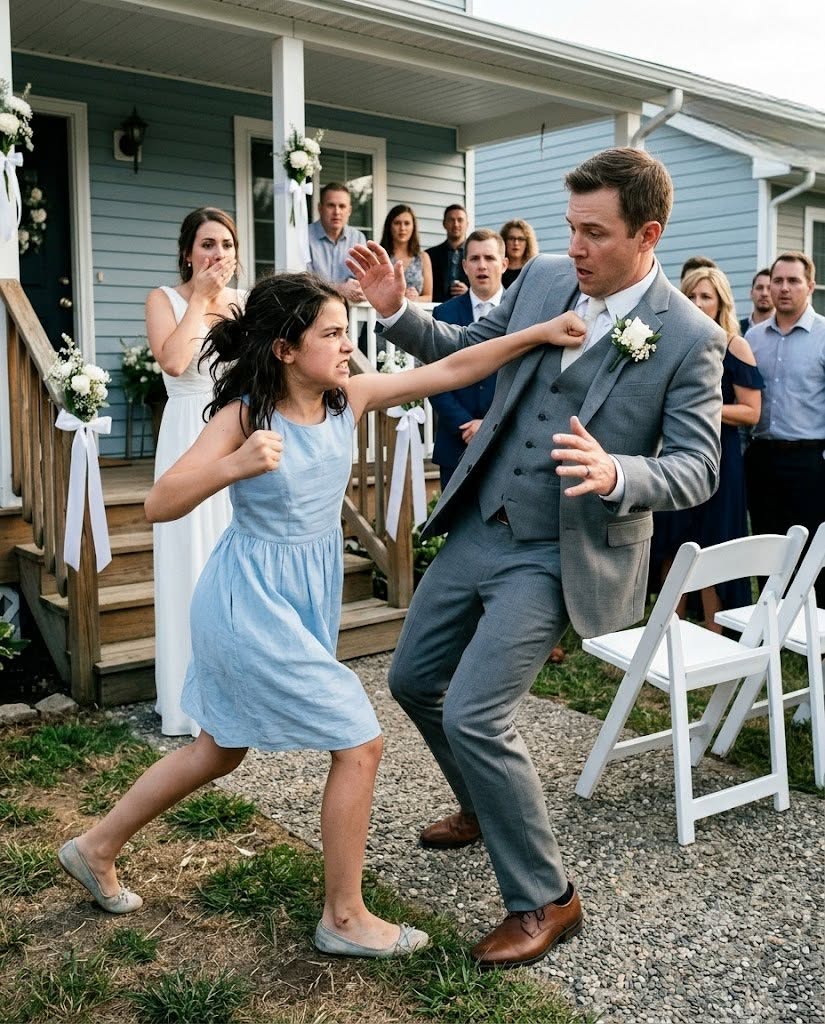 “You did.”
“It means nothing.”
Ava heard the lie.
So did everyone else.
She wiped her cheek with the back of her swollen hand, smearing one tear into the edge of the paper towel.
Then she looked around the room.
Not like a child asking adults to save her.
Like a witness identifying the people who had failed.
“We’re children,” she said, “and every adult in this room chose him over us.”
Nobody interrupted.
No one told her she was being dramatic now.
Diane began crying without sound.
Russ sat down for the first time.
Fen looked toward the stairs.
Wade’s father kept one hand on Patricia’s arm, but his grip had changed.
It was no longer comfort.
It was control.
Ava turned to me.
Her face changed when our eyes met.
For the first time since I entered the house, she looked twelve.
Not dangerous.
Not defiant.
Twelve.
“But that’s not why I hit him,” she said.
My chest tightened.
Behind me, Wade groaned.
Diane whispered Ava’s name.
I did not look away from my daughter.
“What do you mean?”
Ava’s eyes moved toward the stairs.
The hallway above us was quiet.
Too quiet.
Her voice dropped so low I had to lean closer.
“Because Tommy is still—”
“You did.”
“It means nothing.”
Ava heard the lie.
So did everyone else.
She wiped her cheek with the back of her swollen hand, smearing one tear into the edge of the paper towel.
Then she looked around the room.
Not like a child asking adults to save her.
Like a witness identifying the people who had failed.
“We’re children,” she said, “and every adult in this room chose him over us.”
Nobody interrupted.
No one told her she was being dramatic now.
Diane began crying without sound.
Russ sat down for the first time.
Fen looked toward the stairs.
Wade’s father kept one hand on Patricia’s arm, but his grip had changed.
It was no longer comfort.
It was control.
Ava turned to me.
Her face changed when our eyes met.
For the first time since I entered the house, she looked twelve.
Not dangerous.
Not defiant.
Twelve.
“But that’s not why I hit him,” she said.
My chest tightened.
Behind me, Wade groaned.
Diane whispered Ava’s name.
I did not look away from my daughter.
“What do you mean?”
Ava’s eyes moved toward the stairs.
The hallway above us was quiet.
Too quiet.
Her voice dropped so low I had to lean closer.
“Because Tommy is still—”