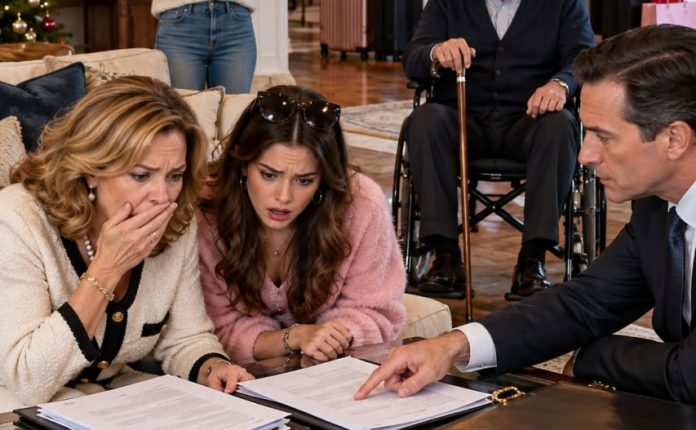
The document was dated March 18, 1965.
My grandfather's name appeared in blue ink.
Beneath it was the name of Thomas Callahan Senior.
I recognized Grandpa's handwriting immediately.
Even at eighty-four, his signature looked nearly identical.
Strong downward strokes.
A crooked final letter.
A tiny space before his last name.
But the amount written near the top made me stop breathing.
Seventy-five thousand dollars.
In 1965.
I read it twice.
Then I looked at Grandpa.
He was studying the desk.
“Seventy-five thousand?” I whispered.
Grandpa rubbed his forehead.
“That was a long time ago.”
Tom nodded.
“It was.”
I tried to understand.
My grandfather drove an old pickup.
He patched his work clothes.
He reused coffee cans for nails.
He had spent half of last winter repairing a water heater because he didn't want to replace it.
How could someone like him have possessed that much money sixty-one years earlier?
And why had he given it to a bank?
Tom seemed to recognize the questions on my face.
“Your grandfather's father sold part of the original family acreage in 1964,” he explained.
Grandpa looked toward the window.
“Sixty acres along the highway.”
“That land eventually became part of the industrial park,” Tom said.
Grandpa nodded.
“My daddy knew the county was growing. Thought selling that piece would protect the rest of the farm.”
The sale had brought more money than the Doyle family had ever held at once.
It was supposed to provide security.
New equipment.
Farm repairs.
A cushion against bad harvests.
But the following spring, Callahan County Bank was in trouble.
Tom pulled another document from the folder.
“The bank was facing a severe liquidity crisis,” he said.
I glanced at him.
“Meaning?”
“Too many depositors wanted their money at the same time. Some of the loans weren't being repaid. The bank had assets, but not enough cash available.”
Grandpa nodded.
“Your daddy came to the farm after supper.”
Tom looked at him.
“I remember.”
“You were a little boy.”
“Eight.”
Grandpa smiled faintly.
“Always asking questions.”
“You let me sit in your tractor.”
“Couldn't get you out of it.”
Tom laughed softly.
Then the laughter faded.
He told me his father had visited Grandpa during one of the bank's worst weeks.
Several farms had suffered losses.
A local factory had closed.
Rumors spread that the bank might fail.
People lined up to withdraw their savings.
Callahan Senior had exhausted the usual options.
He needed immediate cash.
If he couldn't stabilize the bank, it might close before the month ended.
Grandpa listened without interrupting.
Finally, he said, “Your daddy didn't ask me for seventy-five thousand.”
Tom looked up.
“No?”
“He asked whether I'd put in twenty.”
Grandpa leaned back.
“I told him twenty wouldn't do any good if the bank was drowning.”
The office was silent.
“So I offered the whole amount.”
I stared at him.
“All of it?”
He nodded.
“Your grandmother wasn't pleased.”
I could imagine that.
Grandma Ruth had been gentle.
But she had strong opinions about money.
She once made me return a brand-new bicycle helmet because my old one still fit.
“Did she know?” I asked.
“Every penny.”
“Did she agree?”
Grandpa smiled sadly.
“Eventually.”
Tom turned the original agreement toward me.
His father had offered security for the money.
At first, Grandpa refused.
But Ruth insisted there should be something in writing.
So the two men signed an agreement.
The loan carried modest interest.
It was to be repaid over time.
And there was another provision.
A provision Tom's father had written himself.
If the bank failed to repay the loan according to the agreed schedule, a separate security interest would become enforceable.
The collateral was a parcel of commercial land owned by the bank.
Today, that property sat behind the main branch.
The old parking lot.
A storage building.
And several leased storefronts facing the highway.
I looked at Tom.
“Are you saying Grandpa owns that land?”
“Not exactly.”
Tom rested his hands on the desk.
“I'm saying the original agreement created a security claim. Whether it remains enforceable after all these years requires a legal review.”
Grandpa frowned.
“Your daddy paid me.”
Tom looked surprised.
“That's what we need to discuss.”
Grandpa nodded.
“Monthly payments. Took years.”
“Do you remember receiving the final payment?”
Grandpa thought carefully.
“I remember your father telling me the debt was cleared.”
“Do you have a receipt?”
“Somewhere, maybe.”
Tom pulled another document from the folder.
“The records we've located show payments for several years. But the final settlement file is missing.”
Grandpa looked down.
“That's not possible.”
“We haven't found it.”
“Your father wouldn't have cheated me.”
Tom's face tightened.
“I don't believe he did.”
“Then why bring all this up?”
“Because the documents we have don't establish that the agreement was fully discharged.”
Grandpa shook his head.
“Tommy, your father was an honest man.”
“I know.”
“Then don't turn this into something ugly.”
Tom leaned forward.
“I'm not trying to.”
He paused.
“I want to understand what happened.”
I watched Grandpa.
For the first time, his calm seemed strained.
He was eighty-four.
He had spent his whole life believing an old debt was finished.
Now the bank president was telling him there might still be an unresolved legal claim connected to valuable property.
But that wasn't what troubled him most.
He kept defending Tom's father.
Every time the documents raised a question, Grandpa returned to the same point.
“Your daddy paid me.”
Tom understood.
He stopped discussing the figures.
Instead, he removed a small envelope from the folder.
Its paper had yellowed.
Across the front was written:
FOR EARL, IF EVER NECESSARY.
Tom placed it between them.
“My father left this with the agreement.”
Grandpa stared at it.
“That's his handwriting.”
“Yes.”
“Did you read it?”
“I did.”
Grandpa looked away.
For a long moment, the only sound was the air conditioner.
Then he reached for the envelope.
His fingers trembled slightly.
He opened it.
Inside was a letter.
Three pages.
Written in dark blue ink.
Grandpa unfolded the first sheet.
He began reading silently.
Tom and I waited.
Halfway down the page, Grandpa stopped.
His mouth tightened.
He turned the paper over.
Then he returned to the beginning.
I had never seen him look like that.
Not even at Grandma's funeral.
His face showed something more complicated than grief.
Recognition.
Regret.
And an old sorrow he'd apparently learned to carry without speaking about it.
Finally, he lowered the letter.
“Your daddy should've told me.”
Tom nodded.
“He said that in the letter.”
I looked at Grandpa.
“Told you what?”
Grandpa stared toward the window.
Then he handed me the pages.
The first paragraph thanked him for saving the bank.
The second described the fear Callahan Senior had felt when he believed the business might collapse.
The third mentioned the seventy-five thousand dollars.
Then came the sentence that explained Grandpa's reaction.
Callahan Senior had not merely repaid the loan.
He had arranged for the bank to help preserve the Doyle farm during a disastrous season several years later.
I looked up.
“What does that mean?”
Grandpa rubbed his forehead.
“In 1972, we nearly lost the farm.”
I'd heard about that year.
A late frost.
Heavy debt.
Equipment failures.
But Grandpa had always said the family survived by working harder and selling what they didn't need.
Tom opened another file.
“My father wrote that Earl refused to ask for help.”
Grandpa nodded.
“Wasn't anybody else's problem.”
“The bank arranged an extension and a refinancing plan that kept the farm operating.”
“I knew about the refinancing.”
“But you didn't know my father personally guaranteed part of the risk.”
Grandpa stared at him.
“No.”
“He did.”
Tom looked toward the letter.
“He wrote that he couldn't let the man who saved his bank lose his home.”
Grandpa closed his eyes.
For a moment, I thought he might cry.
Instead, he gave a small, painful smile.
“Stubborn old fool.”
Tom smiled too.
“That's what my father called you.”
Grandpa shook his head.
“We argued about money more times than I can count.”
Tom nodded.
“He mentioned that.”
The two men sat quietly.
There was a history between their families I had never understood.
Not a history of wealth.
A history of obligations.
Favors.
Pride.
And people trying to repay kindness without making the recipient feel indebted.
I looked at the final page.
Callahan Senior had written that if any question ever arose about the original loan, his son should investigate fully and make the records clear.
He had also included a personal request.
He wanted Earl Doyle's contribution remembered.
Not because Earl sought recognition.
Precisely because he never did.
I handed the letter back.
Grandpa held it carefully.
“Your father was a good man,” he said.
Tom nodded.
“He had good friends.”
For a while, I thought that was the end of it.
The teller would be corrected.
Grandpa would get his money.
The bank would sort out its records.
We would order the belt.
The harvest would continue.
But Tom wasn't finished.
“Earl, there's another matter.”
Grandpa sighed.
“Lord help us.”
Tom almost smiled.
Then he grew serious.
“When we checked the archive, we found the original agreement had been copied into a later property file.”
“Why?”
“Because the bank considered selling the old commercial parcel.”
Grandpa looked confused.
“That land behind the branch?”
“Yes.”
Tom opened a folder containing a survey.
The property was outlined in red.
It included the old parking lot, storage building, and storefronts.
The parcel had become valuable as the town expanded.
A developer had expressed interest in purchasing it.
The bank's legal department reviewed the title.
That's when the unresolved security agreement appeared.
Grandpa looked at the map.
“I don't want that land.”
Tom nodded.
“I believe you.”
“Then take my name off it.”
“We can't simply do that without establishing what happened.”
Grandpa's expression hardened.
“Your father paid me.”
“I want to prove that.”
“Then prove it.”
Tom leaned back.
“We're trying.”
I could hear the frustration in both their voices.
Not because they distrusted each other.
Because neither wanted the past turned into a dispute.
Grandpa cared about the memory of his friend.
Tom cared about his father's integrity.
And the bank had a legal obligation to understand the documents before selling property.
I looked at the old agreement again.
“Could the missing settlement papers be somewhere else?”
Tom nodded.
“Possibly.”
“Another archive?”
“Maybe.”
Grandpa suddenly straightened.
“Ruth kept everything.”
I looked at him.
“Grandma?”
“She kept farm records in those metal boxes upstairs.”
I knew the boxes.
They were stacked inside the closet at the end of the hall.
Grandma had labeled them by year.
Tax receipts.
Land contracts.
Insurance papers.
Equipment records.
I had helped Grandpa sort some of them the previous winter.
But we'd never opened the oldest boxes.
“They're still there,” I said.
Grandpa nodded.
“Probably.”
Tom leaned forward.
“Would you be willing to check?”
“After harvest.”
“Earl, the property review has already begun.”
Grandpa gave him a stern look.
“Corn won't wait because a bank lawyer found a dusty piece of paper.”
Tom raised both hands.
“All right.”
But I knew Grandpa.
He would think about the letter all day.
He would think about Tom's father.
He would wonder whether his old friend had somehow left unfinished business behind.
And it would bother him more than he wanted anyone to know.
We finally left Tom's office shortly before eleven.
The lobby had changed.
Not physically.
The carpet was still gray.
The coffee machine still hummed.
But the atmosphere was different.
Madison stood near Claire's desk.
Rick was back at the entrance.
A few customers waited in line.
Tom walked us to the door.
Before we left, he addressed Claire.
“I want a written account of what happened this morning.”
“Yes, sir.”
“And I want our staff reminded that respectful treatment isn't optional.”
“Understood.”
Madison approached Grandpa.
Her face was pale.
“Mr. Doyle?”
He turned.
She swallowed.
“I'm sorry.”
Grandpa waited.
“I made assumptions about you.”
“Yes,” he said.
She looked down.
“I shouldn't have.”
“No, you shouldn't.”
I expected him to say something comforting.
Instead, he let the words remain between them.
Then he spoke gently.
“You treated me like I didn't know what I was doing because I looked like somebody who works for a living.”
Madison nodded.
“I know.”
“Next fellow might not know the bank president.”
Her eyes filled.
“I'm sorry.”
Grandpa nodded once.
“Then remember him.”
He turned toward the door.
Tom walked beside him.
Outside, the autumn air smelled of wet leaves and diesel exhaust.
Grandpa paused beside the Ford.
Tom reached out.
“Earl.”
Grandpa looked back.
“My father never forgot what you did.”
Grandpa rested one hand on the truck.
“Your father didn't owe me remembering.”
Tom shook his head.
“He thought he did.”
Grandpa looked toward Main Street.
“Funny thing about getting old,” he said.
“You start finding out people carried things you never knew about.”
Tom nodded.
“Maybe that's true.”
We said goodbye.
Grandpa climbed into the truck.
I took the passenger seat.
For a while, neither of us spoke.
Then I asked, “Why didn't you ever tell us about the bank?”
He started the engine.
“Wasn't a story I needed to tell.”
“You saved it.”
“Helped it.”
“Seventy-five thousand dollars.”
He shrugged.
“Money was worth more then.”
“That's my point.”
Grandpa put the truck in gear.
“Bank closed, a lot of people would've been hurt.”
He glanced at me.
“Your grandma understood that.”
“What did she say?”
He smiled faintly.
“She said if I was going to be foolish, I'd better be foolish for a good reason.”
I laughed.
“That sounds like Grandma.”
“It does.”
We drove toward the parts supplier.
Grandpa counted the cash once more.
Then he handed me the invoice.
“Make sure the man orders the right belt.”
The parts supplier accepted the money.
He promised the replacement would arrive the following morning.
Grandpa checked the part number.
Then he checked it again.
I could tell he was relieved.
But the bank documents remained on his mind.
On the drive home, he grew unusually quiet.
At the farm, he parked beside the barn.
He sat behind the wheel for several moments.
Then he said, “Your grandmother's boxes.”
I looked at him.
“What about them?”
“After supper. We'll look.”
I nodded.
By evening, the wind had shifted.
Clouds moved over the fields.
We finished the chores.
Grandpa ate half a bowl of stew.
Then he pushed back his chair.
“Come upstairs.”
The closet smelled of old paper and cedar.
Grandma's metal boxes were stacked beneath folded blankets.
Each bore a handwritten label.
I carried the first one downstairs.
Grandpa sat at the kitchen table.
We worked through envelopes and folders.
Receipts from 1987.
Insurance policies.
A land survey.
A canceled equipment loan.
Christmas cards Grandma had saved for reasons only she understood.
After an hour, Grandpa found the box marked:
1960–1975.
He stopped.
His thumb rested on the label.
“Ruth always knew where things were.”
I smiled.
“She still does, apparently.”
He opened the box.
Inside were bundles of papers secured with rubber bands.
The oldest bands had become brittle.
They broke when touched.
We sorted carefully.
Near the bottom lay a brown envelope.
On its front, Grandma had written:
CALLAHAN BANK.
Grandpa took it.
He sat very still.
Then he opened it.
Inside were copies of the original loan agreement.
Payment records.
Several handwritten notes.
And a bank receipt dated years after the agreement was signed.
Grandpa unfolded the receipt.
His expression changed.
“Found it?”
I asked.
He didn't answer immediately.
He read the paper twice.
Then he slid it toward me.
I saw a typed statement confirming that the bank's obligation had been satisfied.
There was a signature.
A date.
And a handwritten acknowledgment by Callahan Senior.
I looked up.
“That's it, isn't it?”
Grandpa nodded.
“Looks like.”
I smiled.
“Then everything's settled.”
But Grandpa was studying another paper.
It was folded inside the receipt.
I hadn't noticed it.
He unfolded it carefully.
It was a short letter from Tom's father.
Dated the same day.
Grandpa read it.
His face grew serious.
Then he passed it to me.
The letter confirmed the debt had been repaid.
But it also explained that the original security agreement remained in the bank's archives because Callahan Senior intended to replace it with a formal release.
The release had been prepared.
It required Grandpa's acknowledgment.
According to the letter, Callahan Senior had sent it to the farm.
Grandpa stared at the paper.
“I never signed one.”
I looked through the envelope.
There were no release papers.
Only the receipt.
The old agreement.
And the letter.
“Maybe Grandma filed it elsewhere.”
“Maybe.”
Grandpa looked toward the window.
Then he said something that made my stomach tighten.
“Ruth told me once there was a bank paper she wanted me to read.”
“When?”
“Years ago.”
“What happened?”
Grandpa closed his eyes.
“I was harvesting.”
I waited.
“She said it could wait until Sunday.”
“And?”
“She got sick that weekend.”
Grandma had suffered a serious illness long before I was born.
She recovered, but the family spent months handling medical bills and farm responsibilities.
Grandpa looked down at the letter.
“I never asked her about it again.”
The room was silent.
For the first time, I understood the real burden of the documents.
Not the money.
Not the land.
But the possibility that Grandma had tried to settle something important and Grandpa had been too busy to listen.
He folded the paper carefully.
“We'll call Tommy in the morning.”
I nodded.
Then Grandpa reached into the envelope once more.
There was one final sheet.
It had slipped behind the cardboard backing.
Grandma's handwriting covered half the page.
At the top, she'd written a date.
Underneath were three sentences.
Grandpa read them.
His hand stopped moving.
“What does it say?” I asked.
He stared at the paper.
Then he looked at me.
“Your grandmother knew why Tom's father never finished that release.”
END PART 2