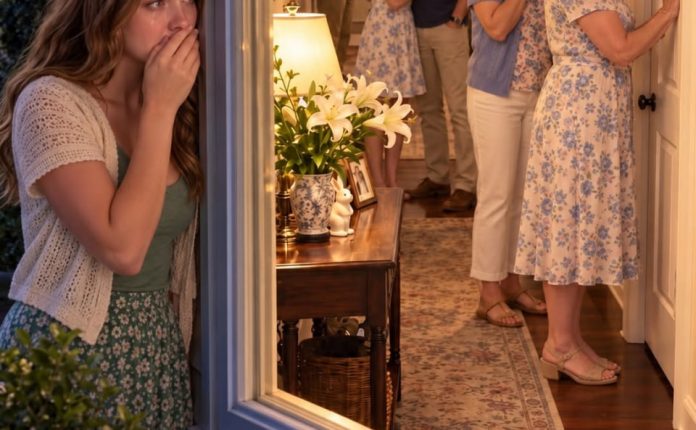
Sabrina snatched the papers from Mom's hands.
“What did you do?” she demanded.
Dad didn't answer immediately.
He looked at my mother.
She sat rigidly on the sofa, her cream jacket caught beneath her watch.
For once, she seemed genuinely unsure of what to say.
Mr. Vance pointed toward the third page.
“Perhaps I should explain this section.”
Mom shook her head.
“I can read.”
“Of course.”
She looked down again.
Then she spoke so quietly I nearly missed it.
“You removed me?”
Dad nodded.
“Yes.”
“From Theodore's money?”
“From the plans I made for it.”
Sabrina looked confused.
“What does that mean?”
Mr. Vance folded his hands.
“Your father's inherited assets were transferred into accounts and arrangements held separately from the household finances. Following legal review, he has revised his estate planning.”
He paused.
“The documents you received explain changes to beneficiaries, financial authority, and proposed future distributions. Some changes are already effective. Others remain subject to applicable legal requirements.”
Sabrina looked at Dad.
“English, please.”
Dad took a slow breath.
“It means you and your mother are no longer automatically receiving the financial benefits you expected from my inheritance.”
Mom pressed her fingers against her forehead.
“You can't just cut your wife out of everything.”
Mr. Vance answered carefully.
“Any rights Mrs. Diane has under marital property or inheritance law remain subject to those laws. Robert cannot simply eliminate them by announcing a decision. These documents address the assets and arrangements he is legally permitted to control.”
Mom barely seemed to hear him.
She turned toward Dad.
“After thirty-four years of marriage?”
Dad watched her.
“Diane, I almost died.”
Her lips tightened.
“I understand that.”
“Do you?”
“Of course I do.”
“Then why haven't you asked me what happened?”
The room fell silent.
Mom glanced at the hospital paperwork.
“You seem to be recovering.”
I saw Dad's expression change.
Not dramatically.
His mouth simply pressed into a thin line.
He looked toward the yellow note lying inside its clear sleeve.
“Tell me when you left.”
Mom blinked.
“What?”
“Tell me the day.”
“Last Saturday.”
“And what did we discuss before you left?”
She crossed her legs.
“Robert, this is ridiculous.”
“Please answer.”
She sighed.
“You weren't feeling well.”
“What else?”
“You had an appointment.”
“With whom?”
“Your doctor.”
“And when?”
Mom looked toward Sabrina.
Sabrina suddenly became interested in the documents.
Dad waited.
“Monday,” Mom said finally.
“My cardiologist's office had arranged an evaluation because I was having chest pressure.”
“You told me you were tired.”
“I told you I was getting short of breath.”
“That could mean anything.”
“No, Diane. It meant I needed medical care.”
Mom opened her mouth.
Dad raised one hand.
“Please let me finish.”
She stopped.
I couldn't remember the last time he had interrupted her.
He spoke quietly.
“I asked you to postpone the trip until we knew what was happening. You told me the reservations were nonrefundable.”
“They were.”
“I suggested you go later.”
“Robert, we'd planned it for months.”
He nodded.
“I know.”
“Then you understand why—”
“I understand why you wanted to go.”
His voice became softer.
“What I don't understand is why leaving mattered more than knowing whether I was safe.”
Mom stared at him.
Sabrina shifted beside her.
“This is because of the vacation?” she asked. “You're really punishing us for going away?”
Dad looked at her.
“Did you know I was having chest pain?”
Sabrina hesitated.
“Mom said it was nothing serious.”
“That wasn't my question.”
She swallowed.
“Yes.”
“Did you know about the appointment?”
“Yes.”
“Did you ask whether I had somebody staying with me?”
Her face reddened.
“I thought Mom arranged that.”
Mom turned sharply.
“Sabrina.”
“What?”
“Don't put this on me.”
Sabrina looked offended.
“You told me Chelsea was coming.”
I felt my stomach tighten.
Dad looked toward me.
“Chelsea didn't know.”
Mom shifted uncomfortably.
I reached for the yellow note.
“This is what you left.”
I placed it on the table between them.
Mom looked down.
Her handwriting was unmistakable.
Your mother and sister went to Hawaii. Stay and take care of your father.
Sabrina leaned forward.
“That's all you wrote?”
Mom shot her a look.
“I was in a hurry.”
Dad nodded.
“You were in a hurry.”
He reached for his water.
I waited until he'd finished drinking before touching his shoulder.
He gave me a brief, grateful smile.
Then he looked at Mom again.
“Do you remember what you said when I told you I was frightened about the pain?”
She stared at him.
“I don't remember the exact words.”
“I do.”
He paused.
“You said I was ruining the mood.”
Mom's eyes filled suddenly.
“Robert, I didn't mean—”
“I know.”
He looked down at his hands.
“You rarely mean the things that hurt me. Somehow they keep happening anyway.”
For several seconds, nobody moved.
Then Sabrina pushed the documents across the table.
“Fine. We should've called. We should've checked. But why does that mean you get to take away our inheritance?”
Dad turned toward her.
“What inheritance?”
She frowned.
“Grandpa Theodore's money.”
“Your grandfather left that property to me.”
“We're your children.”
“Yes.”
“And that means something.”
“It does.”
He nodded.
“It means I'm responsible for loving you. It doesn't mean I'm required to fund every decision you make.”
Sabrina's mouth opened.
Dad continued before she could interrupt.
“For years, I've paid your rent when you couldn't manage it. I've covered credit card bills. I've paid for courses you never completed and business ideas you abandoned after a few weeks.”
Sabrina crossed her arms.
“You offered.”
“I did.”
“Then you can't blame me.”
He looked at her for a long time.
“You're right.”
That surprised everyone.
Even me.
“I kept offering,” Dad continued. “I convinced myself that helping you financially was the same as preparing you for adulthood.”
His eyes moved toward me.
“And I convinced myself Chelsea needed less from me because she asked for less.”
I felt heat rise behind my eyes.
Dad looked directly at me.
“I was wrong.”
I shook my head.
“Dad, this isn't about me.”
“Some of it is.”
He turned back toward Sabrina.
“When Chelsea finished school, she worked two jobs and paid her own bills. When you finished school, I bought you a car and paid the insurance. I called that fairness because you needed more help.”
Sabrina stared at the floor.
“People have different circumstances.”
“They do.”
Dad nodded.
“But I never asked whether I was helping you grow or helping you avoid growing.”
Mom reached for his hand.
He didn't pull away.
But he didn't squeeze her fingers either.
“Robert, you're exhausted. We can discuss this after you've rested.”
Mr. Vance spoke.
“Your husband made these decisions after an independent medical assessment confirmed his capacity. He has been reviewing the arrangements for some time.”
Mom's head snapped toward him.
“For some time?”
Dad nodded.
“Yes.”
“How long?”
“Since before Christmas.”
Sabrina stared.
“So this was planned?”
“The estate review was planned,” Dad said. “My heart attack wasn't.”
Mr. Vance took another document from his briefcase.
“This concerns the accounts and cards.”
Mom leaned forward.
“What accounts?”
“The personal credit accounts held by Robert,” he explained. “He has requested changes to authorized users and spending access. The relevant institutions are processing or have confirmed those instructions.”
Sabrina looked down at her handbag.
“Wait.”
She reached inside and pulled out a card.
“Are you saying this won't work?”
Dad nodded.
“That account will no longer be available for your personal purchases.”
Her expression hardened.
“You can't do that without telling me.”
“I'm telling you now.”
“I have bills.”
“You also have income.”
“Not enough.”
“Then we need to discuss a realistic budget and how you can cover your expenses.”
She looked toward Mom.
Mom was staring at the papers.
“And mine?” she asked.
Dad explained that he had suspended her access to a personal credit account he alone controlled.
Jointly held funds and their shared financial obligations would be handled separately and lawfully.
“I haven't emptied our joint accounts,” he said. “I'm not pretending thirty-four years of marriage never happened.”
Mom's eyes narrowed.
“Then what are you doing?”
“Ending the arrangement where spending money substitutes for discussing our problems.”
She gave a brittle laugh.
“That's an interesting way to describe a marriage.”
“No,” Dad replied. “That's how I've been avoiding having one.”
Mr. Vance quietly pushed another sheet toward her.
It summarized the current estate plan.
Theodore's inheritance had been organized into a revocable trust and related financial accounts, with provisions for Dad's own care, obligations, and beneficiaries.
Dad had changed who would administer the trust if he became unable to manage it.
He had also revised the intended distribution of assets he could legally direct.
Mom's name appeared in a section explaining that earlier discretionary provisions for her had been removed.
Sabrina's expected personal distribution was no longer there.
But the document didn't simply give everything to me.
That was what surprised me most.
A substantial portion had been designated for a charitable educational fund.
Dad intended it to support children whose families couldn't afford early learning programs and necessary school supplies.
He had asked Mr. Vance to establish the proper structure after his recovery.
Another portion was reserved for Dad's long-term care and future needs.
The remaining arrangements would be finalized with attention to legal obligations and the circumstances of both daughters.
My name appeared as a proposed successor trustee and beneficiary under specified conditions.
I stared at it.
“Dad?”
He looked toward me.
“We'll talk about it.”
Sabrina pointed at the document.
“So Chelsea gets everything?”
“No.”
Dad's voice was firm.
“And she didn't ask for any of it.”
“She's standing right there next to your lawyer!”
I felt the old familiar anger rise.
Only this time, I didn't swallow it.
“I was standing next to his hospital bed when nobody else came.”
Sabrina looked at me.
I continued.
“I was the one calling the ambulance. I was the one telling the doctors what medication he took. I was the one sitting outside intensive care, waiting to find out whether I'd ever hear his voice again.”
My throat tightened.
“I didn't even know Grandpa Theodore's estate was settled until Dad told me.”
Sabrina looked away.
I glanced at Mom.
“You could've called. Either of you.”
Mom wiped at her eyes.
“Chelsea, we didn't understand how serious it was.”
“You didn't ask.”
That was the part I couldn't forgive immediately.
They had chosen not to know.
Dad touched my hand.
“Chelsea.”
I stopped.
He looked tired.
Mr. Vance noticed.
“I think we should pause.”
Dad nodded.
“Just one more thing.”
He turned toward Mom.
“Diane, there's something I need you to understand.”
She looked at him.
“This isn't about punishing you for enjoying yourself.”
“Then what is it?”
“It's about what happened when I needed you and you decided I could manage alone.”
Tears slipped down Mom's cheeks.
“I made a mistake.”
“Yes.”
“A terrible mistake.”
“Yes.”
She looked almost angry that he wasn't comforting her.
“Are you going to hold it over me forever?”
Dad shook his head.
“No.”
For a moment, hope crossed her face.
Then he continued.
“But I'm not going to pretend it never happened.”
That was when she began crying in earnest.
I had seen Mom cry before.
Usually, someone rushed to comfort her.
Dad would put his arms around her.
Sabrina would blame whoever upset her.
I would apologize for something I hadn't intended.
This time, nobody moved.
The crying filled the room.
Dad waited.
Eventually, she looked up.
“What happens to us now?”
He considered the question.
“I don't know.”
Her face crumpled.
He continued.
“I need time to recover. I need to speak with professionals about our finances and our marriage. I'm not going to make promises tonight simply because you're frightened.”
Mom stared at him.
“You want a divorce?”
“I haven't decided.”
That answer seemed to frighten her more than a definitive one.
For thirty-four years, she'd known that Dad would eventually give in.
Now she was facing a man who wasn't certain he wanted to continue living the same way.
Mr. Vance closed his briefcase.
“Robert needs rest. I can arrange a separate meeting to explain the legal documents and discuss the appropriate next steps.”
Sabrina stood abruptly.
“This is unbelievable.”
Dad looked at her.
“Sit down for one moment.”
She hesitated.
Then reluctantly sat.
“I want you to hear something,” he said.
He looked at both of them.
“I love you.”
Sabrina's expression softened slightly.
Mom wiped her cheeks.
“But I can love you without paying for everything you want. And I can love you without pretending your choices don't hurt me.”
He looked toward the unopened suitcases in the hallway.
“I don't want apologies that disappear when the next bill arrives.”
Nobody spoke.
“I want behavior that changes.”
Then he turned toward me.
“Chelsea, would you help me back to the guest room?”
I nodded.
Mr. Vance offered to assist, but Dad shook his head.
“I can manage.”
As I guided his wheelchair away from the living room, I heard Mom whisper my name.
“Chelsea?”
I stopped.
She looked at me with an expression I couldn't quite recognize.
“Can you please talk to him?”
I knew exactly what she meant.
She wanted me to soften him.
To explain that she was sorry.
To make the uncomfortable consequences disappear.
For twenty-eight years, that had been my role.
I took a breath.
“You can talk to him yourself when he's ready.”
Mom stared.
“After everything I've done for you?”
I almost answered.
Then I looked at Dad.
He was exhausted, his fingers resting loosely against the wheelchair arms.
I turned back.
“Good night, Mom.”
And I took him to bed.
The weeks that followed were not easy.
If I had expected one dramatic confrontation to repair decades of family habits, I would have been disappointed.
Mom called repeatedly.
Sometimes she apologized.
Sometimes she accused Dad of humiliating her.
Sometimes she asked whether he realized how difficult it would be for her to maintain their lifestyle without unrestricted access to his credit accounts.
Dad listened when he had the energy.
When the conversations became upsetting, he ended them.
Not angrily.
Not cruelly.
He simply said he needed to rest and would speak to her later.
It took Mom a while to understand that he meant it.
Their shared home and finances required careful attention.
Mr. Vance referred them to appropriate professionals to address marital property questions and possible separation arrangements.
Dad wasn't trying to leave Mom destitute.
He was trying to stop using money to avoid decisions.
For the first few weeks, she stayed with her sister.
It was a mutual arrangement, giving Dad space to recover.
She took her personal belongings and the things she needed.
Nobody threw her out.
Nobody changed the locks.
That mattered to Dad.
“I don't want revenge,” he told me. “I want a different life.”
Sabrina reacted less gracefully.
Her first response was anger.
She sent long messages accusing me of manipulating Dad.
One evening, she arrived at my apartment carrying the same expensive handbag she'd displayed in Hawaii.
I opened the door and found her standing in the hallway.
“We need to talk.”
I considered refusing.
Then I stepped aside.
She walked into my small living room, looked around, and sat on the couch.
For a while, neither of us spoke.
Finally, she said, “I can't believe Dad did this.”
I sat opposite her.
“Which part?”
“The money. The trust. Everything.”
I waited.
She rubbed her forehead.
“I thought I was going to get help with my apartment.”
“Dad's been helping with your apartment for years.”
“Not anymore.”
I nodded.
“That seems to be what he's saying.”
She looked toward the window.
“I don't know how I'm supposed to manage.”
For the first time, she sounded less angry than frightened.
I almost offered to help pay her bills.
The words were ready.
They had been ready for most of my adult life.
Instead, I asked, “What can you afford with what you're earning?”
She looked surprised.
“I don't know.”
“Then maybe that's where you start.”
Her eyes filled.
“I thought you'd be on my side.”
I considered the question.
“I can be your sister without telling you every decision you make is right.”
She looked at me for a long time.
Then she began to cry.
Not loudly.
Not dramatically.
Just quietly, with her shoulders bent forward.
I didn't rush to reassure her.
I handed her a tissue.
After a while, she asked whether I thought Dad would ever forgive her.
“I think he wants to,” I said.
“Then why won't he just let things go back?”
“Because going back is what hurt him.”
She stared at the tissue in her hands.
That was the first conversation we'd ever had in which I felt she was actually listening.
It didn't change her overnight.
She still complained.
She still occasionally blamed Mom.
But she began making practical decisions.
She reduced her spending.
She arranged extra hours at work.
A few months later, she moved into a less expensive apartment with a roommate.
Dad didn't pay for the move.
He did help her understand a rental agreement when she asked.
The difference was small but important.
He was offering guidance rather than rescuing her from every inconvenience.
Mom's change came more slowly.
At first, she focused almost entirely on the financial arrangements.
She wanted to know which accounts she could use.
What property belonged to whom.
Whether Dad intended to permanently separate.
Those were legitimate questions, and she was entitled to answers.
But they weren't the questions Dad most wanted to hear.
Eventually, during a meeting with their counselor, he told her so.
“I need to know you understand that I was afraid,” he said.
Mom later told me about that conversation.
She had apparently replied that she was frightened too.
Then Dad had asked her a simple question.
“Of what?”
She couldn't answer immediately.
Finally, she admitted she was frightened of losing her comfortable life.
And of discovering that she had damaged her marriage beyond repair.
That was the first time she seemed to recognize the difference between losing access to money and nearly losing a person.
Several weeks later, she asked to visit Dad without Sabrina.
He agreed.
I was there when she arrived.
She wasn't wearing expensive jewelry.
She carried a small paper bag from the bakery Dad liked.
I offered to leave them alone.
Mom stopped me.
“Chelsea, before you go, there's something I need to say.”
I waited.
She looked uncomfortable.
“I should have called you before leaving for Hawaii.”
I said nothing.
“I should have arranged proper help for your father. I should have taken his symptoms seriously.”
Her hands tightened around the bakery bag.
“And when you told me what happened, I should have asked whether you were all right too.”
I looked at her.
It was the first time she'd said anything about what that week had been like for me.
“I was scared,” I admitted.
“I know.”
“No, Mom. I don't think you do.”
She lowered her eyes.
“Then I need to listen.”
We talked for almost an hour.
Not everything was resolved.
Some of what she said still sounded defensive.
But she listened more than I expected.
Dad later told me that they had agreed to continue counseling while living separately.
Neither knew whether the marriage would survive.
For once, uncertainty wasn't treated as something that had to be solved immediately.
Dad concentrated on his recovery.
He attended cardiac rehabilitation.
He followed his medication schedule.
He hired help for tasks that required more strength than he had.
As the weeks passed, his color returned.
He began walking short distances.
The wheelchair went back into storage once his medical team confirmed he no longer needed it.
One afternoon, I found him standing in his office, looking at the floor beneath his desk.
The third plank had been repaired.
He noticed me watching.
“Thinking of putting another safe down there?” I asked.
He smiled.
“No.”
“Good. That thing nearly broke my back.”
He laughed.
Then he became thoughtful.
“Your grandfather used to say that the most expensive mistakes were the ones you kept paying for because admitting them would hurt your pride.”
I walked over.
“Was he talking about business?”
“Usually.”
Dad paused.
“But I think he knew more about families than I gave him credit for.”
We sat together at his desk.
He had brought out the papers concerning the educational fund.
Mr. Vance had helped him establish a plan that could support early childhood education programs and provide supplies to families who needed assistance.
Dad wanted the fund to carry Theodore's name.
“I think he'd have liked that,” I said.
Dad nodded.
“He wasn't always easy to love. But he believed children deserved a fair chance.”
He turned toward me.
“I want you involved, if you want to be.”
I looked at the documents.
“Because I'm a teacher?”
“Because you know what children actually need. And because I trust your judgment.”
I sat quietly.
For most of my life, being trusted had meant being handed another responsibility.
This felt different.
Dad wasn't asking me to solve an emergency.
He was inviting me to participate in something meaningful.
“Can I think about it?”
He smiled.
“Of course.”
I didn't answer immediately.
A week later, after reviewing the proposed responsibilities and discussing them with Mr. Vance, I agreed to help advise the educational fund.
I made one condition.
It couldn't interfere with my teaching career.
Dad accepted without hesitation.
That might have been the most important part.
As spring arrived, our family developed a new and unfamiliar rhythm.
Sabrina called Dad to ask how his rehabilitation was going.
Sometimes he gave her practical advice.
Sometimes he declined to help financially.
She didn't always take rejection gracefully.
But she stopped assuming every refusal was an insult.
Mom visited occasionally.
She and Dad continued working through their marriage in counseling.
He didn't promise that they would reconcile.
She didn't get to dictate when he should forgive her.
Their relationship remained uncertain, but the conversations became more honest.
And I stopped being the person everyone called whenever something became uncomfortable.
I still loved them.
I still answered messages.
But I learned to say, “You'll need to discuss that with Dad,” or, “I can't do that this weekend.”
The world didn't end.
Sometimes someone was annoyed.
That was survivable.
One evening in late April, Dad invited me for dinner.
He had prepared roast chicken, potatoes, and green beans.
The chicken was slightly dry.
The potatoes were excellent.
We ate at the same kitchen table where Mom once instructed me to wash the dishes while Sabrina scrolled through her phone.
Dad asked about my students.
I told him about a little boy who had spent an entire afternoon insisting that caterpillars were simply butterflies wearing pajamas.
Dad laughed until he had to set down his fork.
After dinner, we sat on the back porch.
The air smelled of damp earth.
A robin was hopping across the lawn, pulling at something in the grass.
Dad leaned back in his chair.
“Do you remember what I asked you in the bedroom?”
I turned toward him.
“When you were sick?”
He nodded.
I remembered perfectly.
Will you help me teach them a lesson?
“Yes.”
He looked embarrassed.
“I wish I'd asked differently.”
“Why?”
“Because I don't want that week remembered as the time I found a clever way to hurt your mother and sister.”
I considered his words.
“What do you want it remembered as?”
He took his time answering.
“The week I stopped pretending everything was fine.”
I looked out over the yard.
For months, I'd thought about the difference between arriving five minutes earlier and five minutes later.
I had replayed every decision I made that evening.
The phone call.
The ambulance.
The hospital.
The note.
The safe.
Sometimes I still woke at night hearing Dad struggle to breathe.
He noticed my silence.
“Chelsea?”
I looked at him.
“I'm glad you came home that night.”
“So am I.”
He reached for my hand.
I held it.
For a while, neither of us spoke.
Then Dad said, “You know, I've been thinking about that note.”
I smiled faintly.
“I still have it.”
“I know.”
“Do you want me to throw it away?”
He shook his head.
“Not yet.”
“Why?”
“Because it reminds me of something.”
I waited.
He glanced toward the house.
“Your mother wrote it because she assumed someone else would take care of what she didn't want to face.”
I nodded.
“And for years, I did the same thing.”
I looked at him.
“I kept expecting you to absorb the inconvenience,” he continued. “To be the dependable one. To understand when your sister didn't. To forgive when your mother wouldn't.”
His voice grew quiet.
“I thought I was keeping peace.”
“You were trying.”
“Yes.”
He squeezed my hand.
“But trying isn't always enough.”
A few days later, I received a message from Sabrina.
It was a photograph of her new apartment.
The living room was small.
There was a secondhand sofa, a wooden coffee table, and a plant in the window.
Beneath it, she'd written:
I bought the sofa myself. It's ugly, but it's mine.
I laughed.
Then another message arrived.
And Chelsea? Thank you for coming home that night. I know I should have said that sooner.
I read it twice.
For a moment, I thought about all the things I could say.
All the years she'd taken me for granted.
All the times she'd treated my help as something owed.
Instead, I wrote:
I'm glad Dad is here to hear you say it too.
She replied a few minutes later.
I told him yesterday.
It wasn't a grand reconciliation.
It wasn't even an apology for everything.
But it was something real.
The next Sunday, I visited Dad again.
He was outside, trimming a rosebush.
Dr. Aerys had cleared him for light activity, and Dad was taking the instruction seriously enough that he only worked for ten minutes before sitting down.
I brought two glasses of lemonade.
He accepted one.
“You're getting better at resting,” I said.
“Don't tell anybody.”
I sat beside him.
Across the yard, the afternoon sunlight fell on the garden path.
The house was quiet.
Not the frightening silence I'd encountered on New Year's.
This silence was ordinary.
Safe.
A house containing someone who could breathe comfortably, make his own decisions, and enjoy an afternoon without defending everyone else's behavior.
Dad lifted his glass.
“To better choices,” he said.
I touched mine to his.
“To second chances.”
He smiled.
Then, after a moment, he added something I never forgot.
“Second chances are worth giving, Chelsea. But nobody should have to disappear to make room for somebody else's happiness.”
I looked toward the house.
For years, I'd been the daughter who carried everyone's bags, solved everyone's problems, and apologized whenever I finally grew tired.
That version of me had walked into my parents' house one cold evening and found a yellow note waiting beside a dying man's bed.
The woman sitting on the porch now was different.
I still loved my family.
But I no longer confused love with unlimited permission to hurt me.
Dad had survived.
Our family had changed.
Mom and Sabrina were learning to live with consequences they could no longer pass to somebody else.
And the man beside me, who had once tried to purchase peace by giving everyone whatever they wanted, was finally learning that his own well-being mattered too.
Nothing about our future was guaranteed.
His recovery required continued care.
His marriage remained unresolved.
Trust would take time to rebuild.
But we had stopped pretending that returning to the old arrangement would make us happy.
Dad set his glass down and asked whether I wanted to stay for supper.
I thought about my apartment, the schoolwork waiting on my kitchen table, and the early morning ahead.
“Not tonight,” I said. “I have lesson plans.”
He nodded.
“All right, sweetheart.”
No disappointment.
No pressure.
No reminder of everything he'd done for me.
Just acceptance.
I stood and kissed his cheek.
As I walked toward my car, I heard him call my name.
“Chelsea?”
I turned.
He was sitting beneath the porch light, smiling.
“Drive safely.”
“I will, Dad.”
“And call when you get home.”
I laughed.
“That part hasn't changed?”
“Some things shouldn't.”
I waved and continued down the driveway.
For the first time in a long while, going home didn't feel like abandoning someone who needed me.
It simply meant going home.
THE END
Disclaimer: This fictional story is inspired by real-life family conflicts and experiences. Characters, dialogue, and specific events have been creatively developed for storytelling purposes.
END PART 3
Disclaimer: This fictional story was created with AI assistance for entertainment. Names, characters, dialogue, and events are fictional. Any resemblance to actual people or events is coincidental.