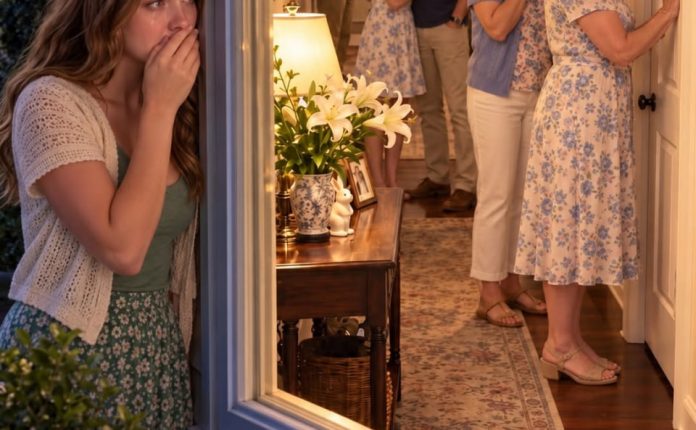
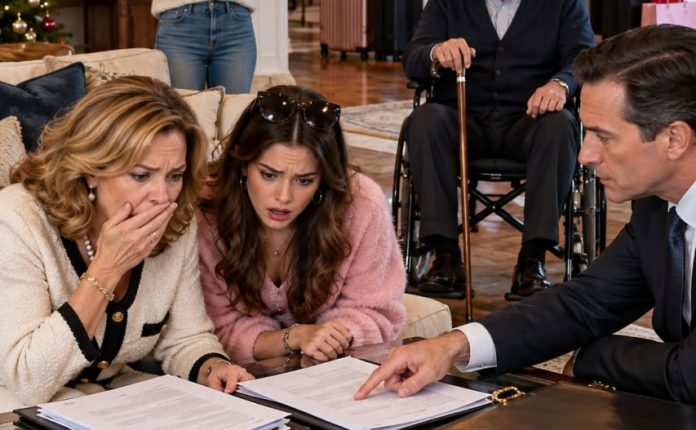
Grandpa held Grandma's letter beneath the kitchen light.
Outside, rain began tapping against the windows.
The house was quiet.
I could hear the refrigerator running.
A branch scraped the porch roof.
Grandpa read the note again.
Then he passed it to me.
Grandma had written it in the careful handwriting I remembered from birthday cards and grocery lists.
It was dated October 1972.
Her message was brief.
Callahan says the farm refinancing is approved.
He wants Earl to understand what he's doing before signing the release.
I told him Earl will never accept another man's help if he knows.
Beneath those sentences, she had written:
Ask Thomas about the papers. Don't let Earl mistake kindness for debt.
I read the note twice.
Then I looked at Grandpa.
“What does she mean?”
He stared toward the window.
“I think I know.”
I waited.
Grandpa rubbed his chin.
“When the farm nearly went under in seventy-two, Tom's father arranged that refinancing.”
“Yes.”
“He told me the bank could do it because my equipment and land still had value.”
Grandpa paused.
“I believed him.”
“And?”
“And I never knew he was putting himself on the line.”
I looked at Grandma's note.
“Maybe he didn't want you to feel obligated.”
Grandpa nodded slowly.
“That's exactly the kind of thing he'd do.”
The old release was more complicated than either of us had understood.
Callahan Senior wanted to clear the original security claim.
But at the same time, he was helping preserve the Doyle farm.
Grandma knew both arrangements were connected emotionally, even if they were separate financial matters.
She wanted Grandpa to understand the generosity involved.
Grandpa, meanwhile, had spent the season trying to save his family's land.
Somewhere amid the pressure, illness, and confusion, the final release had never been completed.
The bank's records still showed the old agreement.
Grandma's files showed repayment.
And the unfinished paperwork had survived for decades.
Grandpa leaned back.
“Ruth was always better with these things.”
I smiled.
“She was better with most things, according to you.”
He laughed quietly.
“That's because she was.”
He folded the note.
Then he placed it beside the other papers.
“We need to tell Tommy.”
I looked at the clock.
Almost ten.
“Tomorrow morning.”
Grandpa nodded.
He stood carefully.
For a moment, he rested one hand against the table.
“Are you all right?” I asked.
“Just tired.”
I watched him walk toward the hallway.
He stopped beneath the photograph of Grandma hanging beside the stairs.
Then he said, so softly I almost missed it, “You kept trying to tell me, Ruth.”
He touched the frame.
Afterward, he went upstairs.
I remained at the kitchen table.
The documents lay in front of me.
Seventy-five thousand dollars.
A repaid loan.
An unfinished release.
A friendship neither man had ever fully explained to his children.
I thought about the bank lobby.
The muddy boots.
The guard.
The teller's dismissive smile.
She'd looked at Grandpa and assumed he had nothing.
But those papers revealed something more meaningful than money.
He'd lived for decades without telling anyone how much he'd once given away.
He'd never asked for recognition.
He didn't even seem comfortable receiving thanks.
And until that morning, I hadn't known how much of his life remained unknown to me.
The next day, the belt arrived.
Grandpa insisted we install it before returning to town.
By eight thirty, we were in the barn.
The combine stood beneath the open doors.
Cold air drifted across the concrete floor.
Grandpa handed me a wrench.
“Hold that steady.”
I obeyed.
He worked slowly.
His hands were stiff from arthritis.
But he knew the machine intimately.
Every bolt.
Every awkward angle.
Every part that could slip if handled carelessly.
When the replacement was installed, we checked the tension.
Grandpa studied it.
Then he nodded.
“Good.”
He climbed into the cab.
The engine started.
The machine ran smoothly.
For the first time in two days, he smiled without worry.
“That's better.”
I climbed down.
“Now the bank?”
He looked toward the fields.
The weather was holding.
There was work waiting.
But he removed his gloves.
“Now the bank.”
He changed his shirt.
That surprised me.
I didn't say anything.
He still wore the same overalls.
The same boots.
The same cap.
But he'd chosen a clean blue work shirt beneath the denim.
As he buttoned the collar, he caught me watching.
“What?”
“Nothing.”
He smiled.
“Don't get used to it.”
We drove into town.
This time, Grandpa carried a thick envelope.
It contained the repayment receipt.
The original loan papers.
Grandma's note.
And Callahan Senior's letter.
He placed it carefully on the seat between us.
When we reached the bank, the entrance mat was damp from the morning rain.
Grandpa wiped his boots thoroughly.
Then he opened the glass door.
Madison was working at the third window.
She saw him immediately.
Her expression changed.
She stood.
“Good morning, Mr. Doyle.”
Grandpa removed his cap.
“Morning.”
She hesitated.
“Mr. Callahan asked us to contact him if you returned.”
“Then you might tell him I'm here.”
“Yes, sir.”
There was no security guard standing beside us.
No customer laughing.
No public confrontation.
Just a young employee trying to behave differently.
Madison called the office.
Within a minute, Tom appeared.
“Earl.”
“Tommy.”
They shook hands.
Tom looked at the envelope.
“You found something?”
Grandpa nodded.
“Ruth kept it.”
Tom's expression softened.
“Of course she did.”
We entered his office.
Claire joined us.
So did a member of the bank's legal department, a woman named Patricia Ellis.
Tom introduced her.
Grandpa regarded her thoughtfully.
“Morning.”
“Good morning, Mr. Doyle.”
She sat at the table with a notebook.
Tom explained that Patricia had been reviewing the old agreement.
He wanted her to examine whatever Grandpa had found.
Grandpa opened the envelope.
He removed the repayment receipt first.
Patricia studied it.
Then she compared it with the original loan agreement.
She examined the signatures.
She checked the dates.
Finally, she nodded.
“This appears to be an acknowledgment that the original debt was satisfied.”
Tom exhaled.
“That's what we were hoping to find.”
Grandpa looked at him.
“Told you your daddy paid me.”
Tom smiled.
“You did.”
Patricia continued reviewing the papers.
She explained that the missing release still needed to be addressed formally.
But the receipt was important evidence.
If verified, it would support clearing the old security claim.
The bank could then update its property records through the proper legal process.
Grandpa listened carefully.
“Will it cost anybody money?”
Patricia looked surprised.
“There may be recording and legal expenses.”
Grandpa turned toward Tom.
“Your bank should pay those.”
Tom nodded immediately.
“We will.”
Grandpa looked satisfied.
“Good.”
I had expected an emotional scene.
Perhaps an argument.
Perhaps a dramatic revelation about valuable land.
Instead, the two men were concerned with completing paperwork correctly.
That seemed exactly right.
Then Grandpa handed Tom Grandma's note.
Tom read it.
His expression changed.
He read it again.
For a moment, he stared at the familiar handwriting.
“I remember your grandmother,” he said.
Grandpa smiled.
“Hard woman to forget.”
Tom nodded.
“She used to bring cookies whenever she visited the bank.”
“She brought cookies everywhere.”
Tom touched the paper.
“My father thought the world of her.”
Grandpa looked at him.
“She thought highly of him too.”
Tom turned the note over.
“She knew about the refinancing.”
“Yes.”
“She understood what my father was doing.”
Grandpa nodded.
“And apparently she wanted me to understand it too.”
Tom sat back.
He seemed lost in thought.
Then he said, “My father once told me that helping the Doyle family was the easiest important decision he ever made.”
Grandpa looked down.
“Didn't feel easy at the time.”
“No,” Tom replied. “I imagine not.”
The room grew quiet.
Patricia excused herself to make copies.
Claire returned to the lobby.
That left Grandpa, Tom, and me.
Tom folded his hands.
“Earl, I owe you an apology.”
Grandpa looked up.
“You weren't working the window.”
“No. But I'm responsible for what happens here.”
Grandpa nodded.
“Fair enough.”
Tom continued.
“Yesterday wasn't simply a matter of one employee behaving badly. It exposed a problem with how we train people.”
Grandpa listened.
“We've put enormous emphasis on procedures, fraud prevention, and efficiency.”
“Important things,” Grandpa said.
“Yes.”
Tom paused.
“But we've failed to teach some people how to recognize the difference between caution and contempt.”
Grandpa considered that.
Then he nodded.
“There's a difference.”
Tom leaned forward.
“I want to correct it.”
Grandpa looked toward the glass wall.
Madison was helping a customer.
“Don't make that girl the whole problem,” he said.
Tom waited.
“She was wrong.”
“Yes.”
“But if everybody else here thought she was doing right, firing her won't fix much.”
Tom nodded slowly.
“I agree.”
Grandpa settled back.
“Then teach her.”
Tom looked at him.
“And if she refuses to learn?”
“That's your business.”
They both smiled.
Then Tom grew serious.
“We're reviewing yesterday's incident formally. Madison will receive appropriate corrective action and training. So will anyone else whose conduct contributed.”
Grandpa nodded.
“Good.”
Tom hesitated.
“There's one more thing I'd like to ask.”
Grandpa sighed.
“Tommy, every time you say that, I end up with more paperwork.”
Tom laughed.
“This one's different.”
He pointed toward the historical photograph on his office wall.
“I want to update our display in the lobby.”
Grandpa stared at him.
“Why?”
“Because it tells only part of the story.”
Grandpa leaned back.
“Oh, no.”
Tom smiled.
“Oh, yes.”
“You know I don't want my face plastered everywhere.”
“It's already in the photograph.”
“That's different.”
Tom leaned forward.
“Earl, I want people to know what happened in 1965.”
Grandpa's expression grew guarded.
“Why?”
“Because it matters.”
Grandpa shook his head.
“It mattered then.”
“It matters now.”
Tom paused.
“My father built this bank around the idea that local people ought to have a place that treated them fairly.”
Grandpa nodded.
“He believed that.”
“Yesterday, we failed that standard.”
Tom looked directly at him.
“I think telling the truth about our history is one way to remind ourselves what we're supposed to be.”
Grandpa didn't answer.
Tom continued.
“I don't want a monument. I want a small display explaining how local families helped keep the bank open.”
Grandpa looked at me.
I could tell he was uncomfortable.
He'd spent his whole life avoiding attention.
Now the bank president wanted to put his story where everyone could see it.
“What do you think?” he asked me.
I hesitated.
I wanted to tell him to agree.
I wanted the teller who had humiliated him to walk past that display every morning.
I wanted everyone who had laughed to understand who they'd dismissed.
But something about that desire made me uncomfortable.
Grandpa wasn't asking how to punish anyone.
He was asking what was right.
“I think people should know,” I said carefully.
He looked down.
“Why?”
“Because it's part of the town's history.”
He considered that.
Then he looked at Tom.
“Don't make it about me being rich.”
Tom blinked.
“Earl—”
“I never was rich.”
He spoke firmly.
“That land money came from my daddy's work. I put it somewhere I thought it could help.”
Tom nodded.
“I understand.”
“And I don't want any foolishness about owning half the bank.”
Tom smiled.
“I promise.”
“Or a plaque saying I rescued everybody single-handed.”
“No plaque like that.”
Grandpa paused.
“Your daddy worked hard too.”
“He did.”
“And Ruth deserves mentioning.”
Tom's face softened.
“Absolutely.”
Grandpa looked toward the old photograph.
Finally, he nodded.
“All right.”
Tom smiled.
“Thank you.”
“But make it about the families who kept this place going.”
“I will.”
Grandpa stood.
“Now can we get back to harvest?”
Tom laughed.
“Yes, Earl.”
But before we left, something else happened.
Madison appeared at the office door.
She stood awkwardly beside Claire.
“Mr. Callahan?”
Tom looked up.
“Yes?”
“May I speak to Mr. Doyle?”
Grandpa turned.
“Go ahead.”
Madison stepped inside.
She wasn't smiling.
Her hands were clasped together.
“I wanted to apologize again,” she said.
Grandpa waited.
“Yesterday, I was rude to you. I made assumptions based on your appearance. And I called security when I shouldn't have.”
She looked toward me.
“I was unfair to both of you.”
I nodded.
Grandpa said nothing.
Madison swallowed.
“I know saying sorry doesn't erase what happened.”
“No,” Grandpa agreed.
“But it's a start.”
She nodded.
“I want you to know I've thought about it.”
Grandpa studied her.
Then he asked, “Where are you from?”
She looked surprised.
“Here. I grew up in town.”
“Your folks still around?”
“My mother is.”
“What does she do?”
Madison hesitated.
“She cleans offices at the medical center.”
Grandpa nodded.
“Hard work.”
“Yes.”
“Does she ever come home tired?”
Madison looked down.
“Every day.”
Grandpa waited.
“Would you want somebody treating her the way you treated me?”
Madison's eyes filled.
“No, sir.”
Grandpa nodded.
“Then there's your lesson.”
She wiped her cheek quickly.
“I understand.”
He put his cap on.
“Good.”
Madison stepped aside.
As we left, she thanked him.
He raised one hand.
That was the end of their conversation.
No grand speech.
No demand for punishment.
Just a lesson delivered plainly enough that she couldn't misunderstand it.
Over the following weeks, life returned to its usual rhythm.
The combine ran.
The rain came.
We worked around the weather.
Grandpa complained about fuel prices.
I complained about the cold.
He told me I was getting soft at college.
I told him he was getting stubborn with age.
He said he'd been stubborn before I was born.
That was true.
Meanwhile, the bank completed its review.
Patricia verified the repayment receipt against surviving records.
The bank arranged the formal release of the old security claim.
The title issue was resolved.
Grandpa received written confirmation that the original loan had been repaid and no obligation remained.
The bank covered the associated costs.
No hidden fortune appeared.
No sudden inheritance changed our lives.
Grandpa did not become the owner of the shopping center.
He didn't gain control of the bank.
He didn't want any of those things.
What emerged instead was a complete record of two families helping each other through difficult years.
In 1965, Grandpa had provided money when Callahan County Bank needed it.
In 1972, Tom's father had helped arrange financing that allowed our farm to survive.
Both men had fulfilled their financial obligations.
Both had also carried private gratitude for the other.
And their friendship had lasted long after the money stopped mattering.
Tom invited Grandpa to review the new historical display before it was installed.
We returned to the bank one Friday afternoon.
The lobby looked much the same.
The gray carpet was still there.
So was the coffee machine.
But near the waiting chairs stood a new framed display.
At the top was the old photograph from 1965.
Beneath it were several paragraphs describing the bank's early history.
Grandpa read every word.
The text explained that the bank had survived difficult economic years through the trust and support of local residents.
It described the emergency loan from Earl and Ruth Doyle.
It also mentioned the bank's later role in helping the Doyle farm continue operating.
The final sentence emphasized the importance of mutual responsibility between a community bank and the people it served.
Grandpa stood quietly.
Tom watched him.
“Well?”
Grandpa rubbed his chin.
“Too many words.”
I laughed.
Tom smiled.
“Your grandson said you'd say that.”
Grandpa looked at me.
“Did he?”
I raised my hands.
“Maybe.”
Grandpa read the display again.
Then he pointed to one phrase.
“Take out the part about exceptional generosity.”
Tom looked at it.
“Why?”
“Because helping somebody isn't exceptional if you're doing what you ought to.”
Tom considered that.
Then he nodded.
“All right.”
He made the change.
Grandpa looked satisfied.
Before we left, a man approached us.
He was about seventy.
He wore a brown jacket and carried a folded newspaper.
“Earl Doyle?”
Grandpa turned.
“That's me.”
The man introduced himself as Frank Miller.
His father had operated a small feed business during the 1960s.
“I remember when people thought this bank was closing,” Frank said.
Grandpa nodded.
“Bad time.”
“My father had his savings here.”
“I remember your father.”
Frank smiled.
“He used to tell us how frightened he was.”
Grandpa looked down.
Frank glanced at the display.
“Never knew you were part of what kept it open.”
Grandpa shrugged.
“Lots of folks helped.”
Frank extended his hand.
“Still. Thank you.”
Grandpa shook it.
“You're welcome.”
After Frank left, Grandpa stood for a moment longer.
Then he looked at the photograph.
I could almost see him remembering that younger man.
Twenty-three years old.
A new husband.
A farmer with money from his father's land sale.
Someone who couldn't know what the next sixty-one years would bring.
I wondered whether Grandpa would have made the same choice if he'd known how difficult his own life would become.
I asked him later.
We were driving home.
The late afternoon sun stretched across the fields.
Grandpa kept both hands on the wheel.
“Would you still have loaned the money?”
He glanced at me.
“Knowing what?”
“That you'd nearly lose the farm later.”
He thought for a moment.
Then he nodded.
“Probably.”
“Why?”
“Because what happened later doesn't change what needed doing then.”
I sat quietly.
Grandpa continued.
“Don't mistake that for saying I never made foolish decisions.”
I smiled.
“Grandma had a list.”
“She certainly did.”
He chuckled.
Then his expression softened.
“But your grandmother and I knew what it meant to have people standing beside you when things got hard.”
He looked toward the road.
“Your great-grandfather knew it too.”
I watched the farmhouses pass outside the window.
For years, I'd thought of my grandfather as a man who had simply worked hard and grown old.
I understood him differently now.
His life contained choices I hadn't witnessed.
Sacrifices he hadn't described.
Kindnesses he hadn't bothered to count.
And perhaps that was true of many people I'd walked past without noticing.
The bank incident gradually became a story people in town discussed.
Some focused on the teller.
Others focused on the old loan.
A few exaggerated details until Grandpa supposedly owned the entire building.
He hated that version.
Whenever someone mentioned it, he corrected them.
“I own a farm,” he'd say. “And half the time, I think the equipment owns me.”
Madison remained at the bank after completing the corrective process.
Several months later, I saw her helping an older man fill out a withdrawal form.
He wore a faded jacket.
His hands shook as he searched for his identification.
She waited patiently.
She explained the form without talking down to him.
When he apologized for taking so long, she told him there was no hurry.
I didn't interrupt.
I simply noticed.
That seemed more important than any apology she could have repeated.
Harvest ended in November.
We finished later than we'd planned.
Grandpa complained about the weather until the last load was delivered.
Then he announced that the season hadn't been so bad after all.
I went back to college.
But I came home more often.
Sometimes just for supper.
Sometimes to repair a fence.
Sometimes because Grandpa called and claimed he needed help with something that turned out to require only one person.
I knew what those calls meant.
He wanted company.
And I wanted to hear more of his stories.
One evening near Thanksgiving, I found him sitting at the kitchen table with Grandma's old metal box.
He had been sorting photographs.
He handed me one I'd never seen.
Grandma stood beside the old Ford tractor.
Her hair was tied beneath a scarf.
Grandpa stood beside her.
They were young.
They looked tired.
But they were smiling.
“Seventy-two,” he said.
“The year you nearly lost the farm?”
He nodded.
“Taken right after we got the refinancing worked out.”
I studied Grandma's face.
“She knew what Tom's father did.”
“Yes.”
“Why didn't she tell you?”
Grandpa smiled sadly.
“She tried.”
He looked at the photograph.
“I wasn't always easy to talk to.”
I laughed softly.
“That hasn't changed much.”
“No,” he admitted.
He placed the photograph on the table.
Then he opened the drawer beside his chair.
Inside was the letter Tom had given him.
The one Callahan Senior had left behind.
Grandpa had put it in a protective sleeve.
He brought it out.
“I've been thinking about something.”
“What?”
“About that morning at the bank.”
I sat across from him.
He ran his finger along the edge of the letter.
“I was angry.”
I looked surprised.
“You never showed it.”
“Doesn't mean I wasn't.”
He stared toward the dark window.
“Not because she thought I was poor.”
He paused.
“I've been poor. Nothing shameful about it.”
I waited.
“What bothered me was how easy it was for her to decide I wasn't worth listening to.”
His voice remained calm.
But the words stayed with me.
He folded his hands.
“Tom knew my name. That changed how everybody treated me.”
I nodded.
“Yes.”
Grandpa looked directly at me.
“But it shouldn't have.”
I didn't answer.
He continued.
“What if I hadn't known Tom?”
I thought about that.
The security guard.
The teller's dismissive smile.
The customers watching.
Grandpa waiting for money that belonged to him.
“If you hadn't known him,” I said, “they might have sent you away.”
Grandpa nodded.
“That's the part I keep thinking about.”
He placed the letter back in its sleeve.
“People ought to be decent before they find out who somebody knows.”
I looked down at the table.
For weeks, I'd focused on Grandpa's extraordinary past.
The loan.
The agreement.
The bank president running across the lobby.
The revelation that the old man in muddy overalls had once helped save the very institution humiliating him.
But Grandpa had been thinking about something else.
The customer who didn't know anyone.
The person whose name opened no office doors.
The stranger who could be dismissed because nobody important was expected to come running.
His experience mattered because it showed how wrong the treatment was.
But his importance to the bank had never been the reason he deserved respect.
He deserved it before Tom appeared.
Before the records were opened.
Before anyone knew his history.
Just as every customer did.
Grandpa stood.
He placed Grandma's photograph on the mantel.
Then he turned toward the kitchen.
“Want some coffee?”
I smiled.
“Sure.”
He filled the old percolator.
It took several minutes to heat.
He refused to replace it with anything newer.
While we waited, I looked at the photograph again.
Grandpa and Grandma.
Young.
Tired.
Standing beside a tractor.
Their future uncertain.
And yet, somehow, they had spent their lives building something larger than a bank account.
The coffee finished.
Grandpa poured two mugs.
He carried mine to the table.
Then he sat across from me.
We talked about the next planting season.
About college.
About the barn roof.
About whether the Ford would survive another winter.
Ordinary things.
The kind that fill a life more completely than dramatic revelations ever can.
Before I left that night, Grandpa walked me to the porch.
The fields were dark.
A cold wind moved through the bare trees.
I pulled on my jacket.
“Grandpa?”
“Hmm?”
“I'm glad Tom came out of his office.”
He looked toward the road.
“So am I.”
I hesitated.
“But I'm even gladder I got to learn what you and Grandma did.”
He smiled.
“Well, don't go making a fuss about it.”
I laughed.
“I won't.”
He touched my shoulder.
“Good.”
Then he added, “And next time we go to town, remind me to scrape my boots.”
I grinned.
“Are you finally worried about the carpet?”
Grandpa shook his head.
“No.”
He looked toward the barn.
“Just hate wasting good field dirt.”
I laughed so hard that he started laughing too.
And standing there in the cold, I realized something.
The bank could hang his photograph.
The town could thank him.
The lawyers could settle every old agreement.
But none of that would change Earl Doyle.
He would still rise before daylight.
Still worry about the weather.
Still drive the old Ford.
Still wear his muddy overalls when there was work to do.
He would still believe that a person's word mattered.
That favors shouldn't become weapons.
That debts ought to be repaid.
And that dignity was something people deserved without proving themselves important first.
He had walked into the bank asking for two thousand dollars.
He left with his money.
Later, he recovered a piece of his family's history.
But the most valuable thing he carried home was something he'd possessed all along.
His quiet certainty about how people should treat one another.
I never forgot that morning.
Not because a bank president came running when he heard my grandfather's name.
But because my grandfather remained the same decent man before and after that door opened.
THE END
Disclaimer: This is a fictionalized story inspired by themes of everyday kindness, dignity, family history, and respect. Characters, dialogue, and events are presented as creative storytelling.
END PART 3
Disclaimer: This fictional story was created with AI assistance for entertainment. Names, characters, dialogue, and events are fictional. Any resemblance to actual people or events is coincidental.