By the following morning, Grant had called eleven times.
I knew because I turned my phone on just long enough to check whether Arthur had contacted me.
He had.
His message was brief.
The family-law attorney he recommended could meet me that afternoon.
I replied that I would be there.
Then I called a locksmith.
It felt like an extraordinary decision for an ordinary Tuesday morning.
I had lived in the house with Grant for thirteen years.
We had planted the maple tree near the driveway together.
We chose the kitchen tiles during a rainy weekend when neither of us could agree on the color.
He had assembled the guest bedroom furniture while complaining that the instructions were written by someone who hated humanity.
Our marriage existed in every room.
Now I was changing the locks.
Arthur had cautioned me to consult the family-law attorney about access and property rights before excluding Grant from a jointly occupied home.
I took that advice.
Instead of immediately changing every lock, I arranged for the locksmith to inspect the doors and scheduled the work pending legal guidance.
That small delay irritated me.
I wanted action.
I wanted one decisive gesture that would separate my life from Grant's.
But Dad had taught me that anger was not a substitute for sound decisions.
So I waited.
At two o'clock, I met with a family-law attorney named Caroline Price.
She was in her late fifties, wore narrow glasses, and had the focused manner of someone who disliked wasting time.
She listened while I explained the funeral, the affair, the missing money, and the investment paperwork.
She didn't interrupt.
When I finished, she reviewed the documents Arthur had supplied.
Then she asked several practical questions.
Were Grant and I both named on the house deed?
Yes.
Did we have children?
No.
Was the renovation account joint?
Yes.
Had I authorized the questioned transfers?
Not knowingly.
Had I ever signed an investment agreement concerning Harbor Point?
No.
Had I previously discussed divorce with Grant?
Not until the funeral.
Caroline took notes.
Finally, she looked at me.
"Natalie, there's a difference between proving that your husband behaved badly and proving specific financial claims. We need to establish exactly what happened."
I nodded.
"I understand."
"I also want you to avoid anything that could complicate the divorce. Don't move joint funds secretly. Don't destroy records. Don't make threats. Let us handle the formal requests."
She paused.
"Can you do that?"
I thought about Rebecca sitting in my father's church wearing my dress.
"Yes."
"Good."
Caroline prepared the necessary steps to begin divorce proceedings and seek a full accounting of the disputed funds.
She explained that the investment authorization would require separate examination.
If my signature had been forged or used without authority, the issue might extend beyond the divorce.
She also advised me about temporary living arrangements, access to the home, and protecting my personal accounts.
For the first time since the funeral, I felt I was doing something more useful than reacting.
I was making decisions.
After the meeting, I walked to a small coffee shop near the courthouse.
Dad used to take me there when I was younger.
He ordered black coffee and always complained that the pastries were too sweet, even while finishing every crumb.
I sat beside the window and watched people hurry past in the afternoon rain.
My phone vibrated.
A message from Rebecca.
I know you're angry, but Grant told me you were already separated. I don't want this to become ugly.
I stared at the screen.
Then another arrived.
Also, I didn't know the money came from your account.
I didn't answer immediately.
I considered writing everything I thought about her.
I considered reminding her that separated women do not generally arrive at their fathers' funerals looking bewildered to find their husbands sitting with mistresses.
Instead, I typed one sentence.
Please return my dress to Arthur Blackwood's office as requested. All other matters should go through the attorneys.
Then I put the phone away.
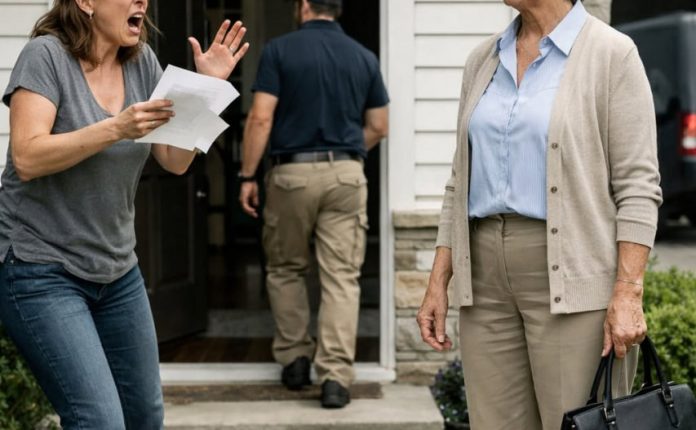
That evening, Grant appeared at the house.
I saw his car pull into the driveway just before seven.
He stood on the porch holding a small overnight bag.
I opened the door but didn't invite him inside.
"We need to talk," he said.
"Caroline Price is representing me. You can contact her."
His face tightened.
"You hired a divorce lawyer already?"
"Yes."
"That's unbelievable."
I studied him.
"What part?"
He looked past me into the hall.
"Can I come in?"
"We can speak here for a moment."
"Natalie, this is my home too."
"Yes," I said. "And the lawyers can help us arrange how to use it while we separate."
He seemed surprised by that answer.
Perhaps he expected me to scream.
Perhaps he expected tears.
I had already spent them.
Grant set down the bag.
"Rebecca and I have been having problems."
I waited.
He rubbed his forehead.
"She didn't understand what she was doing at the funeral."
I stared at him.
"She understood enough to wear my dress."
"She can be impulsive."
"And you can be dishonest."
He looked offended.
I almost laughed.
"Come on, Nat. We've had sixteen good years."
"Some of them were good."
"That's not fair."
"Neither was taking money from our renovation account."
His expression changed.
"We're still arguing about that?"
"Yes."
He sighed.
"I made some investments. The timing was unfortunate."
"Then provide the records."
"I will."
"Through the attorneys."
He looked toward the street.
After a moment, he said, "Arthur Blackwood is trying to destroy my reputation."
I shook my head.
"Arthur didn't bring Rebecca to the funeral."
Grant said nothing.
"He didn't give away my dress."
Silence.
"He didn't sign my name on investment paperwork."
Grant stared at me.
"I didn't forge anything."
"Then cooperate with the examination."
He lowered his voice.
"You don't understand the pressure I was under."
I waited.
For the first time, he seemed close to saying something truthful.
"Harbor Point was supposed to be a major deal," he said. "We had investors lined up. The project needed additional commitments."
"And you told them my father would contribute."
"We thought he might."
"He said no."
"Your father never understood the opportunity."
"Did you tell the investors he had agreed?"
Grant looked away.
I stepped back.
"That tells me enough."
He reached toward the door.
"Nat, please."
I shook my head.
"Go to your attorney."
His expression hardened.
"You'll regret turning this into a public scandal."
I felt something in me become perfectly still.
"Grant, the public scandal happened at the funeral. Everything after that is accountability."
I closed the door.
He remained on the porch for several minutes.
Then I heard his car start.
I stood in the hallway listening until the engine faded.
I did not feel victorious.
I felt exhausted.
But I also felt that I had finally stopped helping him avoid the consequences of his choices.
Over the following weeks, the financial examination continued.
Arthur coordinated the estate issues.
Caroline handled the divorce.
The forensic accountant traced the transfers from our renovation account.
The records established that large sums had been moved through an account Grant controlled before payments reached Rebecca's consulting business, along with expenses for hotels, jewelry, travel, and an apartment.
Rebecca's company had issued invoices describing marketing services.
The investigators could not initially determine whether all those services had actually been performed.
That mattered.
The account transfers, the invoices, and the payments had to be examined separately.
But the overall picture was increasingly clear.
Grant had used our shared savings to finance activities he had concealed from me.
He had also represented the Harbor Point financing more confidently than the documentation justified.
The investment authorization bearing my name was examined.
A handwriting specialist concluded that the questioned signature showed material differences from verified examples of my writing.
The original signing records did not establish that I had personally authorized the transaction.
The matter was referred for further investigation.
I did not celebrate.
The prospect of my husband facing serious consequences frightened me.
Even after everything, I remembered the young man who had proposed beside a lake.
The man who cried when his mother died.
The man who once drove six hours through a snowstorm because I was stranded after a work conference.
I couldn't simply erase those memories.
But I was learning that remembering the good did not require denying the bad.
One Friday afternoon, Arthur called.
"There's something here for you," he said.
I expected another document.
Instead, when I arrived, his receptionist handed me a long garment bag.
I knew before opening it.
The Versace dress.
Inside was a note from a specialist cleaner explaining that the altered waist seams had been examined and that the dress could be restored close to its original measurements, although some needle marks might remain.
Rebecca had returned it.
I carried the bag into Arthur's conference room.
He gave me privacy.
Slowly, I unzipped it.
The midnight blue silk caught the afternoon light.
The crystals shimmered.
I found the small repair beneath the left shoulder.
Dad's repair.
I touched it.
And I cried.
Not because the dress was expensive.
Not because Rebecca had worn it.
I cried because my father had chosen it for me.
Because he had stood in that boutique imagining me wearing it to some happy occasion.
Because he had written a little card that made me laugh.
Because I would never hear him tell me I looked beautiful again.
Arthur came back after a while.
He set a glass of water on the table.
"Your father loved giving you presents," he said.
I smiled through my tears.
"He liked surprising people."
"He did."
Arthur sat opposite me.
"There's one final personal letter he left for you. I wanted to wait until you had enough room to read it without another legal discussion attached."
He placed a cream envelope in front of me.
My name was written across it.
Natalie.
I recognized Dad's handwriting instantly.
I opened it carefully.
The letter was dated March seventeenth.
The day after our conversation about Grant's affair.
Dad wrote that he wished he could spare me the pain of disappointment.
He said he had never expected me to live without mistakes.
He wanted me to make decisions with clear eyes, even when the truth was unpleasant.
He admitted that he had sometimes been too protective.
Then came the part that made me stop reading.
He wrote that he had been proud of how I built my life, not because I had married successfully or managed to keep everyone happy, but because I was capable of thinking for myself.
He said he hoped I would never confuse loyalty with silence.
I placed the letter against my chest.
Arthur looked away, allowing me a few private moments.
Eventually, I finished reading.
Dad ended with a memory from my childhood.
When I was nine, a storm damaged the old wooden fence behind our house.
I insisted on helping him repair it.
He gave me a hammer and a handful of nails.
I bent nearly every nail.
At the time, I cried because I thought I had ruined the project.
Dad told me there were more nails in the garage.
He reminded me that making a mistake did not mean I had lost the right to try again.
I remembered that afternoon.
I remembered the smell of damp wood and the sting of a small blister on my thumb.
I had forgotten the lesson.
But Dad hadn't.
I folded the letter and returned it to its envelope.
Arthur watched quietly.
"Did he know how bad things would become?" I asked.
He shook his head.
"No. He knew there were reasons for concern. He wanted you protected while the facts were established."
I nodded.
That answer was enough.
My father had not possessed some miraculous knowledge of the future.
He had simply listened when I called.
He had taken my concerns seriously.
And he had acted within the time he had left.
The legal proceedings continued for several months.
Grant initially disputed the financial claims.
He maintained that some spending was connected to business development and that the investment documents had been misunderstood.
The accounting records told a less favorable story.
When his employer reviewed the Harbor Point arrangements, Grant was placed on leave while the company conducted its own investigation.
Later, his employment ended.
The firm did not publicly disclose every reason for its decision.
I didn't pretend to know more than the documents established.
But the disputed transactions and representations had become impossible to ignore.
Rebecca's consulting arrangements were also reviewed.
Her relationship with Grant deteriorated quickly once the financial questions became serious.
I learned that from the attorneys, not from any conversation with her.
I had no interest in following their romance.
I had enough work rebuilding my own life.
During the divorce negotiations, the renovation-account transactions became a major issue.
After reviewing the financial evidence, Grant agreed to a settlement that credited me for the misused marital funds and allocated other assets accordingly.
The terms required documentation and legal review.
It was not a dramatic courtroom spectacle.
There were no gasps from spectators.
No judge delivered a speech about betrayal.
There were spreadsheets, account statements, difficult negotiations, and several long afternoons when I wanted nothing more than to go home and sleep.
The house was eventually awarded to me through the settlement, with the required financial adjustments.
Grant removed his remaining possessions under an agreed schedule.
The locksmith returned once the arrangements were legally settled.
That evening, I stood in the doorway while he installed the new locks.
The work took less than an hour.
When he handed me the keys, they felt almost absurdly ordinary.
Small pieces of metal.
Nothing about them suggested sixteen years of marriage had ended.
I thanked him.
Then I closed the door.
For the first time in months, I felt comfortable doing so.
The investigation of the investment authorization proceeded separately from the divorce.
I cooperated with the relevant authorities and provided the records requested of me.
The questioned document was ultimately not used to bind me to the proposed transaction.
My father's estate and the independently administered trust were handled according to his valid instructions.
Grant did not obtain control of the Bennett assets.
He never had an automatic right to them.
And Dad had taken care to make sure my interests were represented independently.
I thought often about the difference between what Grant expected and what the law actually allowed.
He had imagined that years of marriage and his professional confidence would give him authority over money that was never his to command.
But authority required more than certainty.
And trust required more than a wedding ring.
One afternoon, nearly six months after the funeral, I received a letter from Rebecca.
It was handwritten.
I almost threw it away.
Then I sat at the kitchen table and opened it.
She apologized for attending Dad's funeral.
She admitted she knew the dress belonged to me.
She wrote that Grant had described our marriage as finished and claimed I was refusing to accept it.
But she acknowledged that none of those explanations justified the way she treated me.
She said she had wanted to prove that Grant had chosen her.
Reading that sentence, I finally understood the dress.
It had never been about fashion.
She wanted a visible symbol of victory.
My father's gift was something she could take, wear, and display.
At the funeral, she believed she was stepping into my place.
She didn't understand that a place in a family cannot be acquired through humiliation.
Her letter also said she had ended the relationship.
I didn't know whether that was true.
I didn't need to know.
I folded the paper and placed it back in its envelope.
For a long time, I considered responding.
Then I wrote a brief note.
I appreciate your acknowledgment. I hope you understand why I do not wish to continue contact.
I mailed it the following morning.
That was the end of my conversation with Rebecca Thornton.
I did not forgive her in some grand public moment.
I did not invite her to coffee.
I simply stopped giving her a place in my daily life.
Grant sent one final personal letter after the divorce settlement was signed.
He apologized for the affair.
He apologized for the funeral.
He admitted that he had convinced himself the marriage was already ending and used that belief to justify choices he knew would hurt me.
He wrote that he had been ashamed of his financial difficulties and frightened of losing his professional standing.
I read the letter twice.
There were parts I believed.
Other parts seemed designed to make his decisions sound inevitable.
They weren't inevitable.
He had made them.
I placed the letter in a folder with the divorce documents.
I didn't respond.
There was no longer anything I needed him to explain.
The following spring, Aunt Helen invited me to lunch.
We sat at a little restaurant overlooking the river.
The trees had begun to bloom, and the waiters were carrying umbrellas outside because the weather couldn't decide whether to rain.
Helen ordered soup.
I ordered a sandwich.
For most of the meal, we talked about ordinary things.
Her garden.
A neighbor's new dog.
The repair work at St. Augustine's.
Then she looked at me.
"Have you worn the dress?"
I smiled faintly.
"Not yet."
"Why not?"
I considered the question.
For months, the Versace dress had hung in its garment bag in my closet.
The alterations had been repaired as well as possible.
I had checked it once, then put it away.
It was beautiful.
But every time I thought about wearing it, I remembered Rebecca in the cathedral.
Helen seemed to understand.
"Edward didn't buy that dress for her," she said.
"I know."
"He didn't buy it for Grant either."
I laughed softly.
"No."
"He bought it for you."
I looked out at the river.
Helen stirred her soup.
"Your father loved seeing you happy, Natalie. Don't let what happened at his funeral become the only memory attached to something he gave you."
I didn't answer immediately.
Then I nodded.
She was right.
The dress had a history before Rebecca.
A better one.
There had been Dad's birthday celebration.
An evening when he insisted on taking photographs from every angle because he couldn't operate his new phone properly.
There had been my fortieth birthday, when he stood in my kitchen holding the gift box behind his back.
There had been the way he laughed when I protested about the price.
Those moments belonged to me.
Rebecca had worn the dress for a few hours.
She hadn't lived any of those memories.
That summer, Arthur's charitable foundation held its annual fundraising dinner.
Dad had supported the organization for years.
The event provided scholarships for students whose families couldn't afford legal education.
Arthur asked whether I would attend.
He also asked whether I might say a few words about my father.
I hesitated.
Public speaking had never been easy for me.
After the funeral, the idea of standing before a room full of people made me nervous.
But Arthur assured me it would be a small gathering.
No formal speech was required.
Just a few memories.
I agreed.
On the evening of the event, I opened my closet.
The Versace dress hung where it belonged.
I took it from the garment bag and laid it across my bed.
For several minutes, I simply looked at it.
Then I put it on.
The silk settled around me.
The waist fit comfortably again.
The crystals caught the bedroom light.
I fastened a pair of simple earrings, brushed my hair back, and looked in the mirror.
I did not see Rebecca.
I did not see the cathedral.
I saw my father's daughter.
A woman who had lost her father and her marriage within weeks of each other.
A woman who had made mistakes.
A woman who was learning to trust her judgment again.
I picked up my handbag and went downstairs.
At the fundraiser, Arthur greeted me warmly.
When he saw the dress, his expression softened.
"Edward would have loved that."
I smiled.
"I think so too."
The dinner was held in a restored historic building with tall windows overlooking the river.
There were white tablecloths, small candles, and arrangements of blue flowers.
I recognized several of Dad's old friends.
They asked about him.
We laughed about his habits.
Someone remembered how he insisted on correcting the wording of a restaurant menu.
Another recalled the time he arrived at a courthouse wearing mismatched shoes because he had dressed in the dark.
Those stories felt different from the ones told at his funeral.
They no longer carried the same unbearable sense of finality.
They reminded me that his life had been full.
When Arthur introduced me, I stood.
My hands trembled slightly.
I unfolded the paper on which I had written a few notes.
Then I looked at the audience.
"My father believed that legal work should help ordinary people keep their dignity," I began.
I paused.
"He also believed that people could make serious mistakes and still learn from them."
A few people smiled.
I looked toward Arthur.
"Dad wasn't perfect. He could be stubborn. He once spent an entire Sunday arguing with a customer service representative about a billing error that amounted to three dollars."
The room laughed.
"But he cared about fairness. And he believed that when someone was vulnerable, the people around them had a responsibility not to take advantage of that vulnerability."
I took a breath.
That was all I needed to say about the darker months of my life.
I didn't mention Grant.
I didn't mention Rebecca.
I didn't mention the funeral.
The evening belonged to Dad.
I spoke about his kindness, his sense of humor, and the scholarships the foundation would provide.
When I finished, people applauded.
I returned to my seat.
Arthur leaned toward me.
"That was exactly right," he whispered.
I looked at him.
"Thank you."
Later, as the guests began leaving, I walked onto the terrace.
The evening air smelled of the river and freshly cut grass.
Behind me, conversations drifted through the open doors.
I rested my hands on the railing.
For the first time in a long while, I felt no urge to check my phone.
I wasn't waiting for Grant.
I wasn't wondering what Rebecca was doing.
I wasn't rehearsing arguments I wished I had won.
I was simply standing outside on a beautiful evening, remembering my father.
Helen joined me.
She looked at the dress.
"You know," she said, "Edward spent nearly an hour choosing that."
I turned toward her.
"What?"
"The dress. I went shopping with him."
I laughed.
"He told me he picked it himself."
"He did. I tried to persuade him to buy something less expensive."
"That sounds like you."
"He refused."
I smiled.
Helen looked toward the river.
"He said you spent so much time taking care of everyone else that you needed something chosen entirely for yourself."
I looked down at the blue silk.
I hadn't known that.
For months, I had associated the dress with the moment Rebecca tried to humiliate me.
Now I knew something more.
My father had stood in a store, arguing with his sister, determined to give his daughter a gift that belonged entirely to her.
The thought made my eyes sting.
Helen slipped her arm through mine.
We stood together until the terrace lights came on.
A year after Dad's funeral, I visited his grave.
I brought white roses and blue delphiniums.
The cemetery was quiet.
A groundskeeper was trimming the hedges near the entrance.
Somewhere beyond the trees, a church bell rang.
I sat on the bench beside his grave and told him about the foundation.
I told him the house was finally peaceful.
I told him I had finished the kitchen renovation, though I had chosen different cabinets from the ones Grant wanted.
I told him Helen was still arguing with the garden club about its annual budget.
Then I took the birthday card from my handbag.
The edges were softer now.
The handwriting remained clear.
I read it once more.
For the evenings when you need to remember that elegance can be armor.
I smiled.
I had spent so much time believing the dress itself was the armor.
But the silk had never protected me.
Neither had the crystals.
What protected me was the ability to recognize when something was wrong, ask difficult questions, accept help, and make decisions even when I was frightened.
Dad had given me those things long before he bought the dress.
I placed the card back in my handbag.
Then I touched the cold stone.
"I miss you," I whispered.
There was no answer.
Only the wind moving through the trees.
I stood and brushed the grass from my skirt.
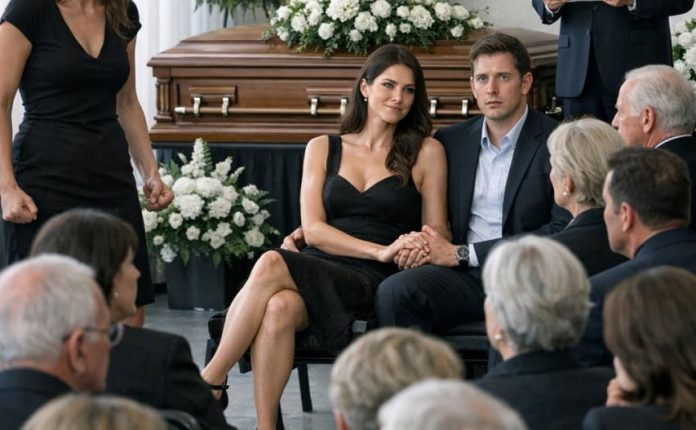
As I walked toward the parking lot, I remembered the sight of Rebecca holding Grant's hand in the front pew.
For a long time, that image had returned whenever I thought about my father's funeral.
But it was no longer the strongest memory.
Now I remembered Aunt Helen taking my arm.
Arthur opening Dad's final statement.
The careful words of a man who had tried to protect his daughter without taking away her independence.
And the little birthday card he had written because he loved being dramatic.
Rebecca had borrowed my dress.
Grant had betrayed our marriage.
Neither had been able to take the love my father left behind.
I drove home beneath the afternoon sun.
The house was quiet when I entered.
Fresh flowers stood on the kitchen table.
My father's photograph rested on the mantel.
Upstairs, the midnight blue Versace dress hung neatly in my closet, ready for another occasion.
It was no longer evidence of someone else's cruelty.
It was simply mine again.
And so was the life I had chosen to rebuild.
THE END
Disclaimer: This is a fictionalized story created for entertainment. Characters, dialogue, events, and circumstances are presented as fiction. Any resemblance to actual people or events is coincidental.
END PART 3
Disclaimer: This fictional story was created with AI assistance for entertainment. Names, characters, dialogue, and events are fictional. Any resemblance to actual people or events is coincidental.