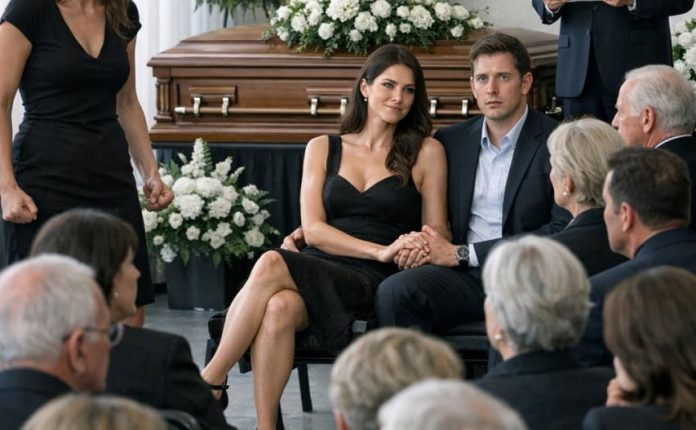
The notice arrived at Brookstone Lane on a Thursday morning, three months after Daniel's funeral.
I wasn't there when it came.
I learned the details later, first from the property manager and then from Robert himself.
Vanessa had been preparing coffee in her enormous white kitchen when someone rang the bell.
She opened the door expecting a delivery.
Instead, she found a process server carrying documents related to the eviction proceedings initiated by Hawthorne Property Holdings.
The packet included a court notice concerning possession of the property, the unpaid rent, and the steps available to contest the claim.
Vanessa read the first page.
Then she read it again.
According to Robert, she walked into the kitchen and dropped the papers onto the marble counter.
"What is this supposed to mean?"
Robert had been sitting at the breakfast island reviewing his emails.
He picked up the notice.
His face went pale.
"We talked about this," he said.
"No. We talked about the landlord threatening us. This is something completely different."
"The rent hasn't been paid."
"Then call your father's people and fix it."
Robert looked at her.
"My father is dead, Vanessa."
She fell silent.
It was a sentence she had heard many times since the funeral, but apparently its practical meaning had not yet settled into her life.
Daniel was no longer available to write a check, make a phone call, or quietly arrange another extension.
For years, his help had arrived so reliably that they had begun treating it as a permanent part of their income.
Now they were discovering that a favor could end.
Vanessa called the property management office that morning.
Patricia Wells answered.
"I need to speak with whoever is responsible for this outrageous notice," Vanessa demanded.
Patricia identified herself and explained the legal status of the tenancy.
Vanessa interrupted repeatedly.
"We have lived here for six years."
"Yes, Mrs. Bennett. Our records reflect that."
"We have maintained the property."
"The company acknowledges the routine maintenance you've performed."
"Then how can you possibly threaten to evict us?"
"Because the rent remains unpaid, and the earlier notices were not resolved."
Vanessa lowered her voice.
"My husband's father had an arrangement with your company."
"Mr. Daniel Bennett was involved in the original lease arrangements."
"Exactly. He would never have allowed this."
Patricia paused.
"I can't speculate about what Mr. Bennett would have decided today."
Vanessa became impatient.
"Then tell me who owns Hawthorne."
"I can direct questions about ownership to the company's legal representative."
"Who is that?"
"Attorney Eleanor Price."
When Robert heard the name, he looked up sharply.
He remembered Eleanor from his father's business affairs.
He had also heard me mention that I was receiving legal guidance about my home.
For the first time, he began to connect the two situations.
Vanessa called Eleanor's office.
The receptionist explained that any questions concerning the tenancy should go through Patricia or their own attorney.
Vanessa demanded an immediate appointment.
When the receptionist declined to discuss confidential company matters, she hung up.
Then she told Robert something that changed the direction of their day.
"Your mother knows that attorney."
Robert stared at her.
"What?"
"Margaret has been talking to Eleanor Price. You told me yourself."
"She's handling Dad's estate."
Vanessa looked down at the notice.
Then at Robert.
"Find out whether your mother has something to do with this."
He called me a few minutes later.
I was in the garden trimming dead leaves from the rosebushes Daniel had planted along the back fence.
My phone rang on the patio table.
When I saw Robert's name, I took off my gloves.
"Hello, sweetheart."
"Mom, I need to ask you something."
His voice was strained.
"What is it?"
"Did Dad own the company that owns our house?"
I looked toward the empty chair beside the back door.
For several seconds, I considered how to answer.
Daniel had kept the ownership structure private.
I had respected that decision while learning about the trust.
But now the legal process had reached a point where Robert was entitled to accurate information about the situation affecting his home.
"Yes," I said.
He didn't speak.
"Hawthorne was part of your father's investments."
"And now?"
"The ownership interest is held in the trust he left for me. I'm responsible for it."
I heard him breathing.
"You're the owner?"
"Through the company and trust, yes."
There was a long silence.
Then he said, "Mom, did you send this eviction notice?"
"The company initiated legal proceedings after the rent remained unpaid and the required notices were served."
"But you authorized it?"
"Yes."
He made a sound I couldn't quite identify.
Part disbelief.
Part anger.
Part something that sounded like shame.
"Why didn't you tell us?"
I put my gloves on the table.
"Because the first time you came to my house after your father's funeral, you brought papers asking me to give you control of it."
"That's not the same thing."
"No. It isn't."
"Vanessa says we're being forced out."
"You're facing legal proceedings because the rent wasn't paid. You received earlier notices and had opportunities to address the problem."
He fell silent.
I continued carefully.
"Robert, I did not know that your father owned your house until after he died. I learned about it when I met with Eleanor."
"How much did he leave you?"
There it was.
Not an apology.
Not a question about how I was coping.
A question about money.
"Enough to make sure I can take care of myself," I said.
"Mom, please."
"I'm not going to discuss the value of my finances over the telephone."
His voice broke slightly.
"We could lose everything."
I sat down.
"Robert, your furniture and personal belongings are yours. Your debts need to be addressed, and your housing situation is serious. But losing this rental house doesn't mean you have lost everything."
"You don't understand what this means to Vanessa."
"I understand that she loves the house."
"She thinks we own it."
I frowned.
"She doesn't know you're tenants?"
He hesitated.
"She knows we signed a lease. But I told her we had a purchase arrangement with Dad."
"Did you?"
"Not exactly."
I closed my eyes.
My son had created another promise that rested on money or property he didn't own.
"Robert, you need to tell her the truth."
"She'll leave me."
I looked at the roses.
Their stems were beginning to produce new growth.
"Perhaps she'll be angry. Perhaps she'll need time. But hiding the truth hasn't protected either of you."
He began to cry.
Not loudly.
Just a small, exhausted sound.
I had heard that sound from him once before, when he was fourteen and his best friend moved away.
I wanted to reach through the phone and hold him.
Instead, I said, "I love you."
He didn't answer.
"I love you, Robert. But I can't keep making your problems disappear."
He ended the call.
I sat outside for a long time afterward.
The garden was quiet except for the occasional traffic noise from the street.
I wondered whether Daniel had felt like this during his final months.
Perhaps every time he helped Robert, he had hoped the next time would be different.
Perhaps he had known that his generosity had become part of the problem but couldn't bear to stop.
I understood him better now.
I also wished we had talked about it while he was alive.
That afternoon, Vanessa came to my house.
She arrived without calling.
I heard her car pull into the driveway, followed by hurried footsteps on the porch.
When I opened the door, she was standing there with the court papers in one hand.
Her shoes were different.
Flat sandals, probably chosen because she had been running around all morning.
She looked tired.
Her makeup was uneven around her eyes.
"Margaret, we need to talk."
I stepped aside.
She walked straight into the living room.
The first thing she noticed was Daniel's chair.
It was still beside the window.
The coffee table was still in front of the sofa.
The china cabinet remained exactly where it had stood for years.
Not one of the pieces she had marked with yellow notes had been removed.
She looked around.
Then she turned toward me.
"You own our house."
"The company owns it."
"And you control the company."
"Through Daniel's trust, yes."
Her face flushed.
"You could have told us."
"Would it have changed the amount of rent you owed?"
She stared at me.
"That's not the point."
"What is the point, Vanessa?"
She held up the notice.
"This is humiliating."
I looked at the papers.
I remembered her standing in almost the same place three months earlier.
Her phone had been angled toward me.
Her voice had been sharp.
She had told me to leave my home and live on the streets.
I didn't remind her immediately.
I wanted to hear what she had come to say.
"We've had a difficult year," she continued. "Robert's contracts fell through. My business hasn't brought in what we expected. We needed time."
"Did you contact the property manager to arrange payment?"
"We spoke to her."
"Did you make the payments you promised?"
She looked away.
"Not all of them."
"Then why did you continue spending money on things you couldn't afford?"
Her jaw tightened.
"You don't know what we spend."
I thought of the fourteen-hundred-dollar shoes.
The holidays.
The expensive cars.
The countless photographs of dinners at restaurants where a single meal cost more than some families spent on groceries.
"I know enough to ask the question."
She moved closer.
"You're enjoying this."
I shook my head.
"No."
"Don't lie."
"Vanessa, my husband died three months ago. I'm still waking up expecting to hear him in the kitchen. I haven't had a day when I didn't miss him. Do you truly believe I'd choose this as a way to entertain myself?"
Her expression flickered.
Then she looked at the floor.
I continued.
"I didn't create your debts. I didn't tell you to stop paying rent. I didn't make you bring those papers to my house."
"Robert said you needed help managing everything."
"And you believed him?"
She opened her mouth, then closed it.
I waited.
Finally, she said, "I believed what I wanted to believe."
It was the first honest thing I had heard from her.
She sat down on the sofa.
For a moment, she looked smaller than I remembered.
"Robert told me his father was going to give us the house."
"He wasn't."
"He said the paperwork wasn't finished."
"Daniel never promised to transfer that property. He refused to use our own home to secure Robert's financing, too."
Vanessa stared at me.
"He told me the money was coming."
"What money?"
She hesitated.
"A business loan. He said your house could provide the security."
I felt a familiar coldness.
So the agreement they had brought me was not merely a general authorization.
It had been part of a plan.
They had expected to borrow against my home to rescue their financial situation.
"Did you know I hadn't agreed?"
She looked down.
"Robert said you would."
"Then you should have asked me."
She pressed her fingers against her eyes.
For a few minutes, neither of us spoke.
Then she asked, "How much did Daniel leave you?"
I looked at her.
It was almost unbelievable how quickly the conversation returned to the same question.
"Why do you need to know?"
"Because if you can afford to keep us in the house, I don't understand why you're doing this."
"Could you afford to pay what you owe if I weren't involved?"
She hesitated.
"Not right now."
"Then the problem isn't who owns the house."
She looked at me sharply.
"It is when that person is family."
I sat opposite her.
"Family shouldn't need to be threatened before being treated with kindness."
Her eyes filled.
"You're going to bring up what I said forever, aren't you?"
"No. But I won't pretend it never happened."
She looked toward Daniel's photograph.
I could see her struggling.
Vanessa had always been good at controlling conversations.
She could change the subject, turn criticism into an insult against herself, or make someone else feel unreasonable for asking a question.
This time, she had run out of places to move.
"I shouldn't have said those things," she whispered.
I waited.
She swallowed.
"I was angry. Robert said the house was going to become complicated, and I thought if you agreed to sell, everything would be easier."
"For whom?"
She looked at her hands.
"For us."
I nodded.
"Yes."
She began crying.
I didn't know whether the tears came from regret, fear, or the loss of a life she had grown accustomed to.
Perhaps all three.
I had spent enough years at the hospital to know that people rarely experienced only one emotion at a time.
After a while, she wiped her face.
"Can you stop the eviction?"
I considered her question.
"I can ask the company to review a documented, realistic resolution. But I won't erase the arrears or promise that you can remain indefinitely."
She looked hopeful.
"Then you'll help?"
"I will support a fair process. That isn't the same as giving you the house."
Her expression tightened again.
"We don't have enough money."
"Then you need to make decisions based on what you have, not what you hoped to receive."
She stood.
"You make it sound so easy."
"I've never said it was easy."
She picked up her papers.
At the door, she turned.
"Did you know all along?"
"Know what?"
"That you were wealthy."
I hesitated.
"Not until after Daniel died."
Her eyes widened slightly.
"How wealthy?"
I opened the door.
"That's private."
For a moment, I thought she might argue again.
Instead, she walked down the porch steps.
I watched her leave, feeling neither victorious nor satisfied.
Only tired.
Two days later, Robert came alone.
He carried a cardboard box.
Inside were the folders he had brought to my house after Daniel's funeral, along with records of his business debts.
He placed the box on the kitchen table.
"I thought you should see these."
I looked at him.
"Why?"
"Because I've been lying to you."
I pulled out a chair.
"Sit down."
He sat opposite me.
For the first time in years, he explained his finances without asking me to rescue him before he finished.
His business had been struggling for nearly eighteen months.
Several anticipated contracts never materialized.
He had borrowed to cover operating expenses, then borrowed more to keep up appearances.
Vanessa's consulting business brought in occasional good months, but its expenses were too high.
The couple had continued spending because neither wanted their friends to know they were having trouble.
Robert admitted that the documents he brought to my house were intended to allow him to arrange a loan secured by my property.
"Vanessa didn't write them," he said. "I asked the adviser to prepare them."
I looked at him.
"Then why did you let her take the blame?"
He stared at the table.
"Because I was ashamed."
I nodded slowly.
"That doesn't excuse it."
"I know."
He took a long breath.
"I knew Dad had refused. I thought if you signed, I could fix everything before you realized how bad it had become."
The admission hurt.
Not because it surprised me.
Because he finally said aloud what I had feared.
He had been willing to risk my home to protect the appearance of his own success.
"Robert," I said, "what would you have done if the loan failed?"
His eyes filled.
"I don't know."
"And where would I have lived?"
He covered his face.
That was when he began crying.
I had seen my son angry, disappointed, embarrassed, and frightened.
But I had rarely seen him ashamed without immediately trying to escape the feeling.
This time, he stayed in his chair.
"I'm sorry, Mom."
I waited.
He lowered his hands.
"I'm sorry I let Vanessa speak to you that way. I'm sorry I asked you to sign those papers. And I'm sorry I treated Dad like he was a bank instead of my father."
I looked away.
The last sentence reached a place in me that had remained raw since the funeral.
Daniel had loved Robert so much.
He had worried about him until almost the end.
I wished he could have heard this apology.
"Your father wanted you to be happy," I said.
Robert nodded.
"He kept telling me I needed to stand on my own feet."
"Yes."
"I thought he didn't believe in me."
"He believed you could do better."
Robert wiped his face.
"Maybe I was afraid to find out whether he was right."
I reached across the table.
This time, he took my hand.
For several minutes, we sat quietly.
Then he asked about Daniel's final days.
He wanted to know whether his father had been afraid.
Whether he had asked for him.
Whether he had said anything about their last argument.
I told him the truth.
Daniel had been frightened at times.
He had also been peaceful.
He had asked about Robert.
And yes, he had worried about their disagreement.
But he had never stopped loving his son.
Robert began crying again.
I moved beside him and put my arms around his shoulders.
For a few moments, he was my little boy again.
Not because his responsibilities had disappeared.
Because loving someone doesn't require pretending they have never made a mistake.
When he finally calmed down, I told him about Eleanor's recommendation to obtain independent financial advice.
I offered to help arrange a meeting with a qualified debt counselor and accountant.
He agreed.
I also told him that I would not pay all his debts.
He listened without arguing.
"I understand."
"Do you?"
He nodded.
"I think I finally do."
We discussed his housing options.
The large Brookstone Lane property had become unaffordable, even at the reduced rent Daniel had arranged.
Robert admitted that he and Vanessa needed something smaller.
Much smaller.
There was a modest townhouse in another neighborhood they had considered before moving into Brookstone.
He had dismissed it because Vanessa wanted a house suitable for entertaining clients.
Now he was considering it again.
"I think we could afford it if I take a salaried position and stop trying to keep the business going," he said.
"Have you applied for jobs?"
"Three."
"Then keep applying."
He smiled faintly.
"That sounds like Dad."
I smiled too.
"He'd probably ask for a spreadsheet."
Robert laughed through his tears.
It was a small sound.
But it mattered.
Over the next several weeks, the legal process continued while Robert and Vanessa arranged their finances.
Their attorney discussed the outstanding balance with Hawthorne's representatives.
They ultimately agreed to a lawful move-out schedule and a documented resolution of the tenancy, subject to the remaining obligations under their agreement.
The court proceeding was concluded through the appropriate process once the arrangements were completed.
I did not personally appear at the property to supervise their departure.
Patricia handled the inspection and keys.
She sent me a report afterward.
The house was empty.
There were ordinary marks on the walls, some minor repairs required, and a few items left in a storage area.
Nothing dramatic.
No broken furniture.
No shouting neighbors.
No public spectacle.
I was relieved.
I had never wanted to stand on their lawn and watch their belongings carried outside.
I only wanted the responsibility for their housing to belong to them.
Robert and Vanessa moved into a two-bedroom rental townhouse.
It had a narrow kitchen, one small living room, and a patch of grass behind the building.
The garage was barely large enough for their remaining car.
They sold the second vehicle.
Vanessa also sold several expensive accessories and pieces of furniture.
Robert took a salaried position with a local distribution company.
It paid less than he had once earned during his best business years, but the income was steady.
For the first time, he began making a household budget based on money he had actually received.
The changes were uncomfortable.
But they were real.
Linda called when she heard about the move.
"I cannot believe you let your own son lose that beautiful house."
I listened.
Then I asked, "Did you offer to help with his rent?"
She sounded offended.
"That's different."
"Why?"
"I don't have the kind of resources Daniel had."
"Neither did Robert."
She fell silent.
I continued.
"Linda, I love my son. But I won't teach him that every financial choice he makes becomes someone else's responsibility."
"You've changed, Maggie."
I looked around my kitchen.
At the curtains I'd sewn.
At the coffee table Daniel had built.
At the family photographs that still lined the mantel.
"Perhaps I have."
She didn't call again for several weeks.
I didn't chase her.
There had been a time when I would have apologized simply to restore peace.
Now I understood that peace achieved by surrendering every boundary wasn't really peace.
It was exhaustion.
As autumn approached, Eleanor and I completed the review of Daniel's trust.
The final accounting confirmed that his estate and trust arrangements had left me with assets valued at approximately twenty-eight million dollars before the final adjustments and ongoing obligations.
The figure still startled me.
I would never become accustomed to saying it aloud.
But I no longer felt that the number was something mysterious and dangerous.
I had learned which assets produced income, which required maintenance, and why independent financial oversight mattered.
I had also learned that wealth was not the same as freedom unless I knew how to manage it.
With professional guidance, I arranged a sustainable investment and spending plan.
I updated my estate documents.
I established clear instructions for what would happen if I became ill or unable to make decisions.
And I made sure no one could obtain control of my property simply by presenting papers while I was vulnerable.
The most meaningful decision concerned St. Vincent's Hospital.
With the hospital's approval and independent administration, I established a charitable fund to assist patients facing serious financial hardship after medical treatment.
The fund supported practical needs such as transportation to appointments, temporary medical equipment, and limited assistance for patients whose circumstances met established criteria.
I named it in Daniel's honor.
He would have been embarrassed by the attention.
I could almost hear him saying that the money should go toward helping people rather than producing a fancy plaque.
We compromised, although he wasn't there to argue.
The hospital placed a small plaque near the patient assistance office.
It read:
Daniel Bennett Patient Support Fund
Established in gratitude for a lifetime of quiet generosity.
I visited the hospital on the afternoon it was installed.
Carol came with me.
She stood beside the plaque and squeezed my hand.
"Daniel would have liked this."
"He would have complained about the lettering."
She laughed.
"Absolutely."
We stood there for a while.
I thought about all the patients I had cared for during my years as a nurse.
Older men who apologized for needing help.
Women who worried more about their children's bills than their own recovery.
Families trying to make good decisions with too little information and too little money.
I had never imagined that the savings Daniel and I accumulated could eventually help people in that way.
It was a different kind of inheritance.
One that felt connected to the lives we had actually lived.
I also began supporting a local nonprofit that helped people avoid housing loss when short-term hardship threatened their stability.
The organization used eligibility requirements, financial counseling, and documented assistance plans.
I wanted the support to be responsible.
Not simply generous for the moment.
Perhaps it was impossible to hear someone say "go live on the streets" and ever again treat those words casually.
I knew Vanessa had used homelessness as an insult.
I had decided to turn the memory into something more useful.
One Sunday afternoon, nearly five months after Daniel's funeral, Robert called to ask whether he could bring Vanessa for dinner.
I hesitated.
"Does she want to come?"
"She says she does."
"Then you're both welcome."
I spent the afternoon preparing a simple meal.
Roast chicken.
Mashed potatoes.
Green beans with butter and a little lemon.
And an apple pie, because Daniel had always insisted that apple pie was the only proper conclusion to Sunday dinner.
I wasn't sure why I made it.
Perhaps some habits continued because they were comforting.
Perhaps I wanted the house to smell the way it had when our family was still whole.
Robert and Vanessa arrived at six.
He carried flowers.
She brought a small container of cookies.
They stood awkwardly on the porch until I invited them inside.
Vanessa looked around the living room.
Her expression changed when she saw Daniel's chair.
"I remember sitting here after the funeral," she said quietly.
I nodded.
"So do I."
She looked down.
"I've wanted to apologize."
I waited.
She took a slow breath.
"What I said to you was cruel. You had just lost your husband, and I treated you like an obstacle."
Robert stood beside her, silent.
She continued.
"I was frightened about our finances, but that doesn't excuse what I did."
I watched her carefully.
There was no phone in her hand.
No audience.
No effort to explain why I should have understood her better.
"I accept your apology," I said.
She looked relieved.
Then I added, "It will take time to rebuild trust."
Her expression grew serious.
"I understand."
"Do you?"
She nodded.
"I think I do now."
We went into the dining room.
For the first time since Daniel's death, Robert sat in his father's old place.
He looked uncomfortable at first.
Then he unfolded his napkin and asked whether I needed help serving.
I handed him the potatoes.
During dinner, we talked about ordinary things.
Robert's new job.
The neighbor's stubborn dog.
A leak in their townhouse bathroom that the landlord had recently repaired.
Vanessa mentioned that she was taking fewer consulting projects and working part-time for an established design firm.
"It isn't glamorous," she said.
"But it pays regularly."
I smiled.
"That's useful."
She gave a small laugh.
"Very useful."
Later, while Robert washed the dishes, Vanessa helped me carry plates into the kitchen.
She stopped beside the refrigerator.
"Margaret, may I ask something?"
"Of course."
"Are you still angry with me?"
I thought before answering.
"Sometimes."
She nodded slowly.
"I suppose that's fair."
"But I don't want to stay angry forever."
She looked at me.
"Neither do I."
We finished clearing the table.
There was no grand reconciliation.
No sudden embrace that erased what had happened.
But when Vanessa handed me the last plate, she did it carefully.
And when I thanked her, she looked directly at me.
Sometimes the beginning of respect is that small.
After dinner, Robert followed me onto the back porch.
The evening air was cool.
The dogwood leaves had begun turning red.
He stood beside me, looking toward the garden.
"Mom, I've been thinking about Dad."
"So have I."
"I used to think he was hard on me because he expected too much."
I waited.
"Now I think he expected me to take responsibility for things I kept asking him to fix."
I looked at my son.
"Your father loved you."
"I know."
"He made mistakes too."
Robert nodded.
"So did I."
We stood quietly.
Then he asked, "Did Dad really leave you enough to be comfortable?"
I smiled.
"More than enough."
He looked relieved.
"Good."
I studied him.
For months, I had wondered whether every question about money contained another request.
This time, he asked nothing more.
He simply looked toward the garden.
"I'm glad you're going to be okay, Mom."
I believed him.
And that mattered more than any apology he could have rehearsed.
As the weeks passed, our relationship improved slowly.
Robert called regularly.
Sometimes he asked for advice.
Sometimes he told me about work.
Sometimes he simply checked whether I had eaten dinner.
I offered encouragement but resisted the temptation to solve every problem he mentioned.
When his car needed repairs, he paid the bill himself.
When he and Vanessa wanted to buy new furniture, they saved for it.
When he received a modest bonus, he used part of it to reduce his debts.
These were ordinary decisions.
There was nothing dramatic about them.
But after years of watching him reach for help before trying to solve problems himself, ordinary responsibility felt remarkable.
Vanessa changed more slowly.
She occasionally slipped into old habits, complaining that her friends had larger homes or newer cars.
But now Robert sometimes reminded her that their lives were no longer organized around appearances.
She didn't always appreciate hearing it.
Neither did I always agree with every decision they made.
But they were beginning to live within the reality of their circumstances.
That was enough for me.
One evening, I opened the wooden box containing Daniel's reading glasses and his final letter.
I carried them to his chair.
The house was quiet.
A lamp illuminated the coffee table he had built.
I unfolded the letter and read the last paragraph again.
He had asked me not to let money become the most important thing about my life.
I smiled.
"Daniel, you made that difficult."
For a moment, I could almost hear his laugh.
I thought about the day Vanessa arrived with her expensive shoes and her yellow sticky notes.
I remembered the humiliation.
The fear.
The terrible silence from my son.
Then I thought about the brass key, Eleanor's office, and the astonishing inheritance Daniel had left behind.
Twenty-eight million dollars.
Enough to change almost any practical circumstance in my life.
Yet the money itself had not taught Robert to apologize.
It had not taught Vanessa to examine her behavior.
It had not restored my sister's loyalty.
And it certainly had not brought Daniel home.
What it had given me was the freedom to make choices without fear.
I could keep the house.
I could decide whom to trust.
I could help people who needed assistance.
And I could love my family without allowing them to control my future.
The eviction notice had arrived at Vanessa's door exactly three months after she told me to live on the streets.
I had not celebrated when it arrived.
I had not posted photographs, made triumphant phone calls, or invited anyone to enjoy her embarrassment.
I had simply allowed a lawful process to continue after repeated promises went unfulfilled.
In the end, the large house on Brookstone Lane was rented to another family.
Robert and Vanessa built a smaller, more manageable life elsewhere.
And I remained in the home where Daniel and I had spent thirty-seven years building something that could never be measured in dollars.
One Saturday morning, Robert came over to repair a loose board on the porch.
He arrived carrying a toolbox.
His father had owned one almost identical to it.
I watched him kneel beside the steps and examine the wood.
"Your dad would have replaced that board years ago," I said.
Robert smiled.
"He probably would have made me hold the flashlight."
"He certainly would."
We laughed.
After the repair was finished, I brought out two mugs of coffee.
Robert sat beside me on the porch.
The morning was bright, and a breeze moved through the dogwood branches.
"Mom," he said, "do you ever wish things had happened differently?"
I looked at him.
"Which things?"
He stared into his coffee.
"Everything after Dad died."
I thought about the funeral.
The argument.
The papers.
The months of uncertainty.
"Of course," I said. "I wish you had stood beside me when I needed you."
He nodded.
"I know."
"But I'm grateful we eventually found our way back to a conversation we should have had years ago."
He looked at me.
"Do you forgive me?"
I placed my hand over his.
"Yes, Robert."
His eyes filled.
I squeezed his fingers.
"But forgiveness doesn't mean we return to the way things were."
"I don't want to," he said.
That answer gave me more comfort than any promise of perfect behavior.
We sat together until the coffee cooled.
And when Robert rose to leave, he carried his toolbox to the car, then came back to hug me.
I stood on the porch watching him drive away.
For a moment, I imagined Daniel standing beside me, one hand resting against the doorframe.
He would have been proud of the repair.
He would have asked whether Robert had checked the other boards.
And perhaps, after everything, he would have been relieved to see our son learning how to care for something without expecting someone else to carry the cost.
I went inside and closed the door.
The little brass key was safely stored now, no longer necessary for daily decisions.
The yellow sticky notes were long gone.
Daniel's chair remained by the window.
And for the first time since losing him, I felt at home not only in the rooms we had shared, but in the life I was learning to live without him.
THE END
Disclaimer: This is a fictional story created for entertainment and reflection. All characters, dialogue, businesses, financial circumstances, and events are fictional. Any resemblance to actual people or situations is coincidental.
END PART 3
Disclaimer: This fictional story was created with AI assistance for entertainment. Names, characters, dialogue, and events are fictional. Any resemblance to actual people or events is coincidental.