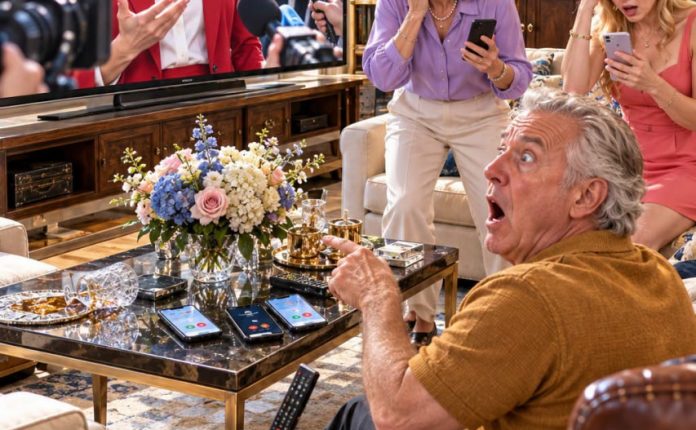
The last Christmas I spent with my family ended before breakfast had even been cleared from the table.
My father was standing beside the refrigerator, studying three boarding passes on his phone, when I asked whether there was any chance I could join them in Colorado.
He kept scrolling.
"Maren, not this again."
I was holding a dish towel. There was a small burn on my thumb from taking the cinnamon rolls out of the oven, and the kitchen window had fogged from the heat of the coffee maker.
"I only asked if you'd checked," I said.
"We checked when we booked it."
"Three months ago."
He finally looked up.
"What's that supposed to mean?"
"It means I could have arranged time off. If I'd known you were planning something."
My mother was at the kitchen counter, carefully folding a cream-colored cashmere scarf into a gift bag. She had purchased it for my younger sister, Briar, the previous weekend.
"Nobody's trying to upset you, sweetheart," she said. "But everything was organized around Briar's schedule. You know how busy she's been."
Briar was sitting on a stool with her phone propped against a ceramic sugar bowl. She was twenty-seven, three years younger than me, and had developed a habit of documenting almost everything she did.
She wore a new white sweater, fitted black pants, and a pair of leather boots that cost more than my monthly car payment.
"Besides," she said, "you don't even ski."
"I told you I wanted to learn."
She glanced at me.
"Well, you should have said something."
"I did."
"Not to me."
"I said it at dinner when Mom showed us the resort."
Mom made a small dismissive motion with her hand.
"Let's not spend Christmas morning arguing about who said what."
That was how our family handled most disagreements.
When Briar was disappointed, everyone adjusted their plans.
When I was disappointed, everyone became concerned about my attitude.
I was thirty years old, employed as a junior designer at a marketing agency outside Dayton, and perfectly capable of paying for a vacation.
Money wasn't the reason I was upset.
It was the fact that nobody had considered asking me.
Dad placed his phone in his pocket.
"Look, there's a suite with two beds. Briar's staying with us. We reserved everything months ago, and I can't just change it now."
"You could have booked two rooms."
"And who's paying for all this?"
"I would have paid my share."
He exhaled sharply.
"You always make things more complicated than they need to be."
I folded the dish towel and set it beside the sink.
Briar opened the gift bag and pulled out the scarf.
"Oh, Mom. This is gorgeous."
Mom's entire expression changed.
"Try it on, honey."
For several minutes, they discussed whether the scarf looked better with Briar's white coat or her navy one.
I stood there listening, wondering how a conversation about my exclusion could disappear so easily.
It wasn't the first time.
The previous Thanksgiving, my parents had traveled to Manhattan for a holiday weekend built around a promotional event Briar was attending.
I learned about the trip when Mom asked whether I could stop by and collect their mail.
When I mentioned that I would have enjoyed spending Thanksgiving with them, she explained that the arrangements were already final.
"We assumed you'd have your own plans."
I hadn't.
They knew I hadn't.
That year, I ate Thanksgiving dinner with a colleague whose husband had made an extra place for me after discovering I would otherwise be alone.
The summer before, my parents and Briar spent a week at a lakeside resort.
I watered Mom's plants, collected packages, and checked the house after a thunderstorm.
They returned with a refrigerator magnet shaped like a sailboat.
"Thought of you," Dad said.
Briar received a bracelet because bad weather had spoiled one afternoon of her vacation.
Before that, there had been Christmas in Vermont.
Another Thanksgiving I wasn't invited to.
A weekend birthday trip that somehow became a family gathering without me.
There were always reasons.
The rooms were too small.
The dates were inconvenient.
Someone needed to watch the house.
Briar's work commitments couldn't be changed.
Somehow, the inconvenience always landed on me.
I had once kept a list of these holidays in a notebook, as though documenting them might help me understand whether I was being unreasonable.
Eventually, I stopped.
I knew the pattern.
What I didn't understand was why I kept returning to participate in it.
At nine thirty, Dad announced that they needed to leave for the airport.
I cleared the breakfast dishes while Mom made a final inspection of the living room.
She checked the thermostat, examined the Christmas tree lights, and reminded me not to leave the upstairs bathroom window open.
"That furnace has been temperamental," she said.
"Have you called someone?"
"Your father says it's fine. Just keep an eye on it."
I rinsed a plate.
"Mom, I don't live here."
"I know that."
"I have my own apartment."
"Of course you do."
She gave me the puzzled smile she used whenever I mentioned something she considered unnecessarily literal.
"It's only a few days, Maren. You're close enough to come over if there's a problem."
I wanted to ask what would happen if there were a problem at my apartment while I was away.
Who would interrupt their vacation to help me?
But I already knew the answer.
Outside, the December wind pushed hard against the garage door.
I carried a suitcase to Dad's car.
Briar was in the passenger seat, recording a departure video.
"Merry Christmas, everyone!" she announced brightly. "We're heading somewhere magical."
She turned the camera toward Mom, who waved and smiled.
Then she turned it toward Dad.
Neither of them suggested including me.
I placed the suitcase in the trunk.
Dad reached into his coat pocket and handed me the house keys.
"You understand, don't you?" he said. "You've always been easier about these things."
He sounded almost grateful.
That was the moment something inside me settled.
My cooperation had become part of the arrangement.
They hadn't merely learned that I would accept being excluded.
They had begun relying on it.
I looked at the keys.
"I understand."
He smiled.
"Good girl."
I hadn't been a girl for a long time.
Mom leaned across the passenger doorway to straighten Briar's collar.
"Make sure you take pictures with the mountains behind you."
Then she turned toward me.
"We'll celebrate together when we get back, sweetheart."
"Have a safe trip."
She kissed my cheek, already looking toward the car.
Dad started the engine.
The tires rolled over the thin frost covering the driveway.
I stood there until their taillights disappeared at the intersection.
Then I walked back inside.
The cinnamon rolls were still warm.
Four stockings hung above the fireplace, each embroidered with a name.
Dad.
Mom.
Briar.
Maren.
I had hung them myself the evening before.
Above the stockings was a framed photograph taken during the previous Christmas holiday in Vermont.
My parents stood beside Briar in front of an elaborate stone fireplace.
All three wore matching red sweaters.
I remembered taking the photograph because Mom had sent it to me and asked whether I could remove a stranger from the background before she used it for their holiday card.
She hadn't asked whether I was hurt by the picture.
I had edited it anyway.
Standing beneath that photograph, I finally understood how thoroughly I had participated in my own exclusion.
I made the reservations whenever Mom couldn't figure out an airline website.
I corrected spelling mistakes in Briar's promotional captions.
I designed birthday invitations.
I arranged anniversary flowers.
I watched houses, watered plants, and collected packages.
I helped create celebrations in which I was rarely included.
For years, I had mistaken being useful for being loved.
I sat on the sofa, still wearing my coat.
Then I took out my phone and opened a message I had been avoiding for almost a month.
It was from Leah Mendoza.
Leah and I had worked together before she moved west to join a small branding studio in Oakland.
We remained friends, trading work samples and complaining about impossible clients.
Her company was expanding.
She had told me about an opening and encouraged me to apply.
I had completed two interviews and received an encouraging message from the creative director.
They wanted a final conversation.
I hadn't scheduled it.
The thought of leaving Ohio had frightened me.
My parents lived nearby.
My work was familiar.
I had a modest apartment, a steady paycheck, and a carefully maintained routine.
I also had a persistent belief that someday my family would notice what they were doing and invite me properly.
That belief had kept me in place longer than anything else.
I called Leah.
She answered on the fourth ring.
"Merry Christmas, stranger."
"Merry Christmas."
"You're awake early."
"My family's heading to Colorado."
"With you?"
"No."
There was a pause.
"Again?"
"Again."
Leah didn't immediately offer comfort. That was one of the things I appreciated about her.
Instead, she asked, "What do you need?"
I looked at the photograph above the fireplace.
"Is your couch still available?"
She was quiet for a moment.
"You're serious."
"Very."
"Then yes. Absolutely."
"I don't want to impose."
"Maren, it's a couch. You're allowed to sit on furniture without apologizing."
I laughed unexpectedly.
The sound startled me.
Leah continued.
"And the company still wants to meet with you. I spoke to the director last week."
"I haven't given them a final answer."
"Then give them one."
I rubbed my thumb against the edge of my phone.
"What if it doesn't work?"
"Then we figure out something else."
It was such an ordinary answer.
No lecture about gratitude.
No accusation of being dramatic.
No reminder of what I owed anyone.
Just a problem that could be solved.
I told her I would call the company that afternoon.
When we hung up, I opened my laptop and searched for flights.
I didn't buy the ticket immediately.
For almost an hour, I sat at the kitchen table looking at the available departures.
Leaving felt enormous.
It also felt embarrassingly simple.
I wasn't married.
I had no children.
My lease was nearing its end.
I had savings sufficient to cover several months of modest expenses.
My current employer had already agreed that I could complete my outstanding assignments remotely if I accepted work elsewhere.
Most of the barriers I had imagined were emotional.
I kept waiting for a reasonable voice in my head to explain that I was overreacting.
Instead, I remembered a Christmas dinner when I was nineteen.
Briar had received a new laptop.
I had received a sweater in a size too small.
When I quietly asked whether the sweater could be exchanged, Dad told me not to spoil the holiday.
Another memory followed.
I was twenty-four, standing in an airport arrivals hall holding a handmade sign to welcome Briar home from a semester abroad.
My parents had arranged a celebration for her.
When I returned from my own first business trip two months later, I took a taxi home because everyone was busy.
Those incidents seemed small individually.
Together, they formed the structure of my childhood and adulthood.
I clicked the flight departing the following morning.
One way.
Dayton to California.
I entered my payment information.
When the confirmation appeared, my hands trembled.
Then I stood up and walked through the house.
I made sure the furnace was running.
I watered Mom's plants.
I checked that the back door was locked.
These tasks took less than twenty minutes.
For once, I didn't try to do anything extra.
At my apartment, I pulled two suitcases from the closet.
I packed clothing, important documents, my laptop, a sketchbook, several family photographs, and the small silver pendant Grandma Evelyn had given me on my eighteenth birthday.
Grandma had died three years earlier.
Of everyone in my family, she was the person I missed most.
She had been practical, direct, and occasionally stubborn.
She repaired things instead of replacing them.
She stored birthday cards in shoeboxes.
She insisted that nobody should feel like an afterthought at her dinner table.
Whenever Briar and I visited, Grandma placed two identical plates on the table, even when one of us arrived late.
"Everybody gets a place," she liked to say.
When I was younger, I assumed that was an ordinary family rule.
Now I realized how unusual it had been in ours.
After Grandma died, Dad handled her estate.
He explained that most of her remaining assets were committed to charitable projects through a small foundation she had established.
I hadn't asked questions.
I was grieving, and I believed him.
I tucked her pendant into my suitcase.
Then I called my landlord, left a message for my supervisor, and emailed the California company confirming my availability for a final interview.
By evening, Leah had sent photographs of her spare room.
It was hardly bigger than a storage closet.
There was a narrow bed, a bookshelf, and a window overlooking the neighboring building.
I thought it looked wonderful.
At eleven, I drove back to my parents' house.
The street was quiet.
Christmas lights blinked along the neighboring porches.
I went inside and placed the keys on the kitchen counter.
Beside them, I left a note.
The furnace was working.
The plants had been watered.
The house was secure.
I considered adding a sentence explaining that I was moving.
Then I remembered all the times I had attempted to explain my feelings.
I remembered Dad's impatience.
Mom's dismissive smile.
Briar's laughter.
I left the note as it was.
I wasn't disappearing to punish them.
I was leaving because I could no longer build a life around hoping they would eventually treat me differently.
At sunrise, I boarded a plane.
California welcomed me with rain.
Not the soft kind.
Cold, steady rain that soaked the shoulders of my coat while I waited outside the airport.
Leah arrived in an aging blue car with a cracked dashboard.
She jumped out, hugged me tightly, and helped load my suitcases.
"Welcome to the glamorous West Coast."
"I was promised sunshine."
"That's the premium package."
We laughed.
During the drive, she talked about Oakland, her coworkers, traffic, expensive groceries, and a café near her apartment that made excellent coffee.
She didn't ask me to explain everything about Christmas.
She let me watch the unfamiliar streets.
For the first time in years, I felt that my life might belong to me.
The first months were not easy.
I got the job, but the salary barely covered rent when I moved into my own apartment above a laundromat.
The heating pipes knocked at night.
My laptop overheated.
My car needed repairs.
Some evenings, I ate cereal for dinner while reviewing unfinished designs on the floor.
I missed Ohio sometimes.
Not my family's holiday photographs.
I missed the familiar roads, the changing autumn leaves, and the smell of Grandma's house after rain.
There were moments when I almost called my parents.
I imagined Mom answering and asking whether I was coming for Sunday dinner.
But every time I pictured that conversation, I found myself rehearsing an apology for leaving.
And I had nothing to apologize for.
Leah helped me understand that loneliness wasn't necessarily proof I had made a mistake.
Sometimes it was simply the price of leaving a familiar place before finding another one.
At work, I began receiving responsibilities that had frightened me in Ohio.
My supervisor asked for my opinion during client meetings.
When I disagreed, nobody accused me of being difficult.
When I proposed an unusual design, colleagues discussed it seriously.
I was promoted after eighteen months.
Two years later, I became a senior designer.
Eventually, I earned a creative director position.
My confidence didn't arrive all at once.
It grew through ordinary experiences.
A colleague thanking me for an idea.
A friend remembering my birthday.
A neighbor saving a package without expecting anything in return.
Leah inviting me to Thanksgiving dinner and setting a place at the table before I arrived.
Small things.
Things I had once considered too much to ask for.
During weekends, I began creating artwork from objects people discarded.
Old invitations.
Unused place cards.
Photographs cut from travel brochures.
Fragments of greeting cards.
At first, the work had no clear direction.
I made collages because assembling broken pieces gave me a strange sense of order.
One afternoon, I found a box of unused Christmas cards at a thrift shop.
Their envelopes had never been addressed.
I imagined families who bought beautiful cards but never sent them.
I took the box home.
That evening, I began constructing an image of an empty dining chair surrounded by torn greetings.
It became the first piece in a series about belonging.
A neighborhood gallery agreed to exhibit the work.
Fewer than fifty people attended the opening.
The heater rattled every time someone opened the door.
I spent much of the evening worrying that visitors would find the exhibition too personal.
Near closing time, an older woman stopped in front of the empty-chair collage.
She stood there for several minutes.
Then she wiped her eyes.
"My family always remembered me when there was work to do," she said. "But nobody seemed to notice when I wasn't there."
I didn't know what to say.
She examined the collage again.
"You've made something I didn't know how to explain."
After she left, I stood in the nearly empty gallery, thinking about her words.
I had believed I was making artwork about my own family.
Perhaps I was making artwork about something much larger.
Over the following years, I explored the quiet ways people could be excluded while appearing to belong.
My work changed.
So did my life.
I rented a brighter apartment.
I bought a reliable car.
I developed friendships that survived disagreements and busy schedules.
I stopped checking my phone on Christmas morning to see whether my parents had remembered me.
And gradually, I stopped imagining that my absence needed to be justified.
Six years after leaving Ohio, I was preparing the largest exhibition of my career.
Its title was The Fourth Place.
The central installation occupied an entire gallery room.
A holiday dining table had been prepared for four.
Three upholstered chairs faced one another beneath warm pendant lights.
A fourth chair stood several feet away, turned toward a blank wall.
Elegant dishes rested on the table.
Four folded napkins had been prepared.
Only three place settings contained engraved name cards.
Under glass lay three carefully designed boarding passes.
The fourth sleeve was empty.
I had invented the visual arrangement, but its emotional foundation came from the Christmas morning I left.
When Leah saw the completed installation, she stood silently for a long time.
Then she asked, "Does your family know about this?"
"No."
"Do you want them to?"
I considered the question.
"I don't think about them when I'm making it anymore."
She nodded.
"That's probably how you know it's yours."
Opening night exceeded every expectation.
Visitors waited outside the gallery.
A local arts journalist interviewed me.
Someone filmed the installation and posted a short video online.
By the next morning, it had spread far beyond the gallery's usual audience.
People shared stories of holidays spent working while siblings vacationed.
Others described being remembered for chores but forgotten for celebrations.
A national morning television program contacted my publicist.
They wanted an interview.
I agreed.
On Tuesday morning, I sat beneath bright studio lights and explained how the exhibition had grown from personal experiences into a broader exploration of family roles.
I didn't identify my parents.
I didn't name Briar.
I didn't mention where they lived.
I simply described how ordinary exclusions could shape a person's understanding of their own value.
The interviewer asked whether I still hoped for reconciliation.
I thought carefully.
"I hope people can change," I said. "But I don't believe healing requires us to keep standing outside a door that someone else refuses to open."
The interview ended.
I returned to the gallery.
By lunchtime, my phone had become almost unusable.
Ninety-nine missed calls.
Most came from Ohio.
I recognized several numbers immediately.
Dad.
Mom.
Briar.
Other numbers belonged to relatives I hadn't heard from in years.
I sat in my office and opened the voicemail list.
Dad's longest message lasted nearly two minutes.
His voice was tense.
"Maren, it's your father. You need to call me. Your mother is getting questions, and Briar's business is involved now. We have to talk before people start looking into those old trips."
I listened again.
Then a third time.
My hands became cold.
He hadn't asked whether I was happy.
He hadn't asked where I'd lived or what I'd been doing.
He was afraid someone would examine the vacations.
I opened my laptop.
And for the first time, I began wondering whether those missing invitations had been more than evidence of favoritism.
END PART 1