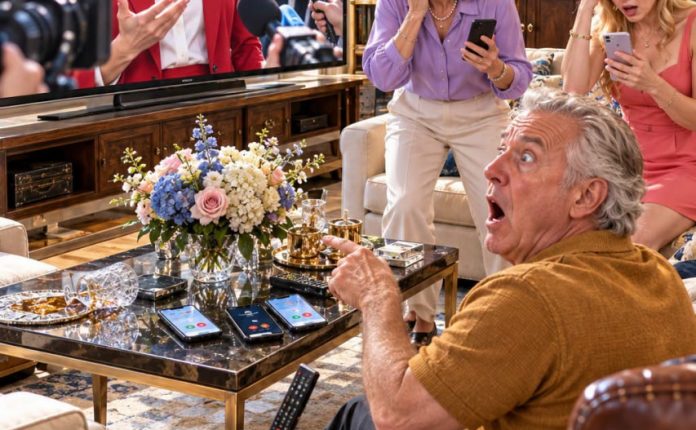
By the following Christmas, I had stopped counting how many times my parents contacted me.
There had been apologies, explanations, angry messages, and periods of silence.
Sometimes Dad wrote as though we were discussing an unfortunate misunderstanding.
Sometimes Mom cried and asked why we couldn't return to the way things used to be.
But there was no returning to the way things used to be.
Not for me.
Not for Briar.
And not for the foundation Grandma had worked so hard to create.
The independent review had forced my family to confront records they once assumed nobody would examine.
The foundation had adopted stricter financial controls, revised its conflict-of-interest procedures, and appointed additional independent board members.
It had also begun implementing the review's recommendations for correcting past accounting and recovering improperly spent funds.
The resulting financial obligations were substantial enough that my parents had to reconsider parts of their lifestyle.
They sold a recreational property they rarely used.
Dad gave up several expensive plans.
Briar arranged repayment of amounts identified through the review and revised her business practices.
The foundation, advised by independent professionals, addressed the reporting and regulatory questions arising from the findings.
I did not control those processes.
I had not asked to.
My purpose had never been to take money from my family.
It had been to understand what happened and prevent Grandma's charitable work from continuing under misleading records.
Once those questions were being addressed, I stepped back.
I had a life to live.
My gallery was preparing a new exhibition when I received a letter from the foundation's independent chairperson.
Her name was Susan Bennett.
She had previously served on the board of a regional arts organization and had no personal connection to my family.
The letter explained that the foundation was establishing a properly supervised scholarship program for young adults seeking training in creative professions.
It would emphasize accessible courses, equipment grants, mentorship, and professional development.
The selection process would be documented, with independent evaluation and clear eligibility requirements.
Susan invited me to serve on an advisory committee.
I read the letter twice.
Then I placed it beside the photograph of Grandma on my desk.
For several minutes, I imagined her sitting in her old kitchen, wearing the blue cardigan with the missing button.
I remembered the way she held a pen between her fingers.
I remembered her insisting that a person's circumstances should not determine whether they deserved an opportunity.
I remembered her telling me that useful work was valuable.
Most of all, I remembered her putting an extra plate on the table when someone arrived unexpectedly.
Everybody gets a place.
I picked up the phone and called Susan.
"Thank you for the invitation," I said.
"We'd be delighted if you'd consider it."
"I have one condition."
"Of course."
"I don't want the program to become another family project where people receive opportunities because of their names."
She didn't hesitate.
"Neither do we."
"I want every decision documented. I want outside applicants considered fairly. And I want the committee to be able to say no when something doesn't serve the program."
"Those principles are already part of the revised framework."
I looked at Grandma's photograph.
"Then I'd be happy to help."
The first scholarship review meeting took place in February.
I attended remotely from California.
There were five committee members, none of whom had a controlling personal interest in the applicants.
We reviewed applications from young people with different ambitions.
One wanted to study animation.
Another needed equipment for a community photography project.
A young woman from a rural town hoped to take an accredited graphic design course but couldn't afford the tuition.
Her application included photographs of posters she had created for local school events.
The layouts were imperfect.
The typography needed work.
But her designs showed patience and imagination.
I remembered making similar posters when I was nineteen.
I remembered saving for software.
I remembered Grandma buying me a sketchbook because she noticed I was filling every spare page of my notebooks with drawings.
During the review, I asked about the applicant's training plan and whether the requested course would provide the instruction she needed.
The committee discussed the evidence carefully.
Eventually, we recommended funding her training, subject to the foundation's standard approval process.
Afterward, I stayed at my desk for a long time.
I hadn't expected the meeting to affect me so deeply.
For years, I'd been angry about opportunities my family withheld.
That afternoon, I participated in helping someone else receive one.
The difference mattered.
I wasn't trying to reconstruct the family I wished I'd had.
I was helping create something worthwhile from a responsibility Grandma had hoped I would accept.
Briar visited California in March.
She contacted me several weeks in advance.
Her message was simple.
I'll be in Oakland for work. Would you be comfortable having coffee? No pressure if not.
I appreciated the wording.
It was the first invitation from her that didn't assume my availability.
I agreed.
We met at a café near the gallery on a cool Saturday morning.
Briar arrived wearing jeans, a navy sweater, and a simple wool coat.
There was no elaborate makeup.
No camera.
No cheerful announcement to an audience.
She looked nervous.
"Hi."
"Hi."
We ordered coffee.
For a while, we talked about ordinary things.
The weather.
Her flight.
Leah's new job.
The gallery's upcoming exhibition.
Then Briar placed her cup down.
"I've been in counseling."
I looked at her.
"How's that going?"
"Uncomfortable."
I smiled slightly.
"That sounds familiar."
She laughed.
Then her expression grew serious.
"I've been thinking about how we grew up."
I waited.
"I always assumed you didn't need much because you never complained the way I did."
"I complained."
"I know that now."
"You knew it then, too."
She nodded.
"You're right."
For once, she didn't argue.
She continued.
"When we were children, I learned that making a fuss got attention. You learned that being responsible kept everyone happy."
I looked out the window.
"Maybe."
"And then we got older, and none of us changed."
I thought about that.
There was truth in it.
But I didn't want our childhood patterns to become excuses for our adult decisions.
"Briar, you were old enough to notice."
"I know."
"You watched them exclude me."
"Yes."
"And you accepted it."
She lowered her eyes.
"Yes."
I appreciated that she didn't add a justification.
After a while, she said, "I've stopped using some of the old travel photographs in my business."
"Why?"
"Because I don't want to keep presenting those years as a perfect family story."
I nodded.
"That makes sense."
"I've also corrected descriptions of the foundation sponsorships where the old posts were misleading."
"Good."
She looked at me carefully.
"I'm not asking you to forgive me today."
I was relieved.
"I can't promise you that."
"I understand."
We finished our coffee.
Before leaving, Briar asked whether she could visit the gallery.
I agreed.
We walked slowly through the rooms.
She studied the photographs, installations, and collages without taking out her phone.
When we reached The Fourth Place, she stopped.
The installation had been partially reconstructed for a smaller exhibition.
Three chairs faced the table.
The fourth stood apart.
Briar stared at it.
"I remember that Christmas," she said.
"So do I."
"I remember you asking to come."
I waited.
"And I remember thinking it would be easier if you stopped asking."
Her voice broke.
"I'm sorry."
I looked at the empty chair.
For years, I had wanted her to understand.
Now she was standing beside me, finally acknowledging what happened.
It didn't erase the past.
But it changed the present.
"Thank you," I said.
We stood together for several minutes.
Then Briar asked a question that surprised me.
"Would you ever want to go somewhere together?"
I turned toward her.
"Where?"
"I don't know. A museum. A weekend trip. Somewhere ordinary."
I considered it.
"Maybe one day."
She nodded.
"I'd like that."
This time, she didn't pressure me for a definite answer.
That made the possibility easier to imagine.
My relationship with my parents remained more difficult.
Mom began sending handwritten letters.
At first, they contained the familiar explanations.
She said she had tried to be fair.
She said Briar had needed extra help.
She said I had always seemed independent.
She reminded me of birthdays, school celebrations, and family dinners.
I read the letters, but I didn't respond to most of them.
They described her intentions.
They rarely acknowledged the consequences.
Then, in May, a different letter arrived.
It was shorter.
The handwriting was uneven.
Maren,
I have been thinking about the morning we left for Colorado.
I remember you asking to come.
I remember telling you somebody needed to watch the house.
I knew you were disappointed.
I told myself it wasn't serious because you were an adult and had your own life.
I see now that I used your independence as a reason not to consider you.
I also told the foundation you weren't interested in participating, even though I never asked you directly.
That was wrong.
I am sorry.
I don't expect you to trust me because I write a letter.
I understand that I have to earn that trust, if you ever want me to.
Love,
Mom
I read it three times.
Then I cried.
Not because everything was fixed.
Not because I had suddenly forgotten six years of silence.
I cried because, for the first time, my mother had described what she actually did without asking me to make her feel better about it.
I wrote back the following week.
I thanked her for acknowledging the truth.
I told her that I was not ready for frequent contact.
I also said I would consider a telephone conversation if she continued respecting my boundaries.
She replied with a single sentence.
I understand, and I will respect that.
For once, she did.
Dad took longer.
He had spent his life believing that providing money, housing, and security made him a good father.
In many ways, he had provided those things.
He worked hard.
He paid bills.
He fixed the car when it broke down.
He attended school events when his schedule allowed.
But he struggled to understand why those efforts hadn't been enough.
Our first calm conversation happened almost a year after the television interview.
He called on a Sunday afternoon.
I answered because he had asked in advance whether it would be convenient.
That was new.
We spoke about the weather and his garden.
Then he said, "I owe you an apology."
I remained quiet.
"I mishandled the foundation."
"Yes."
"I made decisions I shouldn't have made without independent oversight."
"Yes."
"And I should never have told people you weren't interested without asking you."
I waited.
He took a breath.
"I thought Briar needed opportunities more urgently because her business wasn't stable."
"That wasn't your decision to make on my behalf."
"I understand that now."
I looked at the painting above my sofa.
"Dad, I never expected you to buy me the same things you bought Briar."
"I know."
"I wanted to be invited."
His breathing changed.
"That's the part I didn't understand."
I said nothing.
"I thought because you were independent, you didn't care about the trips."
"I told you I cared."
"I know."
He paused.
"I didn't want to hear it."
There it was.
A plain sentence.
No elaborate justification.
No argument about money.
Just an admission.
I felt something loosen inside me.
It wasn't forgiveness exactly.
It was relief that I no longer had to prove the obvious.
Dad continued.
"When you left, I told myself you were trying to punish us."
"Was that easier than wondering why I left?"
"Yes."
I closed my eyes.
He sounded tired.
"I was angry because I couldn't control what happened."
I considered his words.
"You couldn't control me."
"No."
"And you couldn't make me keep accepting the arrangement."
"No."
He cleared his throat.
"I watched your interview again."
I waited.
"You said people sometimes learn to apologize for needing room."
"Yes."
"I think I taught you that."
My eyes filled.
"I think you did."
We remained silent for a long time.
Then he said, "I don't know if you'll ever want to come home."
I looked around my apartment.
The shelves were full of books and art supplies.
The windows overlooked a street I loved.
Photographs of Leah and my friends hung beside the door.
I had spent years building this home.
"Dad," I said, "I am home."
He didn't answer immediately.
Then he said, "I understand."
Perhaps he finally did.
The following autumn, I returned to Ohio for a scholarship ceremony.
It was the first formal event held under the foundation's revised program.
The venue was a modest community arts center.
There were folding chairs, a small podium, and a table displaying artwork from the scholarship recipients.
No luxury resort.
No expensive promotional dinner.
No elaborate family photographs.
Just students, mentors, teachers, and supporters gathered to recognize creative work.
I arrived early.
Susan greeted me near the entrance.
"Thank you for coming."
"I'm glad to be here."
She introduced me to several committee members.
Then I met the young woman whose graphic design course we had helped fund.
Her name was Elena.
She was twenty-two and nervous about speaking in public.
"I wanted to thank you," she said.
I smiled.
"You did the work."
"But the scholarship made it possible."
I looked at her portfolio.
Her designs had improved considerably.
The compositions were stronger.
The typography was more thoughtful.
She had even created a poster for a local nonprofit.
"These are excellent," I said.
Her face lit up.
"Really?"
"Really. Especially this one."
I pointed to a design featuring a small illustrated house beneath a wide night sky.
She explained that it represented her hometown.
I asked about her plans.
She wanted to work in community arts and eventually teach design.
I listened.
Then I told her something Grandma had once told me.
"Keep learning, and don't let anyone convince you that your work matters less because it comes from somewhere small."
Elena smiled.
"I won't."
After she left, I stood beside the portfolio table and looked around the room.
Grandma would have loved it.
Not because it was impressive.
Because it was useful.
My parents attended the ceremony, but we had agreed in advance that there would be no family gathering afterward.
They sat several rows behind me.
Mom wore a dark blue dress.
Dad wore his old gray suit.
I noticed them when I turned to greet another attendee.
Mom smiled uncertainly.
I nodded.
That was enough for the moment.
Briar arrived shortly before the event began.
She had volunteered to help the organizers arrange displays, but she held no decision-making role in the scholarship awards.
She approached me carrying a stack of programs.
"Hi."
"Hi."
"Do you need one?"
"Sure."
She handed me a program.
Then she glanced toward our parents.
"They look nervous."
"So do I."
Briar gave a small smile.
"At least we're consistent."
I laughed.
For a moment, we were simply sisters standing together at an event.
No competition.
No argument about invitations.
No demand that one of us disappear to make room for the other.
During the ceremony, Elena spoke about her experience.
She described working evenings at a grocery store while saving for design training.
She thanked her instructor, her family, and the people who had helped her apply.
Then she said, "I used to think opportunities were for people who already knew someone important. This program helped me believe that my work could be enough."
I looked down at the program in my hands.
Grandma had wanted exactly that.
A chance.
A fair process.
A place for talent that might otherwise be overlooked.
When the ceremony ended, my father approached me.
He looked toward the students gathering around the display tables.
"Your grandmother would have been proud."
"Yes."
He hesitated.
"Of you, especially."
I looked at him.
"She was proud of me before any of this happened."
Dad's eyes lowered.
"You're right."
It was a small exchange.
But it mattered.
He wasn't claiming credit.
He wasn't trying to explain away the past.
He was acknowledging something that had always been true.
Mom joined us.
For a moment, the three of us stood together.
Then she said, "Would you like to have dinner?"
I considered the invitation.
For years, I had dreamed of hearing those words.
A real invitation.
Not a request to watch the house.
Not a last-minute suggestion after everyone else's plans were finalized.
An invitation offered without an obligation attached.
"Not tonight," I said gently. "I have plans with Natalie."
Mom looked disappointed.
Then she nodded.
"All right. Perhaps another time."
"Perhaps."
I meant it.
But I also meant that the choice belonged to me.
The next Christmas, Leah hosted dinner at her house.
She had recently moved into a small home with a garden and a dining room large enough for eight people.
There were seven of us that evening.
Leah.
Her husband, Rafael.
Two friends from the gallery.
A neighbor who had recently lost her sister.
A colleague spending his first Christmas away from his hometown.
And me.
The table was crowded with dishes.
Roasted vegetables.
Mashed potatoes.
Fresh bread.
A pecan pie that Rafael insisted had nearly ruined his afternoon.
Someone had forgotten cranberry sauce.
Leah laughed and said nobody would survive the disappointment.
There were no elaborate decorations.
No expensive gifts arranged for photographs.
No carefully planned presentation of a perfect family holiday.
But every person had been invited.
Every person had a chair.
I helped Leah carry glasses to the table.
When we finished setting the places, I noticed an extra chair near the wall.
It was a simple wooden chair with a worn cushion.
For a moment, I thought of The Fourth Place.
The installation that had changed my life.
The empty chair facing away from the holiday table.
The three boarding passes beneath glass.
The absence that had finally become visible.
Leah noticed me looking.
"What?"
"Nothing."
She followed my gaze.
"Oh, that chair. I brought it in case Natalie decided to join us after all."
"She couldn't get a flight."
"I know. But I thought we'd keep it ready."
I smiled.
A chair kept ready for someone who might arrive.
Not an empty chair used to remind somebody they didn't belong.
That difference seemed enormous.
My phone vibrated.
It was a message from Briar.
Merry Christmas, Maren. I hope you're having a wonderful evening. No need to reply until you're free.
A photograph followed.
It showed her standing beside a small Christmas tree in her apartment.
She had decorated it herself.
There were no mountains.
No luxury resort.
No expensive gift bags.
Just a quiet room and a cup of tea on the table.
I typed back.
Merry Christmas, Briar. We're about to eat. I hope you have a peaceful evening.
She responded with a heart.
A moment later, another message arrived.
From Mom.
Merry Christmas, sweetheart. We're thinking of you. Enjoy your evening with your friends.
Then Dad.
Proud of the work you're doing. Merry Christmas.
I read the messages.
For once, none of them asked where I was, why I hadn't come, or whether I could help with something.
I put my phone away.
Leah called from the dining room.
"Maren, dinner!"
"I'm coming."
I walked toward the table.
Rafael was trying to open a stubborn jar.
Our neighbor was telling a story about the Christmas she accidentally baked a cake without sugar.
Someone was laughing so hard they had to sit down.
I pulled out my chair.
Nobody had to make room for me.
They already had.
Later that evening, after the dishes were washed and the guests had settled in the living room, Leah and I stood on the back porch.
The air was cool.
Rain tapped softly against the wooden railing.
She handed me a mug of tea.
"Do you ever regret leaving Ohio?"
I thought about the question.
Six years earlier, I would have answered immediately.
I would have said no, because I wanted to sound certain.
Now I understood that important decisions could be right and still carry sadness.
"I regret that leaving felt like my only choice," I said.
Leah nodded.
"But I don't regret leaving."
"What about your family?"
"I think we're learning how to know each other differently."
"Is that enough?"
"I don't know yet."
She sipped her tea.
"Fair."
I looked through the window.
Inside, Rafael was passing around photographs from an old vacation.
Everyone leaned closer to see.
When someone asked about a picture, he explained where it was taken and why it mattered.
There was nothing extraordinary about the scene.
And perhaps that was what made it beautiful.
I thought about Grandma Evelyn.
I thought about her rosebush, her crooked birthday cakes, and the way she always insisted on setting an extra plate.
I thought about the scholarship recipients whose work now had a chance to grow.
I thought about Briar learning to build a life without assuming someone else would quietly make sacrifices for her.
I thought about Mom and Dad, slowly discovering that apologies were only useful when followed by different behavior.
And I thought about the woman I had been on that Christmas morning in Ohio.
Thirty years old.
Standing in a cold driveway.
Holding house keys while her family drove away.
She had believed that leaving meant giving up on the possibility of belonging.
She didn't know that belonging could exist beyond the people who first taught her what family meant.
She didn't know she would find friends who remembered her birthday, colleagues who valued her judgment, and strangers who recognized their own experiences in her artwork.
She didn't know that her grandmother's unfinished hopes would eventually lead her toward work she loved.
And she certainly didn't know that six years later, ninety-nine missed calls would force her family to confront a truth they had spent years avoiding.
But she knew one thing.
She couldn't keep waiting in that kitchen.
I wished I could tell her that leaving wouldn't be easy.
That she would be frightened.
That she would sometimes feel lonely.
That she would miss people who had hurt her.
And that none of those feelings meant she had made the wrong decision.
Leah touched my shoulder.
"You okay?"
I smiled.
"Yes."
And I was.
Not because every relationship had healed.
Not because every wrong had been corrected.
Not because the past had stopped mattering.
I was okay because the past no longer controlled where I belonged.
Inside, someone called my name.
A friend wanted me to join a photograph.
I walked into the living room.
Rafael was holding his phone.
"Everybody squeeze together."
I moved toward the group.
Leah put an arm around my shoulders.
Our neighbor laughed because someone stepped on her slipper.
Rafael adjusted the camera.
"Ready?"
I looked at the people standing beside me.
For a fleeting moment, I remembered another Christmas photograph.
Three people smiling beside a fireplace.
A family portrait I had been asked to take but hadn't been invited to join.
That picture had hung above four stockings.
It had told me, for years, exactly where I stood.
Now Rafael held the camera at arm's length, trying to fit everyone into the frame.
"Wait," Leah said. "Maren's getting cut off."
She moved closer and pulled me toward the center.
"There. Now everybody's in."
The camera flashed.
And this time, I was in the picture.
Not because I had earned a place by being helpful.
Not because somebody needed me to carry luggage or watch a house.
Not because I'd finally become successful enough to deserve attention.
I was there because I had been invited, and because I wanted to stay.
For thirty years, I had confused being needed with being loved.
It took one Christmas morning, a one-way ticket, and six years of building my own life to understand the difference.
I didn't need another family vacation to prove I mattered.
I didn't need ninety-nine phone calls.
I didn't need my parents' permission to be happy.
I had finally stopped waiting for someone else to make room for me.
And in doing so, I had made a life where I belonged.
END PART 5
Disclaimer: This fictional story was created with AI assistance for entertainment. Names, characters, dialogue, and events are fictional. Any resemblance to actual people or events is coincidental.