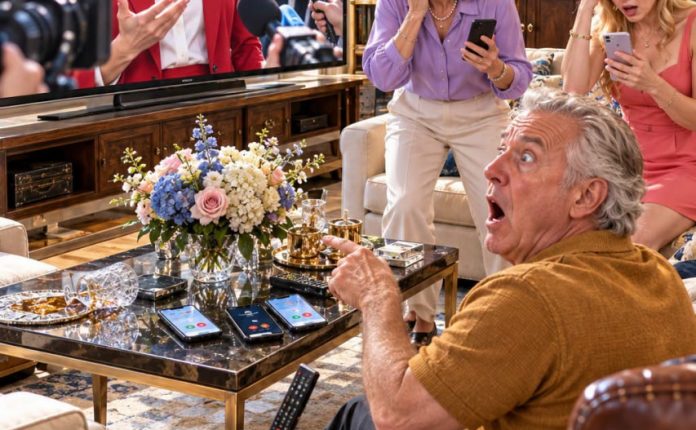
The first person I called after listening to Dad's voicemail wasn't my father.
It was Leah.
She answered while leaving a meeting.
"Everything all right?"
"I'm not sure."
"What happened?"
"My father called."
"That's surprising."
"Ninety-nine times."
There was a brief silence.
Then she said, "I'm coming over."
I told her that wasn't necessary.
She replied that she had already left the office and would bring lunch.
Twenty minutes later, Leah walked into the gallery carrying two sandwiches and a paper bag of pastries.
She found me sitting at my desk with my laptop open, staring at Dad's voicemail transcript.
"Read it," I said.
She set the food down and leaned over my shoulder.
When she reached the sentence about the old trips, her expression changed.
"That's strange."
"I know."
"He sounds worried about something specific."
"That's what bothers me."
"Did your sister use the trips for her business?"
I nodded.
"Briar started posting travel content around the time I left. Mom helped her build the website. Dad handled some of the financial arrangements."
"Did they receive sponsorships?"
"Sometimes. Hotels, clothing companies, local tourism campaigns. At least that's what Briar said."
Leah sat opposite me.
"Then perhaps the interview has attracted attention to her old material."
"Why would that matter?"
"I don't know. But your father apparently thinks it does."
My computer chimed.
An email had arrived through my gallery website.
The sender identified herself as a former subscriber to Briar's travel blog.
She said she remembered a holiday article featuring a special family program, and that photographs from my exhibition looked disturbingly familiar.
She included a link.
I hesitated before opening it.
Leah pulled her chair closer.
The archived webpage loaded slowly.
Across the top was a photograph of my parents and Briar standing outside a mountain resort in Colorado.
I recognized the location immediately.
I recognized Dad's dark wool coat.
I recognized Mom's red gloves.
I even recognized the white scarf Briar wore beneath her jacket.
It was the same Christmas vacation I had watched them leave for six years earlier.
The article was titled "A Holiday Experience That Changed Our Family."
I remembered Briar posting something similar, though I had never read it closely.
The opening paragraphs described a charitable travel initiative for young women pursuing careers in creative industries.
According to Briar's account, the program had helped provide a meaningful family holiday while highlighting opportunities for emerging creators.
Below the article was a small acknowledgment.
The Evelyn Whitcomb Foundation.
I leaned closer.
"That can't be right."
Leah examined the name.
"Who was Evelyn?"
"My grandmother."
"Your father's mother?"
"Yes."
"Did she run a foundation?"
"She did. A small one."
I remembered Grandma's charitable work.
She provided art supplies to schoolchildren, helped women pay for job training, and occasionally funded local educational programs.
She never enjoyed public recognition.
Once, when a community newspaper offered to photograph her presenting a donation, she declined.
"The children need supplies," she said, "not a picture of me."
Seeing her foundation attached to Briar's luxury vacation felt wrong.
I scrolled farther.
The article included several resort photographs, a description of a private holiday dinner, and a paragraph thanking the initiative for supporting creative opportunity.
There was no mention of me.
There was, however, a sentence that made me stop.
"The Whitcomb family believes that meaningful experiences should be shared across generations."
I read it twice.
Leah noticed.
"What's wrong?"
"Grandma would have hated that."
"The sentence?"
"The idea that a ski vacation counted as charitable work."
I opened another archived page.
This one featured a summer lakeside resort.
Again, the foundation received an acknowledgment.
A third page showed Briar's Thanksgiving trip to Manhattan.
The same foundation appeared in the footer.
I remembered those vacations.
I remembered the excuses.
I remembered watering plants, collecting mail, and receiving souvenirs after everyone came home.
Now the vacations seemed connected by something other than my exclusion.
"Do you have any records from your grandmother?" Leah asked.
"Only personal things."
"Did you ever see her will?"
"No."
"Why not?"
I looked down.
"Dad handled everything. He said most of the estate was already committed to charitable projects."
"Did anyone give you paperwork?"
"No."
Leah studied the screen.
"Maren, I think you need to find out exactly what that foundation was supposed to do."
My cousin Natalie called that afternoon.
I hadn't heard her voice in several years.
Our last meaningful conversation had happened shortly after I moved west.
She had asked whether I was safe and whether I needed anything.
I'd answered both questions, but I hadn't been willing to discuss the family.
Eventually, we stopped writing regularly.
When her name appeared on my phone, I answered immediately.
"Hello, Natalie."
"Maren."
She sounded relieved.
"I saw you on television."
"Apparently, everyone did."
"I was proud of you."
"Thank you."
"I mean it. Aunt Evelyn would have been, too."
The mention of Grandma caught me off guard.
For a moment, I couldn't speak.
Natalie continued.
"I need to tell you something. I've been looking through some old family papers."
"What kind of papers?"
"Documents from the foundation."
I glanced at Leah.
She straightened in her chair.
"Why?" I asked.
"Because your father started calling people yesterday."
My stomach tightened.
"Who?"
"Two former foundation volunteers, a retired accountant, and someone who used to work at the bank."
"What did he want?"
"He asked whether they still had copies of the old records."
I looked toward the archived webpage.
"Did he say why?"
"He told one of them there had been a misunderstanding involving some family travel expenses."
Natalie paused.
"Maren, do you know what Grandma intended that foundation to do?"
"Support education and creative opportunities."
"Yes. But there was also a specific program."
"What program?"
"One she established shortly before she died."
I pulled a notebook toward me.
"Tell me."
Natalie explained that Grandma had created a small scholarship initiative for young adults entering creative professions.
It was designed to pay for training, equipment, professional development, and certain educational travel experiences.
One of its early goals had been to support young women who had difficulty receiving encouragement or financial assistance from their families.
"That sounds like Grandma," I said.
"There's more."
Natalie hesitated.
"She wanted you involved."
I stared at the notebook.
"Me?"
"She admired your design work. She told people you understood what young artists actually needed."
"I was twenty-seven when she died."
"I know."
"Why didn't she ask me?"
"I think she intended to."
Natalie took a breath.
"Your father told the board you weren't interested."
I stopped writing.
"What?"
"He said you had declined participation because you were concentrating on your career."
"I never had that conversation."
"I thought so."
I felt a pressure building behind my eyes.
For years, I'd believed Grandma's charitable work had continued quietly after her death.
I'd never imagined that my name might have been used to explain my absence.
"Do you have proof?"
"Not everything. But I know someone who may."
"Who?"
"Daniel Mercer. Grandma's former accountant."
"Is he still working?"
"He's retired. He lives outside Columbus."
"Does he remember the foundation?"
"Very well."
"Will he talk to me?"
"Yes. I called him this morning."
I looked out the window at the gray Oakland sky.
"Why are you helping me now?"
Natalie answered carefully.
"Because I should have asked more questions years ago."
Daniel Mercer sounded exactly like the kind of man who had spent forty years keeping accounts balanced.
He spoke slowly, gave precise answers, and disliked speculation.
When I called, he answered after two rings.
"Miss Whitcomb?"
"Maren, please."
"Very well, Maren. Natalie said you might contact me."
"Thank you for speaking with me."
"Your grandmother would have expected it."
I swallowed.
"Did you know her well?"
"Twenty-three years. I handled the accounting for her personal charitable fund before she established the foundation."
I opened my notebook.
"I've found references to the foundation paying for family vacations."
Daniel said nothing.
"Is that possible?" I asked.
"Possible and appropriate are different questions."
"Would Grandma have approved?"
"Not of an ordinary private vacation."
"What about a creative development program?"
"That depends on the program, its written purpose, and the expenses."
He paused.
"Have you been told that you declined an advisory position?"
"Yes."
"Did you?"
"No."
His next words came slowly.
"Then we have a problem."
I asked him to explain.
Daniel told me that Grandma had established the foundation under a formal governing document.
The foundation was not a large organization.
It had modest assets, a narrow charitable purpose, and a small board.
Before her death, Grandma had wanted to expand its educational support for young adults working in design, art, writing, and related creative professions.
She had suggested that I serve in an advisory capacity.
She also expressed a wish that the two granddaughters be given equal opportunities to participate in the educational and creative programs, provided the expenses met the foundation's charitable requirements.
"That doesn't mean she gave each of you a personal travel allowance," Daniel emphasized.
"I understand."
"But it does mean she expected decisions to be made fairly and documented properly."
I thought about the boarding passes.
"What happened after she died?"
"Your father became involved in overseeing the transition. I continued temporarily, then retired."
"Did you ever meet with me?"
"No."
"Did you try?"
"I sent correspondence through the foundation."
"To my apartment?"
"At first, yes. Later, your father asked that communication go through him. He said you preferred it that way."
I gripped my pen.
"I never told him that."
Daniel was quiet.
Then he said, "I retained copies of certain records when I retired, including correspondence and board minutes, as permitted under my professional obligations. I've kept them secure."
"Can I see them?"
"Some may require authorization or legal review. But I can provide information about records that directly concern you, and I can direct you to the foundation's current administrators."
"Would you?"
"Yes."
I looked at the photograph on my desk.
Grandma was sitting beside me on a porch swing, holding a birthday cake with crooked candles.
She had insisted on baking it herself.
"Mr. Mercer, may I ask you something?"
"Of course."
"Did she ever say she thought my parents treated me differently?"
He took a long breath.
"Your grandmother was a careful woman. She wasn't inclined to interfere in other people's homes unless she believed it necessary."
"That doesn't answer my question."
"No, it doesn't."
He hesitated.
"She once told me she hoped both granddaughters would understand they were equally valuable, regardless of who received the most attention."
My throat tightened.
"Did she mention me?"
"She mentioned your work. She kept clippings from a local design competition you entered. She was very proud."
I pressed my fingertips against my eyes.
I had won that competition when I was twenty-five.
My parents hadn't attended the presentation because Briar had a birthday dinner that evening.
Grandma had come alone.
She sat in the front row and applauded so loudly that I laughed afterward.
I had almost forgotten.
Daniel let the silence continue.
Then he said, "Maren, there is something else you should know."
I straightened.
"What?"
"A review was discussed shortly before I retired. Certain travel expenses did not appear to fit the foundation's charitable purpose."
"The vacations?"
"Among other items."
"Was anything done?"
"I raised questions. Your father assured the board that additional documentation would be provided."
"Was it?"
"Not before I retired."
I looked at Leah.
She had been listening quietly.
"Why didn't you push further?" I asked.
"I did raise concerns. But I no longer held responsibility for the accounts after my retirement, and I didn't have sufficient evidence to conclude that funds had been misused."
His answer was cautious.
It also made sense.
For the first time, I began distinguishing what I suspected from what I could prove.
"Would you be willing to speak with an attorney?" I asked.
"Yes."
I wrote the word attorney in large letters.
Then I underlined it.
My father called again that evening.
I let the phone ring.
Then Mom called.
Then Briar.
Finally, a message arrived from Dad.
Maren, this has gotten out of hand. Call us before you make a serious mistake.
I stared at the screen.
Six years earlier, I would have called immediately.
I would have apologized for whatever trouble I had caused, even without understanding it.
Now I put the phone down and opened my calendar.
The next morning, I contacted an attorney recommended by a colleague who worked with nonprofit organizations.
Her name was Katherine Price.
She had spent years advising charitable foundations on governance, financial controls, and compliance.
I explained that I was concerned about possible misuse of an old family foundation and about statements allegedly made on my behalf.
Katherine listened without interrupting.
When I finished, she asked whether I wanted money, public accountability, or personal reconciliation.
"I don't know yet," I admitted.
"That's all right. But we need to separate those questions."
She explained that the foundation's funds were not automatically mine, even if Grandma had wanted me involved.
The central issues were whether the organization had followed its governing documents, whether charitable assets had been used for permissible purposes, and whether any records had misrepresented my involvement.
"What should I do first?" I asked.
"Preserve what you have. Do not alter it. Do not make public accusations. And don't confront your family about specific financial allegations until we understand the records."
I looked at Dad's newest message.
"What if they contact me?"
"You can tell them you're obtaining independent advice."
She paused.
"And if they ask you to sign anything, don't."
I promised I wouldn't.
We arranged a formal consultation.
Then I called Natalie.
She agreed to send copies of the archived webpages and details about the former board members.
Daniel agreed to prepare a chronology of his involvement.
For the next several hours, I worked quietly.
I downloaded public nonprofit filings.
I saved the archived travel posts.
I wrote down every holiday I could remember.
Dates.
Destinations.
Excuses.
Photographs.
I didn't know whether the foundation had paid for every trip.
I didn't know whether Briar understood how the money had been handled.
But I could already see a troubling pattern.
My exclusion had allowed my parents to present a three-person family publicly while claiming to support opportunities intended for a broader group.
At midnight, I opened an old email folder.
Inside was a message from Mom dated three weeks before that final Christmas.
Its subject line was simple.
Holiday arrangements.
I remembered the email because it had seemed like a routine request.
Mom had asked me to confirm that I would be available to check the house while they were away.
Beneath her message was a forwarded note from Dad.
I had never read it carefully.
Now I noticed an attachment label.
Foundation travel allocation.
The attachment itself was missing from the forwarded copy.
But the message accompanying it remained.
Evelyn's program covers the approved participants. We'll keep the itinerary limited to the three listed names.
I read the sentence again.
Then I searched for other messages.
An earlier email from Dad mentioned finalizing a participant declaration.
Another referred to collecting written acknowledgments.
I had never signed anything.
I hadn't even known the program existed.
My phone vibrated.
It was a new text from an unfamiliar Ohio number.
The message contained no greeting.
Only a photograph.
A photocopied document lay on someone's desk.
At the top were the words:
Evelyn Whitcomb Foundation — Creative Opportunity Participation Record.
Beneath them were four names.
My parents.
Briar.
And me.
Beside my name was a notation stating that I had voluntarily declined participation in the travel program.
There was a date.
There was also an acknowledgment marked as received.
I stared at it.
I hadn't declined anything.
Someone had recorded a decision I had never made.
A second message arrived.
It was from Natalie.
Daniel found this in his older correspondence. He thought you needed to see it before anyone asks you to confirm the family account.
I forwarded the photograph to Katherine.
Then I placed my phone on the desk and stood up.
For six years, I'd told myself the same story.
My parents loved Briar more.
They invited her because they preferred her company.
They left me behind because I was easy to overlook.
That explanation had hurt.
But it was familiar.
Now I had evidence that someone had formally represented my exclusion as my own choice.
And I had to decide whether I was willing to challenge the people who had spent my entire life telling me not to make things difficult.
END PART 2