The message contained only one sentence.
“You need to know what my mother has been hiding.”
I read it twice.
Then a third time.
For several seconds, I couldn’t decide whether Donald was trying to frighten me, manipulate me, or warn me.
I looked across the room at Carolyn.
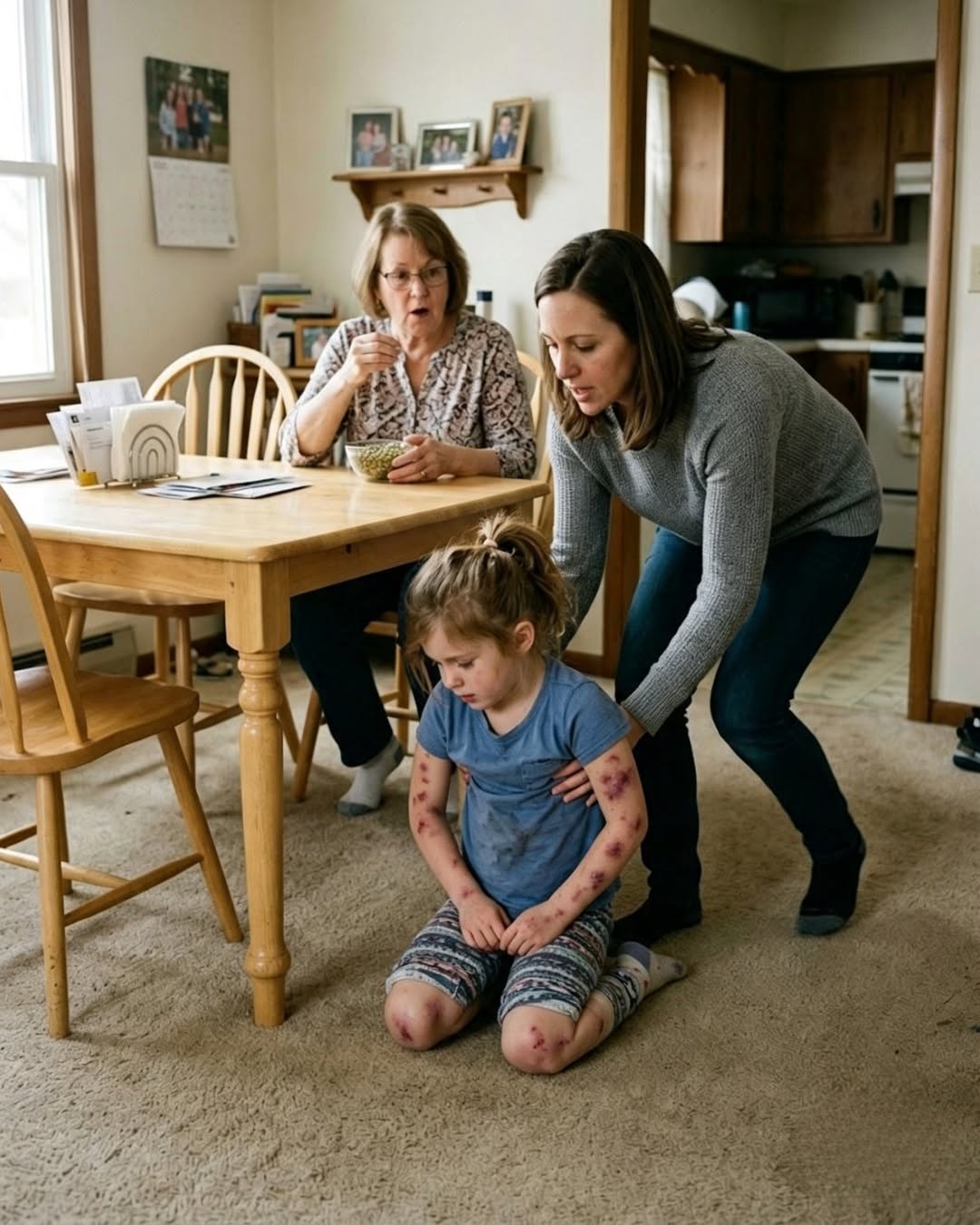
She was asleep on my friend’s couch, one small hand curled around the stuffed bunny she had carried out of our apartment. Her knees were wrapped in fresh bandages. Even asleep, she kept her legs slightly apart, as if she was afraid bending them would hurt.
I lowered the brightness on my phone.
Then another message appeared.
“Don’t tell Nancy I contacted you.”
My stomach tightened.
I typed back.
“What is she hiding?”
The typing indicator appeared almost immediately.
Then disappeared.
Then appeared again.
Finally, Donald sent a photograph.
It was a picture of a document.
At first, I couldn’t understand what I was looking at. There was a school logo at the top, several handwritten notes, and a date from months earlier.
Then I saw Carolyn’s name.
I zoomed in.
The document was from her kindergarten.
It wasn’t a report card.
It was a behavioral incident report.
My eyes moved down the page.
There were several entries.
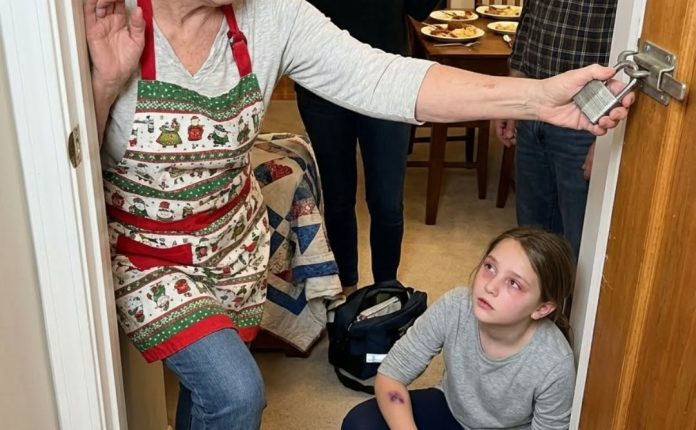
Carolyn had apparently told a teacher that she was afraid to go home.
She had complained about being punished by her grandmother.
She had mentioned being forced to kneel.
And beside one of the entries, someone had written that Carolyn had become unusually quiet whenever Nancy was mentioned.
My hand went cold.
I looked at my daughter.
How had I never seen this?
Donald sent another message.
“Mom told me the school was exaggerating.”
I stared at the words.
Then came another.
“She said Carolyn was making things up because she wanted attention.”
I felt something twist inside me.
There had been signs.
There had probably been more than I wanted to admit.
Carolyn had started asking me to pick her up earlier.
She had become nervous when Nancy called her into another room.
She had stopped talking about school when Donald’s mother was around.
And every time I had asked, someone had supplied an explanation.
She was tired.
She was sensitive.
She was going through a phase.
She was five.
I had accepted those explanations because accepting them was easier than admitting that something might be wrong inside our home.
I looked again at the document.
At the bottom was a note from a teacher asking that Carolyn’s parents schedule a meeting.
The meeting had never happened.
I knew because I had never been invited.
Which meant someone had kept it from me.