The list was a yellow legal-pad page titled FAMILY CONTRIBUTION PLAN, and every difficult job had been written beside my daughter’s name while Eli and his younger brother, Noah, had been assigned to “observe” and report whether she complained.
Eli said it was clipped to the side of Grandma’s refrigerator.
Under my daughter’s name were laundry, floors, toys, dishes, trash, and a final instruction written in my sister’s handwriting: Three refusals means she loses family privileges until her mother cooperates.
My daughter pressed her forehead into my back.
I asked what “family privileges” meant.
Eli glanced at his mother before answering.
“Coming over,” he said. “Birthday parties. Grandma picking her up. Stuff like that.”
The drink cooler behind us clicked off, leaving the employee room so quiet that I heard my daughter swallow.
My sister shook her head and said Eli had misunderstood an old chore chart.
I held out my hand.
“Show me.”
She claimed the paper had probably been thrown away.
Eli pulled a tablet from his backpack instead.
He had photographed the list that morning because Noah had drawn a mustache beside his own name, and Eli thought it was funny.
The picture filled the screen.
My daughter’s name appeared seven times.
Eli’s appeared once beside the word SUPERVISE.
Noah’s appeared once beside the word ENCOURAGE.
At the bottom, in different ink, Mom had added: No food, television, or ride home until attitude improves.
My stomach had been empty since noon, but the sight of those words made the unopened lunch beside the copier feel several days away.
I sent the photograph to myself.
Then I asked Eli to scroll.
There were three more pictures.
The second showed a smaller index card with boxes beside my daughter’s name and dates from the previous two visits.
One box said she had refused to scrub a roasting pan.
Another said she had asked to finish her homework before folding towels.
A third said she had cried after Noah locked her shoes in the garage.
Each event had been recorded as defiance.
My sister reached for the tablet.
Eli stepped back.
“Mom said we got extra screen time if we helped Grandma fill it out,” he said.
My sister’s face changed.
She stopped denying the list existed and started calling it harmless.
She said Mom worried that my daughter was becoming entitled because I worked long hours and sometimes accepted help with school pickup.
She said the plan was supposed to create structure, not frighten anyone.
I asked why nobody had shown it to me.
Her answer came too quickly.
“You get defensive about her.”
My daughter’s fingers tightened around the fabric of my shirt.
I turned so she could see my face.
“You are not being discussed like you’re a problem while you stand here,” I told her.
I asked Maya whether we could use the employee restroom.
Maya said my daughter had arrived maybe twenty minutes earlier, though none of us knew how long she had actually been inside, and handed me a key attached to a faded red spoon.
In the restroom, I helped my daughter wash the dust from her hands.
The water ran warm at first.
Red lines crossed both palms where the laundry-basket handles had pressed into them.
I photographed the marks, dried her hands, and bought her a turkey sandwich she only picked apart.
She moved the pickle from one side of the wrapper to the other three times.
When we returned, my sister was whispering to her children near the coffee machine.
I asked her to bring my daughter’s backpack, sweater, and anything else left at Mom’s house to my apartment that evening.
She started to argue.
I repeated the request once.
Then I told her neither she nor Mom would be alone with my daughter again.
Mom called before we reached the parking lot.
I answered on speaker because my daughter asked me not to leave her alone in the car, even for a minute.
Mom skipped the question of whether her granddaughter was safe.
She demanded to know why I was turning Eli against the family.
I looked at the gas station doors sliding open and shut behind a man carrying two bags of ice.
“Did you tell her I agreed she had to earn shelter?” I asked.
Mom said she had used words a child could understand.
That was not an answer.
I asked again.
She sighed and said, “You’ve complained about her attitude before.”
I had once told Mom that my daughter was stalling at bedtime and leaving wet towels on the bathroom floor.
Mom had turned that ordinary complaint into permission to threaten her home.
I ended the call.
My daughter looked at the dark phone screen.
“Are you still tired of me?” she asked.
I pulled the car into an empty space and turned off the engine.
The afternoon heat gathered around us, but I kept my hands still on the steering wheel until my voice stopped shaking.
“I get tired,” I said. “I do not get tired of you.”
She watched a paper receipt drag itself across the pavement.
“Even when I don’t finish chores?”
“Even then.”
At home, I locked the door and placed my keys in the ceramic bowl beside it.
My daughter checked the lock herself.
Then she checked the bedroom window and the sliding door to the balcony.
I let her.
While she sat under a blanket despite the warm apartment, I opened every family message I had ignored during work.
The list had not started that morning.
Three weeks earlier, Mom had created a group chat called Summer Standards with my sister and me in it, but she had removed me before sending the first message.
My sister had taken screenshots.
Eli had photographed those too.
Mom wrote that my daughter needed to learn that being included required contribution.
My sister replied that her boys would resist if they were assigned the same work.
Mom answered, Then don’t assign it to them. Let them help enforce it.
My sister added a laughing reaction.
I read the exchange twice.
The dishwasher hummed through an empty cycle because I had started it that morning without loading it.
A single purple sock lay beneath the coffee table.
I called my sister’s husband, Marcus.
He had been at work during the incident and knew only that my daughter had “wandered off after an argument.”
I sent him the photographs and screenshots.
For nearly a minute, he said nothing.
Then he asked whether his sons had actually been promised rewards for reporting on her.
I told him to ask them separately.
He called back sometime later.
Eli had admitted everything.
Noah said Mom had told them my daughter was staying at the house because I could not manage her, and that good children were supposed to teach difficult children how to behave.
Marcus had initially guessed the list was several months old, though the dates were written clearly enough for him to see.
He said he was taking the boys home and would not leave them with Mom until he understood what else they had been taught.
My sister called immediately afterward.
She accused me of damaging her marriage.
I asked whether threatening an eight-year-old’s shelter had helped it.
She lowered her voice.
Then she admitted the plan had been her idea first.
Mom had complained that watching three children was exhausting, and my sister did not want to lose free after-school care for Eli and Noah.
She suggested giving my daughter more chores because my daughter was quieter and less likely to argue.
When Mom asked how they would make her comply, my sister proposed the boxes, the rewards, and the phrase “earn your place.”
She said it was only supposed to last until my daughter stopped protesting.
I wrote her exact words in a notebook.
“What happened after she protested today?” I asked.
My sister breathed into the phone.
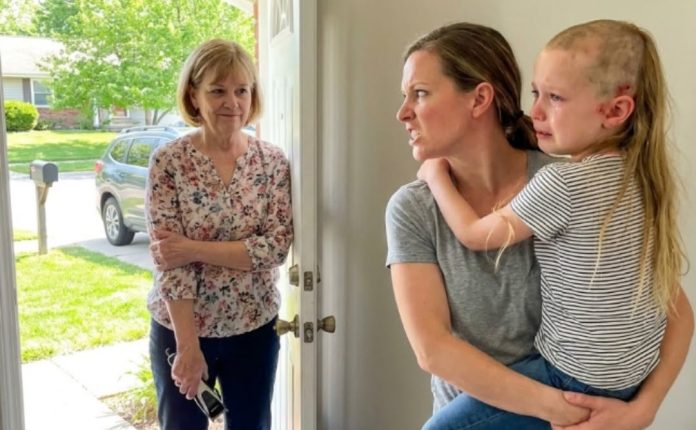
She had watched Mom point toward the door.
She had watched my daughter walk outside.
She had waited because calling me would expose the plan.
By the time she checked the window, my daughter was gone.
The room seemed smaller after that.
My daughter was kneeling beside the couch, arranging sandwich crusts into a square on her plate.
I asked my sister why she had called only after searching the house.
She said she hoped my daughter had returned through the back door.
Then she asked me not to tell Marcus that she had waited.
I ended the call without answering.
That evening, Marcus brought the backpack and sweater himself.
He left my sister in the car.
The bag smelled faintly of Mom’s cinnamon air freshener, and the zipper had been left open.
Inside were my daughter’s school folder, two hair ties, a library book, and a folded copy of the contribution plan.
Someone had placed it there after she disappeared.
Across the bottom, Mom had written a new line in black marker: WALKED AWAY TO AVOID CONSEQUENCES.
My daughter saw it before I could turn the page over.
“She wrote that after?” she asked.
I said yes.
Her face remained still.
Then she asked for scissors.
I gave them to her, but she did not cut the paper.
She folded it smaller and handed it back to me.
“Keep it so nobody says I made it up.”
I placed it with the photographs and my written timeline.
Marcus stood near the door, rubbing one thumb along the edge of his phone case.
He apologized to my daughter for what his sons had done.
She asked whether they really thought she was lazy.
Marcus said they had repeated what adults rewarded them for saying.
That answer did not excuse them, but it did not ask her to comfort him either.
Before leaving, he told me he had removed Mom from his sons’ pickup permissions and would handle the consequences at home.
His decision changed the argument.
Mom could no longer claim I was the only parent overreacting.
Within an hour, she sent a message to the extended-family chat saying I had manipulated Marcus, frightened the children, and threatened to cut off their grandmother over a misunderstood chore.
I did not answer with anger.
I posted four items: the photographed list, the rule denying food and a ride home, the timestamp of my sister’s missing-child call, and Mom’s handwritten accusation added after my daughter was found.
Then I wrote one sentence.
She expelled an eight-year-old from the house and waited to see whether fear would bring her back.
The messages stopped for several minutes.
An aunt asked whether my daughter was safe.
A cousin asked why the boys had been assigned to supervise instead of helping.
Mom answered neither question.
She left the chat.
My sister stayed and wrote that everyone was missing context.
Eli, using Marcus’s phone, sent a voice message.
He said Mom had called him after the gas station and instructed him to say the list was a game the children had invented.
He said he had almost agreed because she promised not to tell his father about a broken lamp.
Then he said he was sorry.
My daughter listened once.
She did not reply.
For a moment, I thought the evidence had ended the immediate danger.
Mom could not deny the list, my sister could not blame a child’s imagination, and Marcus had removed his sons from the arrangement.
I blocked both women, changed the code to my apartment building, and emailed my daughter’s school to remove them from her emergency contacts and pickup list.
The online portal showed the changes as pending.
I set an alarm to call the office when it opened.
My daughter slept in my bed that night with one hand wrapped around my wrist.
She woke twice and asked whether the front door was locked.
Both times, I checked it with her.
In the morning, she asked to stay home from school.
I called out of work and made pancakes, though the first batch burned while I was speaking to the school secretary.
The secretary confirmed that Mom and my sister had been removed.
She also added a note requiring the office to call me before releasing my daughter to anyone not already approved.
I requested written confirmation.
By noon, it arrived.
The apartment smelled like burnt butter, and neither of us had changed out of our pajamas.
My daughter ate one pancake and fed the second to the trash can after covering it with a napkin.
For the next several days, Mom could reach me only through email.
Her messages moved from outrage to concern without ever reaching responsibility.
She said my daughter needed grandparents.
She said family disputes should remain private.
She said children sometimes exaggerate when they dislike rules.
I saved every message and answered none.
My sister sent a longer apology.
She admitted using my daughter to preserve her own childcare arrangement, but she asked me to understand the pressure she had been under.
She wanted a private meeting where all adults could agree on a story that would not “damage the kids.”
I replied that the children had already been damaged by the story she wanted them to tell.
Then I blocked her email too.
The quiet lasted long enough for me to believe the doors were finally closed.
On the fourth afternoon, the school office called twenty minutes before dismissal.
Mom was standing at the front desk.
She claimed I had asked her to collect my daughter because of a work emergency.
The office had followed the new instruction and called me before bringing my daughter out of class.
I told them I had made no such request and did not authorize contact.
Mom began speaking loudly enough for me to hear her through the secretary’s phone.
She said I was unstable.
She said I was using school staff to punish a grandmother.
She said my daughter would confirm that they had always been close.
I asked the secretary to keep my daughter in her classroom until Mom left.
Then I drove to the school.
The steering wheel felt hot under my palms, and a grocery receipt was stuck beneath one windshield wiper.
When I entered the office, Mom was sitting beneath a bulletin board covered with paper apples.
She stood and opened her arms as though we were meeting for lunch.
“We need to stop this performance,” she said.
I stayed beside the secretary’s desk.
“You lied to pick her up.”
Mom said grandparents should not need permission.
I told her she had lost permission when she sent my daughter into the street and waited for fear to discipline her.
She tried to walk past me toward the hallway.
The secretary stepped in front of the secured door.
Mom stopped.
For the first time, her expression changed from annoyance to uncertainty.
The system she expected to bend had held.
The secretary asked Mom to leave the property.
Mom looked at me and said, “She will hate you for taking away her family.”
I did not argue in the office.
I waited until the outer door closed and the secretary confirmed Mom had driven away.
Then my daughter came out with her backpack hanging from one shoulder.
She saw my face and asked whether Grandma had tried to take her.
I said yes.
She moved closer but did not hide behind me.
“I wouldn’t have gone,” she said.
I signed her out and took her home.
That night, I sent Mom and my sister one final written boundary through a new email address created only for records.
Neither woman could pick up, supervise, contact, question, or send messages through other relatives to my daughter.
Any future attempt to collect her from school or another activity without permission would be documented and reported to the organization responsible for her safety.
I attached the school’s confirmation and the photograph of the contribution plan.
I did not ask for an apology.
I did not offer a meeting.
Marcus later told me he and the boys had moved out of Mom’s house after my sister tried to leave them there again the following weekend.
Eli wrote my daughter a note accepting responsibility for calling her names and watching her leave.
She read it, folded it once, and placed it inside her desk.
She was not ready to answer.
Nobody asked her to.
At home, chores changed shape.
We still had laundry, floors, dishes, and trash because ordinary life kept making ordinary messes.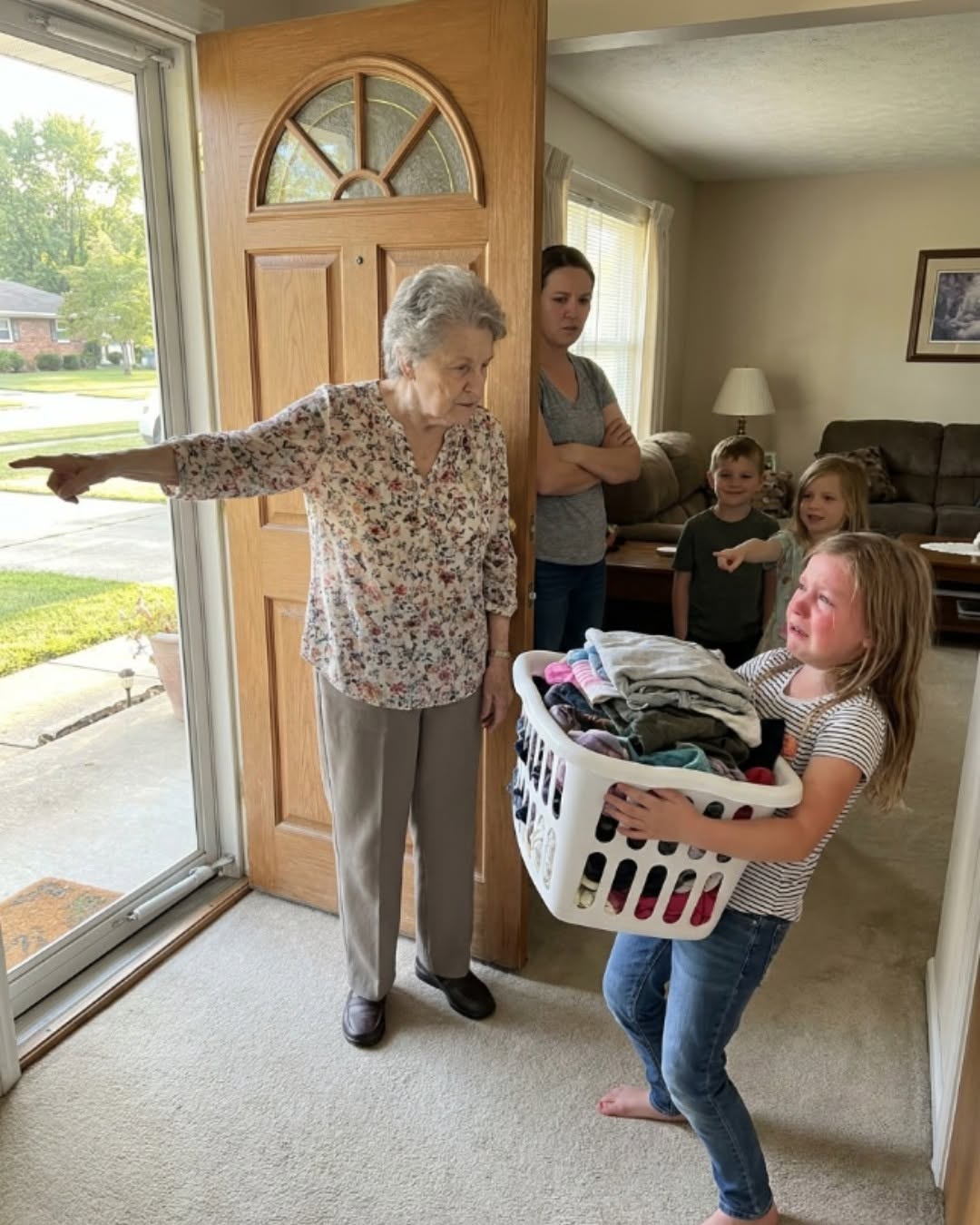 I stopped assigning tasks when she was hungry, doing homework, or too tired to manage them safely.
She carried one light basket while I carried the other.
She matched socks on the couch and sometimes abandoned the last three pairs.
Nothing happened to her dinner.
Nothing happened to her bed.
Nothing happened to her place in our home.
A few weeks later, she asked whether we could put a list on our refrigerator.
I gave her a clean sheet of paper and waited.
At the top, she wrote THINGS WE CAN DO TOGETHER.
She added fold towels, water the plant, wipe the table, and call Maya to say thank you.
The list belonged to her, and she could change it whenever she needed.
At the bottom, she added buy cheese crackers and circled it twice.
I stopped assigning tasks when she was hungry, doing homework, or too tired to manage them safely.
She carried one light basket while I carried the other.
She matched socks on the couch and sometimes abandoned the last three pairs.
Nothing happened to her dinner.
Nothing happened to her bed.
Nothing happened to her place in our home.
A few weeks later, she asked whether we could put a list on our refrigerator.
I gave her a clean sheet of paper and waited.
At the top, she wrote THINGS WE CAN DO TOGETHER.
She added fold towels, water the plant, wipe the table, and call Maya to say thank you.
The list belonged to her, and she could change it whenever she needed.
At the bottom, she added buy cheese crackers and circled it twice.