My eight-year-old son was curled on my parents’ living room carpet, trying to drag air into a body that had gone stiff with pain.
The room smelled like lemon cleaner, old couch fabric, and the chicken casserole my mother had left cooling on the stove.
Somewhere in the kitchen, a pot lid kept ticking softly against metal.
All I could hear was Noah’s breath breaking into short, frightened pulls.
At first, I told myself he had just had the wind knocked out of him.
Kids fall.
Kids wrestle.
Kids run through backyards and smack into furniture and cry like the world has ended.
This was not that.
Noah’s hands were clamped around his side.
His fingers dug into the cotton of his T-shirt like he was trying to hold himself together.
His face had gone pale in a way that made my stomach turn cold.
When I touched the place just under his ribs, he made a small, broken sound.
“Mom,” he whispered, “it hurts.”
I looked across the room at Ryan.
Ryan was twelve.
He was tall for his age, broad-shouldered in the way boys get right before they realize their size can scare people.
He stood near the hallway with his fists still closed.
One knuckle had a red scrape across it.
Nobody seemed eager to explain it.
“What happened?” I asked.
Nobody answered.
My sister Carla leaned against the kitchen counter with her arms crossed.
One hip was tilted like I had interrupted a show she was enjoying.
My mother stood near the sofa, blocking part of the room with that tight expression I knew too well.
It was the look she wore whenever she had already decided who deserved protecting.
My father sat in his recliner with his reading glasses low on his nose.
The TV was muted, and blue-white light flickered across everybody’s faces.
“He just shoved him,” Carla said finally.
Her voice was flat.
“Kids get rough.”
Noah tried to breathe again and only got halfway there.
That is the thing about family loyalty.
It sounds noble until someone uses it to cover the person doing harm.
I pulled out my phone with shaking hands and dialed 911.
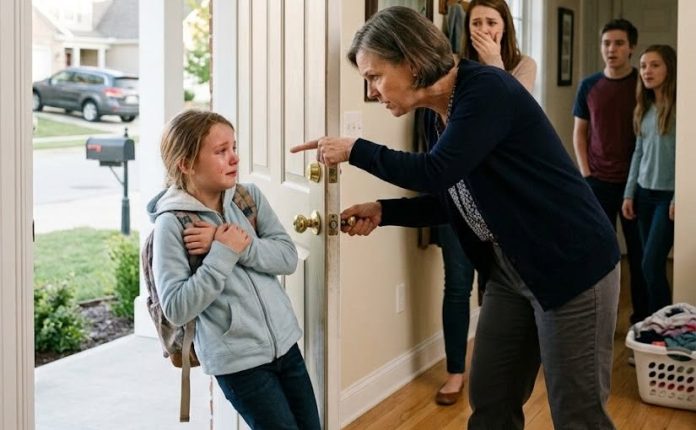
Before the call could connect, my mother lunged forward and snatched it out of my hand.
“Don’t you dare,” she snapped.
For one second, I just stared at her.
Not because I did not understand what she had done.
Because I understood it too clearly.
“Mom, he can’t breathe.”
“Boys fight,” she said.
“You don’t destroy your nephew’s future over a playground scuffle.”
“My son is on the floor.”
My father barely looked up.
“You’re overreacting. He’ll be fine in a day or two.”
Then I looked at Carla.
She was smirking.
Not nervous.
Not ashamed.
Not even trying to pretend she cared.
Just standing there while my child gasped on the carpet, watching me understand exactly where I stood in that family.
The whole room froze around us.
My mother’s hand tightened around my phone.
My father turned one page in his magazine without reading it.
Carla’s bracelet clicked against the counter as she shifted her weight.
Ryan stared down at the carpet, jaw locked, while the muted television flashed across Noah’s tear-wet face.
Nobody moved.
Noah had trusted them because I had trusted them.
I had let him sleep over in that house.
I had let him call my parents after school.
I had let him believe Ryan was just a cousin who got too loud sometimes, not someone he needed to fear.
I had told him family meant safe.
That was my mistake.
My mother had always made excuses for Carla.
When we were kids, Carla could break something and I would be asked why I had not stopped her.
Carla could lie, and I would be told I was too sensitive for noticing.
Carla could take, twist, accuse, and cry, and somehow my mother always found a way to make the rest of us responsible for keeping her comfortable.
When Carla had Ryan, the pattern simply moved into another generation.
Ryan was energetic when he shoved smaller kids.
Ryan was spirited when he broke toys.
Ryan was having a hard day when teachers called.
Noah was the one told to understand.
For years, I swallowed that because it seemed easier than fighting my whole family over every little thing.
Then I watched my son lie on that carpet with his hands around his ribs.
There are moments when “keeping the peace” finally shows you its real price.
The price is usually paid by the quietest person in the room.
For one ugly heartbeat, I wanted to rip my phone out of my mother’s hand.
I wanted to scream loud enough for the whole neighborhood to hear what they were choosing.
I wanted Carla’s little smile gone.
I did none of it.
My hands were already busy becoming steady.
I slid one arm beneath Noah’s knees and the other behind his back.
He cried out when I lifted him.
The sound cut through me, but I kept moving.
“Give me my phone,” I said.
“No,” my mother replied, clutching it tighter.
“You are not calling the police on family.”
I looked at her hand around my phone.
I looked at my father’s blank face.
I looked at Carla’s smile.
Then I looked at my son.
His lips were trembling, and his eyes found mine with a question no eight-year-old should ever have to ask.
“Mom,” he whispered, “am I in trouble?”
That broke something cleanly inside me.
At 6:42 p.m., I carried my son out of that house.
By 6:49, I had reached my SUV in the driveway.
The evening air was cool against my face.
Somewhere down the street, a dog barked behind a fence.
A small American flag hung beside my parents’ porch, lifting once in the breeze like it had no idea what had happened inside that house.
I buckled Noah into the back seat with hands that shook so hard the metal latch clicked twice before it caught.
I had no phone.
I had my keys.
I had my memory.
I had the name of the nearest emergency room.
Behind me, the front door opened.
Carla stepped onto the porch first, still wearing that thin smile.
My mother followed, holding my phone in her hand.
When she realized I was not coming back inside to beg for it, her smile disappeared.
What none of them knew was that the small black dash camera on my windshield had been recording from the moment I pulled into that driveway.
It had caught my mother’s voice.
It had caught my father’s dismissal.
It had caught Carla saying kids get rough while Noah struggled to breathe.
It had caught every word.
I drove with one hand on the wheel and the other gripping the steering wheel harder than necessary because I needed something to hold.
Noah kept making small sounds in the back seat.
Every red light felt like a personal insult.
Every car in front of me felt like one more person standing between my child and help.
“Stay with me, baby,” I said.
“I’m here,” he whispered.
He sounded embarrassed.
That almost undid me.
No child should sound embarrassed for being hurt.
By 7:08 p.m., I pulled into the emergency room entrance.
I ran around the SUV and lifted him out as carefully as I could.
The automatic doors opened with a soft rush of air.
The hospital lobby smelled like sanitizer, coffee, and old fear.
A woman at the intake desk looked up, saw Noah’s face, and stood before I reached the counter.
“He can’t breathe right,” I said.
That was all I managed.
The nurse was already moving.
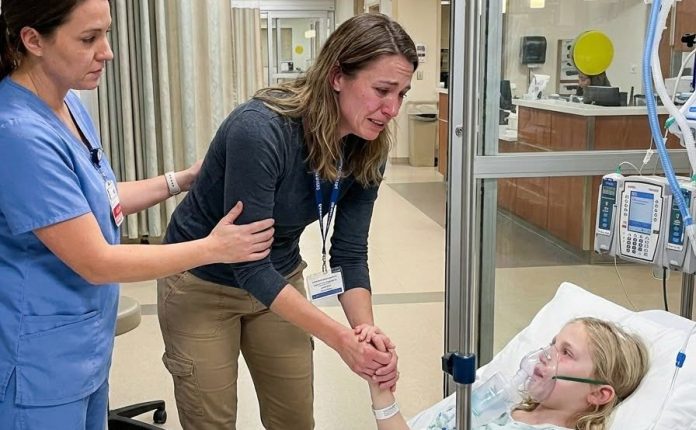
Within minutes, Noah was on a bed behind a curtain.
A second nurse cut his shirt up the side because lifting it hurt him too much.
The doctor came in wearing blue scrubs and a face that went quiet when he saw the way Noah guarded his ribs.
He asked questions.
I answered what I could.
No, I had not seen the exact moment Ryan hit him.
Yes, there were witnesses.
No, I did not have my phone because my mother took it when I tried to call 911.
The doctor stopped writing.
“She took your phone?” he asked.
“Yes.”
“When you were trying to call emergency services?”
“Yes.”
He looked at Noah.
Then he looked back at me.
There was no drama in his face, no shock performed for effect.
Just a kind of professional stillness that frightened me more than yelling would have.
A chest X-ray confirmed what my body already knew.
A broken rib.
The words landed in the room with a cold weight.
Noah stared at the ceiling.
I pressed my fingertips into my palm so hard I left half-moon marks.
The doctor spoke gently to him, explaining that he had done nothing wrong.
Noah nodded, but he did not look convinced.
Children believe adults before they believe pain.
If enough grown-ups stand around pretending something is normal, a child will wonder whether his own body is lying.
I remembered the dash camera then.
The thought came so fast I nearly missed it.
“My car,” I said.
The doctor glanced over.
“My dash camera. It records audio when the car is on. I think it was recording in the driveway.”
The nurse helped me get the memory card from the camera.
Security brought a small reader from the desk.
At 7:41 p.m., the doctor listened.
My mother’s voice filled the hospital room.
“Boys fight.”
Then my father.
“You’re overreacting.”
Then Carla.
“Kids get rough.”
Then Noah’s tiny voice from farther away.
“Mom, am I in trouble?”
The nurse looked down at the clipboard in her hands.
Her jaw tightened so hard I could see it from across the room.
The doctor stopped the recording.
For a moment, nobody spoke.
Then he asked, “Your mother still has your phone?”
I nodded.
He reached for the wall phone by the nurses’ station and asked for hospital security and the social worker on call.
Not loudly.
Not theatrically.
Just with the calm voice of someone who had already decided this was not a family misunderstanding anymore.
A hospital intake form was placed in front of me.
The top line was clinical and plain.
Suspected child assault.
A nurse put Noah’s torn T-shirt into a sealed plastic bag.
She labeled it, dated it, and placed it beside the chart.
The doctor documented Noah’s breathing, the X-ray results, and my statement about the phone.
He asked me to repeat the timeline.
I did.
6:42 p.m., I carried Noah out.
6:49 p.m., I buckled him into the SUV.
7:08 p.m., we arrived at the ER.
7:41 p.m., the doctor heard the recording.
Forensic details feel cold when you are living inside them.
But sometimes cold is exactly what keeps the truth from being boiled down into family gossip.
My father called the hospital first.
I knew it was him because the intake desk had him on an old emergency contact form from when my parents were allowed to pick Noah up from school.
The nurse looked at me before answering.
I nodded.
She put him on speaker.
“Emily,” he said.
His voice sounded smaller than it had in the living room.
“Your mother is crying. Carla says you’re trying to ruin Ryan’s life.”
The doctor looked at Noah.
The nurse covered her mouth.
I closed my eyes for one second, because if I spoke too fast, I knew I would say something that belonged to rage instead of truth.
Then I opened them.
“Dad,” I said, “Noah has a broken rib.”
Silence.
Not the blank silence from the living room.
A different silence.
A silence with fear inside it.
“He what?” my father whispered.
“He has a broken rib,” I said again.
“And you sat in your chair and told me I was overreacting.”
My father started breathing hard into the phone.
In the background, I heard my mother’s voice.
I could not make out the words, but I knew the tone.
The tone of someone trying to get control of a room she no longer owned.
Carla came on next.
“You’re insane,” she said.
“He’s twelve.”
“Noah is eight,” I replied.
“Ryan didn’t mean it.”
“Then why did you smirk while my son couldn’t breathe?”
She stopped.
That was the first time all night I heard Carla run out of words.
The doctor leaned toward the phone.
“This is Dr. Harris in the emergency department,” he said.
His tone was calm enough to make Carla’s breathing sound wild.
“This conversation is no longer appropriate. The child is receiving medical care. Any further communication should go through the proper channels.”
My mother shouted something in the background.
The call ended.
Noah turned his face toward me.
“Are they mad?” he asked.
I sat beside his bed and took his hand.
His fingers were cold.
“They can be mad,” I said.
“You are safe.”
He stared at me for a long time.
Then his eyes filled again.
“I didn’t hit him first,” he whispered.
“I know.”
“He said I was a baby.”
“I know.”
“He kept pushing me. Then he hit me here.”
Noah’s hand hovered over his ribs but did not touch them.
His face twisted in shame.
“And Grandma said not to make it a big deal.”
I bowed my head over his hand.
There are apologies a parent can say out loud, and there are apologies that have to become decisions.
That night, mine became a decision.
I told the hospital social worker everything.
I signed the release for the medical documentation.
I gave security the dash camera file.
I wrote down the timeline twice because my handwriting shook the first time.
By 9:16 p.m., the record contained Noah’s injury, my mother’s refusal to return the phone, the dash camera audio, and the names of every adult in that room.
My mother finally sent my phone back through my father the next afternoon.
It arrived in a plastic grocery bag, powered off, with a cracked corner I did not remember.
There were seventeen missed calls from Carla.
Nine from my mother.
Three from numbers I did not recognize.
Not one text asked how Noah was.
The first message from my mother said, “You need to think about what this will do to the family.”
The second said, “Ryan is just a child too.”
The third said, “Your sister hasn’t stopped crying.”
I stared at that one for a long time.
Carla could cry now.
My mother could cry now.
My father could be shaken now.
But when Noah was on the carpet, the whole room had been dry-eyed.
I blocked Carla first.
Then I blocked my mother.
Then I called Noah’s school and removed my parents from every pickup form, emergency contact card, and permission list.
The office secretary did not ask questions after I said there had been a medical incident.
She printed the forms, handed me a pen, and waited while I crossed out names I had once trusted.
My father showed up at my apartment two days later.
He stood outside with his baseball cap in both hands.
He looked older than he had in the recliner.
For a second, I wanted that to matter.
Then I remembered Noah asking if he was in trouble.
“I didn’t know it was that bad,” my father said.
“You didn’t look,” I answered.
He flinched.
That was the truth he could not soften.
He had been in the room.
He had heard Noah.
He had chosen not to look.
My father said my mother panicked.
He said Carla was scared for Ryan.
He said everybody made mistakes.
I let him finish because Noah was asleep inside, and I would not let that conversation become another loud room he had to survive.
Then I said, “A mistake is knocking over a glass. Taking my phone while my child can’t breathe is a choice.”
My father looked down at the doormat.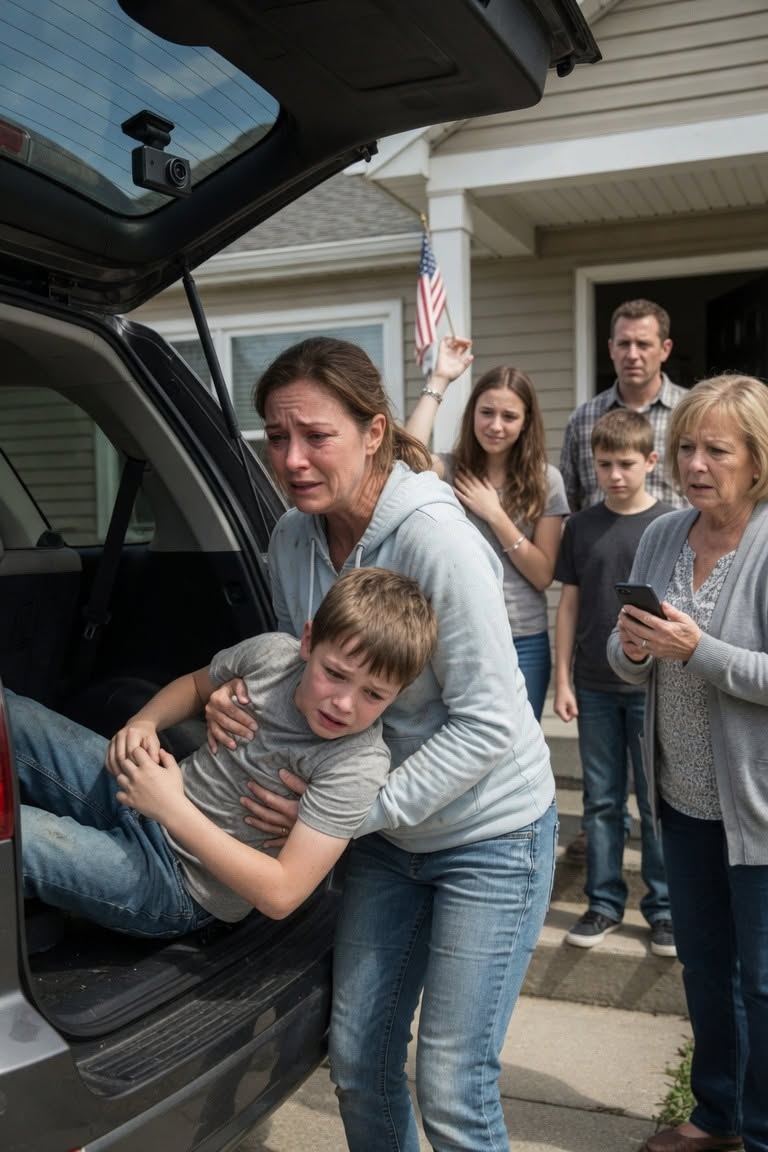 For the first time in my life, he did not defend my mother.
But he did not fully stand beside Noah either.
Some people can regret a thing and still not be brave enough to name it.
That was when I understood he could not be part of our safety plan.
In the weeks that followed, the family did what families like mine do when truth becomes inconvenient.
They called relatives before I could.
They said I had exaggerated.
They said Ryan and Noah had been roughhousing.
They said I had always been dramatic.
Then the recording spread among them.
Not because I posted it.
I did not need strangers feeding on my child’s pain.
It spread because my father played it for one aunt who came over demanding to know why I was “tearing the family apart.”
After she heard Noah’s voice, she stopped demanding.
By the end of that week, the story had changed.
Nobody said I was lying anymore.
They said I should have handled it privately.
That is how people confess without confessing.
When they can no longer deny what happened, they start arguing about who was allowed to know.
Noah healed slowly.
A broken rib does not give a child much dignity.
Laughing hurt.
Coughing hurt.
Getting out of bed hurt.
For the first few nights, he woke up crying because he had turned the wrong way in his sleep.
I learned to keep water by the bed, medicine on a schedule, and a small lamp glowing low in the hallway.
He learned to ask before hugging too tightly.
That may have been the part I hated most.
An eight-year-old should not have to measure affection around pain.
One morning, about three weeks later, Noah stood in the kitchen wearing pajama pants and one of my oversized sweatshirts.
He watched me pack his lunch.
“Do I have to see Ryan again?” he asked.
I put the sandwich down.
“No,” I said.
He looked at me carefully, like he was testing whether adults meant what they said.
“Ever?”
“Not unless you want to when you are older. And even then, only if it is safe.”
His shoulders lowered.
Just a little.
But I saw it.
That was the first morning I understood healing was not one big moment.
It was a child’s shoulders dropping because he believed the locked door would stay locked.
My mother tried one last time at the grocery store.
I was loading paper bags into the back of the SUV when she appeared near the cart return.
She looked smaller in daylight.
She also looked angry, which made her familiar again.
“You have punished us enough,” she said.
I closed the trunk.
“No,” I answered.
“I protected my son.”
“Ryan’s life is changed because of you.”
“No,” I said.
“Ryan’s life is changed because of what he did, and because every adult in that room taught him he could do it.”
My mother’s mouth tightened.
For years, that expression had made me explain myself.
That day, it did not.
Noah was not with me.
That was good.
He did not need to see me learn how to stop begging people to care.
My mother said, “Family doesn’t call authorities on family.”
I thought of the living room carpet.
I thought of my phone in her hand.
I thought of Noah whispering, “Am I in trouble?”
“Family calls for help when a child can’t breathe,” I said.
Then I got in my car and drove away.
The dash camera was still mounted under the windshield.
A tiny black box, ordinary as anything.
Before that night, I barely thought about it.
After that night, it became the only witness in the driveway willing to tell the truth without being asked twice.
Noah still asks questions sometimes.
Not every day.
Not dramatically.
Usually in the car, or while tying his shoes, or when he is supposed to be brushing his teeth.
“Why didn’t Grandpa help?”
“Why did Grandma take your phone?”
“Is Ryan mad at me?”
I answer as honestly as I can without handing him adult ugliness he is too young to carry.
I tell him grown-ups can make wrong choices.
I tell him none of it was his fault.
I tell him pain is not something he has to prove to be believed.
And when he asks whether family means safe, I do not give him the old answer anymore.
I tell him family should mean safe.
Then I tell him our home does.
Noah had trusted them because I had trusted them.
That was the part I carried.
But I did not carry it by handing him back to the same room that hurt him.
I carried it by changing the locks, changing the school forms, saving the medical papers, keeping the recording, and choosing my child over the version of peace my family had always demanded.
Peace without safety is just silence with better manners.
And I was done teaching my son to survive silence.
For the first time in my life, he did not defend my mother.
But he did not fully stand beside Noah either.
Some people can regret a thing and still not be brave enough to name it.
That was when I understood he could not be part of our safety plan.
In the weeks that followed, the family did what families like mine do when truth becomes inconvenient.
They called relatives before I could.
They said I had exaggerated.
They said Ryan and Noah had been roughhousing.
They said I had always been dramatic.
Then the recording spread among them.
Not because I posted it.
I did not need strangers feeding on my child’s pain.
It spread because my father played it for one aunt who came over demanding to know why I was “tearing the family apart.”
After she heard Noah’s voice, she stopped demanding.
By the end of that week, the story had changed.
Nobody said I was lying anymore.
They said I should have handled it privately.
That is how people confess without confessing.
When they can no longer deny what happened, they start arguing about who was allowed to know.
Noah healed slowly.
A broken rib does not give a child much dignity.
Laughing hurt.
Coughing hurt.
Getting out of bed hurt.
For the first few nights, he woke up crying because he had turned the wrong way in his sleep.
I learned to keep water by the bed, medicine on a schedule, and a small lamp glowing low in the hallway.
He learned to ask before hugging too tightly.
That may have been the part I hated most.
An eight-year-old should not have to measure affection around pain.
One morning, about three weeks later, Noah stood in the kitchen wearing pajama pants and one of my oversized sweatshirts.
He watched me pack his lunch.
“Do I have to see Ryan again?” he asked.
I put the sandwich down.
“No,” I said.
He looked at me carefully, like he was testing whether adults meant what they said.
“Ever?”
“Not unless you want to when you are older. And even then, only if it is safe.”
His shoulders lowered.
Just a little.
But I saw it.
That was the first morning I understood healing was not one big moment.
It was a child’s shoulders dropping because he believed the locked door would stay locked.
My mother tried one last time at the grocery store.
I was loading paper bags into the back of the SUV when she appeared near the cart return.
She looked smaller in daylight.
She also looked angry, which made her familiar again.
“You have punished us enough,” she said.
I closed the trunk.
“No,” I answered.
“I protected my son.”
“Ryan’s life is changed because of you.”
“No,” I said.
“Ryan’s life is changed because of what he did, and because every adult in that room taught him he could do it.”
My mother’s mouth tightened.
For years, that expression had made me explain myself.
That day, it did not.
Noah was not with me.
That was good.
He did not need to see me learn how to stop begging people to care.
My mother said, “Family doesn’t call authorities on family.”
I thought of the living room carpet.
I thought of my phone in her hand.
I thought of Noah whispering, “Am I in trouble?”
“Family calls for help when a child can’t breathe,” I said.
Then I got in my car and drove away.
The dash camera was still mounted under the windshield.
A tiny black box, ordinary as anything.
Before that night, I barely thought about it.
After that night, it became the only witness in the driveway willing to tell the truth without being asked twice.
Noah still asks questions sometimes.
Not every day.
Not dramatically.
Usually in the car, or while tying his shoes, or when he is supposed to be brushing his teeth.
“Why didn’t Grandpa help?”
“Why did Grandma take your phone?”
“Is Ryan mad at me?”
I answer as honestly as I can without handing him adult ugliness he is too young to carry.
I tell him grown-ups can make wrong choices.
I tell him none of it was his fault.
I tell him pain is not something he has to prove to be believed.
And when he asks whether family means safe, I do not give him the old answer anymore.
I tell him family should mean safe.
Then I tell him our home does.
Noah had trusted them because I had trusted them.
That was the part I carried.
But I did not carry it by handing him back to the same room that hurt him.
I carried it by changing the locks, changing the school forms, saving the medical papers, keeping the recording, and choosing my child over the version of peace my family had always demanded.
Peace without safety is just silence with better manners.
And I was done teaching my son to survive silence.