I agreed to the Disney trip because I wanted Elliot to experience one day larger than packed lunches, traffic lights, and watching me answer emails beside cold coffee.
That morning, our apartment smelled like sunscreen and toaster waffles. Elliot’s sneakers squeaked across the kitchen floor while he bounced excitedly, barely able to finish breakfast.
I hated working while my six-year-old entered those gates without me, but my mother, Denise, had volunteered before I could even consider taking unpaid leave.
“We’ll take Elliot,” she promised. “Your father and I will be there, and Kara is bringing her children. It’ll be easy. Stop worrying about everything.”
Kara laughed when I hesitated and adjusted her daughter’s matching mouse ears. “He’ll be fine with us. You’ve always been dramatic whenever Elliot leaves your sight.”
Elliot was small for his age and nervous in crowded places. He needed to know which adult was responsible whenever unfamiliar voices, music, and movement surrounded him.
The previous evening, he waited beside our front door wearing his Mickey backpack, although they were not leaving until morning. Excitement and anxiety competed across his face.
“You’ll answer if I call, right?” he whispered, wrapping both hands around one backpack strap as though it were the only steady thing in the apartment.
“Always,” I promised, kneeling until our eyes were level. “If you need me, ask an employee to call. I will come, wherever you are.”
My parents had supported us since Elliot’s birth. Ray held him after delivery while I trembled. Denise brought casseroles when I returned to my exhausting job.
Kara had babysat whenever my sitter canceled. That history became the trust I gave them—my only child placed in their hands because family supposedly meant safety.
For the first hour, pictures arrived constantly. Elliot squinted beneath the entrance sign. Ray unfolded a park map while Kara’s children ran ahead wearing matching shirts.
Denise followed them carrying coffee. I checked every photograph between emails and convinced myself that my anxiety was unnecessary, exactly as my family had always claimed.
At 3:17 p.m., my phone rang from an unknown number. A calm woman introduced herself as Melissa from Disney Guest Relations and asked whether I was Elliot’s mother.
My fingers tightened around the phone.
“Your child is safe,” she said. “He is currently with us at Lost and Found near the transportation exit. He requested that we telephone you.”
The office sounds disappeared—the printer, ringing phones, conversations beside the break room. Everything narrowed to the word “alone” that Melissa had carefully avoided saying.
“Where are the adults who brought him?”
“We haven’t located them, ma’am.”
Then she placed Elliot on the phone, and I heard one broken breath before his frightened voice whispered the word that undid me.
“Mom?”
I entered the concrete stairwell because my knees no longer felt trustworthy. My palm pressed against the cold wall while my son struggled to explain between shaky breaths.
“They left me,” he said. “Grandma got mad because I needed the bathroom. She said I was making everybody late and Grandpa should wait outside.”
When Elliot returned, the bench was empty. He waited where Ray had promised, believing they would come back, until an employee found him crying near the transportation exit.
This had not been a momentary separation followed by terrified adults searching desperately. My family had entered their vehicle, left the property, and started driving home.
Then Elliot repeated the sentence he had heard through the restroom doorway.
“Grandpa said, ‘We’re leaving. His mother can deal with it.’ Then Aunt Kara told everyone to hurry before traffic got worse.”
It was not an accident.
It was a decision made by three adults who believed abandoning a frightened six-year-old was an acceptable way to punish his mother for inconveniencing them.
I called Denise while standing in the stairwell. She answered with the irritated voice she usually reserved for telemarketers and people who interrupted her evening television programs.
“What?”
“Where is Elliot?”
She laughed. Actually laughed.
“Oh, really? He’s at Lost and Found? I suppose we didn’t notice he wasn’t in the car.”
Kara’s voice floated through the background, light and smug.
“My children never get lost. Maybe Elliot needs to learn how to keep up instead of expecting everyone to babysit him.”
“You were his babysitters,” I said. “You agreed to protect him.”
Denise sighed as though I were inconveniencing her. “Relax. Disney employees handle lost children every day. He’s safe, so stop manufacturing another crisis.”
I imagined driving directly to her house and pounding on the door until every neighbor heard what they had done. Instead, I forced myself to become quiet.
Melissa had already emailed an incident report containing a timestamp, case number, employee observations, and the names Elliot provided for every adult responsible for supervising him.
The report confirmed Elliot had been found unattended near the exit and that staff had unsuccessfully attempted to reach Denise, Ray, and Kara before contacting me.
I saved the email, took screenshots, and asked Guest Relations to preserve everything connected to the case. Melissa’s voice softened when she promised they would.
Then I called my manager, explained that my child had been abandoned during a family trip, and walked out while my shaking identification badge tapped repeatedly against my chest.
By 3:42 p.m., I was driving toward the park.
At 4:08, Melissa called again, reassuring me that Elliot had water, crackers, and an employee sitting beside him.
At 4:31, Denise sent a text.
You always overreact.
I stared at those three words before reopening the incident report. My parents still believed this remained a private argument they could dismiss after I calmed down.
They did not understand what documentation changed. Their decision had been witnessed, timed, recorded, and connected to their names before they finished driving away from the property.
I called Denise again.
This time, I did not yell.
“Do you want to explain why Disney documented your names before I forward this report to the sheriff and child protective services?”
Silence replaced the laughter.
Ray spoke first, somewhere behind her. “Now, hold on. Nobody needs to involve authorities. We thought Elliot had followed Kara and the other children.”
“That isn’t what Elliot heard.”
Kara grabbed the phone. “A six-year-old misunderstood an adult conversation. If you make accusations, I’ll tell everyone you constantly dump him on us.”
“Please do,” I answered. “Explain everything to the investigator.”
I ended the call before she could reply and forwarded the report to a family-law attorney named Monica Reyes, who had represented me during Elliot’s custody case.
Monica telephoned within four minutes.
“Do not argue with them again,” she said. “Collect Elliot, follow Guest Relations’ instructions, and allow the official reporting process to proceed.”
When I reached Guest Relations, Elliot sat beneath an oversized wall mural, clutching his backpack while Melissa read him a picture book he was not following.
He saw me through the glass and ran before the door opened completely. His body struck mine with enough force to make us both stumble backward.
“I stayed where Grandpa told me,” he sobbed. “I didn’t wander. I promise I didn’t wander, Mom. I waited where he said.”
I held his face between my hands.
“You did nothing wrong. The adults responsible for you made a terrible choice. None of this happened because you needed the bathroom.”
A park security supervisor joined us. He explained that staff had preserved relevant access records and available footage, but any release would follow official legal procedures.
He also confirmed something my mother had not anticipated: employees had contacted the adults before reaching me. Denise answered once, claimed Elliot was with Ray, and disconnected.
Ray’s telephone location and exit records indicated their group had already departed. After receiving another call, Kara told an employee they were “too far away” to return.
That statement transformed their carelessness into something colder. They knew Elliot remained behind and still expected an overworked mother nearly an hour away to solve their deliberate abandonment.
A county deputy arrived because the park’s child-safety protocol required a report when a young child’s designated caregivers knowingly departed without arranging responsible supervision.
He did not handcuff anyone or announce an instant punishment. He listened, documented Elliot’s words gently, copied the incident number, and explained what would happen next.
The case would be reviewed for possible child neglect. Child protective services would assess whether Denise, Ray, or Kara currently supervised any other vulnerable children.
Kara learned about that review before I reached home because her husband, Michael, called me. His voice sounded confused, then increasingly horrified as I explained what happened.
Kara had told him they lost sight of Elliot briefly and that I was already nearby. She never mentioned leaving the park or laughing when I telephoned.
Michael asked me to send him the report.
I hesitated, but Monica confirmed I could share the document concerning my child. Six minutes later, Michael called again, no longer sounding confused.
“My children were in that car,” he said. “Kara made them promise not to tell me. My oldest just admitted Elliot was crying when they drove away.”
That promise became another statement documented during the review. Kara’s twelve-year-old daughter explained that she begged the adults to turn around, but Denise ordered her to remain quiet.
Ray had apparently slowed near the exit after realizing Elliot was missing. Denise told him continuing home would finally teach me not to rely upon family for childcare.
The betrayal hurt differently when I learned that. My mother had not merely abandoned Elliot during frustration. She had used his fear to deliver a lesson intended for me.
That evening, Denise arrived at my apartment with Ray and Kara. I watched them through the door camera but refused to open the deadbolt.
Denise struck the door with her palm.
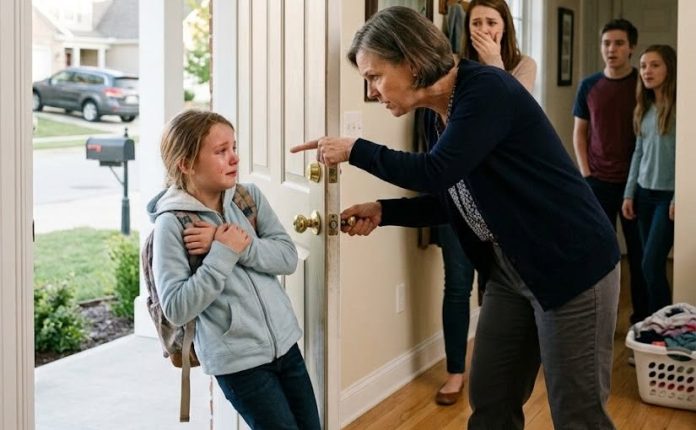
“You have five minutes to withdraw that report,” she shouted. “You’re destroying this family because your spoiled child couldn’t follow simple directions.”
Elliot heard her from his bedroom.
He appeared in the hallway holding his stuffed elephant, his face draining of color when he recognized the voice outside our door.
I moved him into my bedroom, turned on his favorite movie, and telephoned building security. Denise continued shouting until two employees escorted them from the property.
Before leaving, Kara yelled that I would regret making an enemy of my own family. The statement appeared in the building manager’s written incident report the following morning.
Monica used both reports when requesting a temporary protective order preventing Denise and Kara from contacting Elliot while the child-neglect assessment remained active.
The judge did not permanently decide anything that day. She reviewed the documented timeline, the hostile messages, and their appearance at my apartment before granting temporary restrictions.
Ray was not included because he had stopped participating after leaving my building. Instead, he contacted investigators independently and admitted exactly what happened.
He confessed that he knew leaving was wrong. He said Denise threatened to take his car keys and abandon him too if he went back for Elliot.
“That explains your fear,” I told him when he eventually called. “It does not excuse choosing your comfort over my child’s safety.”
Ray cried, but I did not comfort him. Protecting Elliot meant refusing to manage the emotions of adults who had failed him deliberately.
Kara’s consequences arrived through her own household. Michael took their children to his brother’s home and requested temporary custody arrangements while investigators assessed her conduct.
He did not claim she permanently lost her children. He simply refused to leave them with someone who had demonstrated that inconvenience could outweigh a child’s safety.
Denise’s consequences were equally concrete. She had been listed as Elliot’s emergency contact at school, pediatric clinic, after-school program, and apartment building.
Within twenty-four hours, I removed her name from everything.
I canceled the key card allowing her into our building. I changed the backup pickup password at Elliot’s school and provided copies of the temporary order.
Then I ended the automatic monthly payments I had quietly made toward my parents’ property taxes since Ray retired. They had called that assistance a family obligation.
The bank confirmation showed no future transfers scheduled.
I sent Denise one final message through Monica.
You deliberately left my six-year-old behind and laughed when I found him. You no longer have access to Elliot, our home, or my financial support.
The message showed Delivered.
Denise, who always had an explanation for every cruel decision, did not answer.
The investigation continued for several weeks. Authorities interviewed staff members, reviewed records, and spoke separately with every adult and child involved in the trip.
Denise repeatedly described the abandonment as a misunderstanding, but her earlier statement to Guest Relations contradicted her. Kara’s children also confirmed the adults knew Elliot remained behind.
The case eventually resulted in a negotiated resolution involving supervised contact restrictions, mandatory parenting and child-safety education, and continued compliance with the protective order.
It was not the dramatic courtroom destruction my relatives claimed I wanted. It was something more important: a documented boundary they could no longer laugh away.
Disney barred Denise and Kara from returning for a defined period under its guest-conduct procedures. Ray received no ban because he cooperated and accepted responsibility.
Months later, Ray wrote Elliot a letter. Monica read it first. It contained no excuses, requests for forgiveness, or pressure to reunite.
He wrote, “You waited exactly where I told you. I was the person who failed to return. You were never the child who got lost.”
I allowed Elliot to keep the letter. I did not require him to respond.
Healing did not happen when the reports closed. For months, he panicked whenever I disappeared behind a restroom door.
We found a child therapist who helped him understand that responsible adults return, keep promises, and never use abandonment as punishment.
The following spring, I saved enough money and accumulated enough vacation time to take Elliot back myself. We entered the same gates together shortly after sunrise.
He gripped my hand tightly when we approached the transportation exit. I asked whether he wanted to turn around, but he shook his head.
“No,” he said. “I want a new memory here.”
So we made one.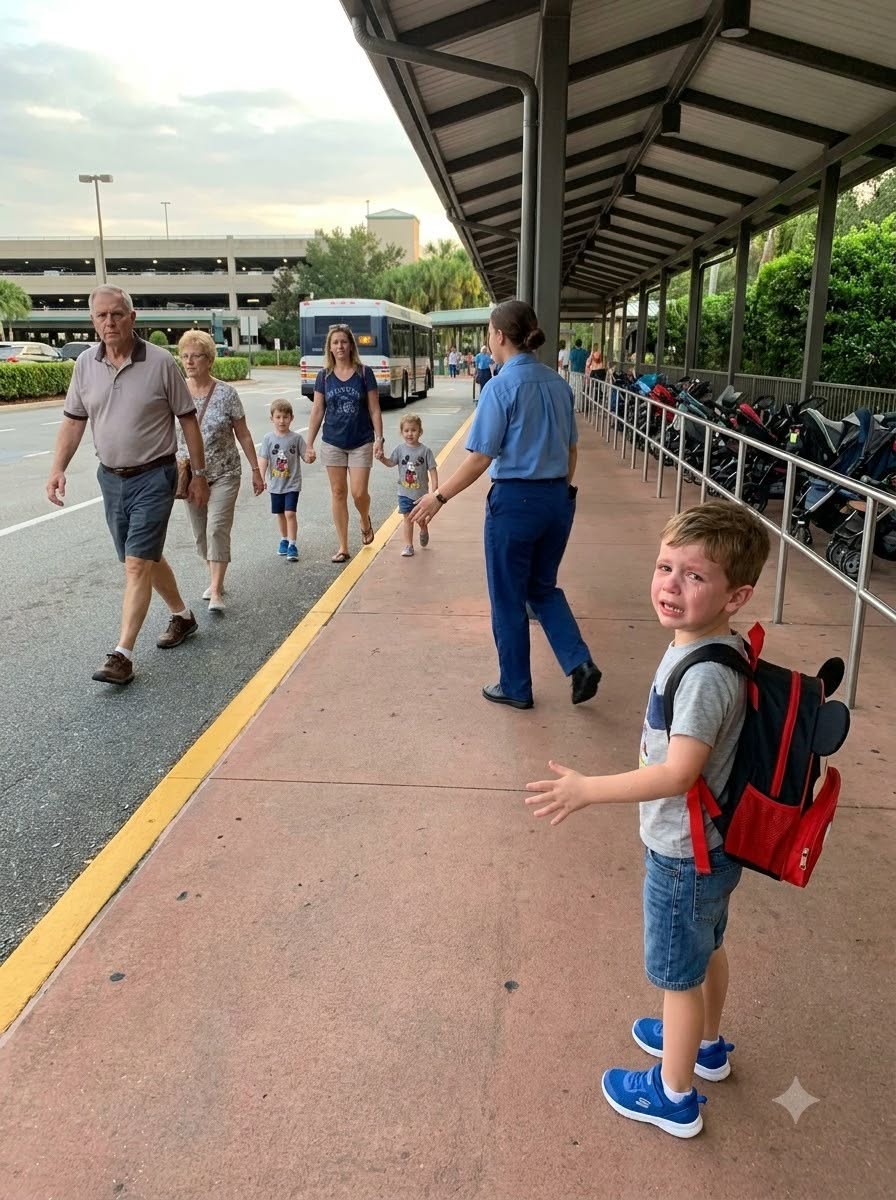 We ate waffles shaped like Mickey, rode his favorite attractions twice, and waited together whenever either of us needed the bathroom.
At sunset, Elliot stood beneath the entrance sign wearing the same backpack. This time, his smile reached his eyes, and I stood beside him in the photograph.
My family once accused me of destroying everything over a child who “got lost.”
But Elliot never got lost.
Three adults deliberately left him behind—and finally discovered that I would never do the same.
If you believe children deserve adults who return for them, leave a “SAFE” in the comments and share Elliot’s story with someone who understands that trust must be protected.
We ate waffles shaped like Mickey, rode his favorite attractions twice, and waited together whenever either of us needed the bathroom.
At sunset, Elliot stood beneath the entrance sign wearing the same backpack. This time, his smile reached his eyes, and I stood beside him in the photograph.
My family once accused me of destroying everything over a child who “got lost.”
But Elliot never got lost.
Three adults deliberately left him behind—and finally discovered that I would never do the same.
If you believe children deserve adults who return for them, leave a “SAFE” in the comments and share Elliot’s story with someone who understands that trust must be protected.